





Wikipedia is the Internet's go-to when it comes to knowledge. It doesn't matter if you're browsing for school, for fun, or falling into a weird rabbit hole, Wikipedia always has your back. The site claims it gets around 10,000 pageviews every second, with editors all around the world performing an average of 16 edits every second.
Although many people think of Wikipedia as a source of interesting facts and knowledge, there's plenty of creepy content on the site as well. The subreddit "Creepy Wikipedia" is a community that collects articles that make people "shiver with fear or disgust." Here are some of their best entries in the form of true crime, mysterious disasters, and heart-breaking real-life stories found on the Internet's encyclopedia.
More info: Reddit
#21
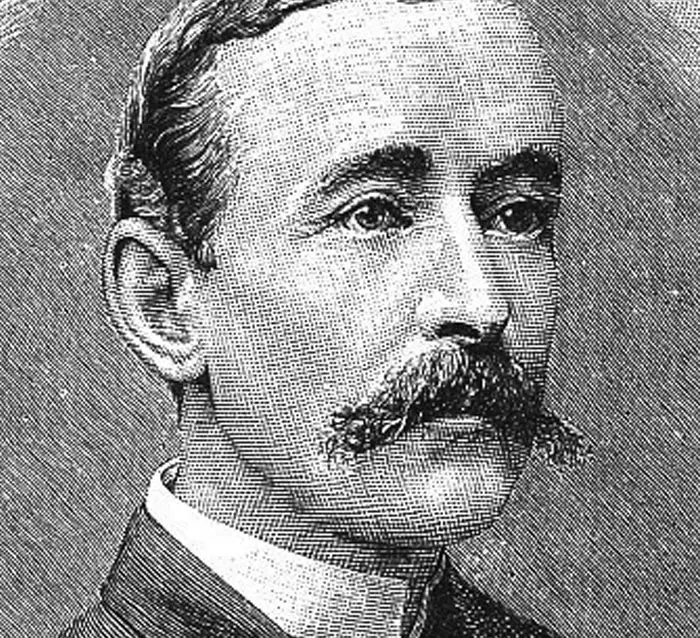
James Sligo Jameson -He is most remembered for his role in causing a slave girl to be killed and eaten by cannibals. "a man appeared, leading a young girl of about ten years old at the hand, and I then witnessed the most horribly sickening sight I am ever likely to see in my life...."
James Sligo Jameson (1856–1888) was a Scottish naturalist, traveler, and a grandson of the founder of Jameson Irish Whiskey. Early in his career, he led several successful expeditions through Asia and Africa, discovering new animal species and having three African birds named after him. Hoping to continue his scientific pursuits, Jameson joined Henry Morton Stanley’s 1887 Emin Pasha Relief Expedition in the Congo Basin, contributing funding and serving as a naturalist and second-in-command of the expedition's rear guard at Yambuya.
While Jameson died of a severe fever during the trip at age 32, his legacy became defined by a horrific event known as the "Jameson Affair." In May 1888, while visiting a local chief alongside the slave trader Tippu Tip, Jameson allegedly expressed curiosity about cannibalism. According to his own diary, an associate offered to demonstrate the practice in exchange for cloth. Jameson purchased a ten-year-old enslaved girl for six handkerchiefs, and watched as she was immediately stabbed to death, dismembered, and eaten by locals. While Jameson claimed in his diary that he believed the transaction was a joke and did not expect the girl to be killed, eyewitnesses and expedition survivors accused him of intentionally orchestrating the slaughter so he could calmly sit by and sketch the murder and subsequent feast. The massive scandal permanently damaged the reputation of African expeditions and is widely believed to have served as the inspiration for the character of Kurtz in Joseph Conrad's famous novella, Heart of Darkness.
Report
11points
#22

Baba Anujka was a 90 year old serial killer from a small village in Serbia. She sold "love potions" to women with marriage problems, which contained arsenic and killed the husbands after 8 days. In 1929, she was sentenced to 15 years in prison. It is believed she killed between 50 and 150 people.
Baba Anujka (born Ana di Pištonja, c. 1836/1838–1938) was a Serbo-Romanian woman from the village of Vladimirovac (then part of the Austro-Hungarian Empire and later Yugoslavia) who became known as one of the earliest serial killers in the Balkans. She is believed to have poisoned at least 50 people, and possibly up to 150.
After an early life marked by isolation and an interest in herbal medicine and chemistry, she built a reputation as a healer and “wise woman.” She ran a small laboratory in her home and sold mixtures she called “magic water” or “love potions.” In reality, these contained poisonous substances such as arsenic and plant toxins, which she sold to clients—often women seeking to get rid of husbands or relatives.
Her victims typically died within days, and she gained both fear and respect in her community for her supposed supernatural abilities. In the 1920s, police eventually uncovered her involvement in several murders linked to these poisonings.
She was arrested in 1928 at the age of about 90 and sentenced in 1929 to 15 years in prison as an accomplice in murder. Due to her age, she was released after about eight years and died in 1938 at around 100 years old.
Today, she is remembered as a notorious historical figure who exploited folk medicine beliefs to carry out poisonings over many decades.
Report
11points
#23

Woo In-hee, one of the most famous actresses in North Korea, was Kim Jong-Il's mistress. After she spoke of the affair, he had her publicly executed and ordered her to be erased from history.
Woo In-hee (c. 1940–1981) was a prominent North Korean actress and the prestigious recipient of the "People's Actress" title. Renowned for her beauty, her career flourished during the 1960s and 1970s, during which she starred in dozens of successful films. Though married to a famous film director, she was involved in various extramarital relationships, eventually becoming a secret mistress to future leader Kim Jong Il in the late 1970s.
In the winter of 1980, Woo was discovered suffering from carbon monoxide poisoning inside a closed vehicle alongside a dead Zainichi Korean man with whom she was having an affair. During the subsequent investigation into the man's death, Woo broke her protocol of secrecy by speaking about her relationship with Kim Jong Il. In response, Kim ordered her execution. In 1981, Woo was publicly executed by a 12-man firing squad at a military academy in front of 6,000 onlookers, including her husband. Following her death, her image and name were systematically purged and edited out of North Korean films and media catalogs.
Report
11points
#24
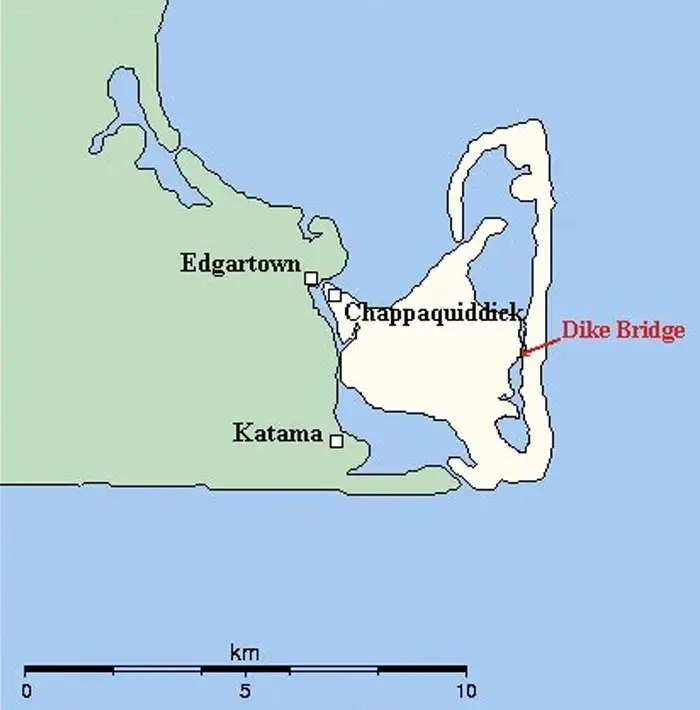
Sometime around midnight on July 18 1969, US Senator Ted Kennedy would lose control of his car, plunging into a pond. Kennedy was able to escape and flee the scene, however, his passenger Mary Jo Kopechne was trapped in the car. Authorities weren’t notified and the body wasn’t recovered for 9 hours.
On the night of July 18, 1969, U.S. Senator Ted Kennedy left a party on Chappaquiddick Island, Massachusetts, driving an Oldsmobile 88 with 28-year-old passenger Mary Jo Kopechne, a former campaign worker for his late brother Robert Kennedy. According to his testimony, Kennedy made a wrong turn onto an unlit dirt road and accidentally drove his vehicle off the narrow, guardrail-less Dike Bridge into the tidal Poucha Pond. While Kennedy managed to escape the submerged, overturned car and swim to safety, Kopechne remained trapped inside and died.
Instead of alerting authorities immediately, Kennedy failed to report the accident to the police for ten hours. During that time, he returned to the party to get help from his cousin and a friend for failed rescue attempts, impulsively swam across the channel back to his hotel in Edgartown, and went to sleep. The body and vehicle were discovered the following morning by fishermen.
A subsequent judicial inquest concluded that Kennedy’s turn toward the bridge was intentional and that he had operated his vehicle negligently. He ultimately pleaded guilty to a charge of leaving the scene of an accident causing bodily injury, receiving a two-month suspended jail sentence and a 16-month driver's license suspension. The resulting national scandal and accusations of a political cover-up deeply damaged Kennedy's reputation, derailed his aspirations for the U.S. presidency in 1972 and 1976, and permanently altered his political trajectory.
Report
10points
#25
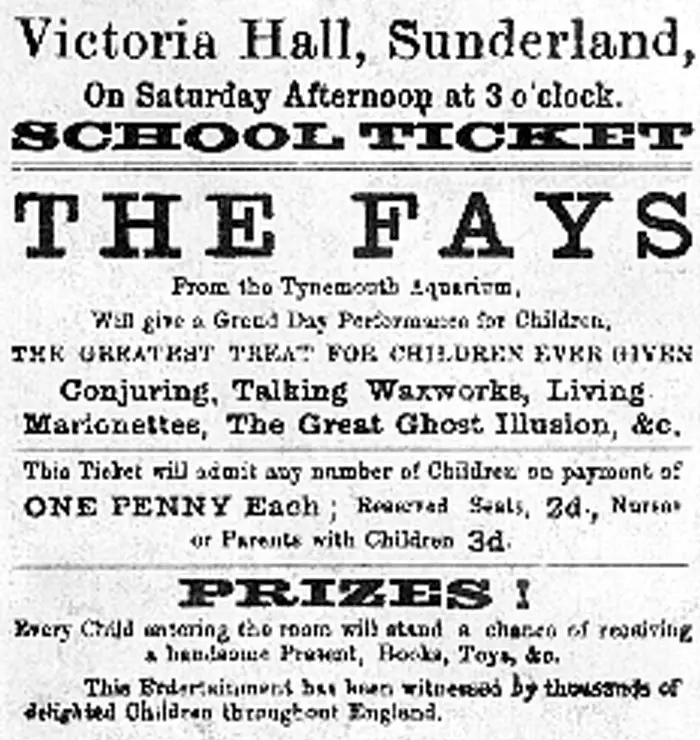
The Victoria Hall disaster of 1883 occurred when during a children’s show, prizes offered on stage lead a surge of children on the top balcony to rush downstairs to barred doors. A horrifically large human crush occurred. The disaster was crucial in the future implementation of push-bar doors.
On June 16, 1883, a horrific crowd crush occurred at the Victoria Hall theater in Sunderland, England, resulting in the deaths of 183 children aged between 3 and 14. The disaster unfolded at the conclusion of a popular children's variety show presented by traveling entertainers. When it was announced that children with certain numbered tickets would receive free toys upon exiting, an estimated 1,100 children seated in the upper gallery panicked that they would miss out and stampeded down the narrow stairwell toward the exit.
Unbeknownst to the rushing crowd, the inward-opening door at the bottom of the staircase had been purposely bolted partially shut by management to leave a restrictive opening of only about 20 inches—a measure meant to easily check tickets and control the flow of children. With virtually no adults present in the gallery to supervise or maintain order, the children at the front of the surge were instantly trapped against the barricaded door and buried under a pile of bodies six feet high. Trapped under the immense pressure of hundreds of children continuing to push from above, 183 children died of compressive asphyxia. The tragedy caused massive national grief, drawing condolences and financial support from Queen Victoria, and led directly to a major overhaul of British safety codes. The government instituted strict laws requiring public entertainment venues to be equipped with outward-opening doors, leading directly to the invention and widespread legal mandate of the modern emergency exit "push bar."
Report
10points
#26

For years, Cindy James claimed she was harassed, poisoned, stabbed, had her house set on fire and dead animals left in her yard. She was later found dead, having been hog-tied and choked with a stocking. The police ruled she’d died from an “unknown event” as they never found signs of her stalker.
From 1982 to 1989, Cindy James reported around 90–100 incidents of stalking and violent harassment, including threatening phone calls, break-ins, arson attempts, physical attacks, and anonymous threats. She claimed she was being targeted by an unknown assailant who repeatedly invaded her home and assaulted her.
The RCMP investigated extensively but found no solid evidence of a stalker or any consistent physical proof linking the incidents to an external attacker. Over time, authorities began to suspect that the events may have been staged or self-inflicted, especially given inconsistencies in the evidence and her documented mental health struggles, including depression and prior suicidal thoughts.
Despite this, James continued to report escalating attacks over the years, and the case became one of the most expensive and prolonged police investigations in British Columbia at the time.
After her death in 1989—found bound and with a fatal drug overdose—the harassment claims became central to the controversy: some believed she had been a real victim of an unseen attacker, while others believed the harassment was fabricated and connected to her death being a staged suicide or self-inflicted act.
Report
10points
#27

Missy Bevers was a fitness instructor who was killed while setting up for a class inside a church. The case became famous for cctv footage showing a person wearing a swat team uniform walking through the church before Missy arrived.
Before dawn on April 18, 2016, 45-year-old fitness instructor Terri Leann "Missy" Bevers was murdered inside the Creekside Church of Christ in Midlothian, Texas, where she had arrived early to set up an indoor boot camp class. Her body was discovered shortly after 5:00 a.m. by her arriving students.
The case gained widespread attention due to security footage capturing the killer roaming the church hallways just before the murder. The suspect was uniquely disguised in full tactical police gear, including a helmet, gloves, and a vest labeled "POLICE." Investigators noted that the killer walked with a highly distinct, asymmetrical gait, but their face and gender could not be identified. Because nothing was stolen from the church and Bevers' valuables were left untouched, police determined she was deliberately targeted.
Despite an extensive investigation into Bevers' personal life, thousands of tips, and the analysis of a suspicious vehicle seen nearby, no suspects have ever been arrested, and the murder remains unsolved.
10points
#28

Taylor Mitchell was a 19 year old folk musician from Canada. In 2009, on her downtime between concerts she went for a hike, where she was attacked and killed by two eastern coyotes. She is currently the only known adult to be killed by coyotes.
Taylor Mitchell (born Taylor Josephine Stephanie Luciow; 1990–2009) was a Canadian country-folk singer and songwriter from Toronto. Her debut studio album, For Your Consideration, was released in March 2009 to encouraging reviews and earned her a nomination for Young Performer of the Year at the Canadian Folk Music Awards.
On October 27, 2009, while on a solo musical tour of the Maritime provinces, the 19-year-old was mauled by eastern coyotes while hiking alone on the Skyline Trail in Nova Scotia's Cape Breton Highlands National Park. Other hikers discovered her and managed to drive the coyotes away, but Mitchell died the next day in a Halifax hospital from severe injuries and blood loss. Her death remains the only confirmed fatal coyote attack on an adult, as well as the only fatal human coyote attack ever recorded in Canada, which shocked wildlife experts and led to a thorough reassessment of the predatory risk coyotes pose to humans.
10points
#29
Liam Ashley was a 17 year old boy from New Zealand who had criminal charges pressed against him by his parents for using their car without permission. His parents denied bail so he would be sent to prison. While being transported in a prison van, Liam was attacked by a dangerous offender and killed.
The murder of Liam Ashley occurred on August 24, 2006, when a 17-year-old was choked and beaten to death inside a New Zealand prison transport van.
Ashley had been arrested for minor, non-violent offenses. His parents declined bail, hoping a brief stay in custody would reform his behavior, under the impression that minors were safely separated from adult offenders. Instead, due to systemic administrative errors, Ashley was placed in an unmonitored compartment of a transit van alongside 25-year-old George Charlie Baker—a dangerous recidivist with 79 prior convictions and a history of extreme violence.
During the drive, Baker became paranoid that Ashley was a police informant. He launched a brutal 15-minute assault, strangling Ashley and stomping on his head. The attack was only discovered when the van reached its destination. Ashley suffered severe brain damage and died the following day after being removed from life support.
The tragedy provoked national outrage and intense criticism of the justice system. Official inquiries labeled the prisoner transport policies "inhumane" and the death "preventable." In response, the contracted security firm withdrew from the business, the government introduced tighter prisoner restraints, and the Ashley family received a compensation settlement. Baker pleaded guilty to the murder and received a life sentence; he remains one of New Zealand's most notorious inmates after launching further violent attacks behind bars.
Report
10points
#30
Missing white woman syndrome is a phrase used to describe the disproportionately higher coverage of white women and girls in the upper-middle-class who disappear.
Missing white woman syndrome is a term used by social scientists and media commentators to describe the disproportionate media coverage—particularly on television—given to missing-person cases involving young, attractive, white, upper-middle-class women and girls, compared to cases involving men, boys, or people of color. Coined by American news anchor Gwen Ifill in 2004, the term highlights a cultural and racial hierarchy in media reporting, where white women are uniquely cast in a privileged role as "damsels in distress" worthy of urgent national rescue.
Empirical research, including a prominent 2016 study by sociologist Zach Sommers, confirms this disparity, showing that Black missing persons are significantly underrepresented in news coverage relative to actual missing person database rates. Furthermore, when Black or Indigenous victims are covered, the media tone is statistically more likely to focus on the victim’s perceived problems—such as addiction, criminal history, or unstable relationships—effectively blaming them for their disappearance. Conversely, coverage of white women typically emphasizes their positive societal contributions as mothers, daughters, and students. In Canada, studies found that missing Indigenous women receive up to 27 times less news coverage than white women, often featuring detached, less-detailed headlines. This systemic bias not only distorts public perception of who goes missing, but has historically influenced legislative priorities, driving "tough-on-crime" laws named almost exclusively after white female victims.
Report
10points
#31
John Leonard Orr was a fire captain and arson investigator who set around 2000 fires over a thirty year period, making him the most prolific serial arsonist in American history.
John Leonard Orr (born 1949) is an American convicted serial arsonist and mass murderer who previously served as a fire captain and arson investigator for the Glendale Fire Department in California. He is believed to have set nearly 2,000 fires during a 30-year spree between 1984 and 1991, making him the most prolific serial arsonist in United States history. Orr typically used a signature time-delay incendiary device, consisting of a lit cigarette, matches, writing paper, and a rubber band, to set fires inside crowded retail stores during business hours.
His pattern was uncovered after a series of suspicious fires erupted near fire investigator conventions in Fresno and Pacific Grove. Investigators linked a fingerprint recovered from one of the crime scenes to Orr's law enforcement application records. Following his arrest in December 1991, a forensic re-evaluation tied him to a catastrophic 1984 hardware store fire in South Pasadena that killed four people, including a two-year-old child. Investigators discovered that Orr had written an unpublished novel, Points of Origin, detailing a firefighter who was a serial arsonist, featuring highly specific similarities to the 1984 tragedy.
Orr was convicted in federal court of arson in 1992 and sentenced to 30 years in prison. In 1998, a California state court convicted him on four counts of first-degree murder and multiple counts of arson, resulting in a consecutive sentence of life without parole. Following his arrest, the number of brush fires in the surrounding Southern California foothills decreased by more than 90 percent. Orr is currently serving his life sentence at Mule Creek State Prison.
Report
10points
#32

In 2008 suspected serial murderer Ricky Simonds was found dead of heat stroke in the trunk of his ex-girlfriends car. Investigators on the case believe Simonds was waiting in the trunk to ambush and murder his ex-girlfriend, when he became locked in the vehicle.
The disappearance of Jamie Fraley occurred in the early hours of April 8, 2008, in Gastonia, North Carolina. The 22-year-old, who was suffering from a severe stomach flu, had already visited the local hospital twice that day. At approximately 1:30 a.m., she called a friend to mention she was returning to the hospital for a third time but abruptly cut the call short when she saw her ride arrive, referring to the driver simply as "him." Fraley never checked into the hospital and was never seen again. Her apartment was found locked with her wallet, keys, and purse left inside, while her cell phone was later found discarded on a nearby roadside.
The initial investigation centered heavily on Ricky Simonds Sr., the father of Fraley’s incarcerated fiancé. Simonds lived in the same apartment complex, worked as its maintenance man, and had driven Fraley to the hospital for one of her visits earlier that day. He also possessed a criminal record that included a prior conviction for manslaughter. However, two months after Fraley vanished, the investigation into Simonds came to a bizarre end when his body was discovered inside the trunk of a former girlfriend's car, having suffocated from extreme heat.
With their primary person of interest dead, detectives faced a stalled investigation. In 2015, a convicted prison inmate confessed to murdering Fraley, but investigators quickly ruled him out after confirming he was incarcerated at the time of her disappearance. Despite extensive searches, multiple tips, and national true-crime coverage, no concrete evidence or remains have ever been found, and Fraley's case remains an open, unsolved mystery.
Report
10points
#33
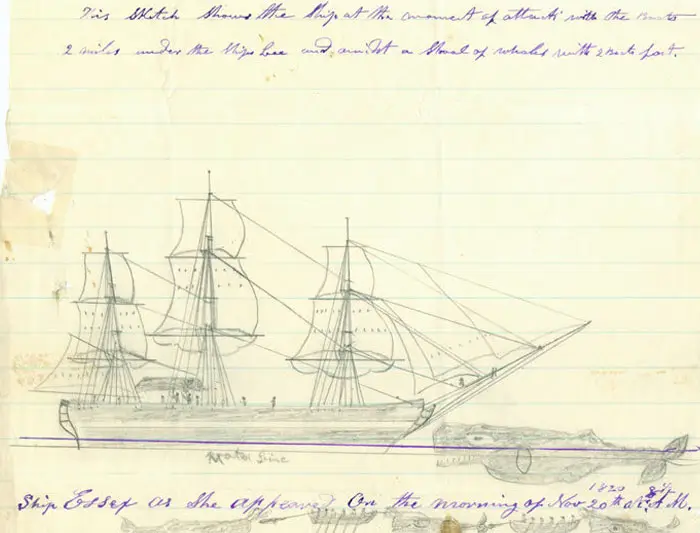
Essex (whaleship) that was attacked and sunk by a sperm whale about 2,000 nautical miles (3,700 km) from the coast, the 20-man crew was forced to make for land in three whaleboats and suffered dehydration, starvation, the survivors eventually resorted to cannibalism. It inspired the novel Moby-Dick.
The Essex was an American whaling ship from Nantucket, Massachusetts, that became the subject of one of the most harrowing survival stories in maritime history. In November 1820, while hunting in a remote region of the South Pacific under the command of Captain George Pollard Jr., the ship was repeatedly and deliberately rammed by an immense, 85-foot sperm whale bull. The devastating attack crushed the ship's bow, causing it to rapidly capsize and sink, leaving the 20-man crew stranded thousands of miles from land.
Forced to abandon ship, the crew split into three small, makeshift whaleboats with very limited food and water. Fearing false rumors of cannibals on the closer islands to their west, the officers made the tragic decision to sail thousands of miles east toward South America. After a month at sea, they briefly found refuge on the uninhabited Henderson Island, where three men chose to stay behind. The remaining seventeen sailors pushed back out into the open ocean, where they quickly succumbed to severe dehydration, exposure, and starvation.
As the weeks dragged on and men began to die, the desperate survivors resorted to necessity cannibalism to stay alive. When those bodies were exhausted, the men in the captain's boat were forced to draw lots to determine who would be executed for sustenance; Pollard’s own 16-year-old cousin, Owen Coffin, drew the fatal straw and was shot. By the time the survivors were rescued in February 1821—nearly three months after the sinking—only five men remained alive in the boats, while the three on the island were rescued later that April. The extraordinary tragedy later served as the primary inspiration for Herman Melville's classic 1851 novel, Moby-Dick.
Report
10points
#34

Smile mask syndrome is a psychological disorder in which subjects develop depression and physical illness as a result of prolonged, unnatural smiling. It can lead to severe physical strain of the mouth and can result in an inability to stop smiling, even when upset or agitated.
Smile mask syndrome (SMS) is a proposed psychological disorder where individuals develop depression and physical illness from unnaturally prolonged, forced smiling. The term was coined by Professor Makoto Natsume in Japan, who noticed that patients who faked smiles for too long would unconsciously smile even while recounting stressful or upsetting experiences.
The condition is heavily linked to the Japanese and South Korean service industries, where an obligatory workplace smile has been demanded of employees—especially young women—since the 1980s. According to Natsume, constantly forcing an artificial smile causes people to suppress their true emotions, leading to depression. It also causes physical symptoms, such as severe muscle aches and headaches, similar to a repetitive strain injury.
Report
9points
#35

Sahar Khodayari was an Iranian woman known for setting herself on fire in front of the Islamic Revolutionary Court of Tehran on 2 September 2019. She was protesting a possible sentence of six months in prison for having tried to enter a public stadium to watch a football game.
The death of Sahar Khodayari occurred on September 9, 2019, after she committed suicide by self-immolation to protest Iran’s de facto ban on female sports spectators. A 29-year-old football fan, she was known online as the "Blue Girl" after the color of her favorite club, Esteghlal FC.
In March 2019, Khodayari was arrested by the morality police after attempting to enter Tehran's Azadi Stadium disguised as a man. She was detained for three nights at the notorious Shahr-e Rey prison, an experience that severely deteriorated her mental health. On September 2, 2019, after visiting a Tehran courthouse and learning she could face a six-month prison sentence for appearing in public without a hijab, she set herself on fire outside the building. She suffered burns over 90% of her body and died a week later.
Her death sparked massive international outrage and condemnation from human rights groups, celebrities, and athletes. Under immense public pressure and threats of suspension from football's governing body, FIFA, the Iranian government relented. One month later, on October 10, 2019, thousands of Iranian women were allowed into a stadium to watch a men's national match for the first time since the 1979 Islamic Revolution.
Report
9points
#36
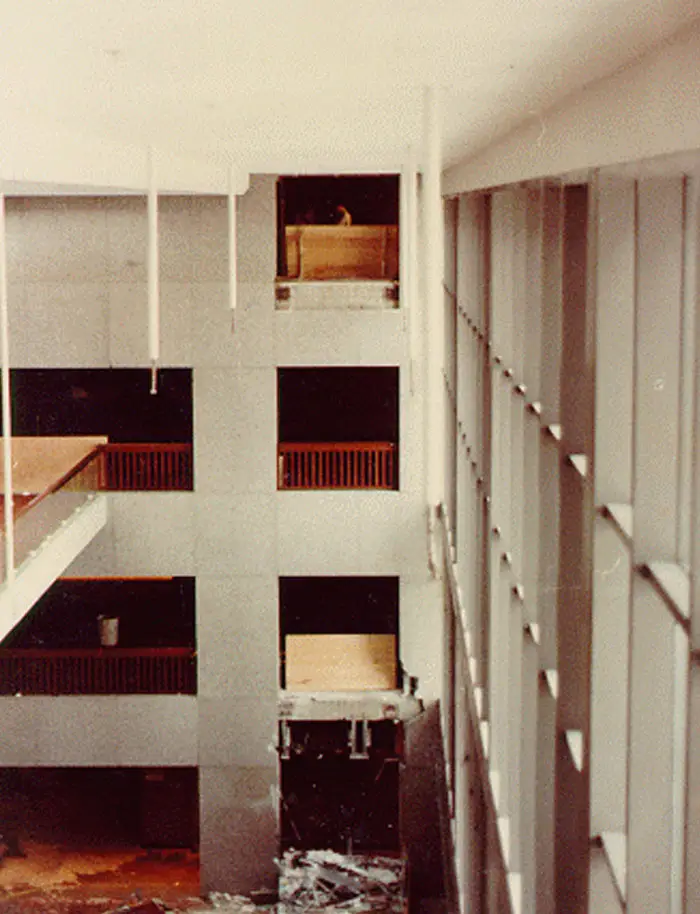
Hyatt Regency walkway collapse- 114 people were killed and 216 injured when two walkways made of glass and concrete (weighing about 64,000 lbs.) collapsed onto a tea dance that was being held in the atrium of the hotel. There had been about 1,600 people in attendance.
The Hyatt Regency walkway collapse occurred on July 17, 1981, in Kansas City, Missouri, killing 114 people and injuring 216 others. During a crowded tea dance in the hotel's atrium, the fourth-floor concrete walkway collapsed onto the second-floor walkway directly underneath it, sending both platforms crashing into the crowded lobby. It remains one of the deadliest structural failures in U.S. history.
An investigation revealed that the catastrophe was caused by a fatal design change made during construction. The original blueprints called for continuous steel hanger rods to suspend both walkways from the ceiling. However, the steel fabricator changed this to two separate, offset sets of rods to simplify installation. This modification inadvertently doubled the load on the fourth-floor cross-beams, leaving the structure unable to support its own weight and violating local building codes.
The engineering firm, Jack D. Gillum and Associates, approved the fatal alteration over a telephone call without performing necessary safety calculations. While the engineers were acquitted of criminal charges, they were found guilty of gross negligence and misconduct, losing their professional licenses. The disaster became a landmark case study in engineering ethics and led to sweeping industry reforms, establishing that structural engineers bear ultimate legal responsibility for reviewing all fabricator drawings.
Report
8points
#37

The murder of Leigh Leigh Mears: a young girl attends a party where a group of a dozen boys take turns harassing, beating, mocking, assaulting and spitting on her while onlookers do nothing. The next day she’s found in a sand dune with her skull split open and genitals severely mutilated.
The murder of Leigh Leigh occurred on November 3, 1989, at Stockton Beach in New South Wales, Australia. The 14-year-old girl was attending an un-chaperoned 16th birthday party at a surf club. After returning from a non-consensual sexual encounter on the beach with a 15-year-old boy, a distressed and bleeding Leigh sought help. Instead of receiving assistance, she was surrounded by a large group of teenagers who verbally abused, kicked, and spat on her. She eventually staggered away to find refuge. Her naked body was found in nearby sand dunes the following morning. A postmortem revealed that she had been choked and severely sexually assaulted before dying from a crushed skull inflicted by a 5.6 kg rock.
The case became highly controversial and sparked intense national media scrutiny. Much of the early coverage was widely criticized by criminologists and social commentators as a prominent example of victim-blaming, as media focus shifted heavily toward Leigh's alleged sexual promiscuity, her looks, and the lack of parental supervision, rather than the violence committed against her. The police investigation was also heavily criticized for procedural failures and suspected cover-ups, leading to official inquiries by the New South Wales Crime Commission and the Police Integrity Commission.
Matthew Grant Webster, an 18-year-old acting as a bouncer at the party, pleaded guilty to the murder and was sentenced to 20 years in prison; he was released on parole in 2004. Guy Charles Wilson, another 18-year-old bouncer, received a six-month sentence for assault, while the 15-year-old boy was sentenced to community service for having s*x with a minor. No one was ever charged with her sexual assault. The tragedy inspired the notable Australian theatrical play A Property of the Clan, which was later adapted into the movie Blackrock.
Report
7points
#38

Verrückt was the world’s tallest waterslide infamous for its incredibly sketchy construction and safety record. These details came to the public following it’s closure in 2016, when a young boy riding it was decapitated.
Verrückt (German for "crazy") was a record-breaking water slide at the Schlitterbahn water park in Kansas City, Kansas. Standing at 168 feet 7 inches, it was certified as the tallest water slide in the world when it opened in July 2014. The attraction featured a 17-story initial drop followed by a five-story uphill crest, sending riders in three-person rafts plummeting at speeds of up to 70 mph.
From its inception, the slide faced severe engineering issues, as early test rafts routinely went airborne off the uphill hump. Rather than fundamentally altering the ride's physics, designers installed a metal hoop structure covered in netting directly over the chute to prevent rafts from flying off. Over its two years of operation, this hazardous design caused at least thirteen riders to suffer injuries from slamming into the overhead supports.
The ride permanently closed following a tragedy on August 7, 2016, when 10-year-old Caleb Schwab was killed. Due to uneven weight distribution, his raft went airborne at the crest of the hill, throwing him into a metal support pole and resulting in his immediate decapitation. In the aftermath, Verrückt was demolished, the Schwab family received a $20 million settlement, and Kansas dramatically tightened its amusement park regulations. Criminal charges against the park's owners and designers were later dismissed due to procedural issues, but the disaster ultimately forced the permanent closure of the water park.
Report
6points
#39
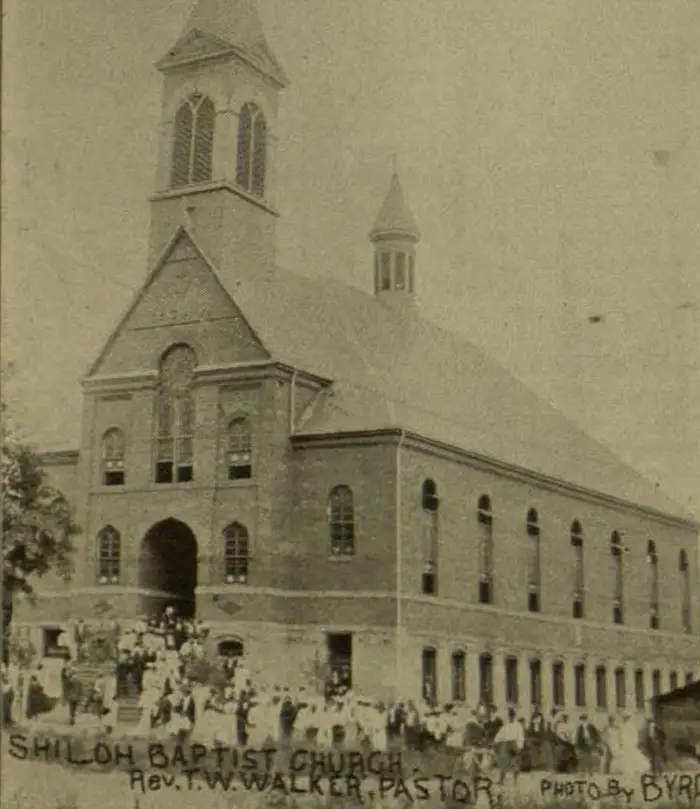
Shiloh Baptist Church stampede- 115 people lost their lives after someone called out ‘There’s a fight!’ Which people misheard for ‘Fire!’ and stampeded towards the exits resulting in a crowd crush. There had been 3,000 people in attendance to see Booker T Washington give a speech.
The Shiloh Baptist Church stampede occurred on September 19, 1902, in Birmingham, Alabama, resulting in the deaths of 115 people. Approximately 3,000 people had gathered at the church to hear a speech by prominent educator Booker T. Washington at the National Convention of Negro Baptists.
Shortly after Washington finished speaking, a dispute broke out between a convention delegate and the choir leader. Someone yelled, "There's a fight!", which members of the congregation mistook for "Fire!". A minister attempted to calm the crowd by shouting "Quiet!", but panicked attendees misheard this as a second fire alarm, triggering a mass rush toward the exits.
The building's layout created a severe bottleneck. The church floor sat 15 feet above ground level, forcing the crowd onto a set of long steps flanked by brick walls. As people at the front tripped or were pushed down, a pile of bodies accumulated up to 10 feet high, trapping and suffocating those underneath. The majority of the victims were women who fainted from fright and died of suffocation. Firefighters and police eventually cleared the entrance, but at least 15 of the injured died on the scene before they could be moved.
Report
6points
#40
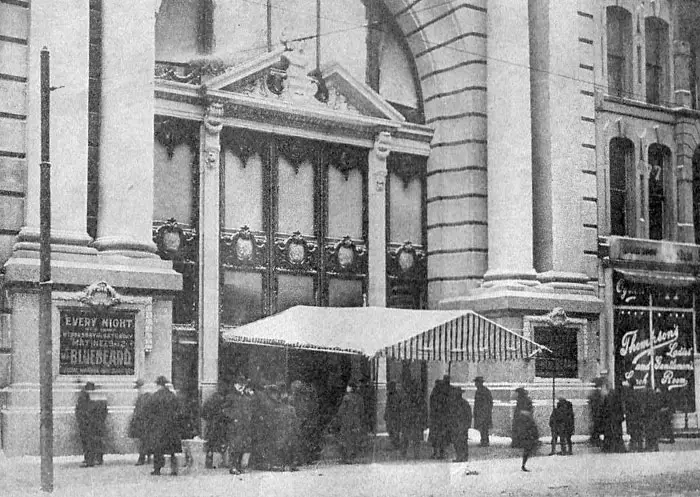
The Iroquois Theatre fire is the worst theatre fire to occur in the US, taking 602 deaths and 250 injuries. The more I read about this fire, the more disturbing it became.
The Iroquois Theatre fire occurred on December 30, 1903, in Chicago, Illinois, and remains the deadliest single-building fire in United States history, claiming 602 lives. During a packed holiday matinee of the musical Mr. Blue Beard, sparks from a faulty stage light ignited a curtain. The venue had been advertised as "absolutely fireproof," but it lacked basic safety features. The fire quickly intensified when the asbestos curtain jammed, and fleeing cast members opened the rear doors, creating a backdraft that blew a fireball directly into the audience.
Panicked patrons, mostly women and children, rushed for the exits in total darkness after the power failed. They encountered fatal bottlenecks: many doors opened inward, others were hidden by drapery or locked with unfamiliar European latches, and iron gates barred the stairways to keep balcony ticket-holders out of the main floor. Hundreds were crushed or suffocated at these chokepoints, while others died jumping from uncompleted fire escapes. While no one was criminally convicted for the disaster, the tragedy sparked global reforms, mandating outward-opening exit doors, automatic roof vents, and the invention of the crash bar.
Report
5points
