


#1
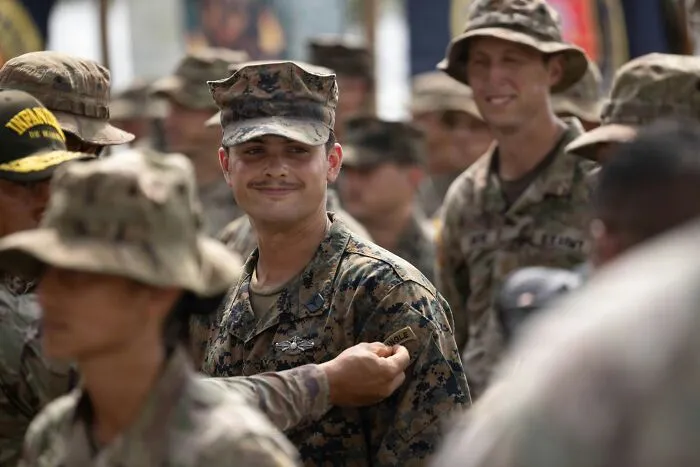
My grandfather and I don't get on. He's worn a mustache for the last 40 odd years. And he's got our countries national bird of prey tattooed on his upper arm.
Then she asked me if I was joining the military, before I could respond, she said "don't, if you do, you'll lose your life 4 years from today." I was planning on enlisting when I returned home.
She wrote down her name, and "4 years" on a piece of paper, which I keep in my wallet.
I'm still not sure if I believe her.
#2

The guy moved on & approached the other 3 drivers with the same line. I was already upset & off kilter from the accident, but this guy made it 100 times worse by touching/grabbing me without consent & subjecting me to his self righteous ritual.
#3

I just stared at him, mumbled something incoherent and practically ran off.
Creepiness has been studied as a psychological phenomenon because it is too universal not to. A 2016 study by Francis McAndrew and Sara Koehnke at Knox College, one of the first empirical studies on the subject, found that creepiness is triggered when someone violates the unspoken rules of social interaction in ways that are ambiguous enough to prevent a clear response.
The brain detects that something is wrong but cannot classify it as an outright threat, leaving a sense of discomfort about whether to react or laugh it off. The stranger who says something deeply unsettling and then smiles normally is creepy precisely because the signals contradict each other, and the brain has no clean category for it.
#4
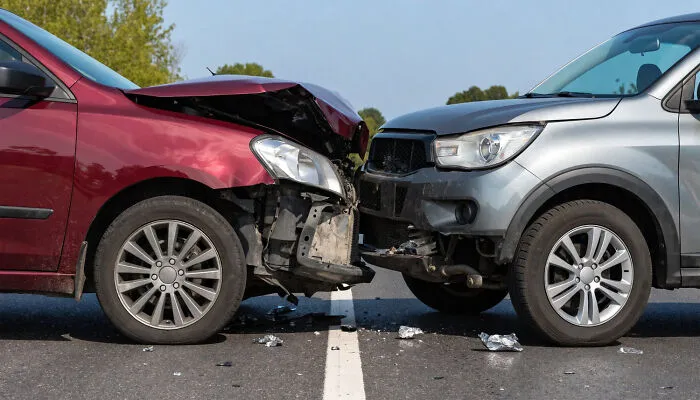
It was true. He witnessed the accident, called the paramedics. He was trying to talk to her to make sure she was okay, and all she would say is"I have to go, I have to go pick my son up" and he volunteered to come get me. I was so shaken I never even got his
name. Thank you kind stranger.
#5
"I had to stand like that in prison. I'm not a bad person though. We were sent there because we tried to stop a war."
#6
The same study found that the most universally creepy behaviors involve unpredictability, unusual patterns of eye contact, and comments that demonstrate an inappropriate level of knowledge or interest in another person. Standing too close, steering conversation toward personal details too quickly, and saying something that implies observation over time all register as threat signals. The body responds before the conscious mind has finished processing the interaction, which is why people often describe the feeling as arriving before they can explain it.
#7
#8
#9

Gavin de Becker, author of The Gift of Fear, spent decades studying predatory behavior and reached a conclusion that this thread echoes: the gut feeling that something is wrong is the brain processing information faster than language can keep up with. It is not you being irrational.
De Becker argues that the discomfort people feel and then talk themselves out of, "I am probably overreacting," "they probably meant nothing by it," is one of the most dangerous habits available. The feeling exists for a reason. The stranger who says something that makes every hair on your arms stand up has already communicated something, and your evolutionary skills are kicking in, so you better listen.
#10

Thanks, I think.
#11

Anyway this guy started to ramble about how I shouldn't be and that I should also consider being a good wife and a mom. He invited me to a pub and in that moment I walked on another direction to a mall just in case this guy tried to kidnap me. Don't try to pick girls like this please.
#12

So I'm walking to class and I have this disheveled old man stop me, he's confused, he reeks, he obviously is on substances. He hands me a piece of paper, he needs to find this address.
It's my address exactly, down the the apartment number. This is in the city, with tons of apartments around and this guy needs to find MY address. We're a good 10 minute walk away.
Instantly I'm scared. Trying to not sound suspicious, I ask why this address? It's most likely residential, knowing the area we're in. Does he know someone there?
No, he says, I live there.
Panic sets in. No this guy does NOT live there. I tell him I don't know, doesn't sound familiar. I'm sorry, gotta get to class. He just kinda shuffles away. I mass-text my roommates, this creep totally had our address and was looking for the building.
Turns out, he did live there. In the apartment below me. The old people moved out and we had no idea, and he got the apartment number wrong.
The concept of 'stranger danger', introduced in public safety campaigns in the 1960s, is actually very misleading. According to research, the vast majority of harm done to people, particularly children, comes from people they already know rather than strangers. Shockingly, as much as 90%. The campaign created a fear of the unknown that in many cases redirected attention away from the more statistically significant risk.
#13
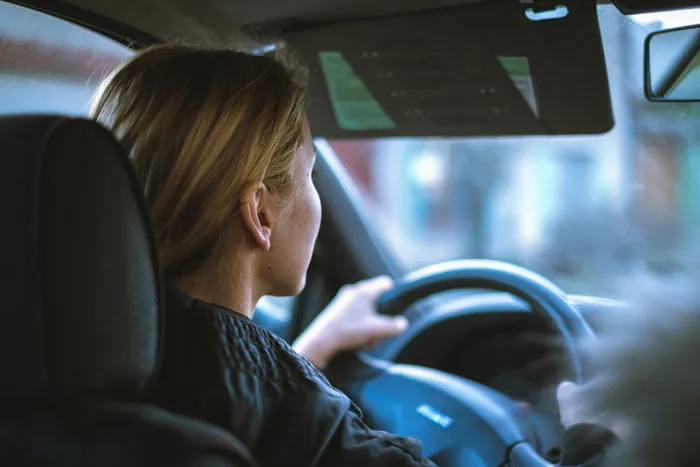
Random American woman that picked me up hitch-hiking here in Australia (as she began veering toward the right lane).
#14

"You may call me Uncle Albert. Remember that you cannot stop yourself from helping others, but you can let that moment pass so that you don't hear what they need you to help."
I went out, came back, and Uncle Albert was gone. I asked around, and no one knows who he is, not even my bosses. The next day my classmate (who sabotaged my graduation work but I didn't know it was her) came by to talk to me. Suddenly I remembered what Uncle Albert said, and i told her I need to go to the washroom and I'll be back later. When I'm back, she's gone. A few years later, I then learned that it was her who sabotaged my work.
#15

Gross.
Predatory conversation has identifiable patterns that researchers and behavioral analysts warn us about. Strategies include accelerated intimacy, pushing a conversation toward personal territory faster than the situation warrants, and testing compliance, making a slightly inappropriate comment to gauge whether the other person will object or go along with it.
De Becker calls the latter "forced teaming," where a stranger creates a false sense of shared experience or obligation. The comments that end up in threads like this one often have the structure of a test that the commenter did not realize they were being given.
#16

#17

#18

She then chucked a U-turn, pulled up next to me and told me 'I can tell your special, god told me just then that he has plans for you.' I said 'cheers, catchya later.'
The amygdala, the brain's threat detection center, processes social information faster than any conscious reasoning system and has been doing so for considerably longer than modern society has existed. It was calibrated in an environment where a misreading of another person's intentions could be fatal, which is why the response to a creepy stranger feels physical rather than intellectual.
Heart rate increases. Skin conductance changes. Attention narrows. The body prepares options before the brain decides whether they are needed, and this happens within milliseconds of the trigger, which in many of these stories was a single sentence.

#20