



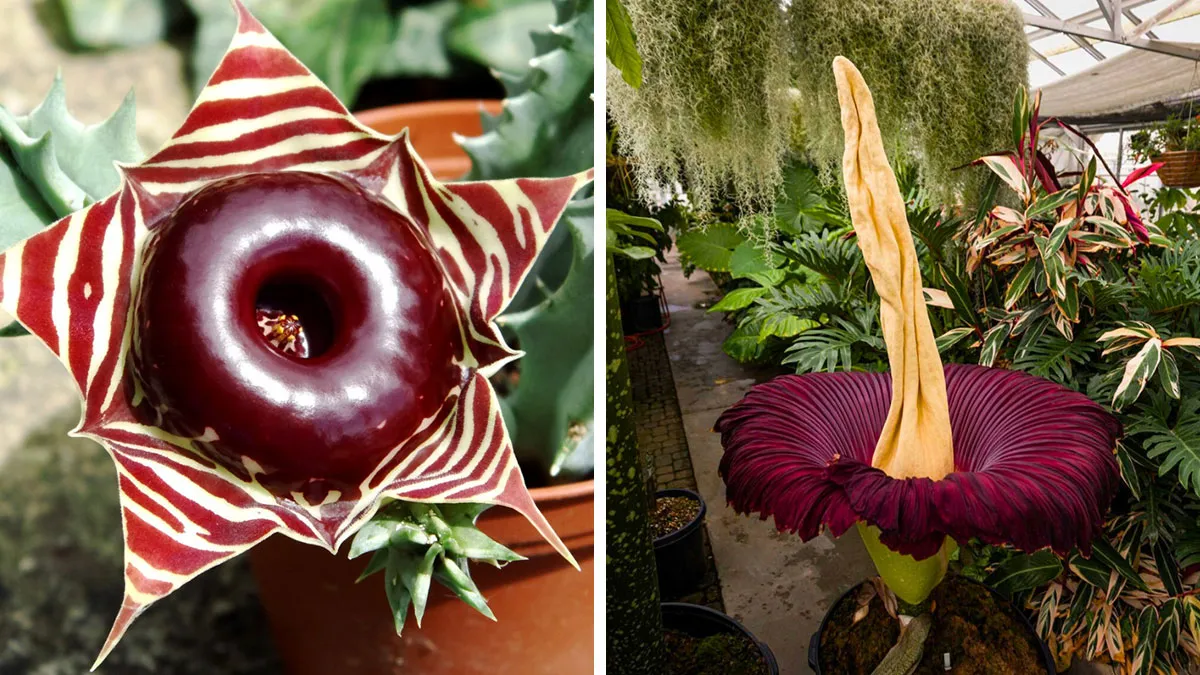


Halloween doesn’t just belong to plastic pumpkins, skeletons and fake cobwebs. Out there in the botanical underworld, there are species so bizarre, so sinister and so downright fascinating that they deserve a place in your own haunted home.
From flowers that reek of decay to succulents shaped like brains and eyeballs, these eerie plants are proof that Mother Nature can do spooky better than any special-effects artist ever could.
If you’re ready to create your own greenhouse of horror, Climadoor has put together a list of 24 of their favorite creepy, weird-looking plants that are perfect for Halloween, with useful tips on how to keep them alive and your pets safe too…
More info: climadoor.co.uk
#21 Monkey Cups (Nepenthes Spp.)
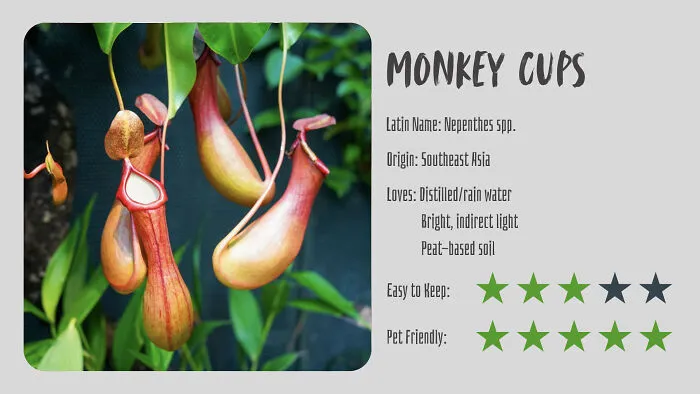
These hanging pitchers look like open mouths waiting for their next victim. They’re actually insect traps, filled with digestive liquid that lures and devours bugs.
Care: Needs warmth, humidity and rainwater or distilled water only. Never let it dry out.
Pet-friendly? Totally safe… unless your pet is a fly.
13points
#22 Cobra Plant (Darlingtonia Californica)
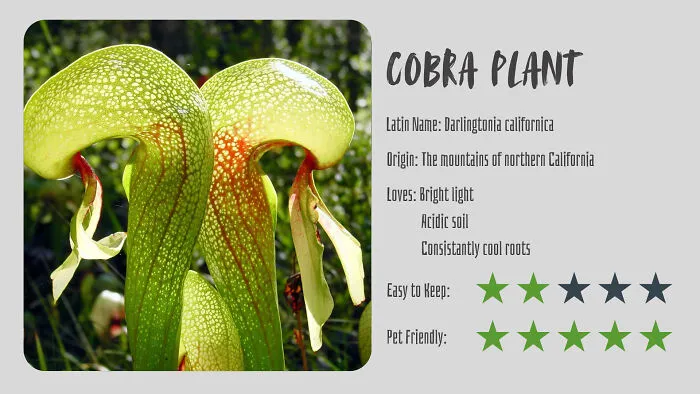
The serpentine pitchers of this carnivorous plant mimic striking cobras, complete with flared hoods and “eyes.”
Care: Challenging to grow – it needs bright light, pure water and cool roots (often cooled with ice cubes in summer).
Pet-friendly? Harmless, apart from the psychological trauma of seeing a plant that looks ready to bite.
12points
#23 Medusa’s Head (Euphorbia Caput-Medusae)
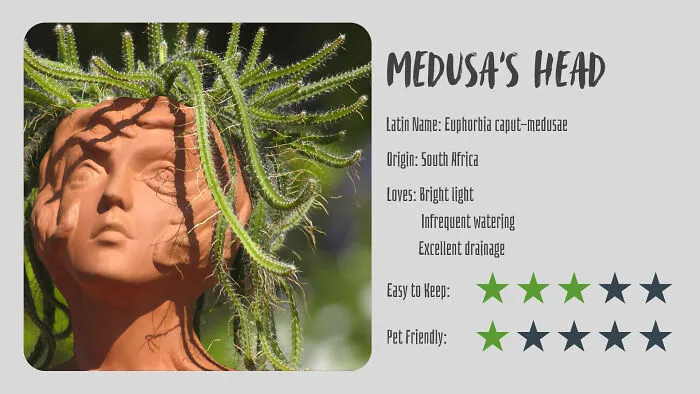
From a central base sprout dozens of writhing green stems – it really does look like the Gorgon herself. When it blooms, tiny yellow flowers crown the “snakes.”
Care: Treat it like a cactus: bright light, infrequent watering and excellent drainage. Wear gloves when handling, as the sap can irritate skin.
Pet-friendly? Definitely not. The milky sap is toxic to pets and people alike.
12points
#24 Snake Plant (Sansevieria Trifasciata)
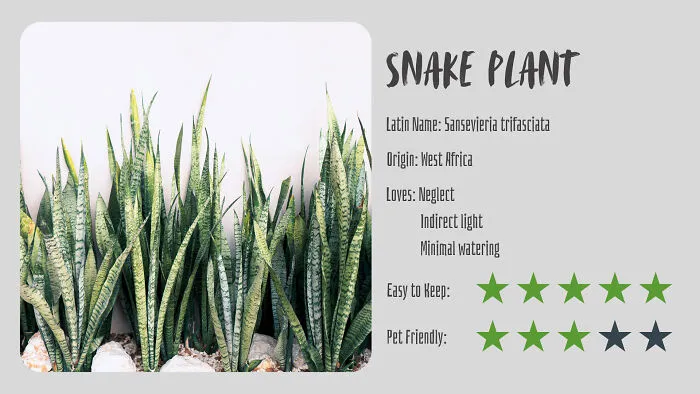
Tall, sword-like leaves that could double as decor in a minimalist vampire’s lair. It’s practically indestructible. Sometimes called Mother-in-laws tongue… says it all really.
Care: Thrives on neglect. Low to bright light and very little water.
Pet-friendly? Mildly toxic if chewed, so keep it out of reach.
Care: Thrives on neglect. Low to bright light and very little water.
Pet-friendly? Mildly toxic if chewed, so keep it out of reach.
12points