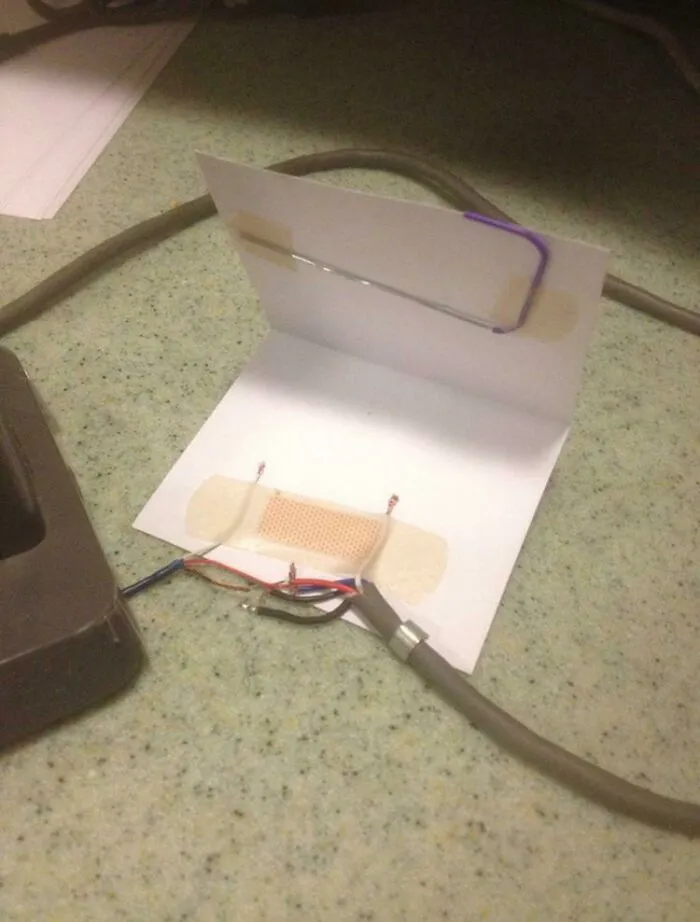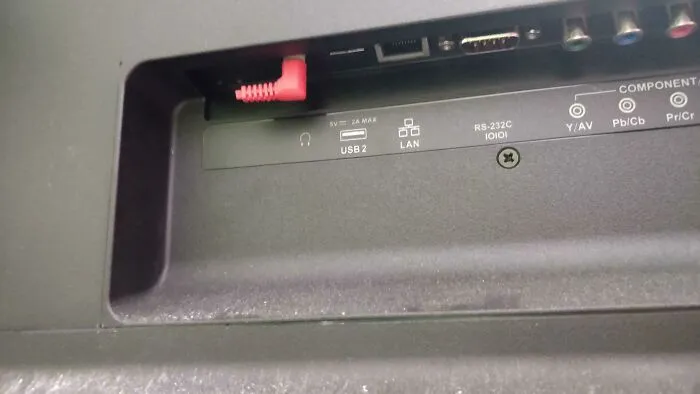


Communities like r/techsupportmacgyver and r/Macgyverhacks are built around a simple idea: when everyday life throws you a curveball, you don’t need the right parts, tools, or even the right skills. You just need to be willing to try.
To the moderators of r/techsupportmacgyver, it doesn’t even matter if the repair works; they want to see it all. Because to them, as one of their group rules states, it’s all about “the spirit of the endeavor.”
In other words, it’s more about the “MacGyver” in the sub’s name and less about the “tech support”—a point driven home by their next rule, which explains that “It doesn’t have to be a computer or even electronics. It just has to be MacGyver-y.”
#2 Cat Kept Stepping On My Power Button So I Installed A "Molly Guard"


Those who grew up watching MacGyver in the ’80s will already know exactly what the moderators mean by this. For everyone else, the word traces back to the titular character of the action series.
He became iconic for staying cool under pressure and overcoming any obstacle, no matter how hopeless it looked, by building a solution out of whatever happened to be within reach—think “Someone who can jump-start a truck with a cactus,” as one of the earliest Urban Dictionary entries for the term, added in 2003, puts it.
That might be one of the more playful definitions out there, but the word has since made its way into several major dictionaries, too. Merriam-Webster, for example, defines it as a slang verb that means “to make, form, or repair (something) with what is conveniently on hand.”

And while I’d say it’s pretty impressive for a TV show character to inspire an official dictionary entry, there’s actually a decades-old concept in anthropology that helps explain what made MacGyver’s improvisation so satisfying to watch in the first place.
Back in 1962, French anthropologist Claude Lévi-Strauss coined the term “bricolage” (from the French verb bricoler, “to tinker”) to describe this same instinct: building something functional from whatever happens to be on hand. As Associate Professor Colleen Sharen of Western University puts it, bricolage is essentially “a kind of MacGyver experience.”
Lévi-Strauss drew a distinction between the engineer, who designs a purpose-built solution using the correct materials for the job, and the bricoleur, who instead works within whatever’s already available. That doesn’t make the bricoleur any less capable; they just approach problems differently. Instead of relying on the “right” tool, they understand what’s available and what each piece could become.
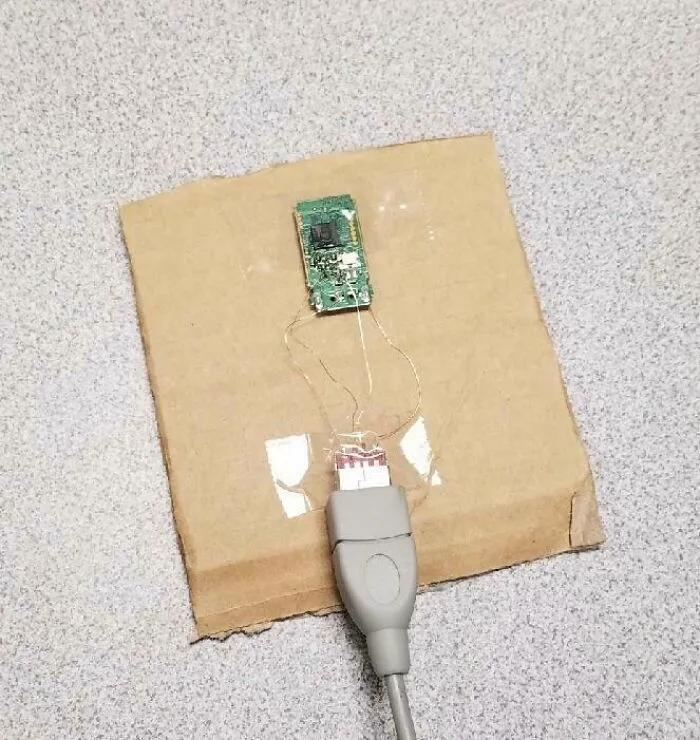
#6 A Teacher Asked If I Could Recover What Was On This Broken Flash Drive. I Said Give Me 20 Minutes And A Soldering Iron. (Worked)

#7 The Sensor In Our Dishwasher Is Malfunctioning And It Will Only Stay Running If There Is Continuous Pressure On The Door. This Was My Dad's Solution

#8 I Built Myself Secret Bluetooth Headphones In My Earmuffs So I Can Listen To Podcasts At Work

This mindset, that of the bricoleur or MacGyver, is also arguably becoming increasingly important at a time when repairing things is often harder than replacing them.
According to the UN’s Global E-waste Monitor 2024, global e-waste nearly doubled in just 12 years, rising from 34 billion kg (37.5 million tons) in 2010 to a record 62 billion kg (68 million tons) in 2022. It’s expected to reach 82 billion kg (90 million tons) by 2030. Although more e-waste is being formally recycled than ever before, the report says it’s not happening nearly fast enough to keep up with the amount being generated.
Part of the problem, the report says, is that many products have shorter lifespans and are increasingly difficult to repair. Combined with limited repair options and inconsistent recycling systems, it’s often easier (and sometimes more realistic) to replace something rather than fix it.
That’s the challenge the Right to Repair movement is trying to solve. It argues that consumers should have access to the parts, tools, software, and manuals needed to repair the products they own instead of being forced to replace them.
#9 Articulated Monitor Arms Are Way Too Expensive In My Country, So I Built One
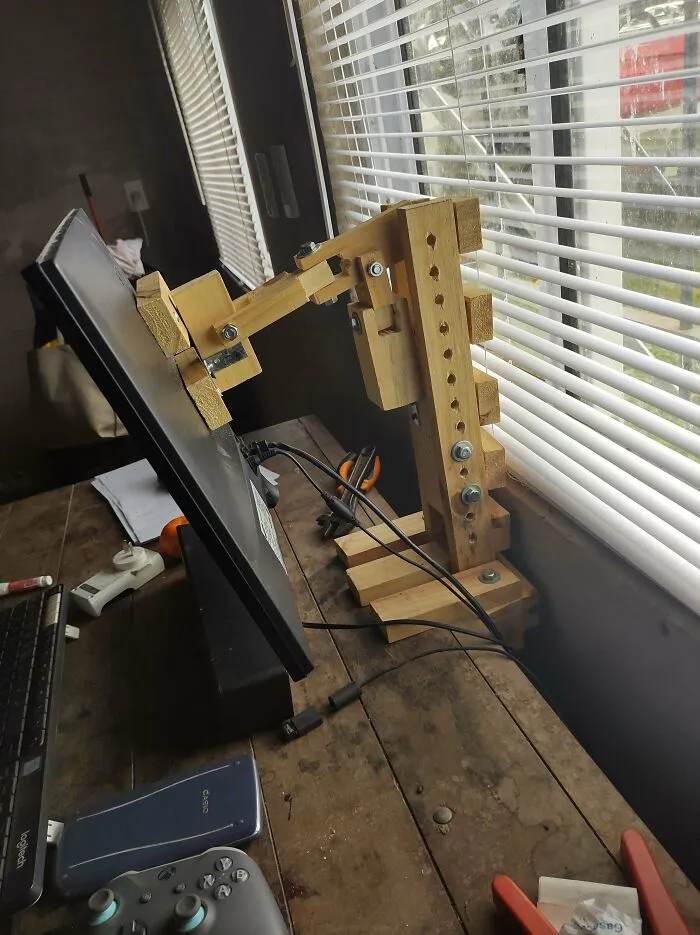
#10 Ghetto Rgb: Changed The Colour Of My MacBook Pro Keyboard Backlight To Replicate The Colours From The Old Apple Logo Using Coloured Cellophane

#11 I Slept Through All Of My Phone Alarms Today So I Rigged A Tens Unit To An Alarm Clock. It Hurts A Lot

Perhaps it could be said that on some small level, the MacGyvers and bricoleurs of Reddit are doing exactly what governments and environmental groups are now trying to legislate on a global scale: keeping things in use rather than adding to a 68-million-ton pile that’s growing too quickly for anyone to keep up with.
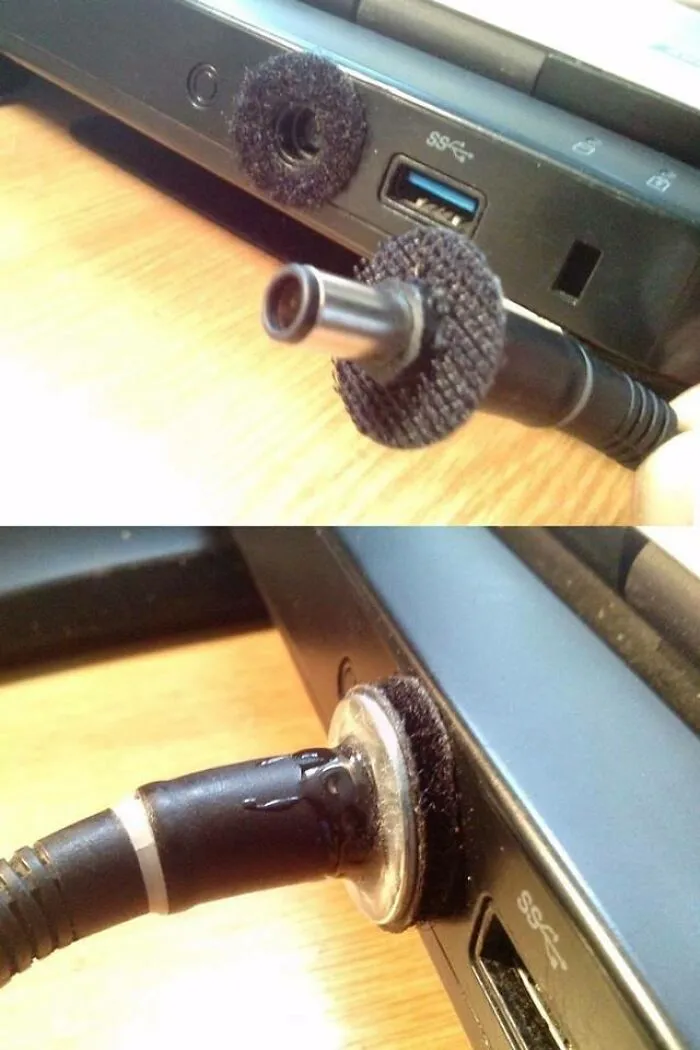
Of course, nobody’s suggesting that adding Velcro to a loose charging port is going to solve the e-waste crisis. But the instinct behind it—repairing, reusing, or adapting what’s already in front of you instead of immediately replacing it—is exactly the mindset today’s repair movement is trying to encourage.
Turns out there may be a little more wisdom in these chaotic “MacGyver-y” fixes than first meets the eye. Now, scroll through the rest of them, upvote your favorites, and let us know which ones you found the most amusing or ingenious!
#13 Hottest Day Of The Year Hits The UK. Luckily, I Have A Box Of Old PC Parts Lying Around

#14 My Building’s PA Microphone Was Broken. These Were The Only Supplies I Could Scavenge At The Front Desk