


For some reason, people can be surprisingly careless with office supplies. There is always someone taking a stack of paper home, borrowing a tool indefinitely, or treating office furniture and equipment as disposable. Perhaps it comes down to a sense of entitlement, but employees who view workplace resources as theirs to use however they please are hardly uncommon.
The Original Poster (OP) of today's story found himself dealing with one of these situations when a coworker swapped chairs behind his back, leaving a broken office chair inside his cubicle. After repairing it and discovering it was more comfortable, the man decided to keep it. However, he didn’t expect this would lead to a heated workplace feud.
Bored Panda reached out to u/Mata187 to ask a couple of questions, and he was kind enough to share more about his experience. You’ll find our interview with the author of the post as you scroll down.
Workplace boundaries often become complicated when colleagues treat shared resources as personal belongings

After finding a broken chair in his cubicle, an employee repaired every loose part and the seat ended up being more comfortable
The coworker who made the chair swap returned and expected his repaired seat back, but the narrator stood his ground


The dispute escalated and reached management, but the manager heard the story and sided with the poster
"I’ve been working with Charlie since August 2023; almost every day is different"
Redditor u/Mata187 posted this story and created a heated argument online. With people going back and forth with possible solutions to the problem, here at Bored Panda we wondered what it was like working with his coworker. "Some days are great", and code name: Charlie is quite effective at work.
However, there are other days that end up being a nightmare. "He just simply cannot make a decision", the OP explains, showing a tad of frustration.
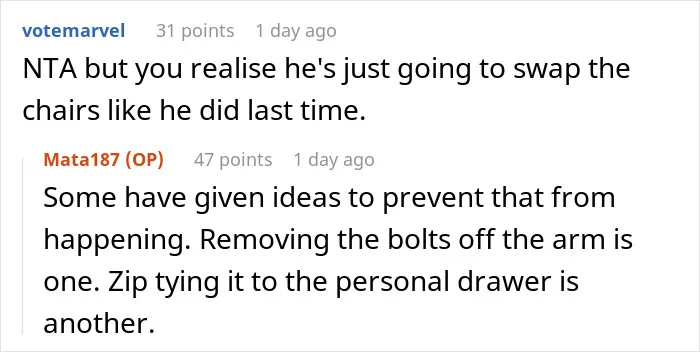
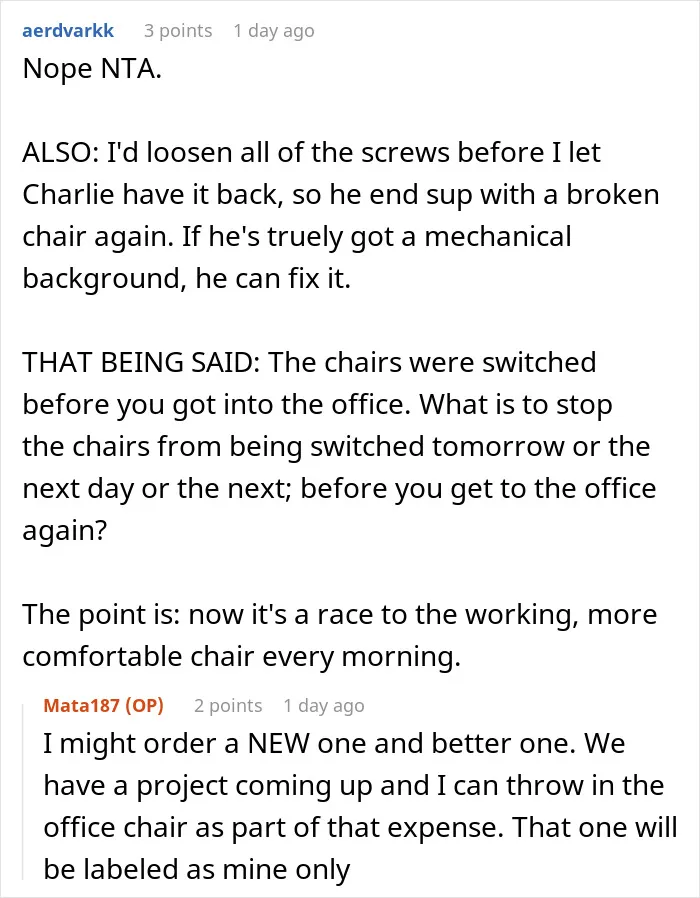
And about the chair, well, I think you might all be wondering what happened. At least I was. The OP's coworker tried to snatch the chair multiple times, so he took the community's advice on loosening some bolts and nuts before leaving work. "I didn’t want to do that every night", he explained, so he found that the chair had a distinguished sticker.
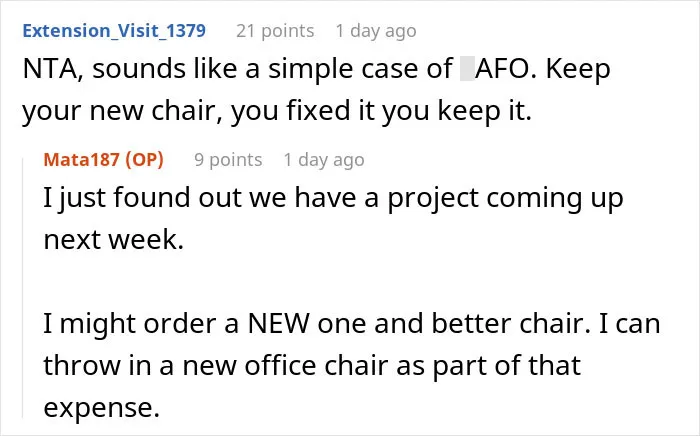
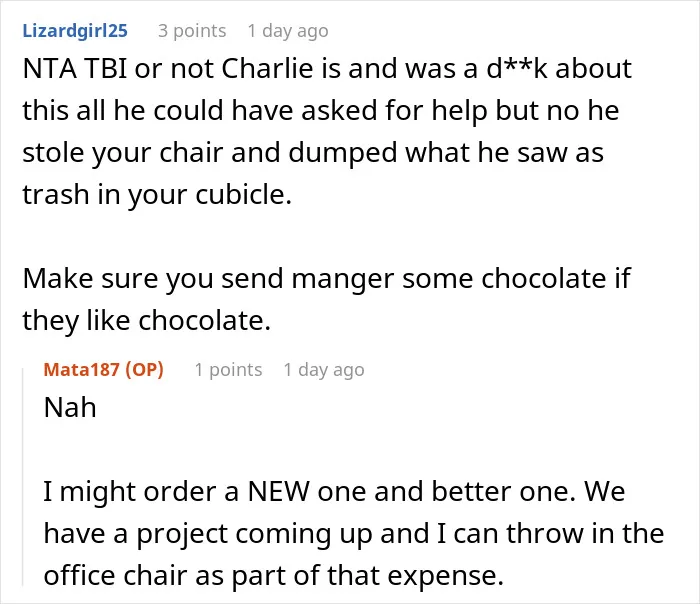
Eventually, Charlie ended up with the chair. "I did not end up keeping the chair", says the poster, but he told us he managed to request an exclusive chair with project funds that will be fully assigned to him. So, all in all, things are looking bright for the OP in the end.
The man defended his decision but wondered if he was wrong in keeping the repaired chair
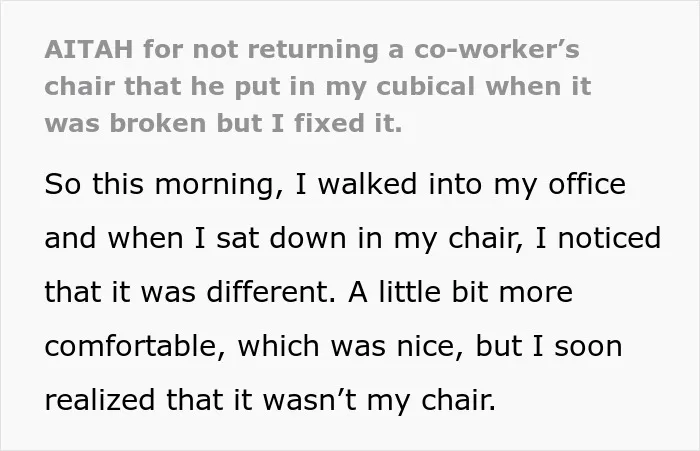
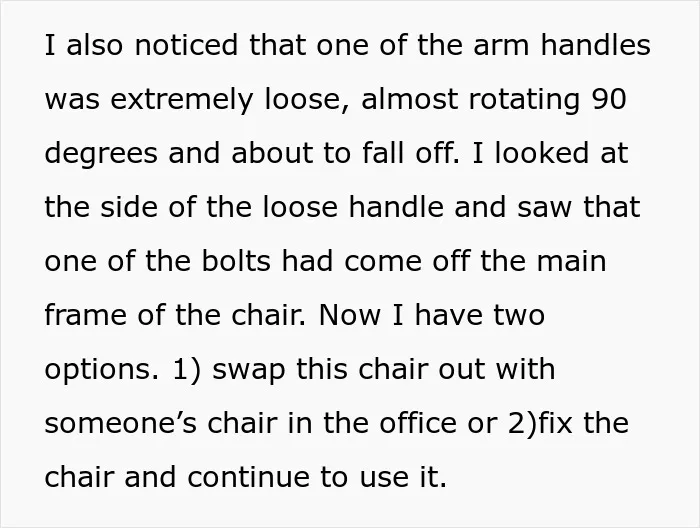
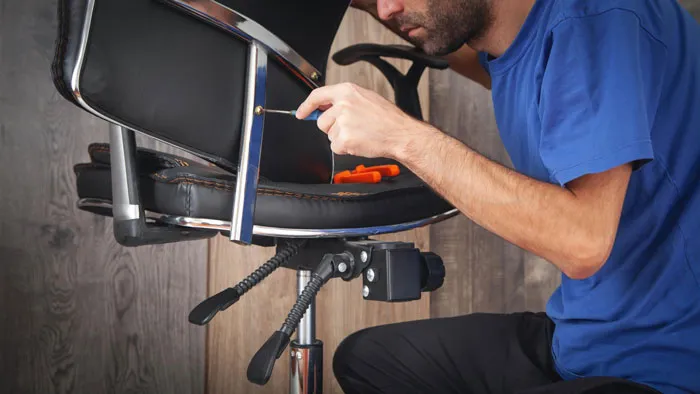
The OP arrived at work one morning and noticed something was off: someone had replaced his office chair with a broken one. One armrest was loose and nearly detached, but, to his surprise, the new chair was much more comfortable. After finding there was a missing bolt, he rolled up his sleeves, secured the armrest, and tightened other nuts and bolts, greatly improving the chair.
About an hour later, the coworker responsible for the swap returned and, after noticing the chair seemed way better, thanked the OP for repairing the chair and then asked him to switch back. The narrator refused, explaining that the repaired chair was now his new seat. The coworker insisted that he had specifically ordered it for himself, but admitted the office had purchased it with a GSA card.
The OP then pointed out that the chair therefore belonged to the workplace, and considering his coworker was a maintenance guy, he could have repaired it himself using the available tools. Instead, he chose to discard it and disrespect a colleague. After a long argument about fairness, the coworker took the dispute to their manager. The poster was then called into the office to explain his side.
The manager heard both stories before asking if the OP would return the chair. The man declined, explaining that his coworker had left it broken inside his cubicle, while he had taken the time to repair it himself. The manager ultimately sided with the narrator and solved the workplace drama, leaving his coworker visibly frustrated and the OP with his newly repaired and more comfortable office chair.
Company Property May Be Shared, But That Does Not Mean Coworkers Can Ignore Basic Consideration

At first glance, this situation looks somewhat morally gray, especially considering that the chair belonged to the office rather than either coworker. Still, workplace resources require clear boundaries not only from people but also from companies. As this article explains, employees should address limits directly instead of allowing coworkers to treat shared supplies as personal property.
Respecting belongings at work also means recognizing that a shared office does not make everything public access. Professionals note, as mentioned before, that clear boundaries around belongings are necessary as they help prevent tensions and support professionalism. Understanding the rules for communal items matters, especially when coworkers claim things without asking.
Putting the situation into perspective, the coworker’s behavior is questionable. He acted entitled to a company chair despite leaving it broken inside the OP’s cubicle, then acted as if the narrator had fixed it for him. His attitude showed little consideration for the coworker who solved the problem, and then pretended it was his right to have the chair back.
This office-equipment guide offers a fitting rule: “respect the equipment and the people who use it.” It should go without saying, but it’s important to be responsible and considerate toward coworkers. This incident should serve as a lesson: being a better colleague means respecting shared equipment, setting clear limits, and not pretending other people should be at your service.
Was the OP right to keep the chair after fixing it, or should he have returned it? Did his coworker cross a line? Share your thoughts in the comments!
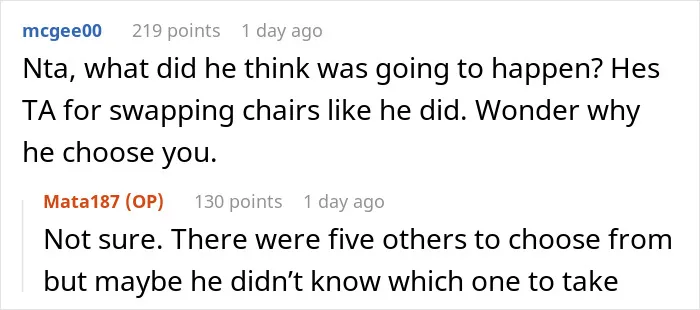
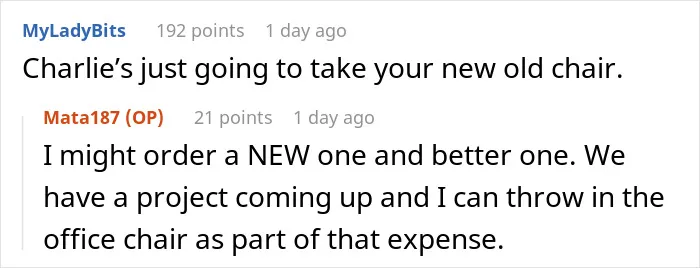
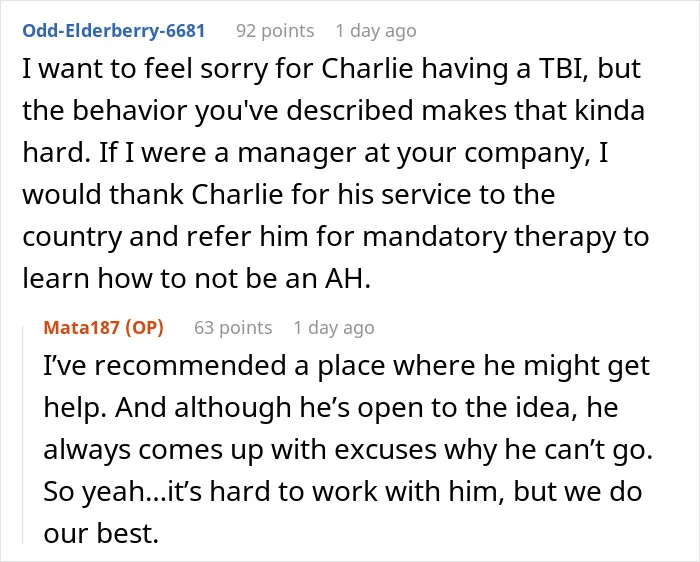
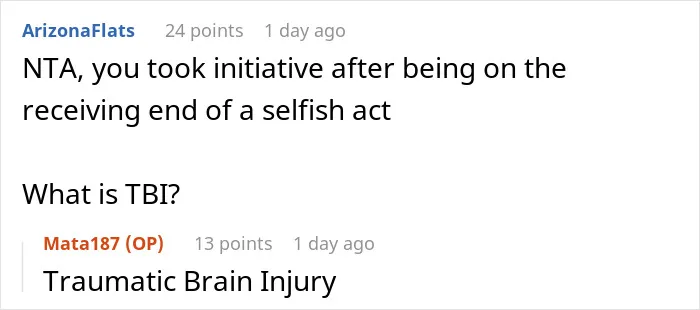
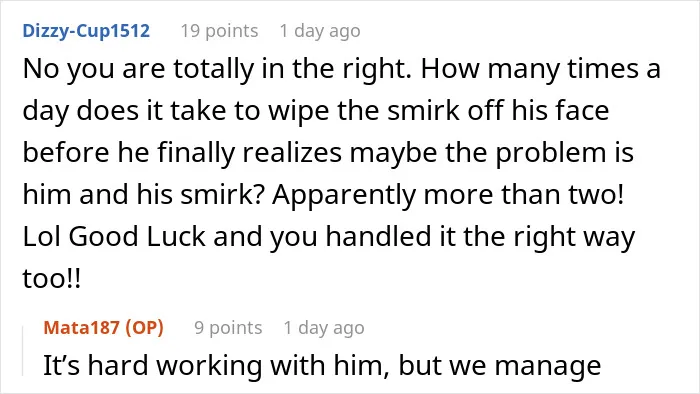
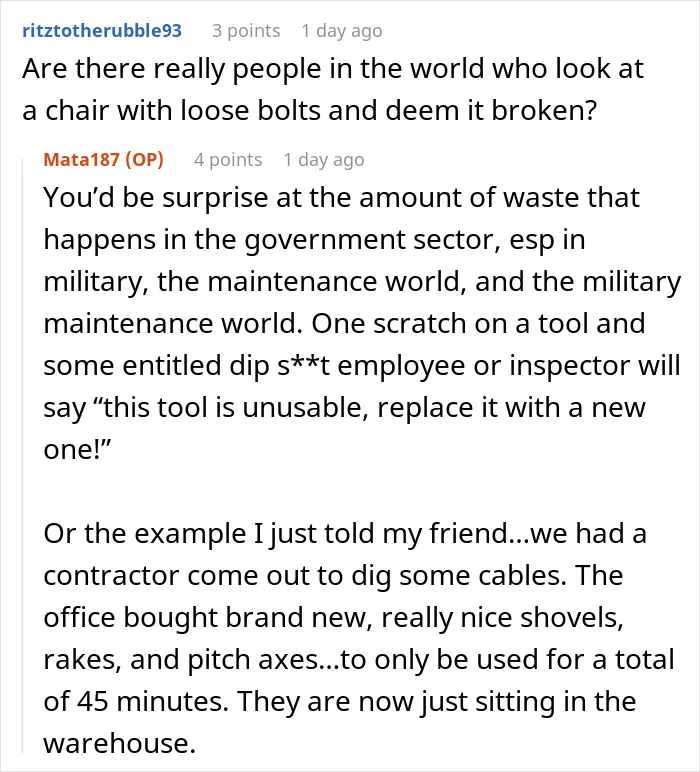
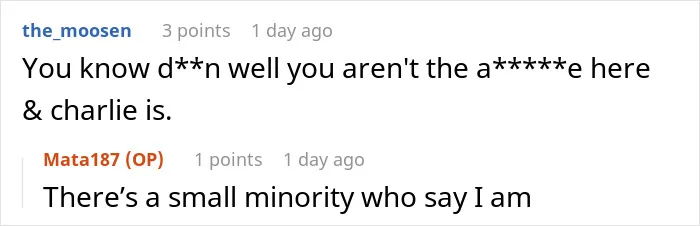
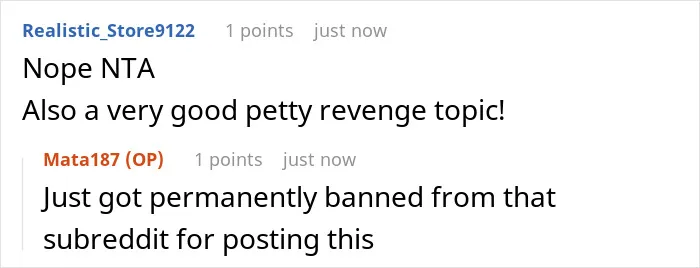
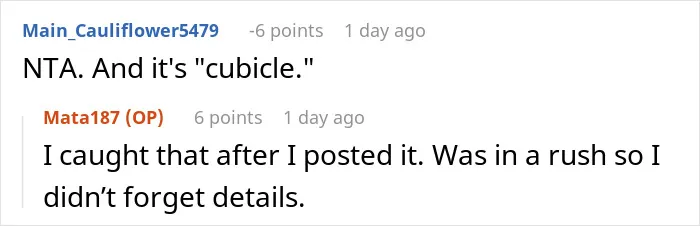
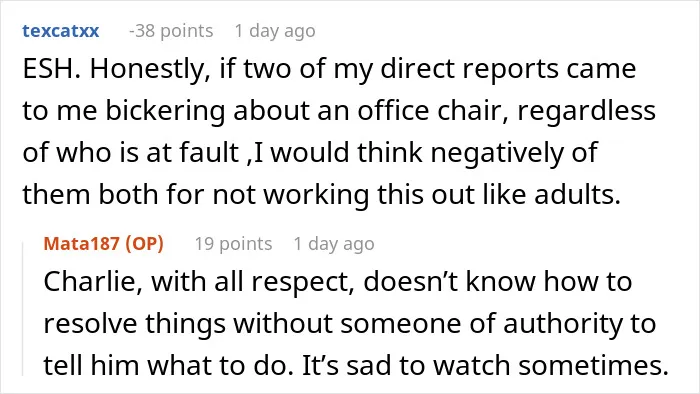
Netizens deemed that the narrator was not wrong and agreed his coworker crossed workplace boundaries