







If you ever stumble upon a new word, Rosemary suggests digging into its background. “Even a quick online search can reveal fascinating things,” she says. Knowing where a word comes from can help you use it better and remember it more easily. It also builds vocabulary in a way that sticks. For students, writers, and curious minds alike, exploring etymology is a rewarding habit. It turns memorization into a journey.
#22

#23

*”scene of riotous disorder, heated argument," 1852, from Donnybrook Fair, which dated to c. 1200 but which by late 18c, had become proverbial for carousing and brawling, held in County Dublin until 1855.*
The idea of a whole Irish town that had such a rowdy annual fair that it’s place-name became synonymous with “brawl” just cracks me up.
#24
At the end of the day, words are more than tools for communication. They reflect values, cultures, and time periods. “Sometimes a word has deeper meaning than we realize,” Rosemary says. From ancient rituals to forgotten customs, the stories behind words can offer surprising insights. They can reveal what people once feared, celebrated, or prioritized. So next time you use a word, pause for a second. You might just uncover a hidden world buried in a single syllable.
#25

#26

#27

From quirky roots to everyday classics, these posts show just how wonderful language can be. Which word origin surprised you the most? Are there any phrases you use all the time but never stopped to question? Share this article with an English lover or a curious friend, you might just spark a fun debate.
#28
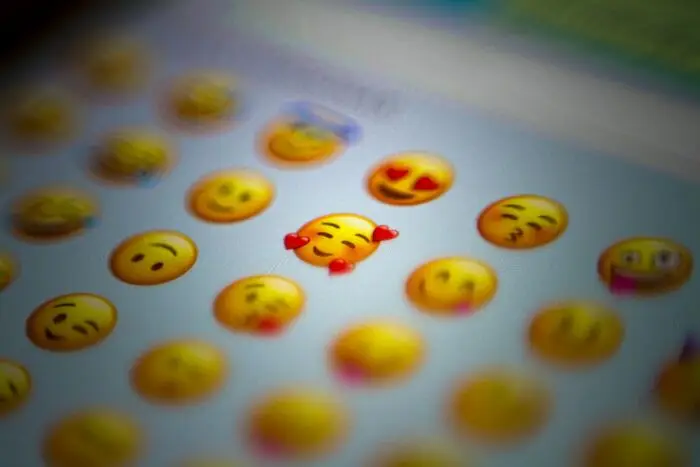
The word in Japanese breaks down into “picture character”.
#29
#30

#31

#32
#33

The term "log" refers to a device used to measure the speed of a ship in knots. In earlier times, a log was a wooden float attached to a line with knots tied at regular intervals. The line with the log would be thrown overboard, and the number of knots that passed through the sailor's hands in a specific time period would determine the ship's speed.
The word "book" simply refers to a written record or a bound collection of pages.
The combination of "log" and "book" resulted in "logbook," which originally referred to a book where sailors would record the speed measurements obtained using the ship's log. Over time, the term expanded to encompass other types of records kept on ships, such as navigational information, weather conditions, and notable events during a voyage.
#34
#35
“E n j o y a n i c e c o l d w a t e r” Because of the poor kerning, it could be read as “a nice cold water” or “an ice cold water,” and I thought that was pretty intriguing.
So much to my surprise, when I learned that the words “adder,” “orange,” and “apron” were originally nadder, norange and napron, but because of the word break issues of reading and writing, the initial “n” got stolen by the article.
#36

We have the word unicorn in English from Latin via Old French: uni- meaning one and corn- meaning horn. A one-horn, cool.
But somewhere between Old French and today, native speakers misdivided "unicorne" as "une icorne", equivalent to "an icorn", and for a while they called unicorns "icorne".
But in French if you want to use a definite article (equivalent to "the") before a word starting with a phonological vowel then it elides to just the sound /l/. So the animal was commonly called "l'icorne".
Over time people misdivided this new misdivision, and now a unicorn in French is "une licorne".
