


#1
#2
#3

Space is huge, and it just seems to go on forever, and that’s kind of why it’s so hard to define clear limits for it. According to the Natural History Museum, outer space begins around 62 miles (100 kilometers) above Earth’s sea level, which is called the Kármán Line.
There is no exact point for it to start, but as you go higher in the sky, the Earth’s atmosphere thins, and that is considered space. What’s interesting is that our universe is constantly expanding, and the most distant galaxies are at least 13 and a half billion light-years away. It’s clear that the cosmos is full of interesting things, but what’s shocking is that we have yet to learn of many, including whether our universe is finite or infinite.
#4
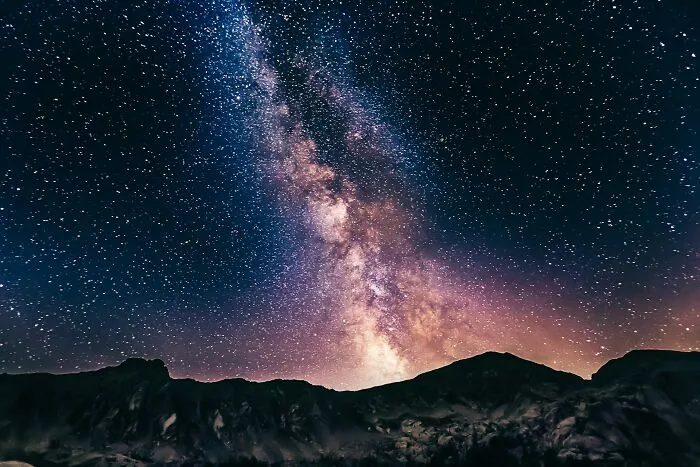
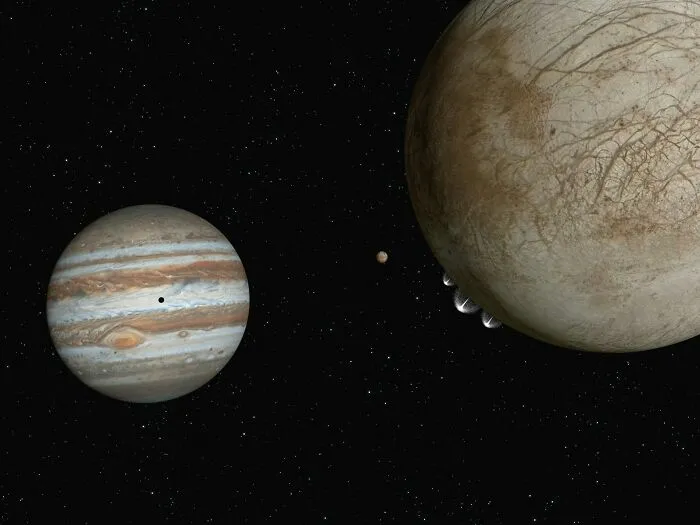
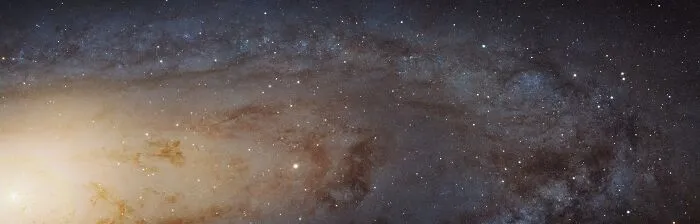
100-400 billion stars in our galaxy alone. Estimated upwards of 2 trillion galaxies in the observable universe, which for all we know might only be a tiny fraction.
So that’s roughly 800,000,000,000,000,000,000,000 stars, each likely with planets, moons, and entire systems.
To quote Carl Sagan, we really are just a mote of dust suspended in a sunbeam.
#5
#6

- Carl Sagan.
You might have heard that there is no sound in space and that it’s absolutely quiet, but that is not exactly true. Research shared by the BBC's ‘Sky at Night’ magazine explains that our ears perceive sound as a pressure wave that passes through some kind of medium and causes the small hairs and bones within to vibrate.
Since space isn’t a vacuum, except for areas in interstellar and intergalactic space, the electromagnetic vibrations can actually be experienced by humans. Within galaxies and nebulae, huge, swirling clouds of gas and dust can transmit pressure waves through their molecules, which can become sound. It’s also interesting to note that black holes make a low-pitched warbling sound that feels like it’s straight out of a sci-fi movie.
#7
#8
#9
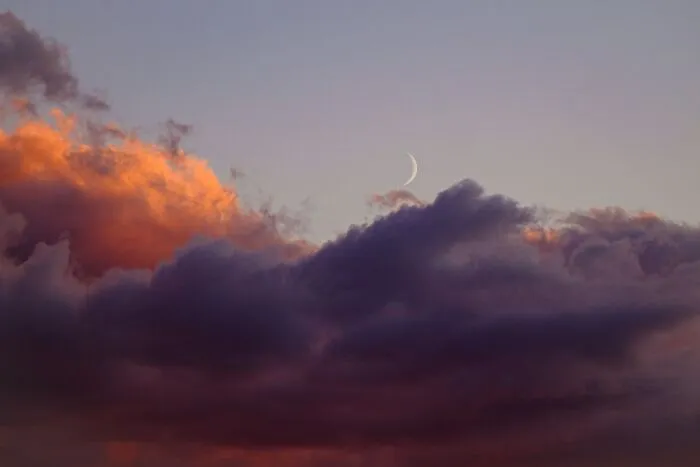
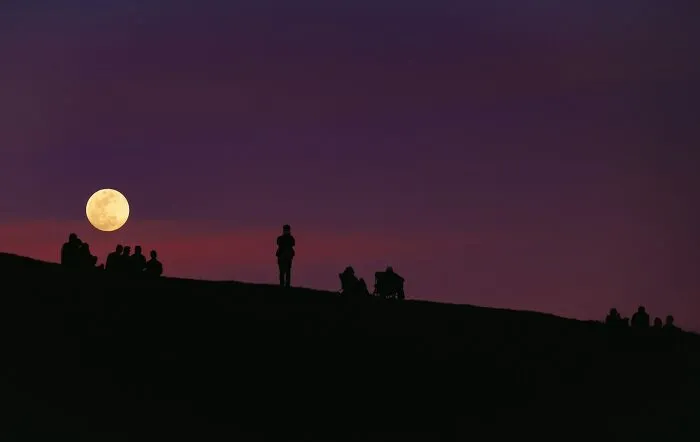
The moon is often seen as a loving companion of the Earth that controls the tides and provides beautiful cooling light to the planet. Even though this natural satellite seems round from our point of view, research has found it’s actually lemon-shaped, with flattened poles and bulges on both the near and far sides around its equator.
This interesting shape seems to have been created because of the Moon’s own spin and the tidal pull of the Earth. This might have happened when it was mostly liquid beneath a thin, rock-like crust, which could explain why it transformed this way.
#10
#11

For our solar system to become a black hole, it would have a radius of about 4km/6miles, about the radius of a mountain.
For the observable universe to become a black hole, the black hole maiE equates roughly to the observable universe.
Bonus: (Also, the largest black hole known has a radius bigger than entire orbit of Pluto around the sun.)
Edit: changed the observable universe to saying it measures roughly equal rather than larger.
Also, mea culpa, I read it the title quickly and didn't realise it was specifically asking astronomers/cosmologists. Heavily interested in but definitely not one. Don't listen to to me and downvote me to oblivion.
#12
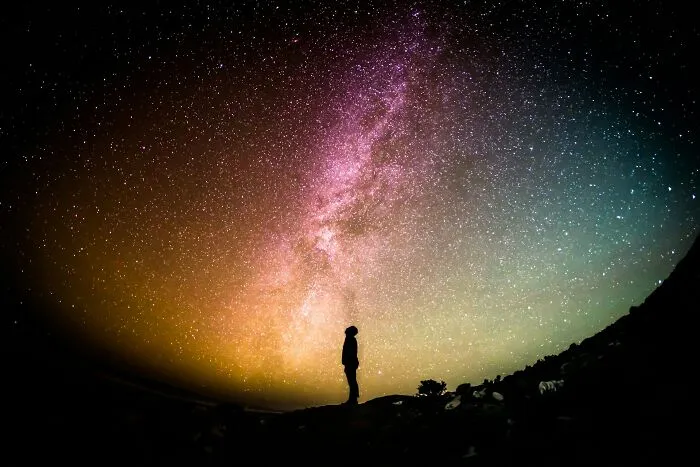
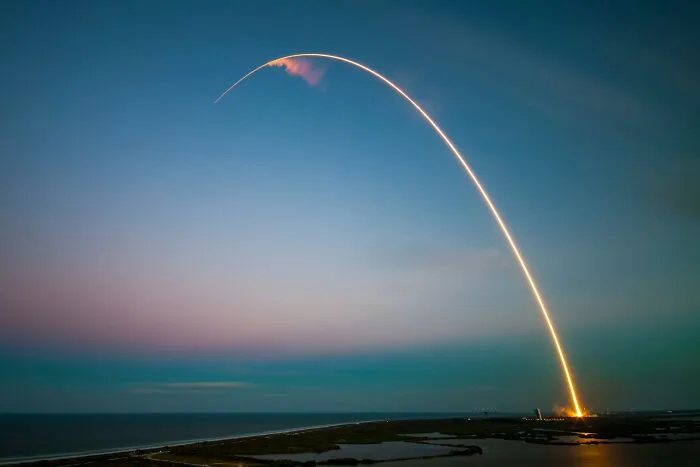
Space seems full of beautiful things like galaxies, comets, and nebulas, but apparently there’s also a lot of junk floating around in it. According to National Geographic Kids, space debris refers to any machinery or trash left behind by humans, including old satellites, rockets, and even spanners that might have been dropped during the construction of the International Space Station.
Scientists estimate there are nearly 500,000 pieces of space junk today, and those in lower orbits might re-enter the atmosphere and burn up before reaching the ground. Anything left at higher altitudes like 22,369 miles (36,000 kilometers) might circle the Earth for hundreds or even thousands of years.
#13
#14
Nothing unbelievable there.
Except, as you go back in time, that trend slows down, and eventually reverses. Galaxies that emitted light less than a billion years after the Big Bang are **bigger** in the night sky than ones that emitted it more recently.
Everything in the universe was a lot closer at the time, so as you look at light that was emitted soon after the Big Bang, the galaxies appear much larger in the sky.
Xkcd did a comic called "Angular Diameter Turnaround" illustrating the phenomenon.
#15

Since the universe is so vast, space junk might not seem like a big deal, but every year, scientists have to perform hundreds of satellite collision-avoidance maneuvers. That’s why it’s important for us to take initiative and clear our atmosphere; one way might be for the United Nations to ask all companies to remove their satellites from orbit within 25 years after the end of their mission.
Another direct way to get rid of junk would be to find ways to drag it closer to our atmosphere, where it will burn up. There are many ways of doing this with nets, magnets, or even lasers, but whichever method is chosen must be sustainable in the long run.

#17
#18
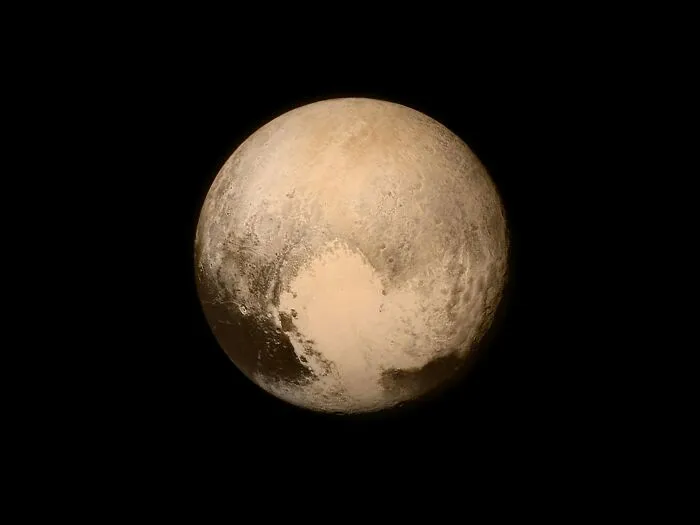
They actually captured pictures of it in 1915 but didn’t recognize what it was. Lowell died before Pluto was located, using his observatory and in the predicted location, in 1930.
This is where it gets weird.
Almost immediately scientists examining Pluto began questioning if it could truly be the object influencing the orbits of the two planets as the size continued to be revised downward. It took until the 70s for scientists to be able to properly figure out the mass of Pluto and to confirm that it was too small to have the expected gravitational pull on Uranus and Neptune. This left confusion as to what was causing the incorrect orbits of the two planets.
Scientists resumed the search for Planet X to resolve the calculations made by Lowell and his team.
In 1989 the data finally came in Voyager II came close enough to Neptune to give true values on its size and the revision led to re-running of the math and the correction of the orbital patterns. Planet X was determined to be a myth because the math no longer supported it.
However… how did Lowell and his team correctly predict, in the massive space in our solar system and, and based on totally incorrect math, where Pluto would be?
The idea that they were working from invalid data and yet still managed to find something in almost precisely the spot they predicted is insane.
And the Planet X theory is making a comeback now.
As we continue to find more and more objects in the outskirts of the system we are finding new equations that do not make sense. Objects moving in patterns that show some influence shaping their course that we have not seen.
There is Sedna, a dwarf planet with such an eccentric orbit that its course had to have been set by passing by a planet, but its course takes it too far from any of the planets to have had that influence.
There are clusters in the Kuiper Belt that indicate something is moving objects in several regions.
As of today, there are several theories that there may be objects larger than Earth out in the edges of the system that are quietly shuffling through and impacting the smaller bodies on the fringes.
Mars is known as the Red Planet because of the iron oxide in its soil, and this hue is visible to us from Earth even without a telescope. Despite its bright color, NASA researchers have shared that a blue sunrise is visible on it, which might seem bizarre to us humans.
Martian sunsets and sunrises are so distinctive because fine dust in the atmosphere lets only blue sunlight pass through. This becomes even more prominent against Mars's color, and because the rest of the sky is usually yellow or orange.
#19

#20