





We tend to think of our eyes as tiny cameras that simply record whatever is in front of them. In reality, seeing is a lot more complicated and takes some serious teamwork.
For starters, light passes through the cornea and lens, which focus it onto the retina at the back of the eye, according to the National Eye Institute.
There, special cells called photoreceptors turn it into electrical signals that travel along the optic nerve to the brain, which pieces them together into the world we perceive.



Since the brain does all that work, it’s also the part that gets fooled by weird pictures and visual illusions. Scientists still aren’t sure exactly why this happens, but one leading theory, which researchers are still debating, is called predictive processing.
The idea, first suggested by German physicist Hermann von Helmholtz in the 1860s, is that your brain uses past experience to guess what you’re looking at.
So when you come across an odd photo, your mind instantly compares it to things you’ve seen before and lands on the most likely answer. If the picture breaks the usual rules, that answer turns out wrong, which is why it takes a second look to figure out what’s going on.


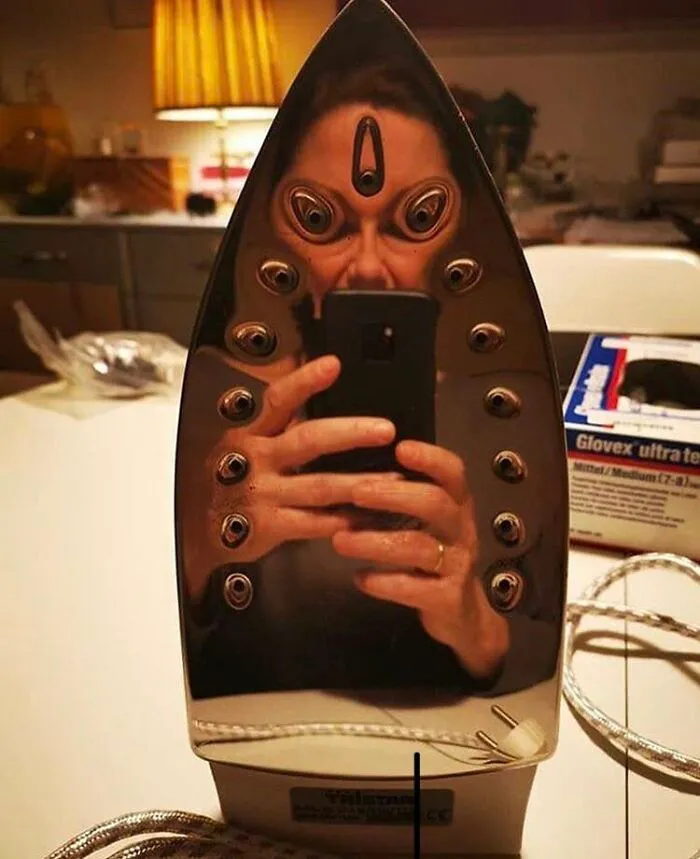
Depth perception also plays a big role in how we see. The image that lands on the retina is flat, so the brain has to figure out how far away things are using clues like perspective lines and the size of familiar objects.
For example, when a person walks toward you, your brain understands they’re getting closer because it knows how tall people usually are. Photos can mess with this system, since the right camera angle can make near and far objects look like they’re right next to each other.


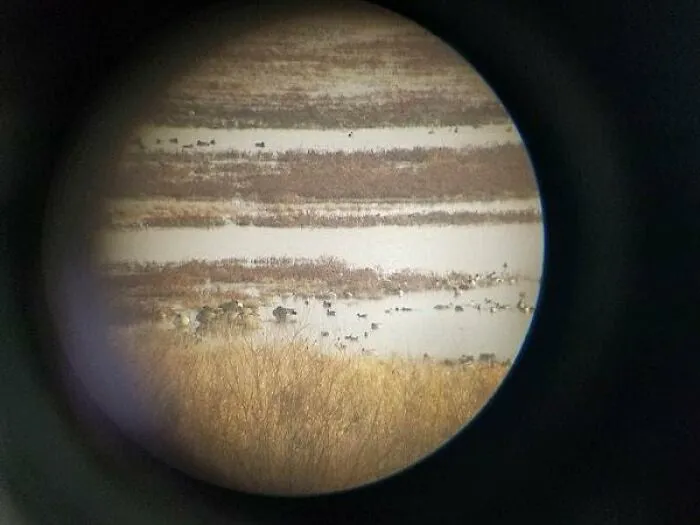
Our brains rely on these depth clues so much that even simple sketches can trick us. In the famous Ponzo illusion, two identical bars sit between slanted tracks, and the top one looks bigger because the tracks make it seem farther away.
The Müller-Lyer drawing works in a similar way, so two equal lines look like different lengths.



In the 1930s, ophthalmologist Adelbert Ames Jr. built a special room, later known as the Ames room, to show how depth perception can play tricks on us. Through a peephole, it looks perfectly ordinary, but its walls are actually uneven.
Since your brain assumes the space is a regular rectangle, people inside seem to grow or shrink as they walk across it. The Lord of the Rings even used this setup to make the hobbits look tiny next to Gandalf.
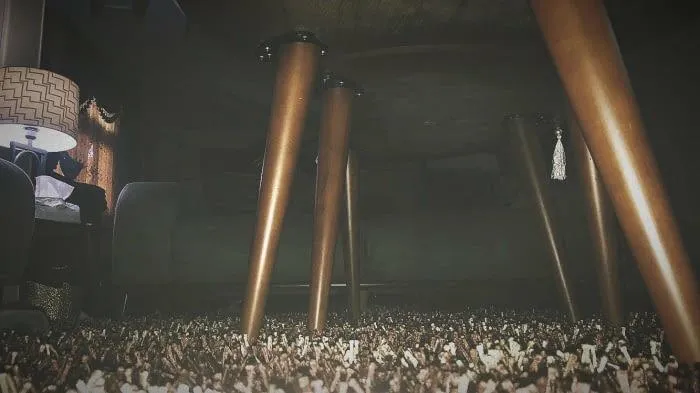


Lighting also plays a huge part in how we see things, and nothing proves it better than The Dress. Back in 2015, the whole internet lost its mind arguing over whether it was blue and black or white and gold. Good times.
As it turns out, there’s a simple reason everyone was so divided. The photo showed very little of the surroundings, so our brains had to fill in the lighting on their own.
According to color scientists, anyone who assumed the dress was sitting in shadow saw white and gold, while those who imagined a bright, yellowish glow saw blue and black. For the record, the second group was right.