


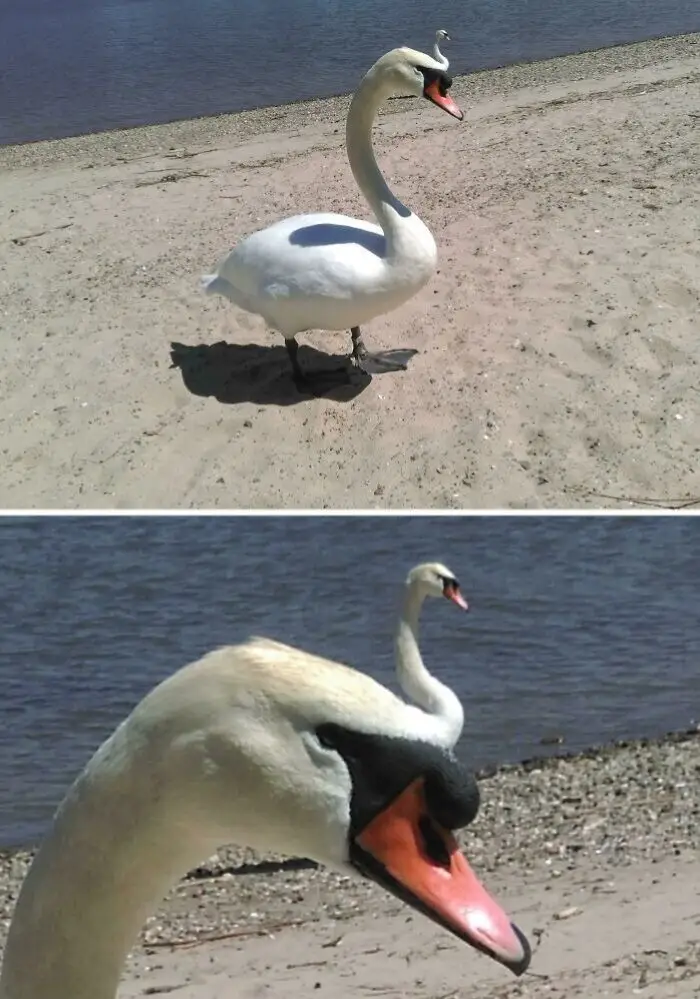
#21 This Picture I Took Of Two Swans That Looks Like One Swan With A Smaller Second Head
During the 20th century, scientists continued to research how our perception works, with David Hubel and Torsten Wiesel discovering that some neurons in the brain perceive different-shaped objects, which earned them a Nobel Prize in 1981. Then the artists experimented with illusions for some time, creating pieces worth studying.


Then, fast forward to the 21st century; technological advancements allowed scientists to look into optical illusions more in-depth. With functional magnetic resonance imaging (fMRI), researchers can now analyze how the neurons in our brain respond to individual illusions. What’s interesting is that new illusions are appearing all the time, and even a competition for the best ones is held every year.


Last year (2024), the winner was The Static Spin, which includes a gray picture of a ballerina. The way it's portrayed makes it seem like she's spinning without anything actually moving. It’s a variation of an older illusion, where motion is seen without anything making a move.
Even though our brain is powerful, all these illusions show that it’s still too limited to process all the visual information our eyes need to take in. So our mind takes shortcuts, which brings us to our initial point that seeing doesn’t always mean that we should believe it.

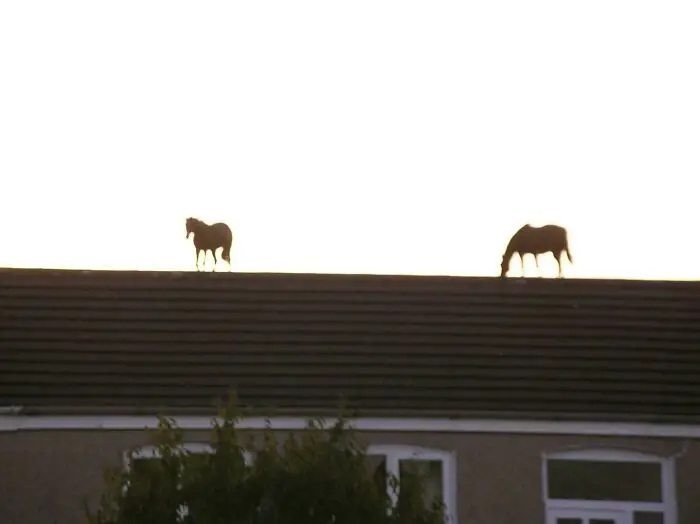
#31 Yes, They're Real Horses, Yes, That's A Roof
#32 Disappearing Trailer

#33 Gigantic Boy Descends Upon A Serene Lakeshore