







Time essentially rules our daily life, and we often find ourselves having too much of it or too little. Nobody wants to waste these precious moments, but we often take for granted how much time we have to spend.
Although it might be easy to understand the concept of minutes and seconds in our day-to-day lives, on a bigger scale, things seem much more warped and weird. The examples in this list serve to show that time is way more complicated and flexible than we’d ever imagine.
More info: Reddit
#21
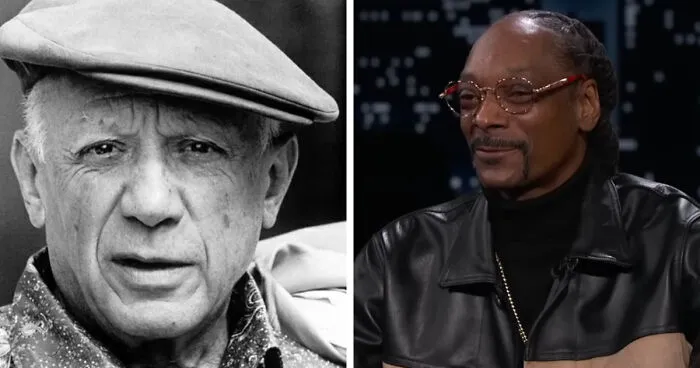
Snoop Dogg and Pablo Picasso were both alive at the same time.
17points
#22

You know how time moves more slowly when you're under a stronger gravitational force? Someone on on the edge of a black hole goes through time slower than someone on earth.
So youd think that someone on Earth goes through time more slowly than someone on the ISS right? WRONG someone on the ISS experiences time dilation through velocity, and it just barely outweighs the time dilation of the gravitational force of the Earth. Someone on the ISS actually goes through time a fraction slower than someone on Earth. Times dilates with gravity *and* velocity 😵💫
And distances shrink the faster you're going...
Wtf even is time or distance or the universe maaaaan.
So youd think that someone on Earth goes through time more slowly than someone on the ISS right? WRONG someone on the ISS experiences time dilation through velocity, and it just barely outweighs the time dilation of the gravitational force of the Earth. Someone on the ISS actually goes through time a fraction slower than someone on Earth. Times dilates with gravity *and* velocity 😵💫
And distances shrink the faster you're going...
Wtf even is time or distance or the universe maaaaan.
Report
16points
#23

I'm in my early 60s (old but not *that* old):
The time from World War II to my birth is less than the time from 9/11 to now.
The time from World War II to my birth is less than the time from 9/11 to now.
Report
16points
#24
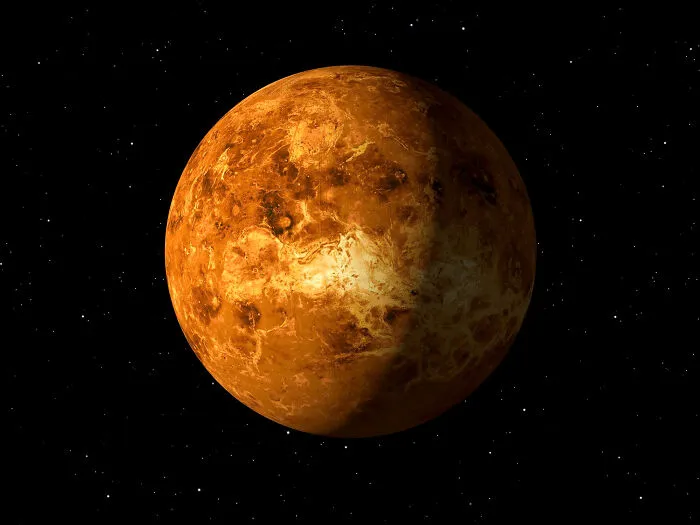
Like, did you know a day on Venus is longer than a year on Venus? Time is basically just lying to us.
Report
14points
#25

Here's a time related physics fact that blew my mind.
Photons of light don't experience the passage of time. Special relativity predicts that time slows down as a speeding object approaches the speed of light. At the speed of light itself, the speeding object does not experience the passage of time.
One of the weird implications of this is that for a photon of light that travels from a distant quasar billions of light-years away, all the way to earth, all those billions of years it was in transit pass in an instant. If you are sitting outside and are touched by the cosmic microwave background radiation, which traveled to earth from the time of the big bang, those photons experience the entire age of the universe (from our perspective, nearly 14 billion years ago) in a single instant. They go from being created to hitting whatever they hit, no matter how far away it is, from one moment to another as if no time had passed at all.
There is no reason your frame of reference, where all of the billions of years of history have passed, is any more important or correct or canonical than the frame of reference of that photon. The age of the universe therefore varies based on your frame of reference. It can be billions of years old as seen from earth, or it can be an instant old as viewed from the photon's frame of reference. Or it can be anything in between as long as there is some frame of reference for it. (**EDIT:** Or it might be older! We are not stationary in the universe, and are moving through it at tremendous speed, and there might be some frame of reference for which the universe is much older.)
All of the history and prehistory of the earth, the rise and fall of nations and cultures, entire species coming into being and going extinct, and every chain of cause and effect that led to your parents meeting and your path through life that led to you standing outside on any particular night for the light from some distant quasar or galaxy to enter your eye as you glance up at the night sky was as good as pre-destined the moment that photon got emitted, and suddenly made contact with your retina, with no passage of time at all from its frame of reference.
Thinking about this made me realize that I have no concept of time.
Photons of light don't experience the passage of time. Special relativity predicts that time slows down as a speeding object approaches the speed of light. At the speed of light itself, the speeding object does not experience the passage of time.
One of the weird implications of this is that for a photon of light that travels from a distant quasar billions of light-years away, all the way to earth, all those billions of years it was in transit pass in an instant. If you are sitting outside and are touched by the cosmic microwave background radiation, which traveled to earth from the time of the big bang, those photons experience the entire age of the universe (from our perspective, nearly 14 billion years ago) in a single instant. They go from being created to hitting whatever they hit, no matter how far away it is, from one moment to another as if no time had passed at all.
There is no reason your frame of reference, where all of the billions of years of history have passed, is any more important or correct or canonical than the frame of reference of that photon. The age of the universe therefore varies based on your frame of reference. It can be billions of years old as seen from earth, or it can be an instant old as viewed from the photon's frame of reference. Or it can be anything in between as long as there is some frame of reference for it. (**EDIT:** Or it might be older! We are not stationary in the universe, and are moving through it at tremendous speed, and there might be some frame of reference for which the universe is much older.)
All of the history and prehistory of the earth, the rise and fall of nations and cultures, entire species coming into being and going extinct, and every chain of cause and effect that led to your parents meeting and your path through life that led to you standing outside on any particular night for the light from some distant quasar or galaxy to enter your eye as you glance up at the night sky was as good as pre-destined the moment that photon got emitted, and suddenly made contact with your retina, with no passage of time at all from its frame of reference.
Thinking about this made me realize that I have no concept of time.
13points
#27

Oxford didn't teach calculus for the first couple hundred years after it was founded, because Calculus had not been invented.
One state was around for both the Black Death, and Babe Ruth (the Ottomans, founded in 1299, and ended in 1918).
One state was around for both the Black Death, and Babe Ruth (the Ottomans, founded in 1299, and ended in 1918).
Report
12points
#29
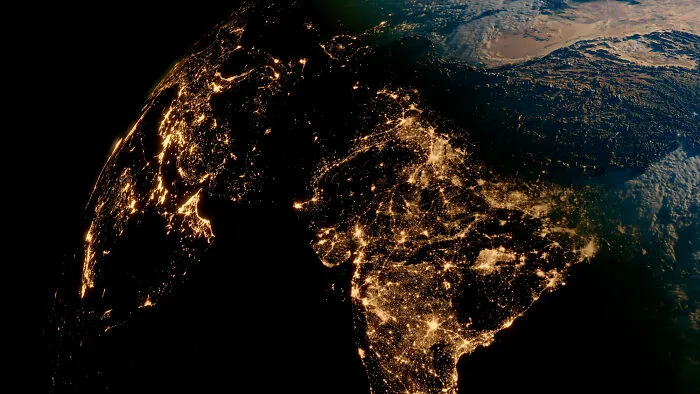
Earth is ~4,5 billion years old. The first life on earth might have appeared as early as 4,1 billion years ago. That would mean that life has existed for 90% of earth's existence. Neat, right?
Well, multicellular life has only been around for 2,1 billion years - only 47% of the age of earth.
Vertebrates are even younger at 518 million years, or 11,5%.
Mammals? A bit unclear, but were probably around 200 million years ago. 4,4% the time that earth exists.
It goes on:
Great apes appeared 13 million years ago, 0,3%
Hominids 7 million years, 0,15%.
Finally, when did modern humans, homo sapiens, apoear? The highest estimate is 350 000 years ago. That's 0,008% the age of earth.
Oh, but how old are the earliest signs of human civilization? Agriculture was developed during the Neolithic revolution, in about 10000 BCE. Keep in mind, that's still abou 2,5 times as old as the pyramids of Giza mentioned elsewhere in this thread. 12000 years are about 3,4% of the age pf homo sapiens or 0,0003% of the age of earth. For comparison, if you assume a human gets around 80 years old, 0,00003% would account for 7575 seconds, or about 2 hours in a human's life.
Well, multicellular life has only been around for 2,1 billion years - only 47% of the age of earth.
Vertebrates are even younger at 518 million years, or 11,5%.
Mammals? A bit unclear, but were probably around 200 million years ago. 4,4% the time that earth exists.
It goes on:
Great apes appeared 13 million years ago, 0,3%
Hominids 7 million years, 0,15%.
Finally, when did modern humans, homo sapiens, apoear? The highest estimate is 350 000 years ago. That's 0,008% the age of earth.
Oh, but how old are the earliest signs of human civilization? Agriculture was developed during the Neolithic revolution, in about 10000 BCE. Keep in mind, that's still abou 2,5 times as old as the pyramids of Giza mentioned elsewhere in this thread. 12000 years are about 3,4% of the age pf homo sapiens or 0,0003% of the age of earth. For comparison, if you assume a human gets around 80 years old, 0,00003% would account for 7575 seconds, or about 2 hours in a human's life.
11points
#30
Pluto's orbit was first calculated shortly after that planet-c*m-"dwarf planet" was first discovered in 1930.
But no one alive (or ever born) will live to watch it complete one full trip around the Sun, as that takes 248 years.
But no one alive (or ever born) will live to watch it complete one full trip around the Sun, as that takes 248 years.
Report
10points
#31

The human brain experiences and remembers time spans not absolutely but relatively, _very roughly_ as a fraction of its own age. A day to a toddler is like a week to a student or a month to a pensioner.
- 1000 days ≈ 3 years
- 1000 weeks ≈ 20 years
- 1000 months ≈ 80 years.
- 1000 days ≈ 3 years
- 1000 weeks ≈ 20 years
- 1000 months ≈ 80 years.
Report
9points
#32

President Biden's birthday is closer in time to Lincoln's second inauguration than it is to Biden's own inauguration.
Report
9points
#33

Abraham Lincoln could have sent a fax to a samurai warlord.
Because all those things existed at the same time.
Did I blow your mind?? 😂😂.
Because all those things existed at the same time.
Did I blow your mind?? 😂😂.
Report
9points
#34
The Phantom Menace (1999) came out closer in time to the original Star Wars (1977) than to the present day.
Report
8points
#35

It took roughly 3 million years for humans to go from stone to iron weapons, It took another 3 thousand to go from iron weapons to nuclear warheads.
Report
5points
