







#1

#2

Suffice to say, Kodak went bankrupt right after the patent expired.
Some of the examples mentioned before are definitely among the most emblematic companies that people remember when discussing corporate giants that fell behind. This list includes several familiar names, including Xerox, which developed the first PC, and Yahoo, one of the most used search engines before Google became dominant.
#3

But honestly, I don't think they would have done with it what Netflix did.
#4

They failed to set up a web shop and became irrelevant and went under. If they had taken their systems, added a web shop, and continued on, Amazon wouldn't ever have gained a foothold in germany or possibly Europe.
So, what brought these giants down? In many cases, the answer is a failure to innovate, just as experts explain. Companies can become too attached to successful products or business models, making change feel like an unnecessary risk. “Companies that have invested heavily in their systems or equipment are hesitant to invest again in newer technologies,” creating a big resistance to change.
#5

Decided to go the route of replacing older more experienced employees with cheaper inexperienced people to cut wage costs. Then they doubled down and reduced the floor staff at each store.
That move only helped the elite as then CEO Phillip Schoonover in 2007 got a $7 million bonus for such corporate cost cuts. Add in the recession and by 2009 the liquidation of all stores and mass layoffs have completely k****d the name.
#6

Blockbuster may be one of the clearest examples. In 2000, Netflix offered to sell itself to the video rental giant for $50 million, but Blockbuster declined. Instead, the company continued relying on their traditional blue and yellow physical stores, and failed to see that the market was moving towards digital entertainment. By 2010, Blockbuster had to file for bankruptcy, while Netflix was already king.
#7
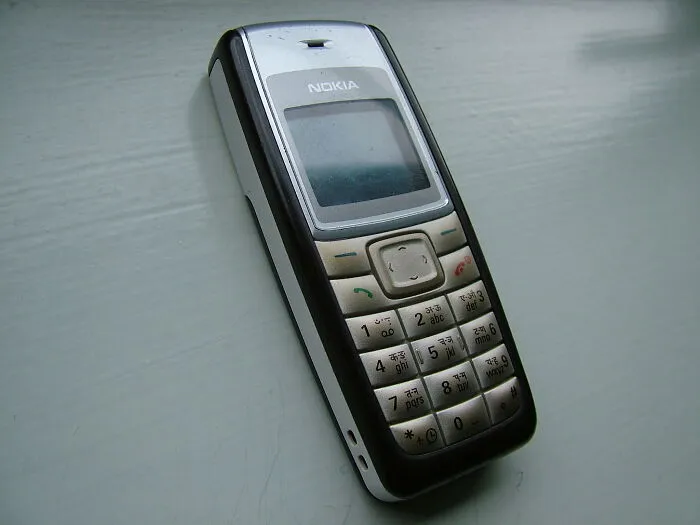
It used to be THE cellphone manufacturer at the time... until a series of bad, bad, BAD management decisions (Symbian, the refusal to adopt Android, and... Elop) led to its almost complete disappearance.
#8

BlackBerry experienced a remarkably similar shift. The company had once transformed mobile communication with its unique smartphones and physical keyboards. But as touchscreen devices became more and more popular, BlackBerry remained focused on protecting their identity. But failing to adapt was the major reason the company eventually fell.
#10
Amazon then broke the agreement and sold anyone's toys on the platform. Toy R us sued and won, but the money Amazon was making was greater than the law suit anyway. Toys R Us was now way to behind to start building their own digital sales portal while Amazon was directly competing with them.
This was not the only thing, but was a major contributor to the company's downfall.
#11

Gerald Rather described their products as cheap tat
Went from a high street mainstay to bankrupt inside a year .
#12

Another enormous name that underestimated the smartphone market was Nokia. During the late 1990s and early 2000s, it was the global leader in mobile phones. However, the company put too much confidence in the strength of its own brand and products, and arrived too late to compete effectively with Android and the rapidly changing smartphone landscape.
#13

It's actually one of the worst decisions ever in business history, in my opinion, and should be used as a case study in how not to operate.
#14
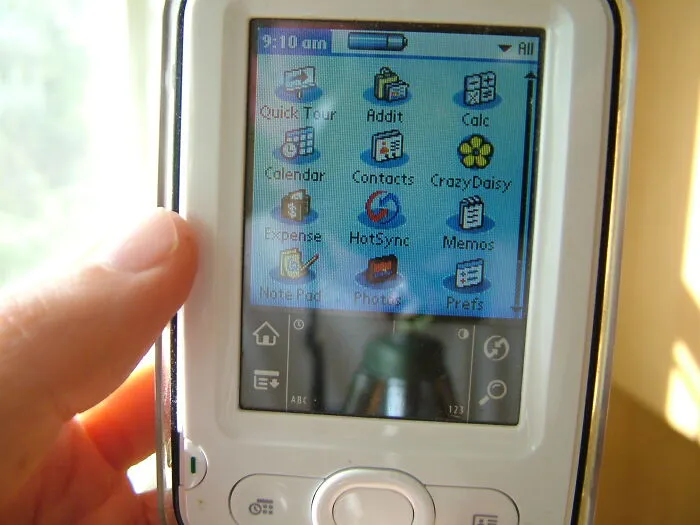
They pioneered concepts that we still use today a good decade before the iPhone was announced.
The originals were a non-connected handheld computer that had a ton of capabilities. There were app stores (plural!), a vibrant developers community, and a solid userbase. The one thing people kept asking for over and over: Add telephony! Add wireless networking!
They refused for years. Then they finally did with a weird flipphone/Palm hybrid with a keyboard. Everyone hated the smaller screen and keyboard — they had all gotten quite adept at the Graffiti input language. But they cited Blackberry as a reason why. They didn't get that Blackberry was popular because of the backend services, not because of the keyboards.
They basically didn't realize that smartphones was a huge emerging new market, not just a sub-region of their own market, and they paid the price.
#15
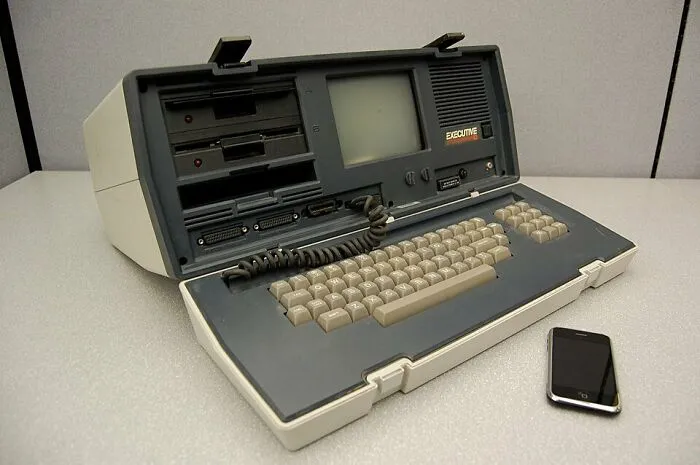
Adam Osborne, CEO of Osborne Computer Corporation, announced the Osborne 2 before it was ready. Customers cancelled their orders for the Osborne 1 to wait for the superior successor. This robbed them of the money needed to finish developing the Osborne 2 and the company went under.
Still, not every corporate failure ends with a company disappearing forever. Some brands manage to survive in a smaller form, rebuild their operations, or return after years away from the spotlight. As this business analysis puts it, “Not every failure ends in a shutdown. Sears, Toys ‘R’ Us, and Kodak have all found smaller second lives since collapsing.”
Among these, Kodak is perhaps the most ironic example, mostly because the company helped create the technology that threatened its own business. Kodak developed the world's first digital camera but remained heavily focused on photographic film. As digital photography transformed the market, the company struggled to adapt and filed for bankruptcy in 2012.
#16

Pretty much the entire userbase decamped to Reddit.
#17
Having military experience doesn't mean you can run a company.
Managing to bankrupt a Fortune 500 company has to be a pretty good analogy for something, though. B*****d.
#18

The Miku tracked breathing, sleep cycles, and other data. Their closest competitors, the Nanit and Owlet, needed an additional special wrap or Bluetooth sock to do the same thing. The Miku did it with just the camera, a huge advantage.
They were clearly trying to grow, gather data, perfect, and pivot to the wider medical monitoring industry (imagine a single camera above a bed that did everything that the small city of monitors and wires do now).
Then they pushed one bad update, bricked every single camera they had sold, and couldn't replace 100% of their inventory overnight, logistically and financially.
They were eventually sold off, either wholly or in pieces, under some court orders or lawsuits I believe. The new owners shifted to a mandatory monthly service fee of $10 for it to even work and all their users fled.
Today they're a semi-budget camera with the monthly subscription offering many of the same services, but they don't even make the top 5 to top 10 options most of the time.
Baby stuff is big bucks, and they were the #1 product on a trajectory to run away with it and now you have to Google a few times to even remember their name. All thanks to one bad software update.
Edited for a typo.
And then there is General Motors, one of the most spectacular examples of a corporate giant falling from the top. As once the world's largest automaker, GM eventually faced enormous financial pressure after years of questionable decisions and poor innovation endeavors. Its 2009 bankruptcy became the largest industrial bankruptcy in U.S. history, proving that even the biggest giants can fall.
What do you think? Which company's downfall do you find the most surprising? Share your thoughts in the comments!
#19

Had the paper making machine industry basically cornered world-wide for the better part of the last century.
Was purchased in the late 1980s by a company that never produced a single component of a paper machine.
They went far outside their wheelhouse on a couple of contracts and they were bankrupt inside of a year.
Bad management pure and simple.
There's a YouTube video that goes through the entire history of the company.
#20

Good movie though.