





My name is Siyu and I'm the creator of Tiny Eyes Comics, a webcomic series that explores and shares Chinese culture through the details of everyday life.
A year ago, I published a collection of my comics on the differences between Chinese and Western culture (check it out). During the past year, besides cultural differences, I also realized the cultural connections and universal values we all share as people across cultures.
For this post, I put together a selection of my latest comics I thought you might enjoy. You can find more content on my social media pages listed below.
#21
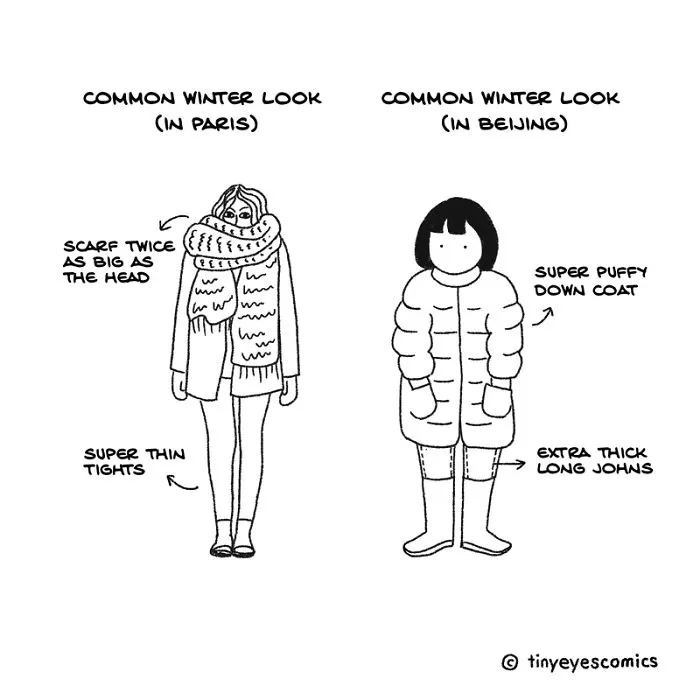
Style is personal, of course, but it’s funny to see how certain fashion trends change with time. Beijing is usually much colder in winter compared to Paris. Down coats started gaining popularity in the 80s, and people usually wear a layer of long johns inside their trousers to protect them from the cold. Nowadays many young Chinese women perceive down coats as “old fashioned”, and prefer instead of dressing in “European style”. Yet here in Paris I started to see more people wearing down coats in winter, c’est la mode.
76points
#22
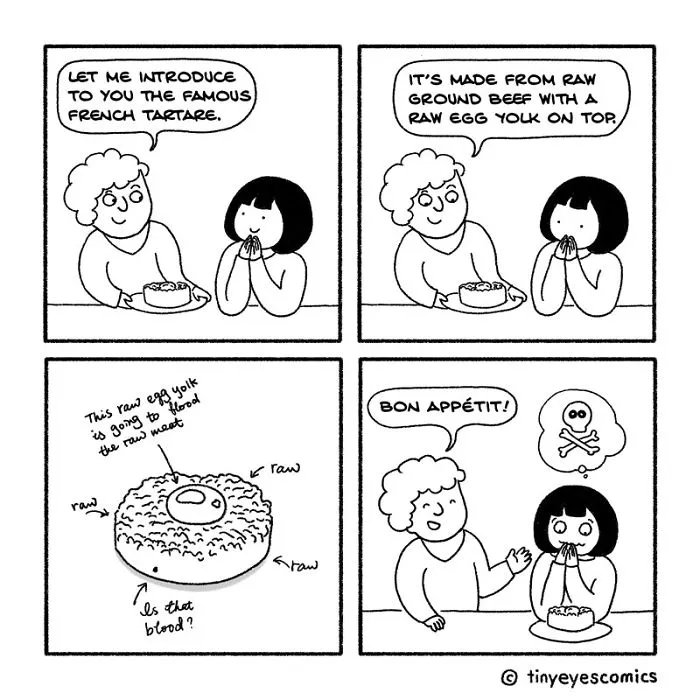
If century eggs and chicken feet are the nightmares for lots of westerners, then for me, raw stuff is the absolute horror. In my personal dictionary of cuisine, the word “raw” is associated with bacteria, bad digestion, and barbarians (human invented fire to cook great food right?). I still remember the horror I had the first time eating a steak in the U.S. My American friend had to convince me that it’s both safe and delicious to eat not fully cooked beef.
With globalization, steak and sushi restaurants are no longer exotic in China. Yet traditionally, apart from a few marinated specialties, Chinese dishes are usually well cooked, whether it’s red meat, fish or vegetables. The word “salad” 沙拉 in Chinese is a direct translation of the sound of the English word, because it was a new concept. Having lived abroad for many years, I still find pure green salad a bit “tasteless”. (although I love Salade Niçoise where there are lots of mixed ingredients) “Why do Chinese people like eating ‘hot salad’?” It made me laugh when a Romanian friend asked me this question. I had never thought about it from the other side!
76points
#23
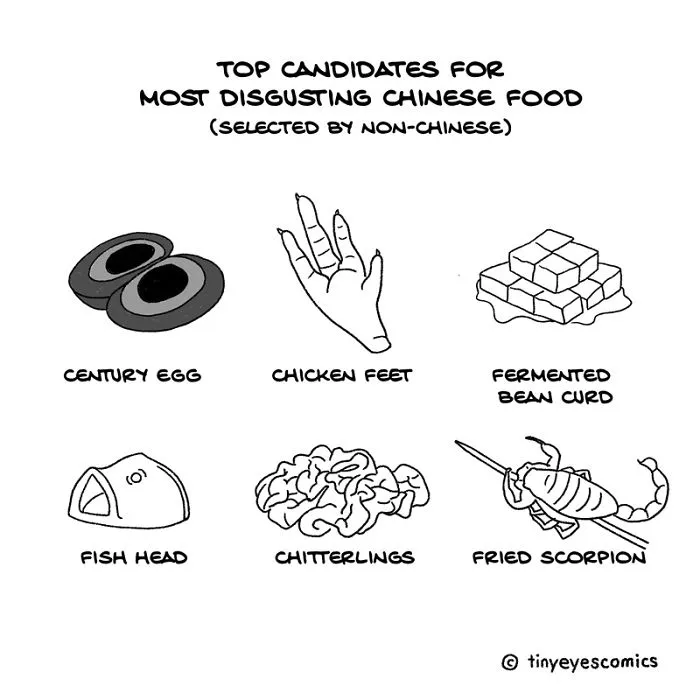
Chinese cuisine is often associated with words such as “rich” and “diverse”. Despite all its glamor and greatness, we all know that in many people’s mind, there’s also a dark corner of slimy, creepy stuff related to brains, insects, and eyeballs. In 2011, CNN selected the world’s 10 most disgusting food. On top of this winning list is Chinese “century egg”(皮蛋), which many Chinese find delicious, including myself (I mean, who wouldn’t want some congee with minced pork and century eggs?!). The comments of the CNN reporters triggered some serious rage from its Chinese audience, with a major Chinese food company demanding CNN to apologize.
I still remember the first time I saw century eggs on a dinner table. I noticed the smell and the unusual black color immediately, but as a child, I was more adventurous and open to tastes, especially when my parents let me try, I knew that it must be something “safe” and “normal” to eat. I’m sure if my parents had made me insects instead of rice every meal, today I’d happily gobble down a bowl of steamed caterpillars with some fried scorpions. After all, culture is this arbitrary thing that we adopt from others. Do we really need to agree on what’s delicious or disgusting?
74points
#24
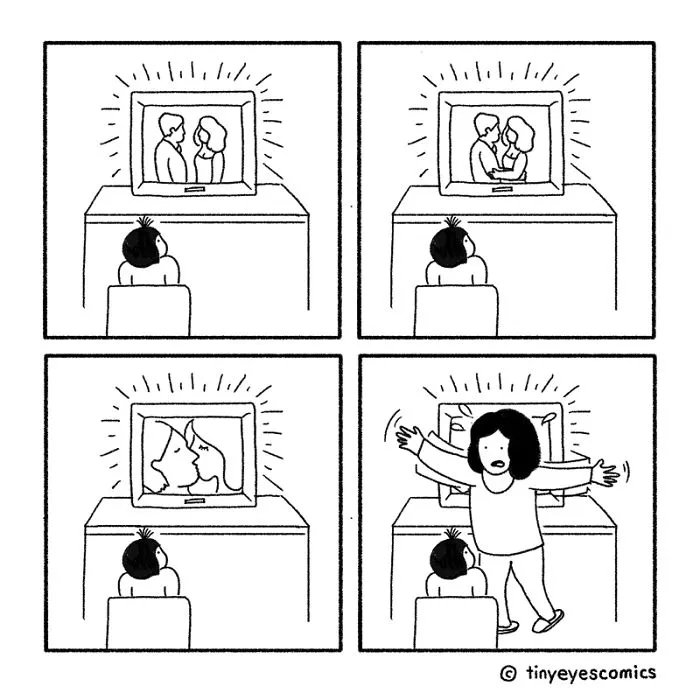
Do you remember the time when you saw people kissing (or have intimate body contact) on TV when you were little? How did your parents react? For a good part of Chinese parents, “changing the channel”, or “distracting their children” is the immediate reaction, because they think it’s improper for them to watch. In fact, what’s behind this reaction the inability to communicate. Expressing love directly is already hard for adults, talking about it, to a child, sounds even more awkward. So the best way might just be to avoid it completely. My parents are both very liberal, but we never had any open conversation on this subject. (And sex is a subject of taboo). Nowadays, lots of younger parents have adopted new ways communicate openly with their children on this subject.m, so that kissing becomes something natural instead of mysterious for their children.
70points
#25
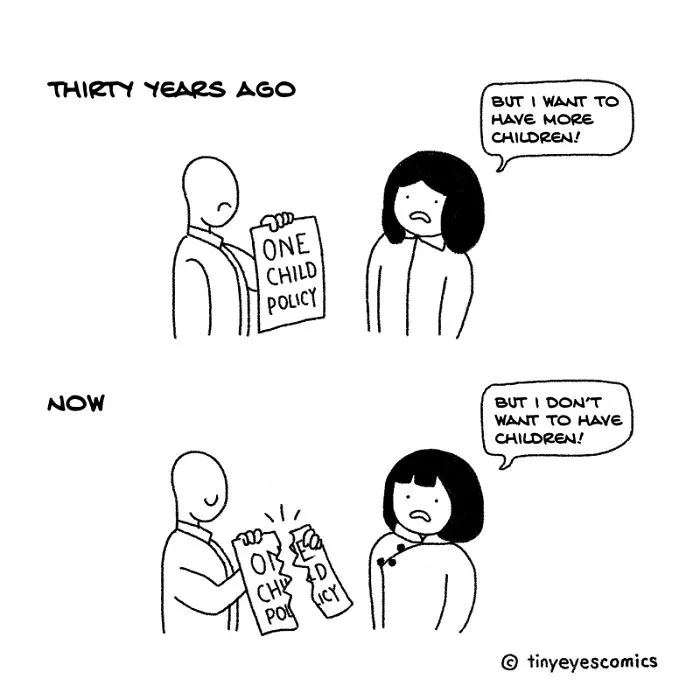
In 1982, the “One Child Policy” was officially implemented as one of the basic national policies of China. No one has expected that only after 30 years, this policy has become history facing the rapidly aging population. Couples are now encouraged to have a second child, not only for the sake of family planning but also for the future of the nation. Ironically, the end of the “One Child Policy” didn’t lead to immediate population growth. Many friends of mine who live in big cities are worried about not being able to afford a second child, or not having enough time and energy to take care of their children due to the high social pressure. What’s more, women’s idea about having children has also evolved as they received higher education. Many choose to have children later in their life, and some, not having children at all. Maybe we could get some inspiration by looking at similar cases in the past such as Sweden in the 1930s and 1940s when the birth rate was at its low point. Following the proposal of Swedish economists Alva and Gunnar Myrdal, social reform and policies were implemented to support families, including better maternal and child healthcare, free delivery, maternity and housing benefits, and general child allowances. It focused on improving the quality of life, and the birthrate started to rise as a result.
69points
#26
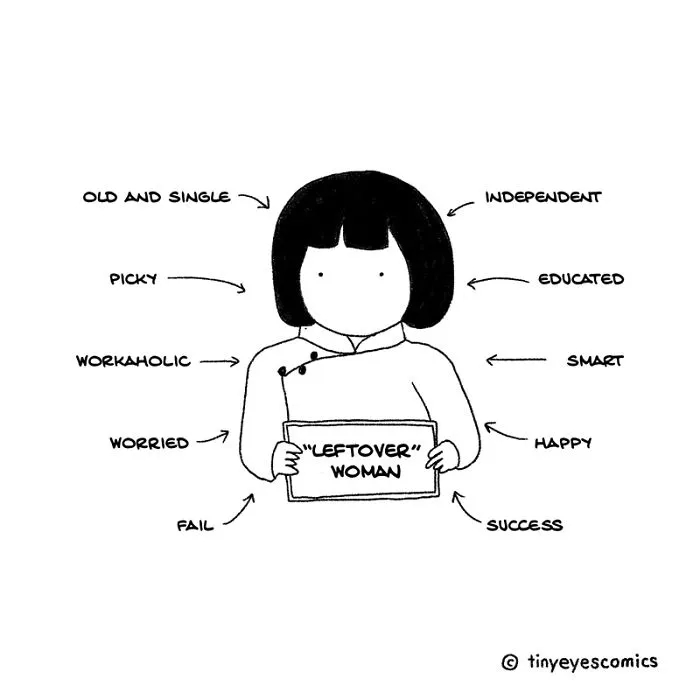
The evolution of a word can reflect the evolution of society. The word “leftover woman”(剩女)is used in China to describe women who are single but who have already passed the “best age” of getting married. There isn’t an accurate definition of the word but these women often share common characteristics such as “over 27 years old”, “well educated” and “living in big cities”. The word was mainly seen as negative when created, but the connotation has been evolving since then.
In recent years people start to associate “leftover women” with positive images, such as “independent”, “smart” and “happy”. Women begin to joke about being “leftover” and some are even proud of it. While the pressure of getting married for women still exist at large in Chinese society, more and more women (especially in large cities) start to choose their lifestyle at their own will.
65points
#27
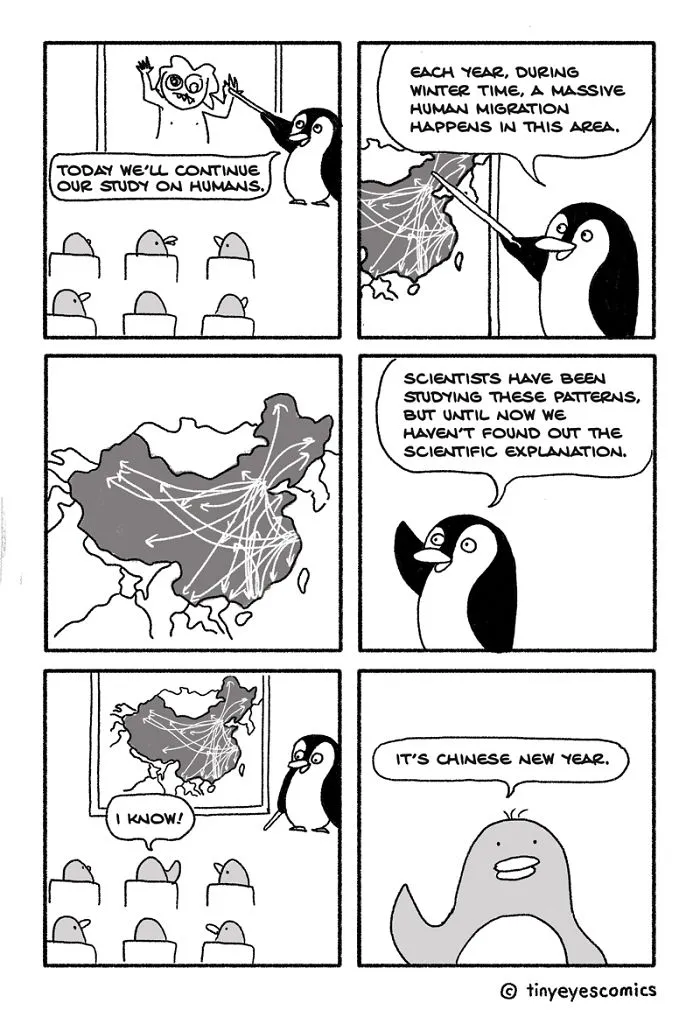
“Spring Festival Travel Rush” is a period of travel in China with an extremely high traffic load around the time of the Chinese New Year, also known as “the biggest migration of humankind”.(this year between Feb.1 – Mar.12)It’s not rare to see online ticket system crashed due to large amount of people snapping up train tickets at the same time, because if you are slow you might not be able to get a ticket, or you might have to stand all the way on the train, but you know that your whole family is waiting for you to have dinner, and you have all the motivation to win this ticket fight.
64points
#28
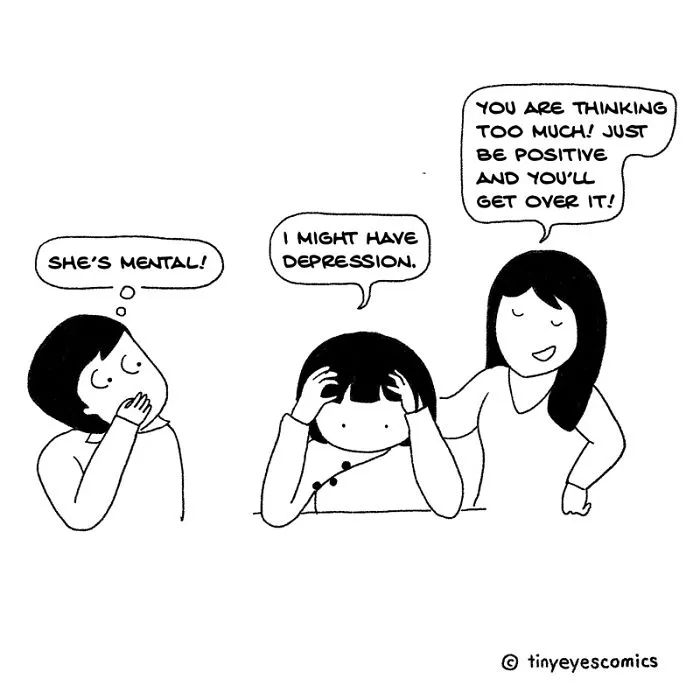
My mom suffered from postpartum depression after I was born, but nobody knew at the time, she didn’t either. “It’s probably just a strange bad mood,” she thought.
The word “depression” remains vague to lots of people, even though there are roughly 30 million patients in China, according to a recent report of the WHO. The lack of knowledge leads to two types of attitudes of the public: one treats depression as a scary mental illness, while the other thinks it’s simply an over-exaggeration of a bad mood.
Recent years, with more people sharing their personal stories of fighting against depression, especially celebrities, people start to understand depression better, and more patients would go to doctors for proper treatment, but that’s not the majority yet, and most of them are not comfortable talking about it openly.
60points
#29
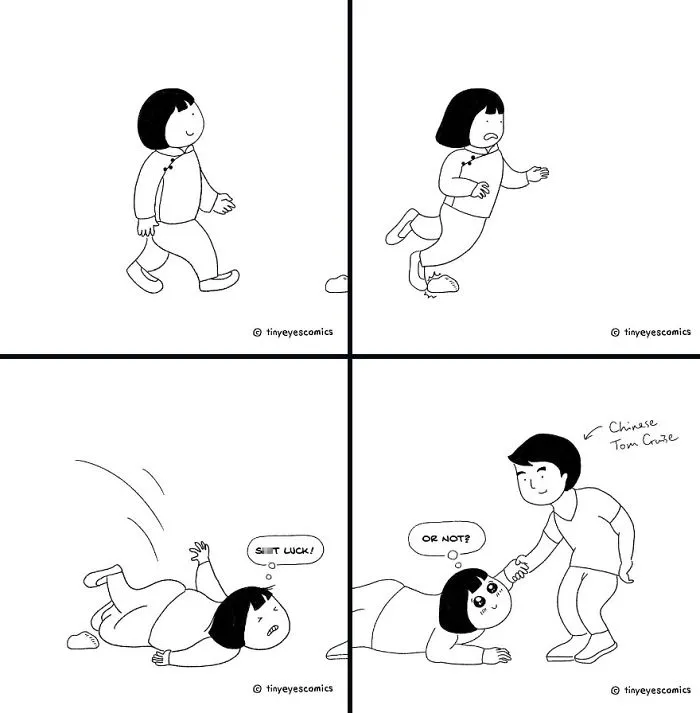
There’s a Chinese expression “因祸得福“,(a blessing in disguise) which refers to situations initially recognised as “negative” later turn out to be “positive”. (In this comic, falling down has led to a romantic encounter.) There’s a lot of Chinese expressions like this that shows the possibility of the transformation from the current status into its opposite. For example, 乐极生悲, ”extreme joy begets sorrow“, and 居安思危,“to be prepared for danger in times of peace”. They recognize the connections between the opposites and the eternal force of change. Most Chinese people are familiar with these expressions, which constantly remind them of a context that’s larger than the point of time they are living in.
Taking my personal experience as an example, I failed college entrance exam, which initially was a disappointing event, but it also urged me to look for other solutions, so I went studying abroad, which turned out to be an amazing experience, but then, living abroad kept me far from my family and moving from place to place created long-distance relationships that didn’t work, which comes back to the negative side, yet again, this distance also allows me to appreciate more about my family and my culture afterwards… The loop goes on and on, and the game of the two sides shifting between each other will never end. Maybe that’s why the traditional Chinese way of being appears to be“mild”—not because people don’t have strong emotions, but because they are constantly seeking the balance between the opposites, being on one side while thinking about the other.
57points
#30
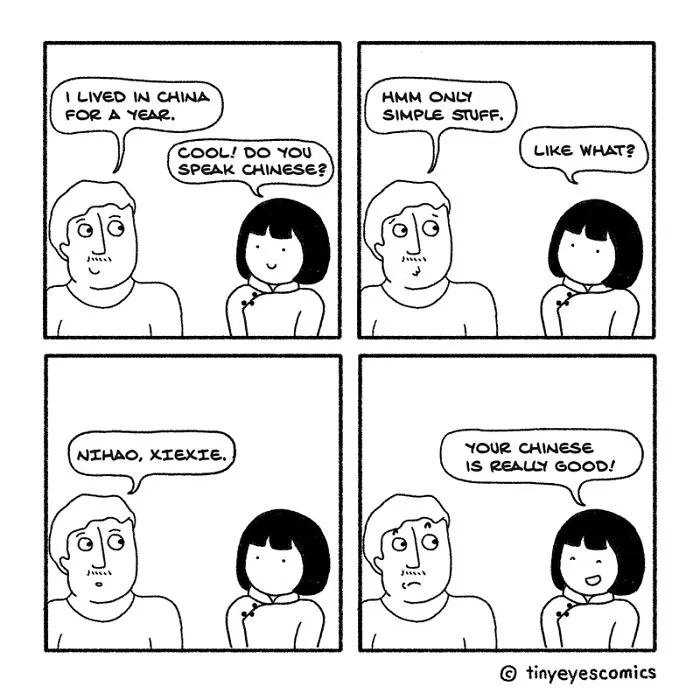
Inspired by a true story of a non-Chinese friend, who asked me why Chinese people say his Chinese is good even though obviously it’s not. “Is it because they think I’m a foreigner so I can’t speak Chinese at all? Isn’t that condescending?” My first thought, even though I can’t represent others, would be that because those people want to encourage him. The word “good” in this context does not necessarily mean the level of language as in exams, but the effort to speak another language. When I first arrived in the USA my English was not even half as good as it is now, but people would still say that my English is “really good”. I took it as a kind gesture.
56points
#31
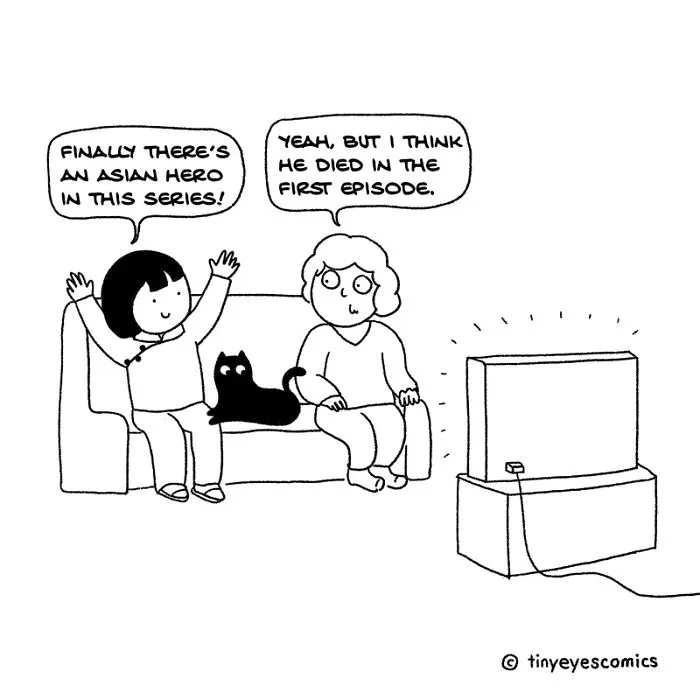
Sidekicks and underwritten rivals, Asian actors are still stuck in supporting roles in western films and TV series (especially in Hollywood films). Although recent years have witnessed an increasing appearance of Asian faces, the reasons behind it are probably more about appeasing critics and making profits than telling diverse stories. If you put a famous Chinese actor/actress in a film, the box-office is probably going to expand. The characters themselves, though, have stayed largely stereotypical, unimportant, or irrelevant to the storylines. (Or, they can play important Asian villains!) Casting Asian actors doesn’t solve the problem of representation. Weaving them into the stories in a meaningful way is probably a better beginning.
54points
#32
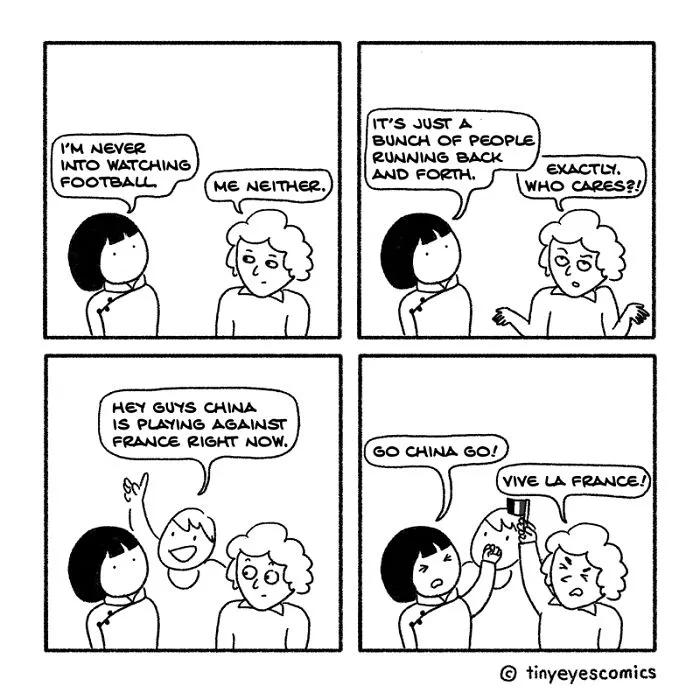
There seem to be many “fake football fans” who don’t watch football usually but who suddenly become enthusiastic during the World Cup. “I don’t care about the clubs, but when it’s between countries I enjoy it," one of them told me. These people watch the World Cup not because they love football particularly, but rather the atmosphere, the spirit of a team/player, and the feeling of being engaged in a world event with other countries. What’s more, hanging out with friends in a bar and cheering together with strangers is simply fun.
51points
#33
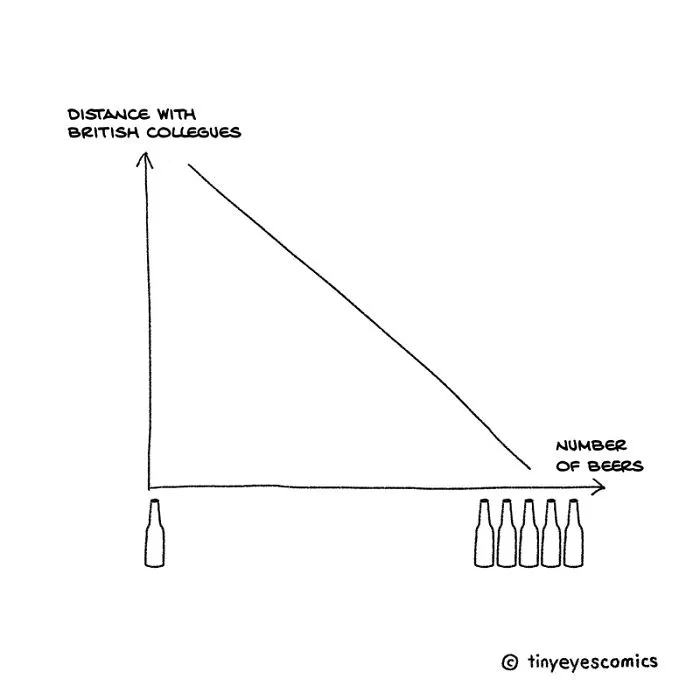
I heard in Scandinavian culture the contrast of “before” and “after” drinks is even more dramatic because emotions are reserved and maintaining distance is important. Is it true?
49points
#34
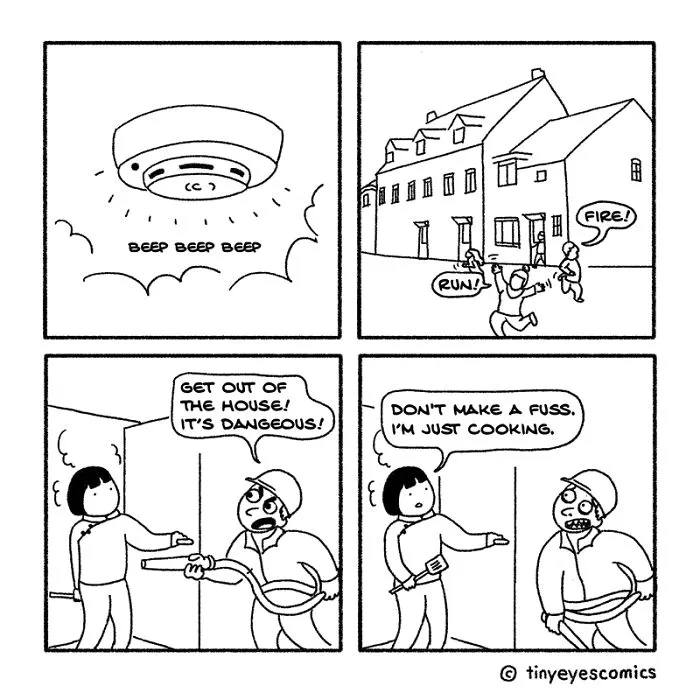
In Chinese cooking, it’s very common to use the wok to fry different ingredients, which creates lots of smoke. In China, most apartments have powerful range hoods installed to extract smoke. However, most of the western kitchens are equipped with a sensitive smoke alarm which is set off by Chinese wok easily. It’s not rare to hear landlords complaining about oil stains or to see Chinese students covering up the smoke detector with tapes during cooking(could be dangerous, not recommend). It’s a little inconvenient, that’s true, but the food is delicious that’s also true!
49points
#35
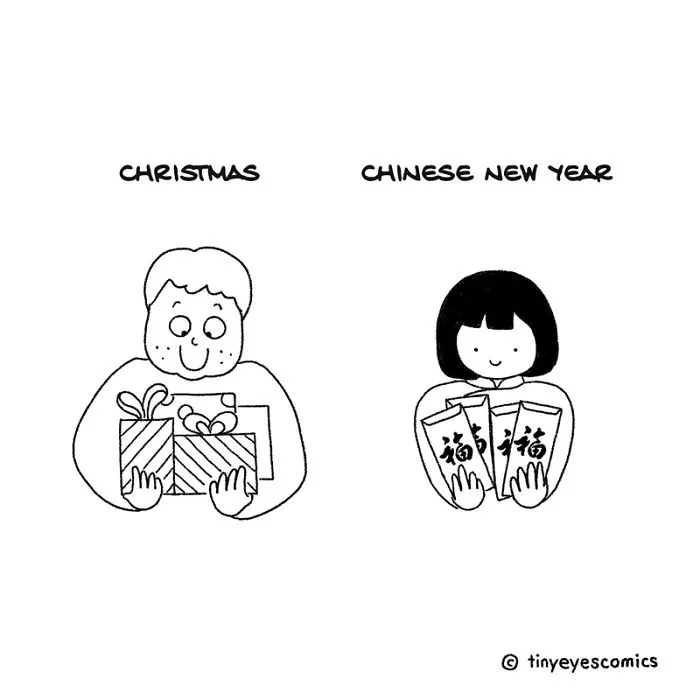
During Chinese New Year, traditionally children receive red envelopes (红包) that contain money, which keep them away from evil spirits and bring them good luck. Nowadays it’s also very popular to send money (often in digital forms through Wechat) between friends and colleagues.
Compared to giving gifts, giving money is rather direct and less imaginative. But when I see people going to the same store and struggling to buy something original for Christmas every year, I start to wonder if there exists a better way. What do you think?
45points
#36
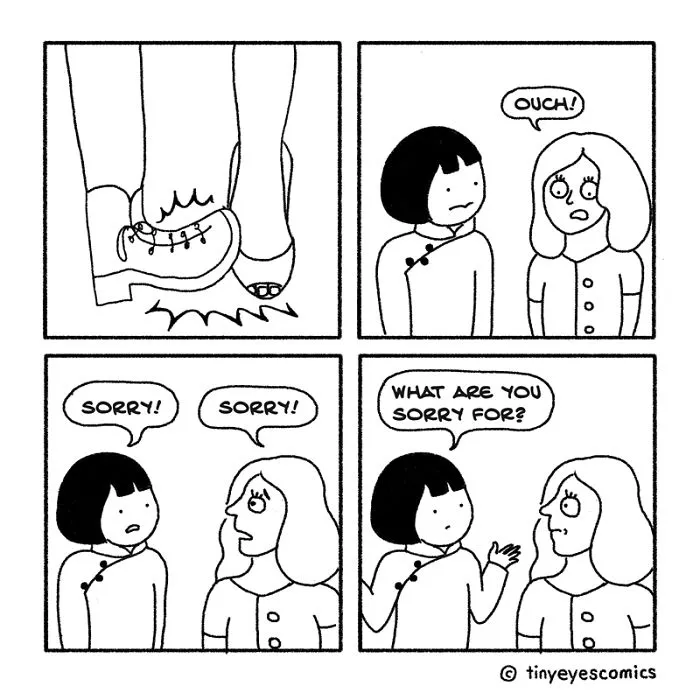
I’ve never heard or said “sorry” so many times in my life as in the years I spent in the U.K. From commenting on the weather to sitting beside someone in the tube, it seems to be an indispensable part of everyday life.
According to a survey in 2016, the average Brits says "sorry" around eight times per day – and that one in eight people apologize up to 20 times a day. Yet the word doesn’t always mean being remorseful as in the sense I’m familiar with. It might have several meanings depending on the context. For example, it could be a way to show empathy and build trust, or in other situations, to keep distance and protect privacy. “Our excessive, often inappropriate and sometimes downright misleading use of this word devalues it, and it makes things very confusing and difficult for foreigners unaccustomed to our ways,” says Kate Fox, a social anthropologist who has written several books that reveal the unwritten rules and behaviors that define English national identity and character. Check them out if you are curious
39points
#37
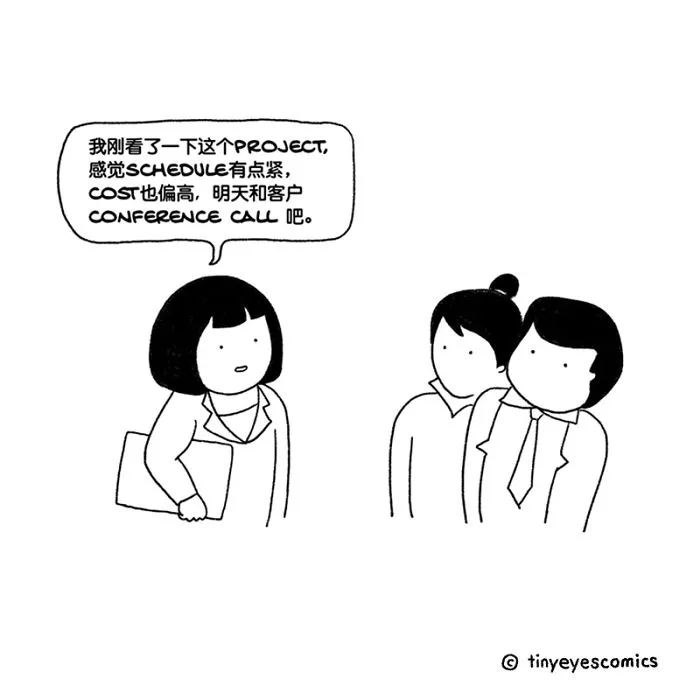
Mixing English and Chinese when speaking triggers mixed reactions in Chinese society. Some people think this is pure show-off by people who have been abroad, others think this is unavoidable in an international company culture where there are concepts hard to translate. There are also experts who are worried about the future of the Chinese language.
Personally, I don't’ really mind the form of language I use as long as it facilitates communication in that context: I’d speak English to a Chinese person if there’re other English-speaking people in conversation, but I wouldn’t use English words when speaking to my parents because it will confuse them. When I met my Hong Kong friend last time we spoke a mixture of Mandarin and English because she was still practicing Mandarin, and I didn’t speak Cantonese.
36points
#38
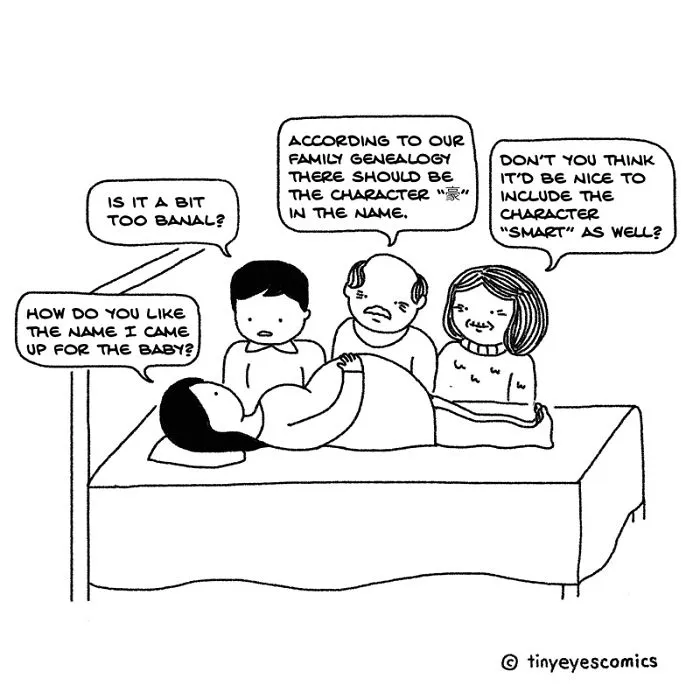
Naming a child is an important event for most Chinese parents, even though trying to squeeze tons of meaning into one or two characters is not an easy job, especially when you have a reservoir of thousands of characters to choose from. Normally you want to choose something that’s beautiful, promising, and unique, while at the same time avoiding careless homophones that will turn the name of your child into a joke. In addition, depending on the family, sometimes you also have super engaged grandparents who enjoy offering their opinions and suggestions, which can bring lots of fruits, or other times, wars. You can also choose to make your life easier and go for something simple and low-profile. In the end, every name has a story to tell.
What’s the story of your name?
34points
#39
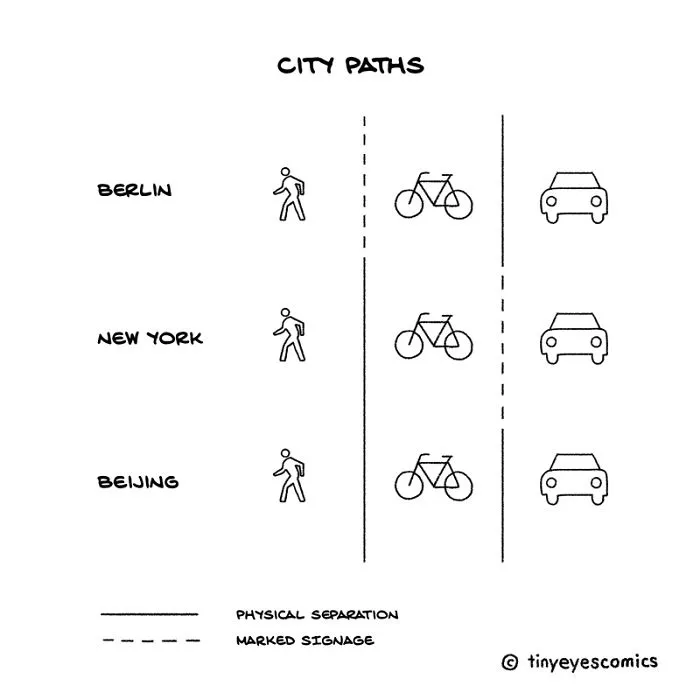
During these days in Berlin, I often found myself mistakenly walking on the bike lane, which is often combined with the path for pedestrians. The separation is clearly marked out with paint but I was so used to the physically separated lanes in Beijing where I could close my eyes and walk safely (that’s not true because there are bicycles and motorcycles violating the rules). In New York, it’s common to see the bike lane lie between a parking lane and a traffic lane, or shared with vehicles. In Paris, there’s a mixture of all types of lanes (even contra-flow bike lanes where you have to go against the traffic!) and the rules are not obvious for first comers. I’m still not courageous enough to explore the city on my bike.
30points
#40
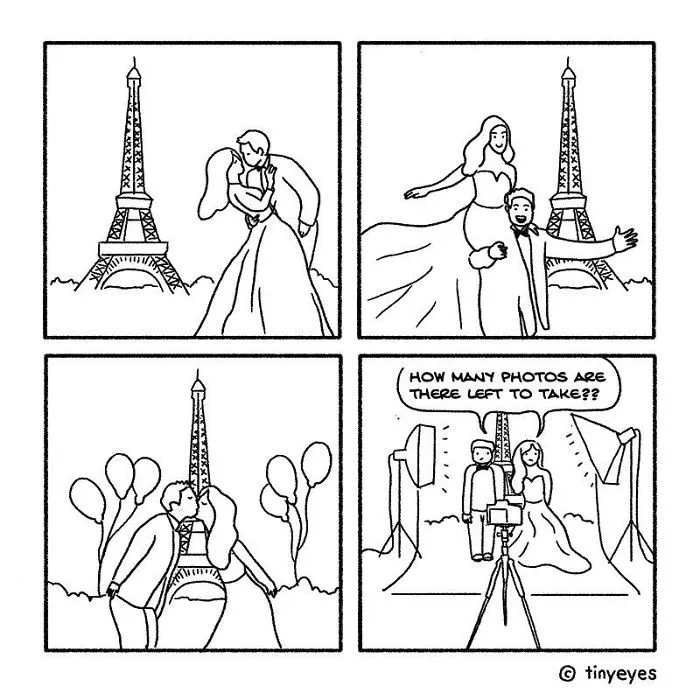
Every time a friend gets married, he/she will show me their album of pre-wedding photos, where the couple poses romantically in different settings wearing wedding costumes in either western style or Chinese style. Wedding photos were first introduced from the West to China during the period of The Republic of China, but the pre-wedding photo industry is fairly recent, gaining popularity from the 1990s. The photos can be done in a studio with a changing background. Or, if willing to pay more, the couple can travel with a professional photographer to other parts of the world for the shooting( Europe is the most popular destination). After the shooting, there’s retouching in photoshop, which renders everything “perfect”, to the point that it often looks a bit fake. The process could take a day or even weeks, requiring lots of energy, especially that you have to smile non-stop!!
29points
In exploring cultural nuances through webcomics, one can find insights into how different societies navigate life's details. An interesting parallel appears in how various cultures apply ingenious solutions to improve daily life within the home.
For example, the thoughtful details in Korean households demonstrate a keen awareness of space and utility, reflecting a universal desire to create comfort and efficiency in our living environments.
