




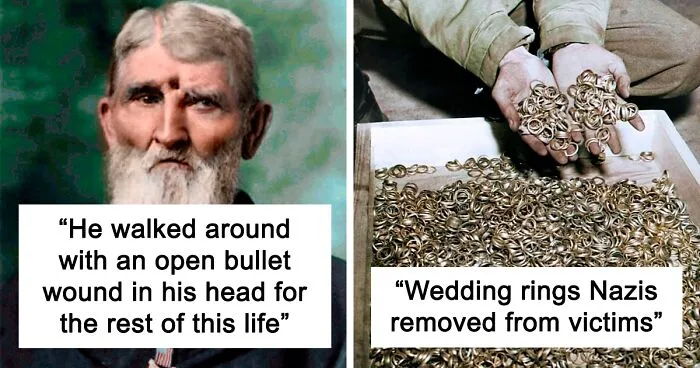


Joel Bellviure, the main colorizer at Cassowary Colorizations, started this project out of a desire to learn through historical rediscovery.
Cassowary Colorizations has colorized photos for both media publications as well as regular people (by accepting their commissions) but no matter where an image comes from, it is treated with attention and care.
If you take a look at Cassowary Colorizations' social media, you'd quickly understand just how meticulous their work really is. Every picture comes with a detailed description, providing not only visual information but important historical facts behind them as well.
#21
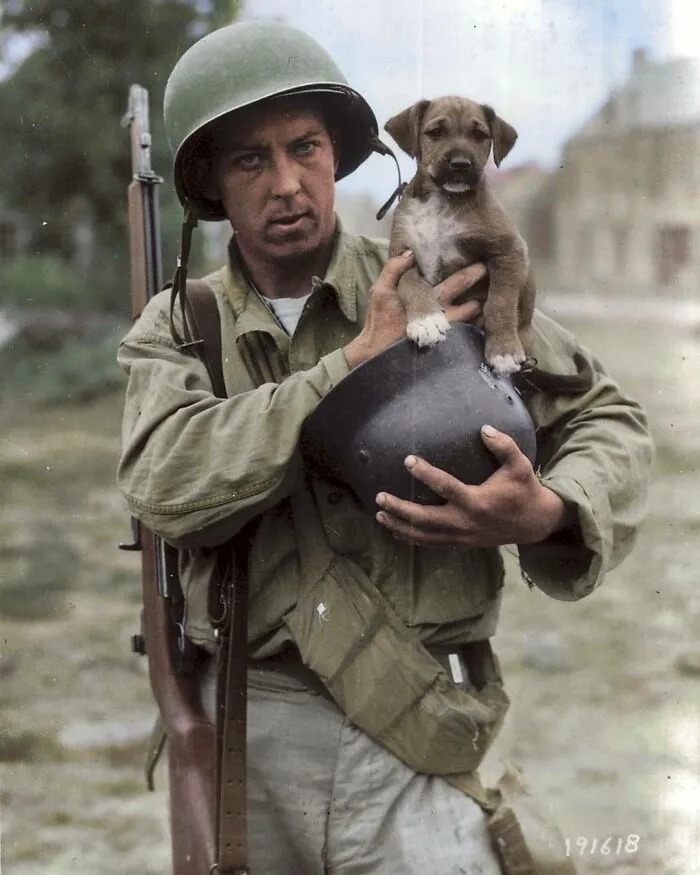
Pfc Joseph E. Day (1918-2009), in underpants, holds a puppy named "Invasion" in a German helmet, Le Dezert, France, 1944. Concerning underwear, it was largely an invention of the 1930s. On 1935, an engineer named Arthur Kneibler, designed the world's first briefs in Chicago. During World War II, elastic waistbands and metal snaps gave way once again to button fasteners due to rubber and metal shortages. Undergarments were harder to find as well, since soldiers abroad had priority to obtain them. By the end of the war, Jockey and Hanes remained the industry leaders in the US, but Cluett, Peabody and Company made a name for itself when it introduced a preshrinking process called "Sanforization", invented by Sanford Cluett in 1933, which came to be licensed by most major manufacturers.
1944
Report
56points
#22
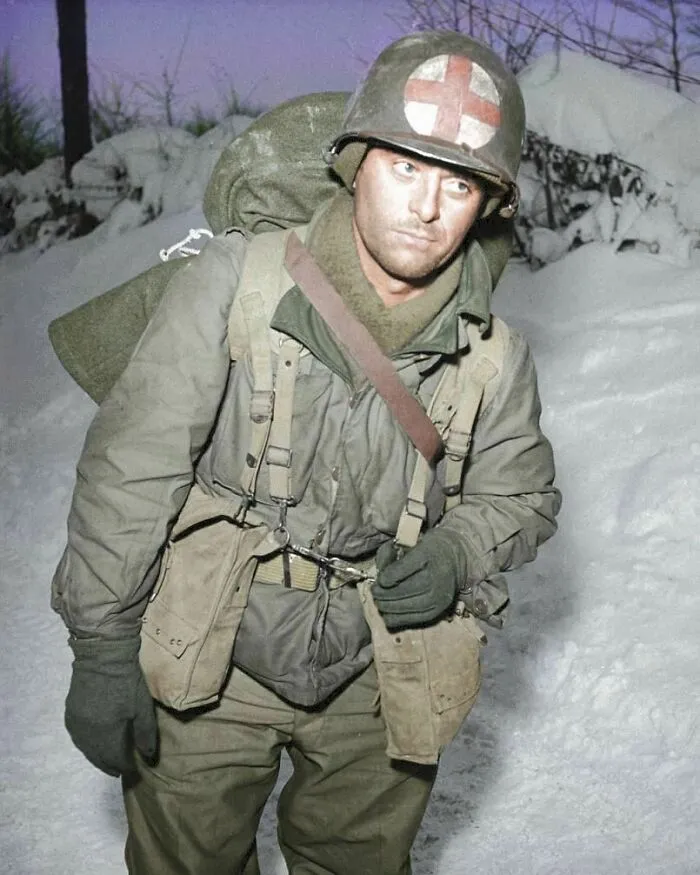
An exhausted American medic returning from the front during the Battle of the Bulge. Combat or Field medics in WW2 were military personnel prepared in a medical basic training, responsible for providing first aid and frontline trauma care on the battlefield. However, they could assist to other units even preparing patients for operations, making beds, or serving as cooks. Geneva Convention completely prohibits medics from using weapons. Medics could use a weapon to protect a casualty, but not themselves. Quoting Stephen Ambrose, "It was the universal opinion of the frontline infantry that the medics were the bravest of all".
Report
53points
#23
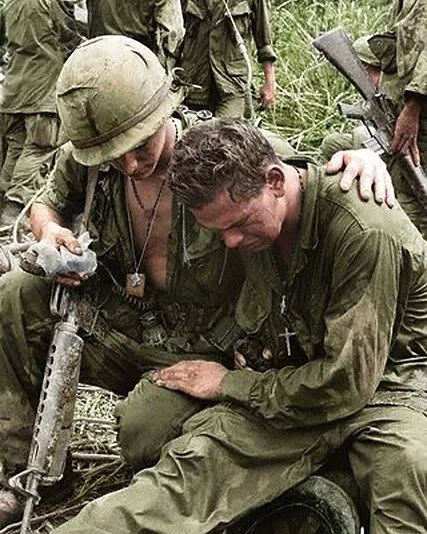
Two soldiers comfort each other under the strain of combat in Pleiku, South Vietnam, 26 May 1967. Pleiku was strategically important during the Vietnam War because it was the primary terminus of the military supply logistics corridor extending westwards along Highway 19 from the coastal population centre and port facilities of Qui Nhơn. Additionally, its central location on the plateau, between Kon Tum in the north, Buôn Ma Thuột to the south, and the North Vietnamese Army's base areas inside Cambodia to the west made Pleiku the main center of defense of the entire highland region of the Republic of Vietnam. This was obvious to both sides; the United States established an armed presence very early in the conflict at Camp Holloway, and the Việt Cộng attack on this base in early 1965 was one of the key escalating events that brought U.S. troops into the conflict. On 15 June 1972, Cathay Pacific Flight 700Z, operating a Convair 880 from Bangkok to Hong Kong, disintegrated and crashed while the aircraft was flying at 8,800 m. over Pleiku, Vietnam after a bomb exploded in a suitcase placed under a seat in the cabin, killing all 81 people on board.
Report
53points
#24
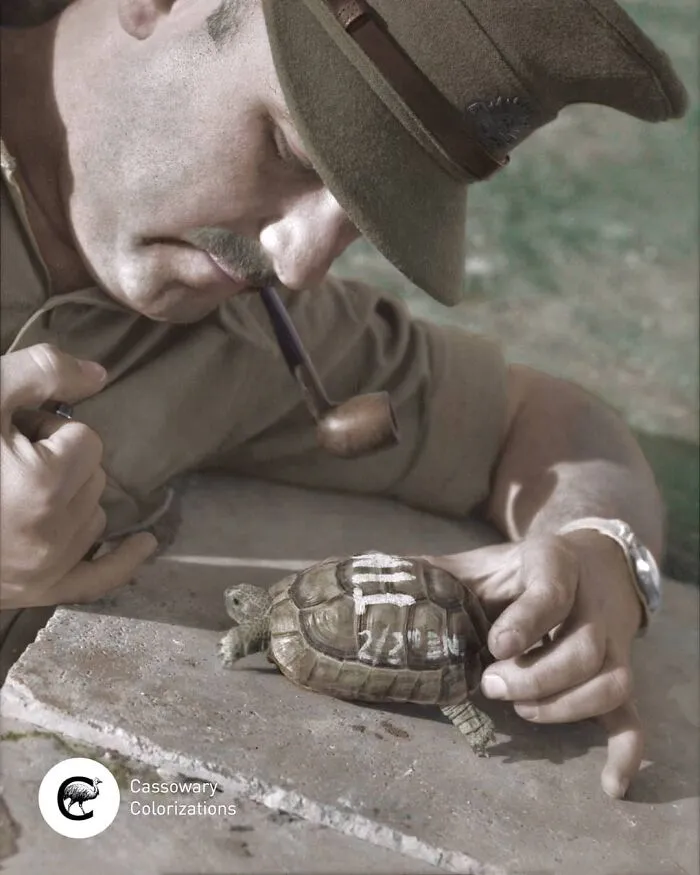
Captain D. Michelson with Tim the tortoise, the pet of the Australian 2/2nd Battalion, 16th Brigade, 6th Division, Julis, Palestine, 28 March 1930. So I was curious about Captain Michelson, but couldn’t find anything about his service in WWII. The Australian War Memorial didn’t through any clues, until I searched just the surname and, hidden in a group picture, I found his complete name: David Enoch Michelson, SN - NX320, was born in Sydney (the 2/2nd recruitment area was NSW) on April 19, 1910. Enlisting in Denistone on December 27, 1939 was discharged six years later, on October 9, 1945. You can find several recordings and interviews of him in the Australian War Memorial website.
Report
51points
#25
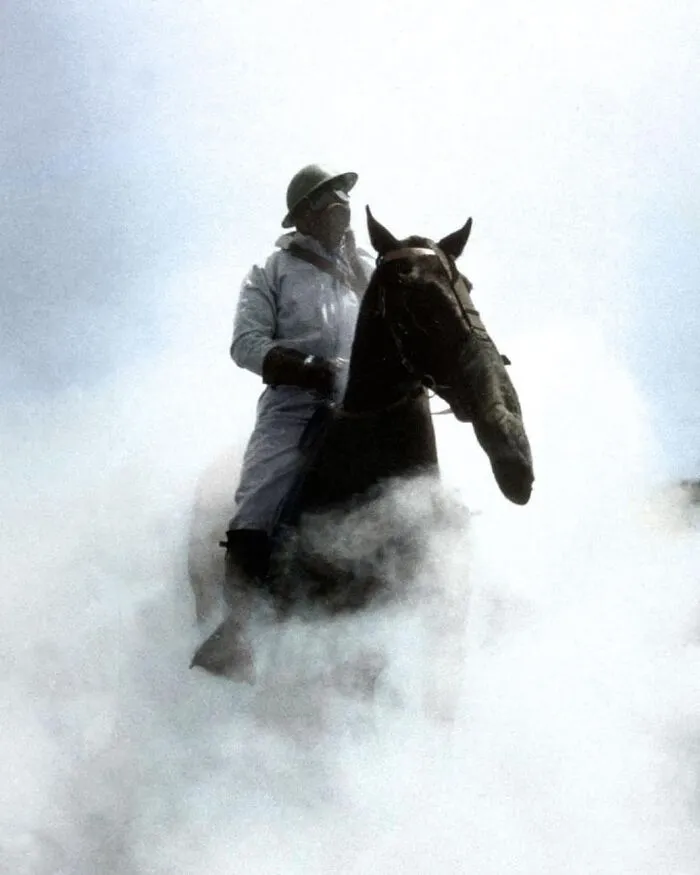
Sergeant Joseph Levin of the American Army Chemical Warfare Service testing a gas mask with his horse “Buddy”, Governor's Island, New York, 1928. This picture has long been credited as a Frenchman during the Battle of Verdun (something incredibly thoughtless because of many indications). More ironically, and what hurts me the most, is that Getty Images credits it as being an early 1930s picture and then, in another shot of the same man and day, as a 1917 picture. After I took some research, I discovered a similar photograph taken the same day in the Popular Science issue of October 1928. It is sad that a corporation as Getty, which charges colossal fees to its photographs doesn’t even bother to make a five-minutes research. I’ve transcribed you the original article: “ARMY DEMONSTRATES A NEW GAS MASK FOR WAR HORSES / Buddy, an Army horse stationed at Governor's Island, New York, is shown wearing the latest mask designed to protect war horses and mules during gas attacks. The bag of the mask fits tightly over the nostrils of the animal and is held in place by straps buckled over its head. Buddy demonstrated the effectiveness of the new protection recently when he carried Sergeant Joseph Levin of the Chemical Warfare Service, through a deadly screen of poison gas without suffering ill effects. Levin is seen wearing the newest equipment developed by Army experts to protect soldiers.” The American Chemical Corps was and still is one of the many branches in which the United States Army is divided. It was created the 28 June 1918, few months before the First World War ended, named the U.S. Chemical Warfare Service (CWS). After the Second World War, its name was changed to the current Chemical Corps. For most of its history, the Chemical Corps was tasked with delivering chemical weapons rather than defending against them.
Report
51points
#26
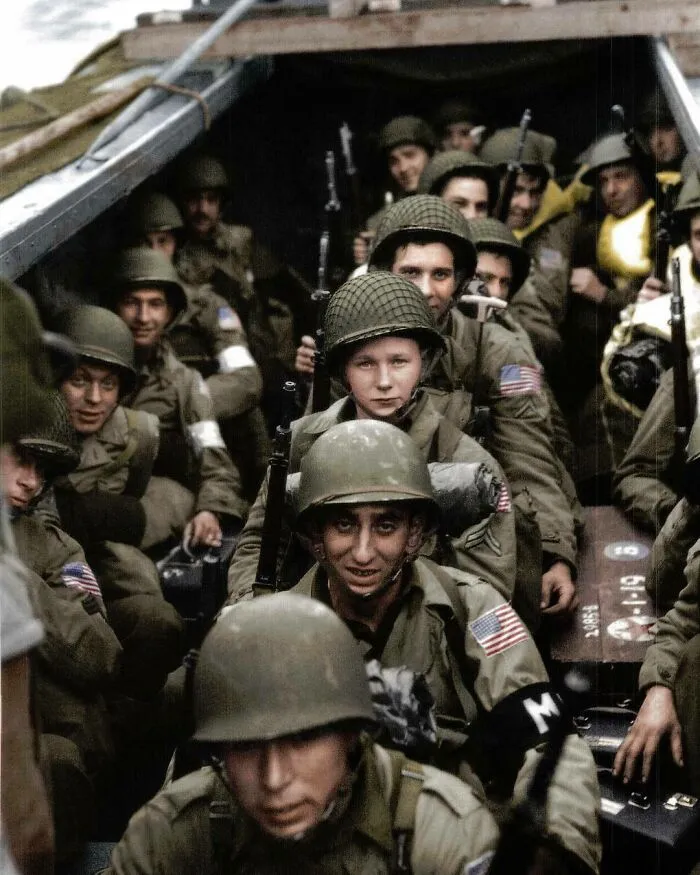
American troops on board a landing craft heading for the beaches at Oran in Algeria during Operation Torch, November 1942. Today I was reading a Victor Hugo’s poem which made me think why couldn’t I do something rather original: composing a poem while colorizing a picture, evoking the picture in words. I’m deeply sorry if this seems irreverent, but here it goes.
The bitter weaving holds the sound
of the darkest scream beneath the bank.
The sewed badge in the shoulder dies
with the moans of white, red and black.
As the ship approaches the dying shore,
Its breath embosoms the crimson sand.
And, as the filth of an unborn child,
the men jump into a shore of wrath.
of the darkest scream beneath the bank.
The sewed badge in the shoulder dies
with the moans of white, red and black.
As the ship approaches the dying shore,
Its breath embosoms the crimson sand.
And, as the filth of an unborn child,
the men jump into a shore of wrath.
The helmets hold the hope of most,
the grenades, the hands of twenty more,
the uniforms turn into a deeper moan
and the brave, gloomy men pray and cry
without even reaching the rage’s coast.
They shout the word of a dratted god,
they confess their duties to the ghost
of a flowing glory; today may be gone.
the grenades, the hands of twenty more,
the uniforms turn into a deeper moan
and the brave, gloomy men pray and cry
without even reaching the rage’s coast.
They shout the word of a dratted god,
they confess their duties to the ghost
of a flowing glory; today may be gone.
And the water embraces them all,
with the sorrow of a widow’s cough,
and it spits them all into the wall
of blood, darter, and expired goals.
Now, the fourteenth weave tries to bend
the moral of the mysterious men
who perished in the glazed arms
of a far, pitiful, unknown land.
with the sorrow of a widow’s cough,
and it spits them all into the wall
of blood, darter, and expired goals.
Now, the fourteenth weave tries to bend
the moral of the mysterious men
who perished in the glazed arms
of a far, pitiful, unknown land.
Report
47points
#27
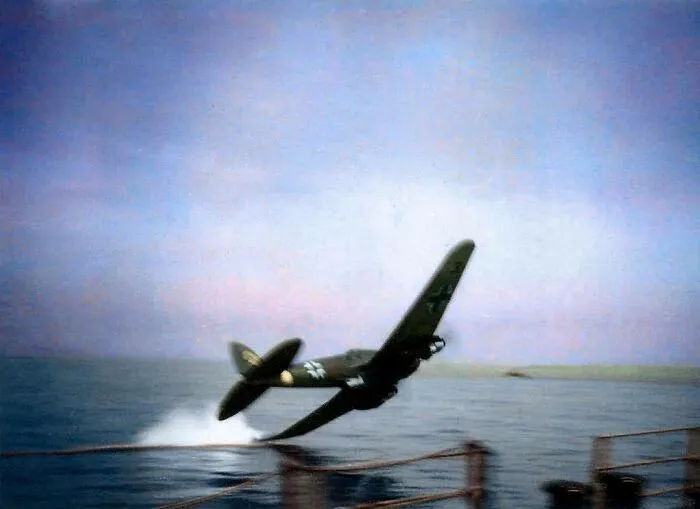
A Heinkel He 111 crashing directly into the sea, date and place unknown. This He 111 is only one of thousands that wrecked during World War Two, and that currently lie beneath the silence of the seas. Only on the little island of Malta, it’s reckoned to be 800 wrecked planes, a third part of the 2700 planes that participated along the Allies and the Axis in the bombing of Malta.
Report
45points
#28
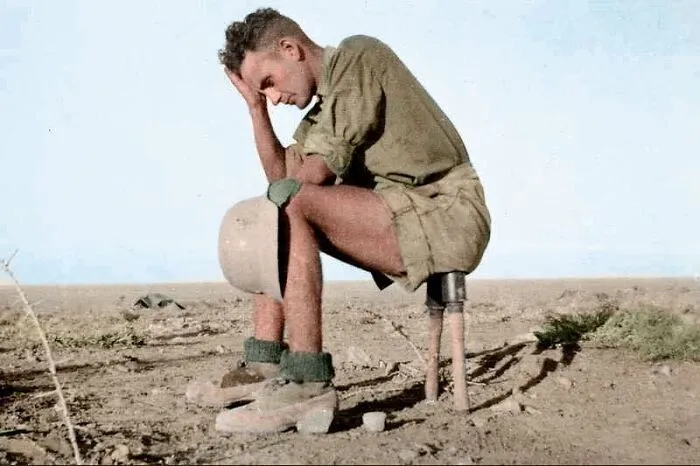
Afrika Korps, shortened DAK, soldier sitting on two M24 Stielhandgranates in the North African theatre, 1942. Although this picture seems pretty dangerous, the chance that the grenades denotated was very difficult and even those could be neutralised grenades. I’ve just realised that I have hardly even made DAK posts, so I am going to explain a little bit what and how it worked. The Deutsches Afrikakorps was -and this is something people ignore in many occasions- an expeditionary force, not any kind of formation as a division or a battalion, mainly made out of motorised divisions, created in 1941 and handed directly by Adolf Hitler to Erwin Rommel, both having very close relations. The first intention of the force -another ignored fact- was not to conquer or to expand Germany’s colonial control, but to support the Italian fascist forces trying to reconquer Libya, which had had serious trouble. After outstanding military victories, and after the brave yet disastrous fights of El Alamein, the DAK was dissolved on 13 May 1943.
Report
44points
#29
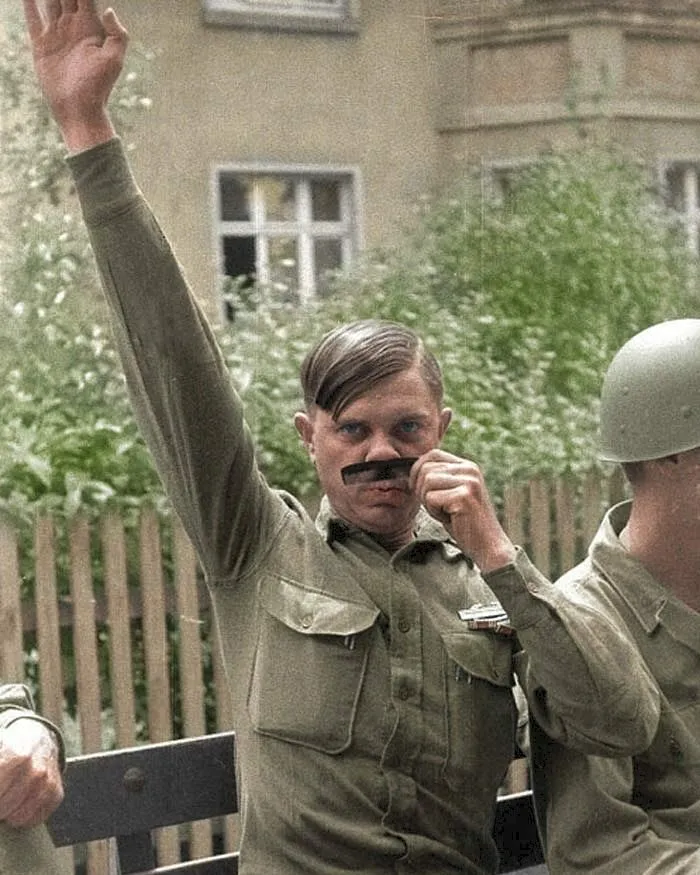
An unknown American soldier in Summer Service Uniform mocking Hitler’s moustache with a hair comb. Depicted in his uniform, a Combat Infantryman Badge, a Good Conduct Medal and an unknown medal. The Good Conduct Medal is one of the oldest military awards in the United States Armed Forces. Although the U.S. Navy's variant of the Good Conduct Medal was established in 1869, the Army version wasn’t scheduled until 1941, and the Air Force on, until 1963. The medal is awarded to any active-duty enlisted member of the United States military who completes three consecutive years of "honorable and faithful service, which means not having any non-judicial punishment, disciplinary infractions, or court martial offenses. During wartime, the Good Conduct Medal may be awarded for one year of faithful service, or even awarded posthumously.
c. 1944
Report
42points
#30
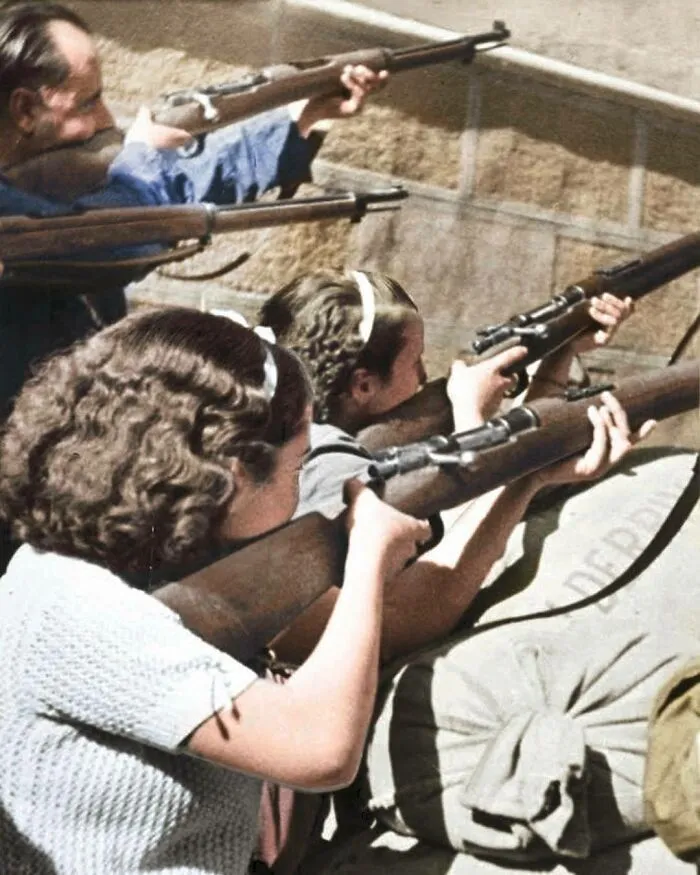
Two women and what seems to be an Assault Guard during the Siege of the Alcázar, in Toledo, during Spanish Civil War. The role of women during the Spanish Civil War was very different between sides. During the years of the 2nd Republic (1931-1939), women started to gain freedom, strictly censored by the dictatorship of Primo de Rivera (1923-1930), and in 1931 women’s right to vote was approved. During the war, in the Republican side, women reached the biggest ladder of liberties, and eventually saw themselves standing in the battlefield among men. On the other hand, in the Nationalist side, women were strictly prohibited from bearing arms, and their task was relieved to nursing. Later, during Franco’s dictatorship (1939-1975), the so called government made up a plan where woman where supposed to fulfil the role of wife, mother and housewife, with single-sex school policy. The women had to wear long and little scandalous clothes, with a censorship present in the media and especially the cinema, stepping 40 years back. Pilar Primo de Rivera, member of the Falange, said once: “Let's be nice and funny little ants”. 1936
Report
40points
Considering colorization as an art form that bridges past and present, readers might find the stories of animal bravery during peacetime even more compelling.
Each photo tells a story, much like the acclaimed wartime photos capturing animals that served bravely in WW1 and WW2. Exploring these narratives deepens our understanding of the contributions that even the smallest creatures made.


