
Picture a fishing trip where the rod is a blade of grass, the pond is a termite mound, and the catch is a crunchy, protein-rich snack. For a group of chimpanzees in southern Tanzania, that's just lunch, and scientists have now confirmed they're doing it farther south than anyone has ever recorded.
Researchers working in Tanzania's Loasi Forest Reserve found chimps using stripped pieces of grass and bark to pull termites from their mounds. The Wildlife Conservation Society (WCS) announced the findings on Wednesday, November 18. Among the evidence was a termite mound still littered with fishing tools the chimps had recently abandoned, left behind after what was presumably a successful meal.
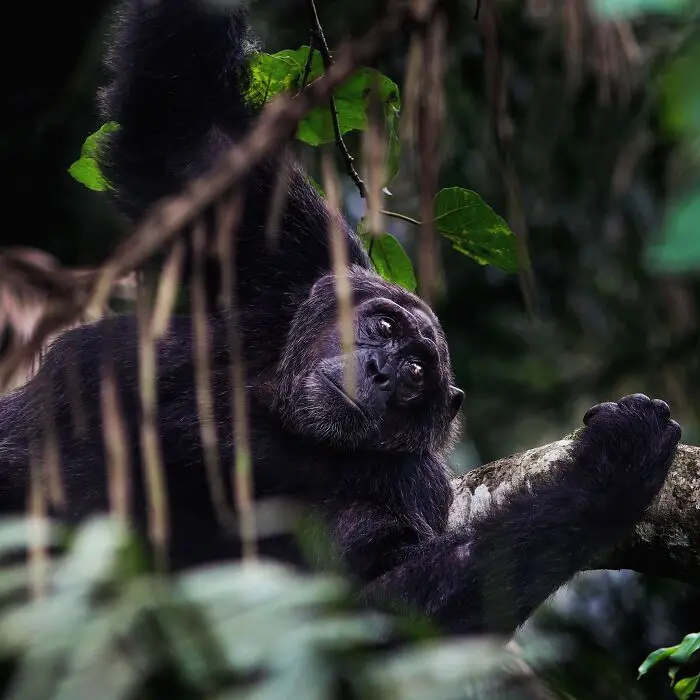
Scientists in Tanzania's Loasi Forest Reserve discover wild chimps using grass and bark to fish for termites
Termite fishing itself is nothing new to science. Jane Goodall famously watched chimpanzees do it at Gombe, also in Tanzania, in the 1960s, and the observation helped change how scientists define tool use. What makes the Loasi discovery remarkable is the location. These chimps live near the southernmost edge of their species' entire range, and the finding moves the known southern limit of chimpanzee tool use roughly 143 miles (about 230 km) beyond where it had previously been documented.
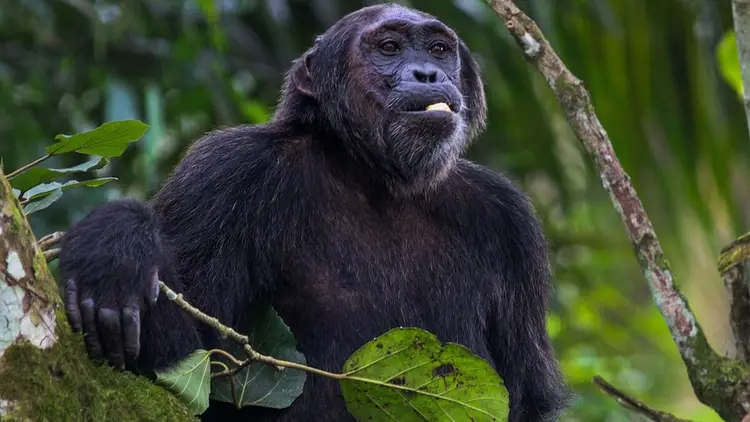
The discovery extends the known southern limit of chimpanzee tool use by roughly 143 miles (about 230 km)
The method is simple but effective. A chimp picks a slender piece of plant material, sometimes trimming it to the right shape, and slides it into an opening in the mound. The termites inside bite onto the intruding stick to defend their home. The chimp then carefully pulls the "rod" back out and eats the insects clinging to it, a meal that would otherwise be almost impossible to reach.
It's just one of the many ways chimpanzees use the objects around them to make life easier. Across Africa, different chimp communities have been seen cracking nuts with stones, soaking up drinking water with chewed leaves, and even using sharpened sticks to hunt. Termite fishing, though, remains one of the most iconic examples, and the Loasi chimps have now shown they're just as resourceful as their better-known relatives farther north.
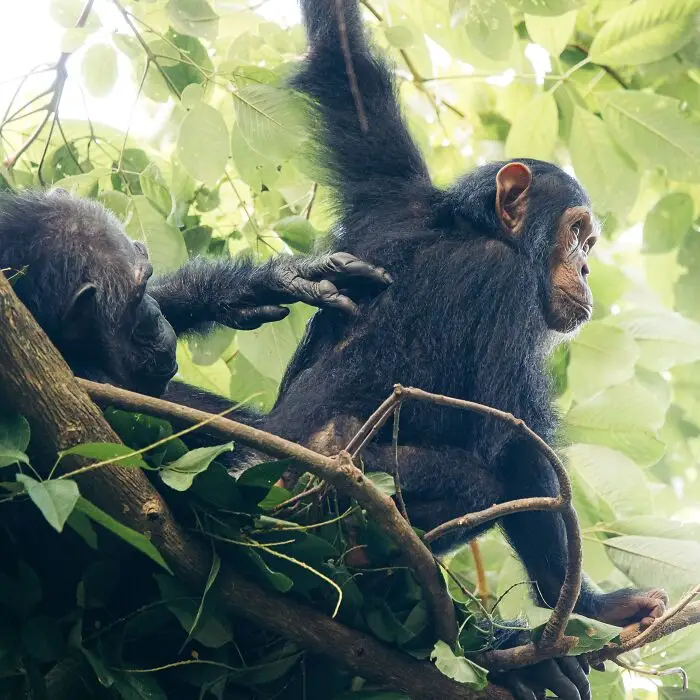
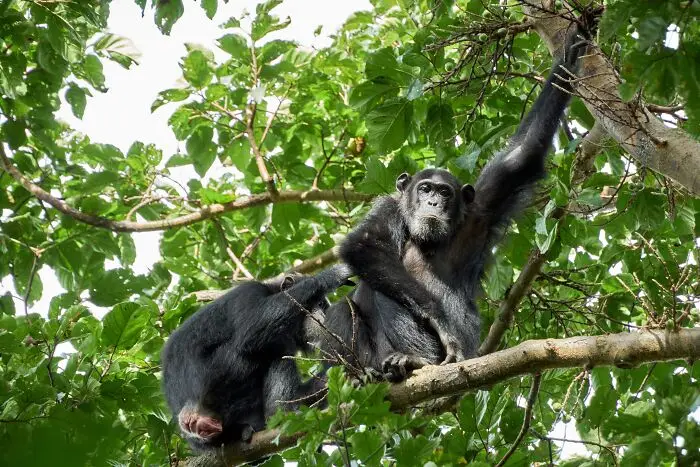
To catch the insects, chimps slide slender pieces of plant material into termite mounds and pull them out covered in termites
"Even at the southernmost edge of their range, chimpanzees are demonstrating remarkable ingenuity," said Aaron Nicholas, a WCS Tanzania researcher and co-author of the study.
Chimpanzee tool use in other parts of Africa has been studied for decades. The Loasi population, however, has received very little scientific attention, so researchers are only beginning to learn how these apes go about their daily lives. The discovery hints at how much there may still be to learn about chimpanzees living in more remote, less-explored corners of the continent.
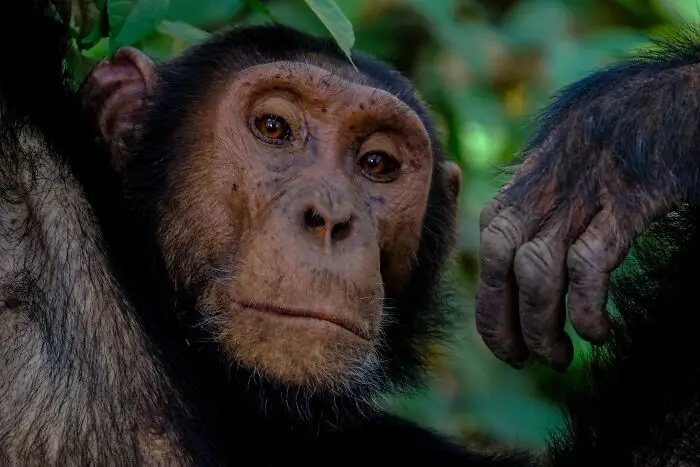
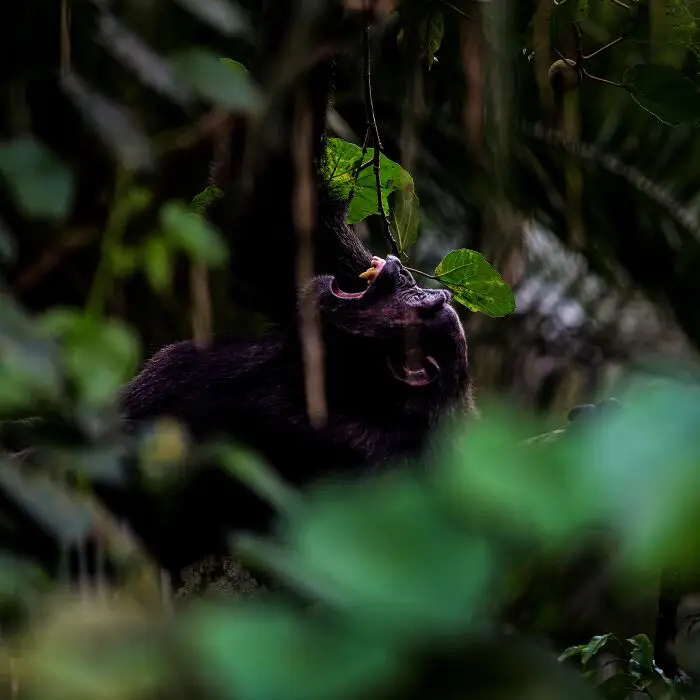
The protein-rich insects provide an easy meal that would otherwise be almost impossible for the chimps to reach
The findings were published in the journal African Primates in a study titled New Southernmost Limit for Chimpanzee Tool-making: Termite Fishing in the Loasi Forest Reserve (Tanzania). The research was carried out by Alejandra Pascual-Garrido, Susana Carvalho, Sophy J. Machaga, Noah E. Mpunga, Frank Mbago, and Aaron Nicholas, with Machaga, Mpunga, and Nicholas all working for WCS Tanzania.
Part of what excites scientists about discoveries like this is that chimpanzees don't all do things the same way, even something as ordinary as finding food. Different communities develop their own tool-using techniques, which young chimps often pick up by watching older group members. Over generations, these behaviors become something like local traditions, and researchers see them as a fascinating window into how chimpanzee "cultures" form and spread. Every newly documented group adds another piece to that puzzle.
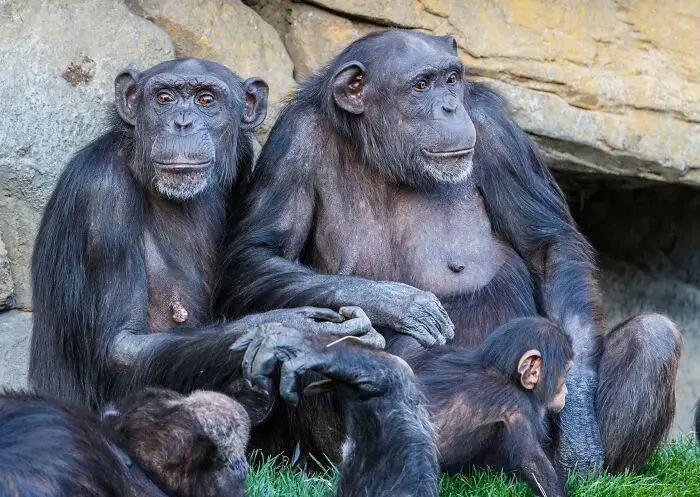
Different chimpanzee communities develop their own tool-using techniques, which younger members often learn by watching older chimps
There's also good news for the forest the Loasi chimps call home. According to WCS, the Tanzanian government committed the same week to working with the organization and local communities to explore upgrading Loasi Forest Reserve to Nature Forest Reserve status. The new designation could give the area and its wildlife stronger protection for years to come, and the study is expected to support those discussions.
Researchers believe these learned behaviors become local traditions, offering a fascinating glimpse into how chimpanzee cultures form and spread
That protection matters. Chimpanzees are listed as endangered, with their populations threatened by habitat loss, hunting, and disease. For Nicholas and his colleagues, though, saving them is about more than keeping the animals alive and their forests standing. As Nicholas put it, it also means "safeguarding the unique behaviors and traditions" that make each population distinct, from the way they find food to the skills they pass on to one another.
And with so many remote habitats still barely explored, the Loasi chimps may not be the last group to surprise scientists.
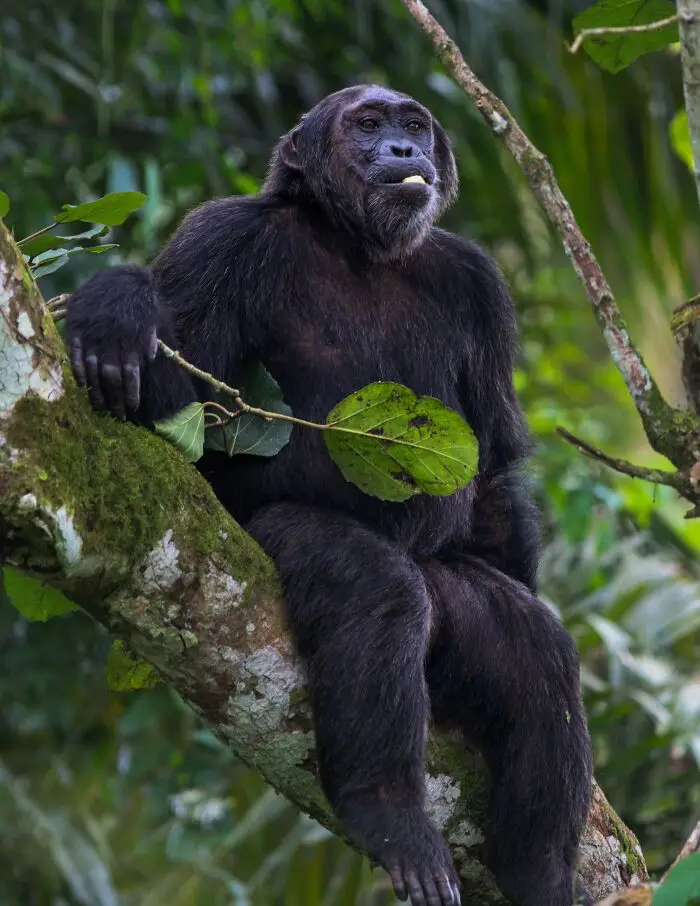
The discovery could also support stronger protection for Loasi Forest Reserve, home to an endangered chimpanzee population whose unique behaviors and traditions are worth preserving