

Most people want those closest to them to be there when they say “I do” on their wedding day. Traditionally, family members are among those people, but some people may not have a good relationship with their parents, siblings, cousins, or grandparents, making it difficult to have them on their special day.
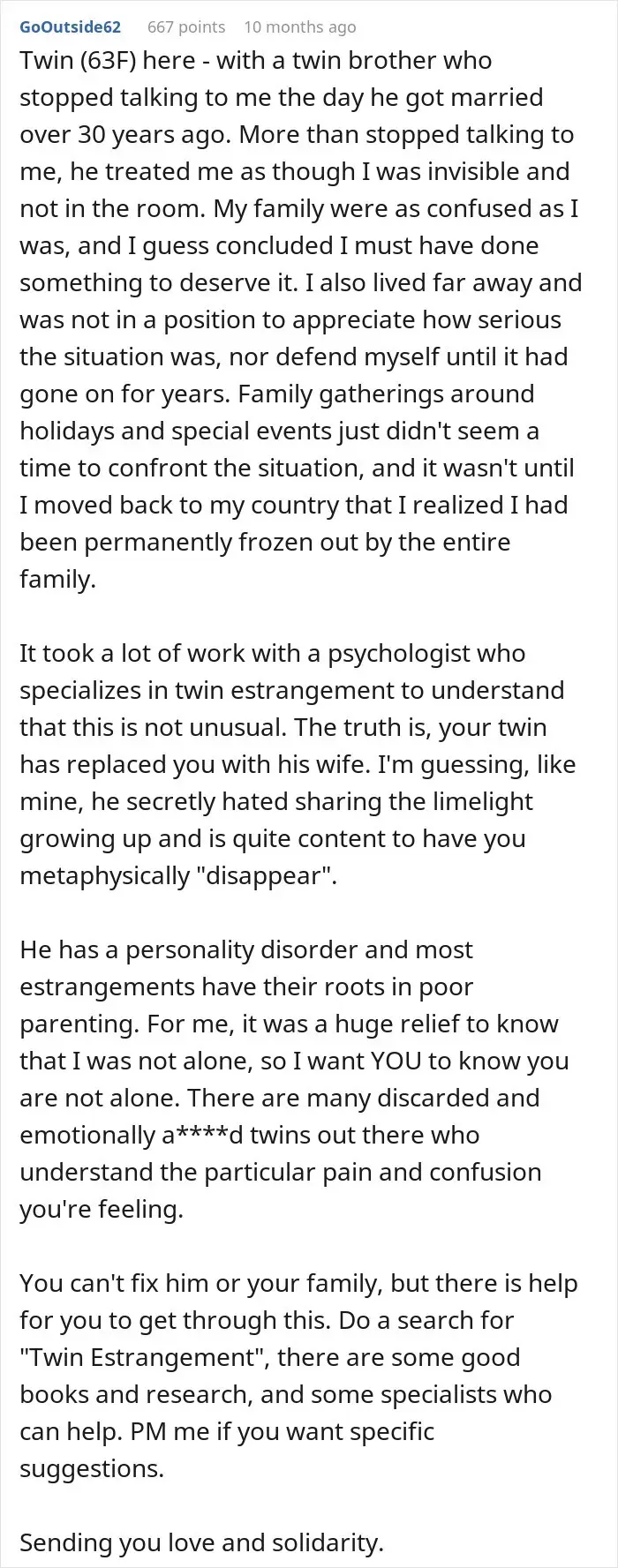
This woman experienced real shock when she realized her twin brother had disinvited her from his wedding. Since they were always like two peas in a pod, his sudden behavior puzzled her, and because she had to make travel arrangements for a 10-hour flight, his ignoring her messages seemed suspicious. As time went by, it became clear there might be more going on, and even parents and other siblings got involved in the drama.
A sister was receiving mixed signals about whether her twin brother wanted her at his wedding

She found out about it from other people, and when she tried to reach out, he ignored her




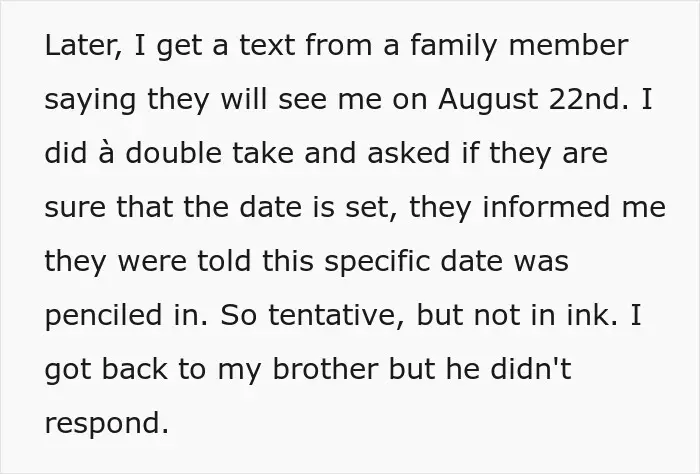

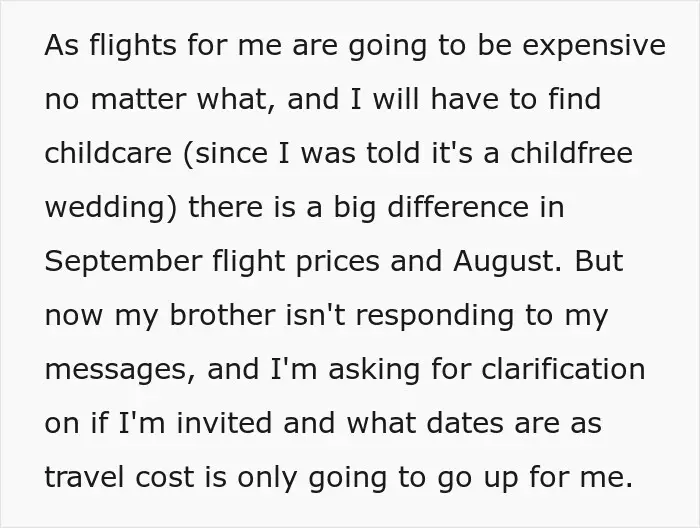





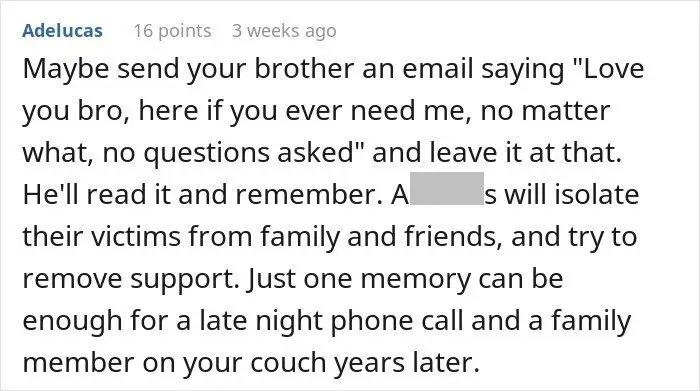
Some people thought the OP was overthinking it, others pointed out that their relationship wasn’t as good as she thought

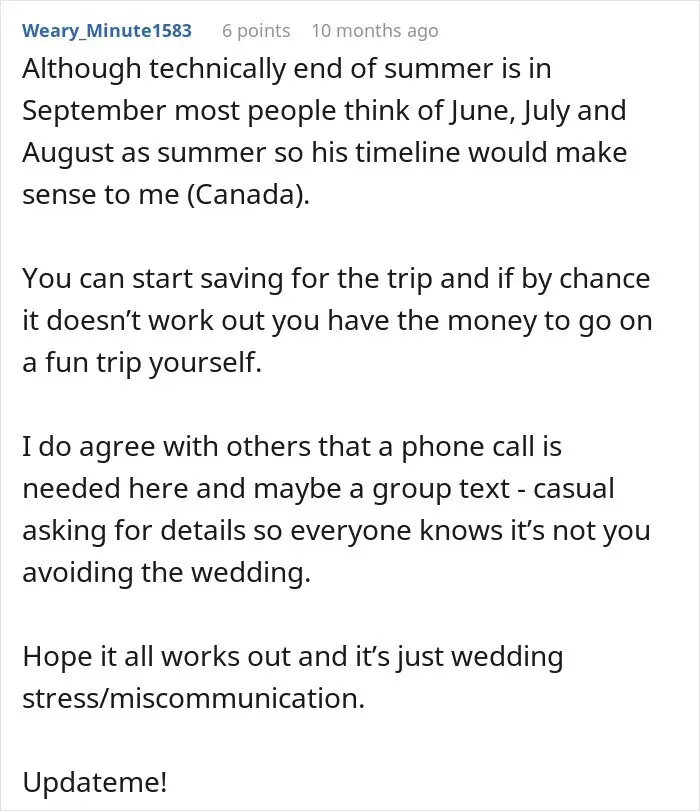
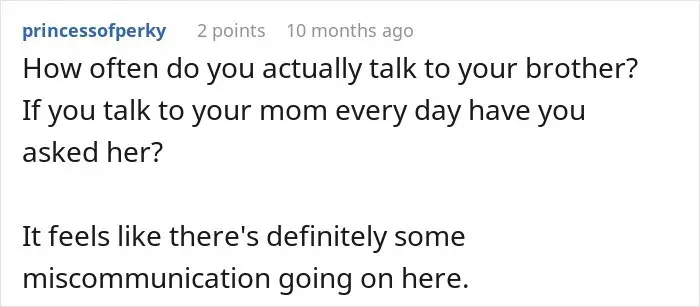


Sudden estrangement is usually years in the making, but the other sibling often doesn’t know that
Sibling estrangement often hurts in a very particular way. A sibling relationship is often the longest one many of us experience in life; a sibling is a person who knows you from early childhood up until the very end of your life. According to statistics, about 8% of Americans are estranged from a sibling, while 27% don’t have a relationship with a relative at any given time overall.
The way the OP recounts this story, it seems like her brother cut contact out of the blue: their relationship was good, and then, suddenly, he just refused to text and call her back. Florida Supreme Court certified mediator and conflict coach Sapir Saadon writes that while this may seem like what happens to one party, there’s more likely more to the story.
“One sibling often experiences the cutoff as a shocking, unexplained abandonment; the other experiences it as the long-overdue end of something painful they tried to signal for years,” she explained. “Both of these stories are usually sincere. Understanding that your sibling's version of events is genuinely different from yours — not a lie, but a different lived experience — is the single most important preparation for any attempt at repair.”
It’s sort of like the “divorce came out of nowhere” phenomenon. In reality, there’s usually something that triggers siblings to finally go no-contact, whether it’s years of unspoken resentment or a painful event. And until the other sibling understands that and doesn’t take responsibility for something on their part, reconciliation is unlikely.
Some advice from a family conflict mediator about how to have the first conversation with your sibling post-estrangement
According to Saadon, it’s important to figure out why you want to reconcile with your sibling. Until a person is ready to listen to their sibling’s side of the story without arguing or wanting to be proven right, talking may be of no use.
“Each person arrives with years of rehearsed arguments and a deep need to finally be understood, which means both talk and neither listens,” she writes. “The conversation has no container: no agreed topic, no time limit, no rules about interrupting, no plan for what happens if it gets hot.”
It’s unrealistic to hope to solve 20 or 30 years of resentment. That’s why siblings need to decide beforehand about the scope of their first conversation. A good start is getting to the bottom of why the no-contact happened and what triggered it, with both sides giving their version of the events.
Neither sibling should seek a verdict on who’s right — this is not about validation but about hearing and understanding each other’s feelings. That’s where the “no interruptions” rule also comes in: both parties listen to each other without talking over the other sibling and only get to respond after one has said their piece.
It’s okay if reconciliation doesn’t happen, but clarity is always the best path to having at least minimal contact. Siblings need to set boundaries around whether they’ll keep talking, how often, and at what pace. These should be decided very explicitly. “Ambiguity after an emotional conversation is where relapses happen,” Saadon writes.
Because she lived on another continent, she kept texting him about making arrangements



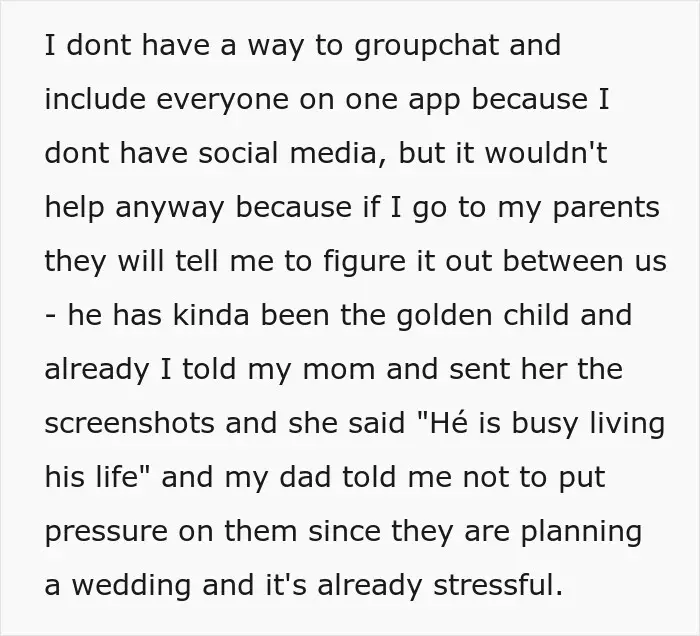
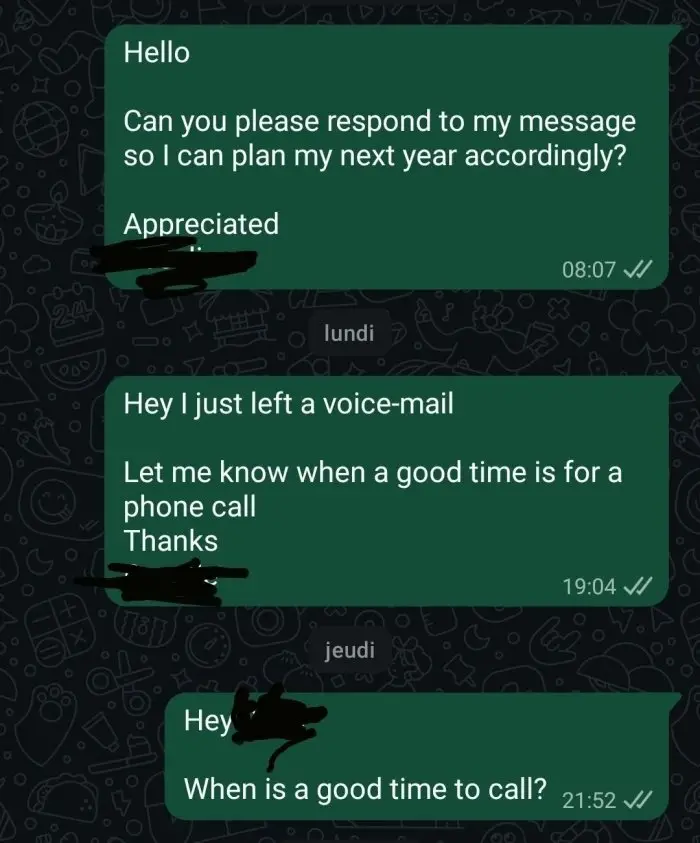
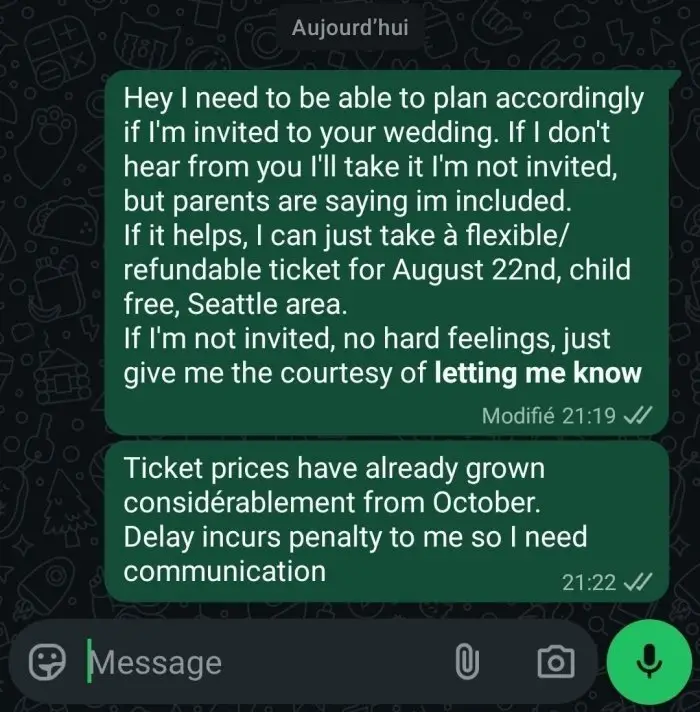
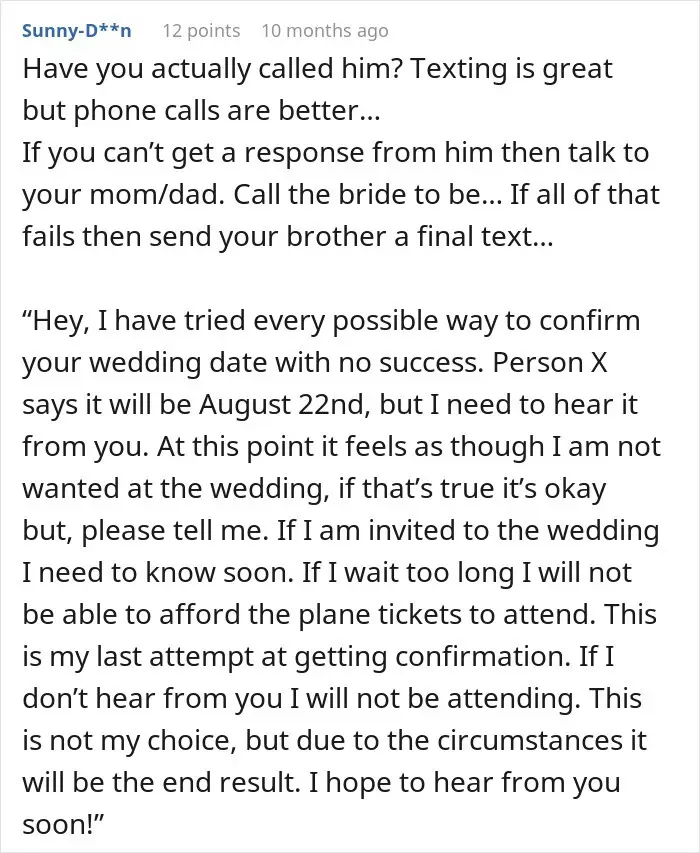
Commenters agreed that something fishy was going on and advised the OP to hold off on buying the plane tickets
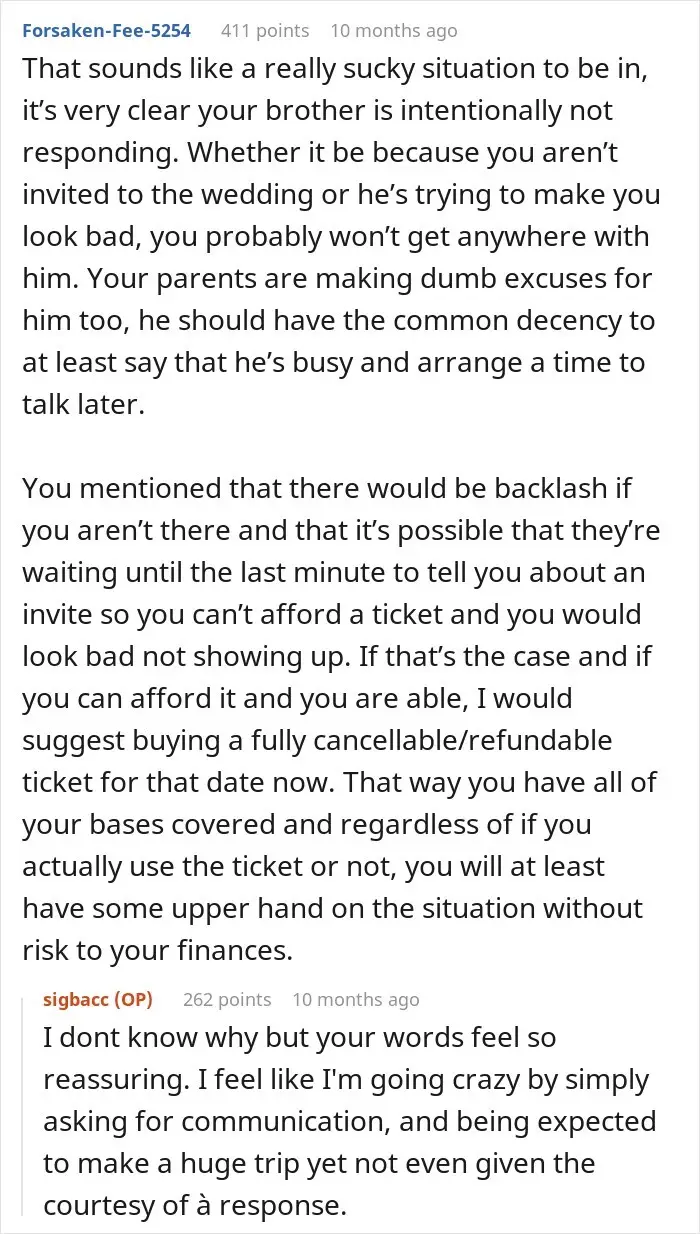
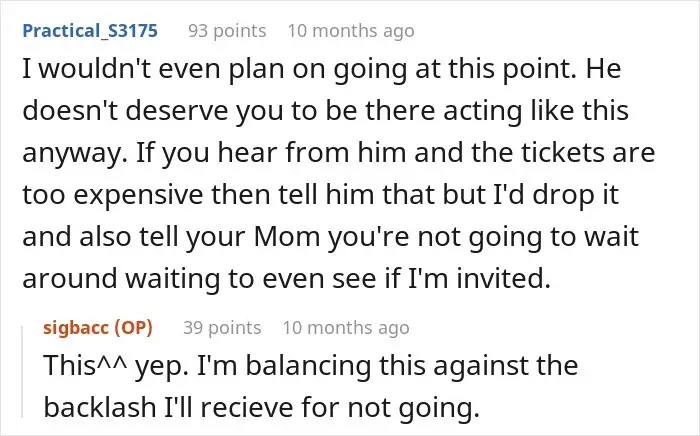




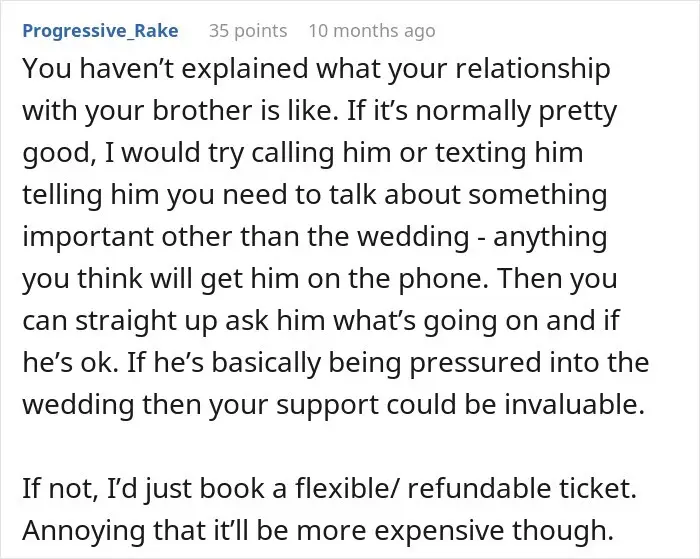


Finally, the brother responded with a curt and impersonal text



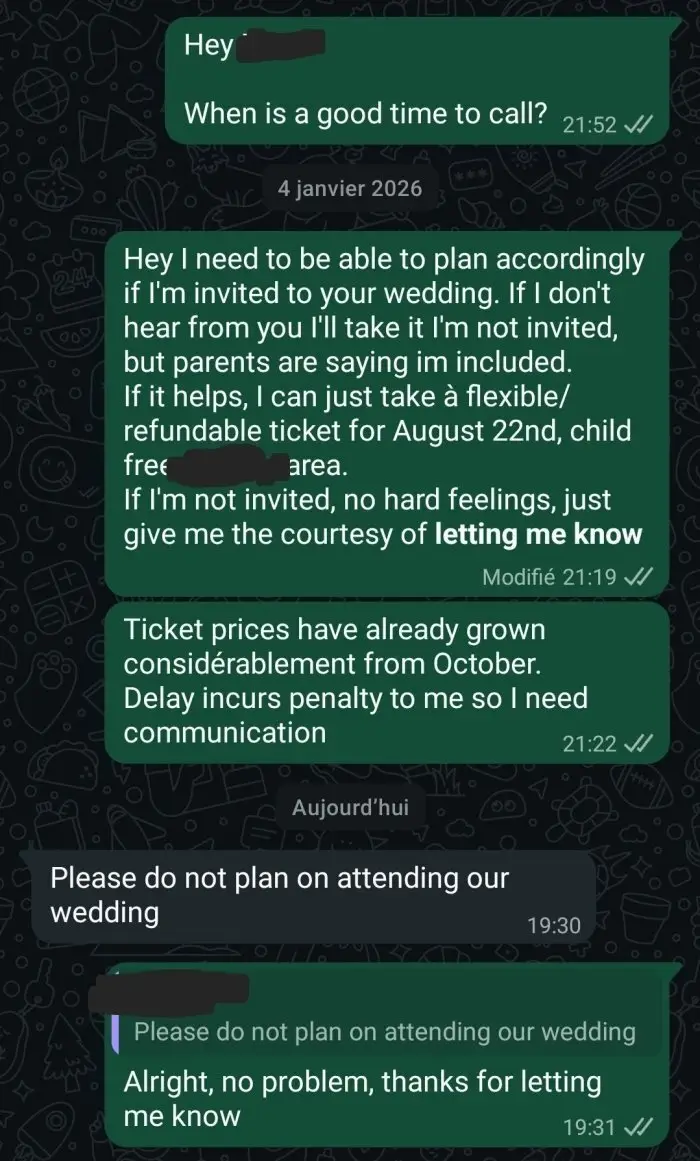
Commenters were confused about what exactly was going on, but mostly sided with the OP







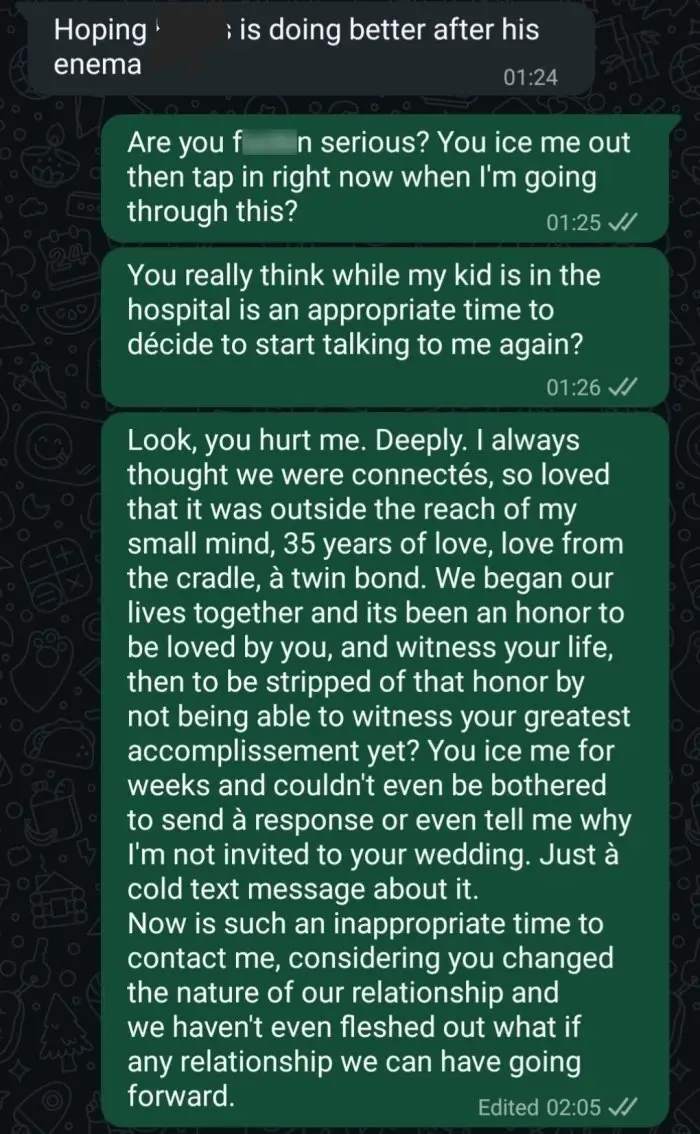
Then, when OP’s son was in the hospital, the brother decided to text again


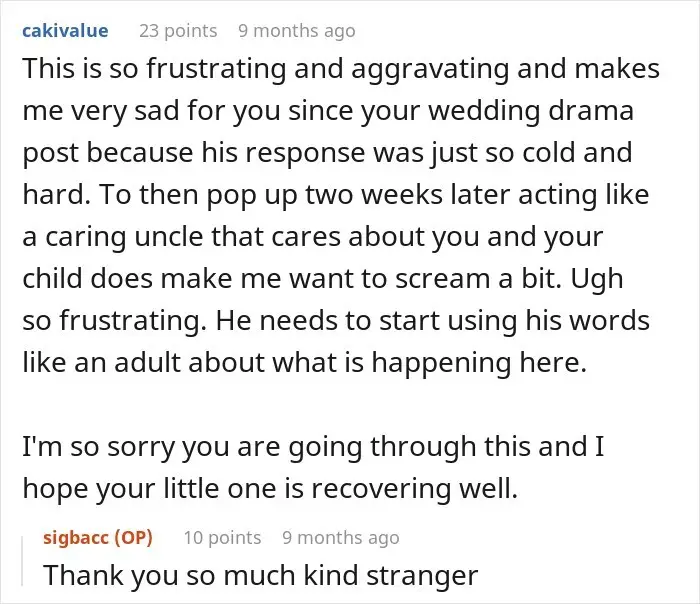
“He needs to start using his words like an adult,” one commenter pointed out







The wedding happened and — surprise surprise — it wasn’t drama-free









“That marriage won’t last long,” the commenters delivered their verdict