

Doing someone a favor requires mutual respect. If someone helps you out, the sensible response would be to express gratitude, not push your luck and see what else you can get away with.
This simple concept seems absent in this woman, who asked to take her wedding photos in a man’s house. She said it was the home she grew up in, and she wanted snapshots on the front porch, where she had one of her many core memories.
But instead of sticking to the 15 minutes she promised, the woman and her bridesmaids spent hours in the house and caused a ruckus. The homeowner had enough and set boundaries, yet he still came off as the villain.
A bride thought she could push her luck after a man did her a favor
It happened when the woman asked to take photos in the man's house, saying it was her childhood home
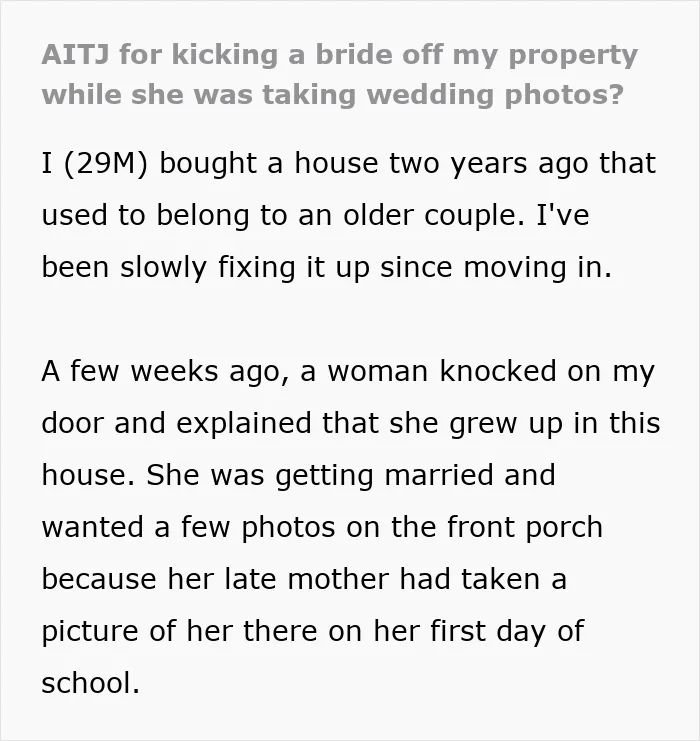
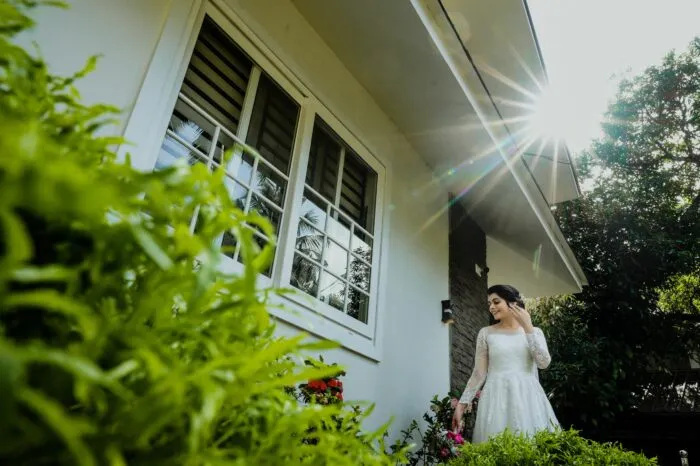
However, her request of 15 minutes turned into hours of unuly behavior

He eventually had to kick everyone out
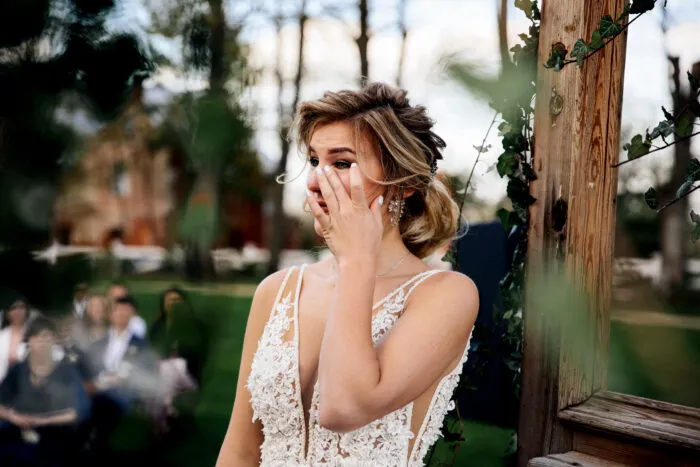
But because the bride went off crying, he wondered whether he was being too harsh
Setting boundaries requires emotional forces that may make it difficult for some people
The homeowner was within his rights to say no to the woman’s request to take photos on his property. He was also within his rights to kick them out as soon as the woman and her bridesmaids went past the 15 minutes they asked. Yet it took him three hours to enforce his boundaries, and he even wondered if he was being a jerk.
Setting boundaries, even when we have the right to do so, can be difficult. According to board-certified psychiatrist Dr. Dimitrios Tsatiris, strong emotional forces like guilt, shame, conflict avoidance, fear of repercussions, and need for control are the reasons why.
One repercussion people may fear is coming off as mean when they say no. According to psychotherapist Leah Marone, it can be a heavy burden to bear.
“These intense efforts to appease and protect everyone else often lead us to overextend, putting other people’s needs and wants above our own. Over time, this pattern becomes a blueprint for internal disconnect, fueling anxious thoughts and mood shifts,” she wrote.

Enforcing boundaries effectively involves being direct and empathetic at the same time
As uncomfortable as it can be to say no or enforce boundaries, it is a necessary part of life. As Cleveland Clinic psychologist Dr. Scott Bea notes, saying yes all the time can lead to feelings of anger and resentment, among other “painful consequences.”
“Think about it as carrying a set of logs in your arms. There’s going to be one log too many at some point, and they will start falling to the ground,” he said.
So what's the best way to enforce necessary boundaries? Dr. Bea says sending the message firmly and directly is key, while still showing empathy toward the other person.
“It can be effective to acknowledge that you might be creating difficulty for the person by saying no,” he stated. The author didn’t specify the words he used or how he told the women to pack up and leave. But assuming he wasn’t rude, he shouldn’t feel guilty about drawing the line at a stranger’s rude behavior in his own home.
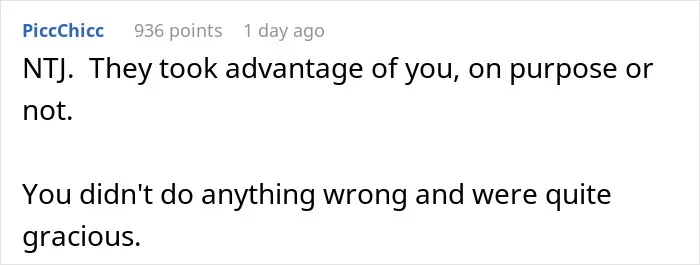
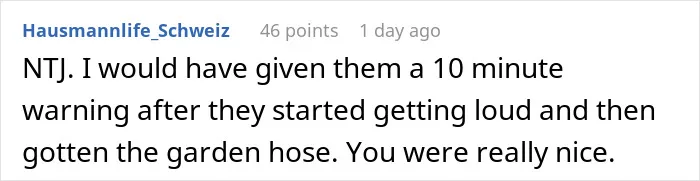
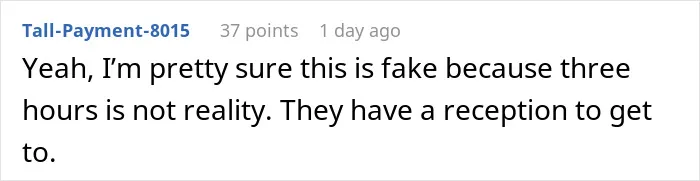
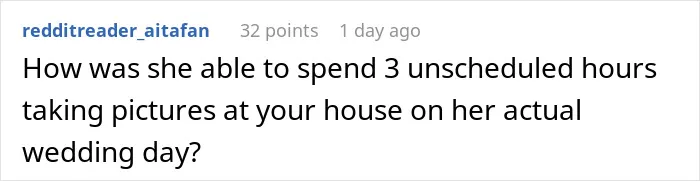
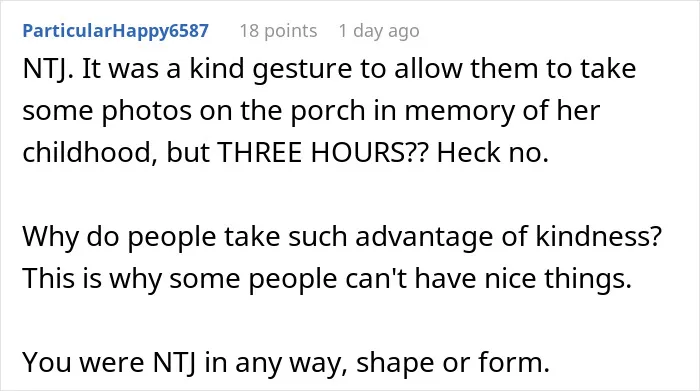
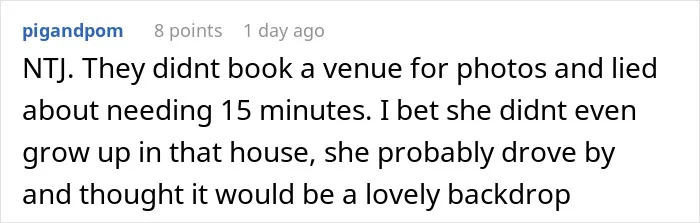
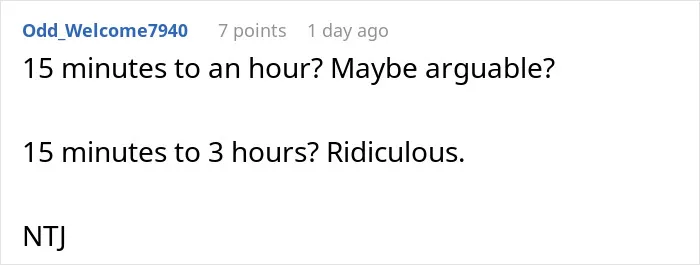
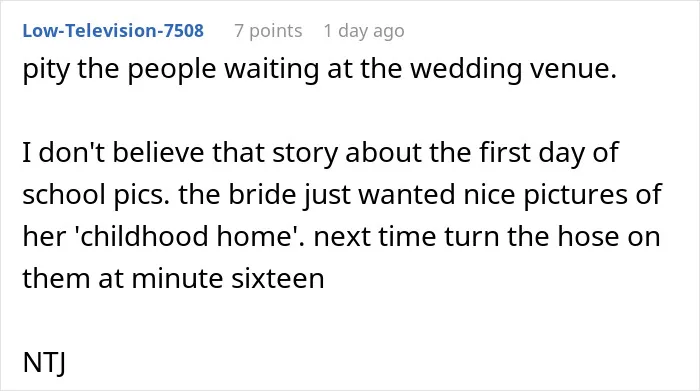
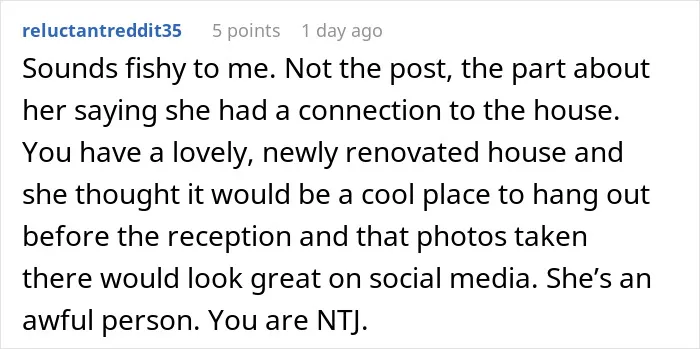
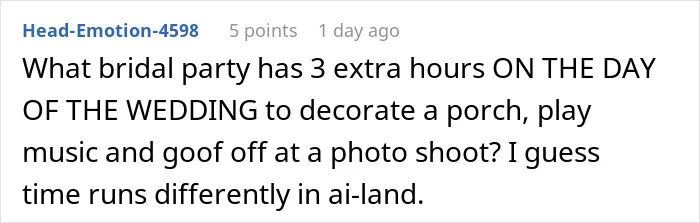
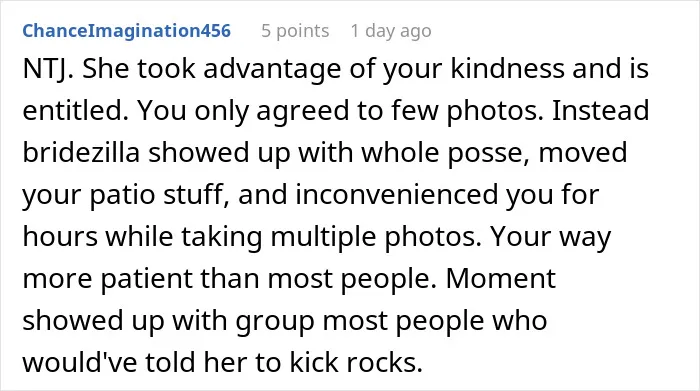
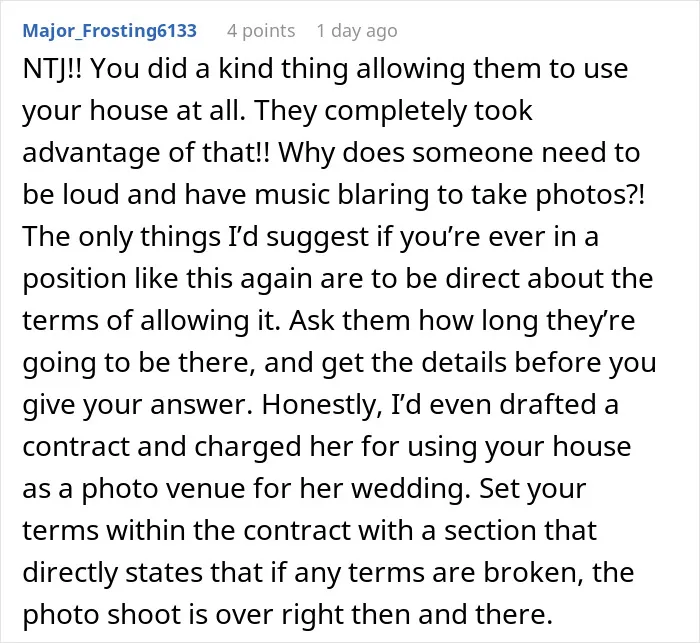
Most people sided with the author