


Plenty of people love AI for how quickly it can answer just about any question. The catch is that it also has a well-documented habit of making stuff up and passing it off as fact, which can end up causing some pretty serious problems.
This post may include affiliate links.
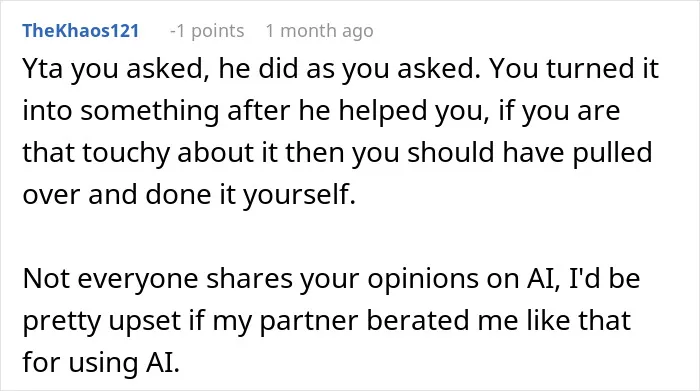
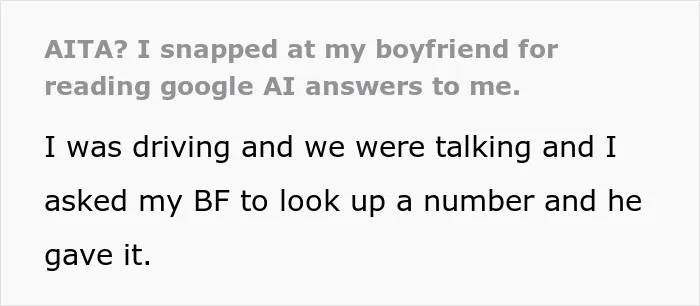
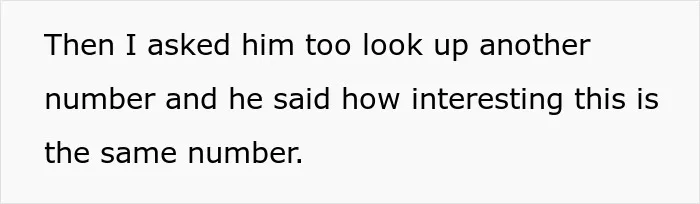
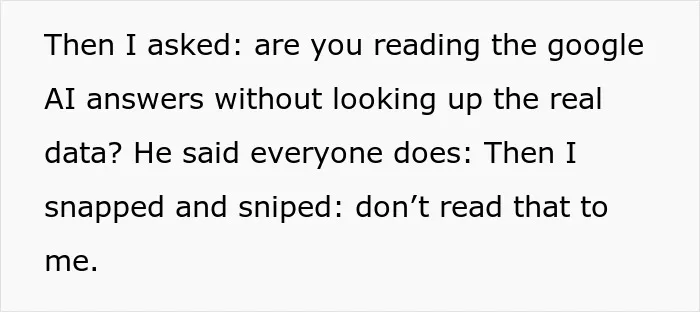
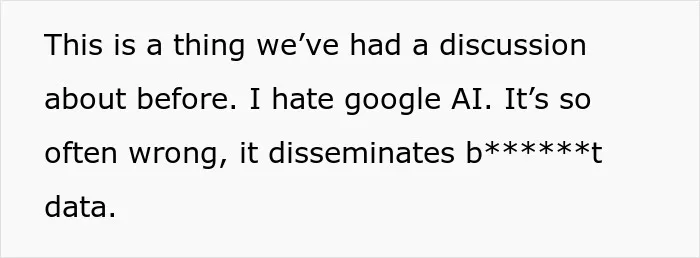
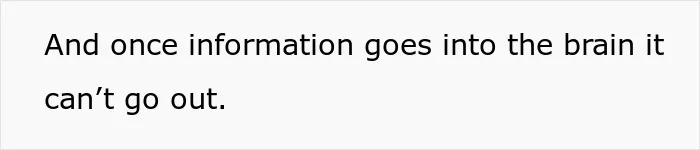
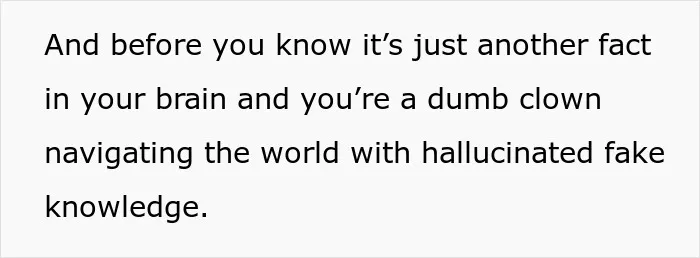
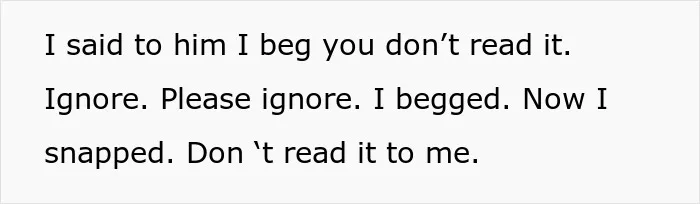
One Redditor has had enough of their boyfriend blindly trusting Google’s AI summaries every time he looks something up. After catching him doing it yet again, they snapped, and a huge fight broke out. Now they’re turning to the internet to figure out whether they went too far.
Read the full story below.
AI can respond to just about any question in seconds, but it also has a habit of getting things wrong

So when one man kept relying on it for answers, his partner eventually had enough


Why does artificial intelligence hallucinate?
When AI first became widely available to the public, it honestly felt like some kind of miracle. The things you could do with it seemed almost endless.
If you didn’t have time to finish Pride and Prejudice for your next book club meeting, you could ask it to summarize the whole plot, and it would have it ready for you in seconds. And if you’d rather hang out with your friends than sweat over math homework, you could hand it off to AI and go catch a movie instead.
Before long, people got so hooked that they weren’t just asking AI to do tasks for them. They were having hours-long conversations with it about their lives and problems.
Some became friends with their chatbots or started using them like personal therapists. Others began dating their digital companions, and a handful actually “married” them, insisting the AI understood them better than any human ever could.
Once the initial excitement wore off, though, it became clear that AI wasn’t always as brilliant as it looked. The same technology that could do your taxes faster than your accountant could also confidently tell you there are only two Rs in the word “strawberry.” And if you corrected it, there was no guarantee it would get it right the second time either.
How could something so smart make such obvious mistakes? It turned out that AI could hallucinate. That means it could confidently give you information that was completely wrong or simply make something up.
A lot of this comes down to how AI works. These systems can’t actually “think” like humans do. They don’t understand the meaning of words in the same way we do, and they don’t always work through calculations step by step.

Instead, many AI models predict what is most likely to come next based on patterns they’ve seen in their training data.
For example, they may have seen the phrase “the sky is blue” countless times, so the word “blue” becomes something that’s very likely to follow “the sky is.” As a result, if you asked what the sky looks like during a red sunset, the AI might still say “blue” simply because that’s the pattern it has seen most often.
This is also why Google’s AI Overview can get things wrong. The mechanism pulls information from web pages and uses it to build a short summary, but it doesn’t “understand” the context behind what it finds.
One time, for example, someone searched for how to stop cheese from sliding off a pizza. Google’s AI Overview suggested mixing about an eighth of a cup of glue into the sauce. Needless to say, please don’t try that at home. The tip came from an old Reddit joke, but the AI didn’t catch the sarcasm and repeated it like genuine advice.
When you’re actually looking for useful information, mistakes like that can be incredibly frustrating. In more serious cases, they can even be dangerous. So it’s easy to understand why the author of this story was so fed up with their boyfriend relying on AI answers without checking them.
The bigger question is where to draw the line. Is it fine to use AI as long as you double-check important information? Or is it something you should avoid altogether, like the author of this story thinks? Share your thoughts in the comments.
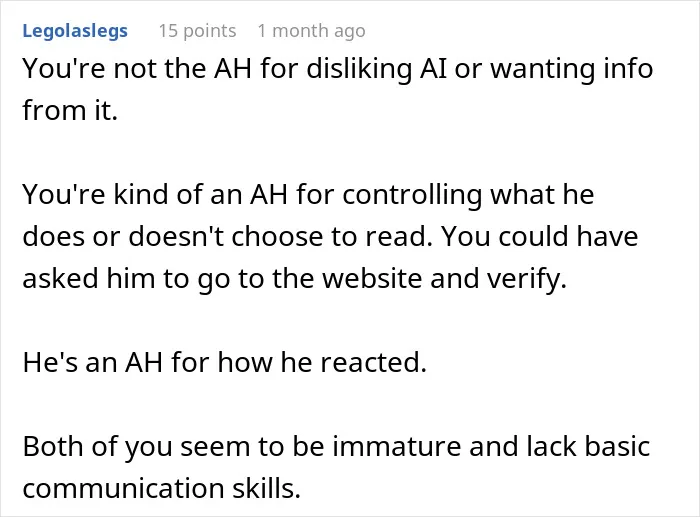
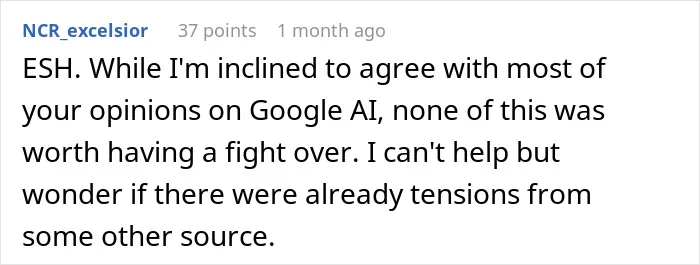
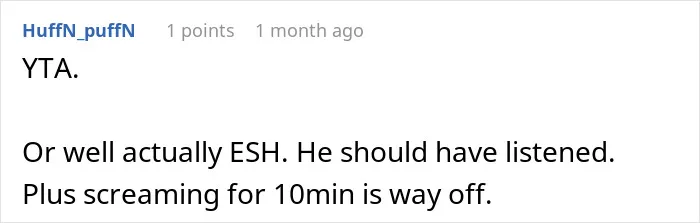
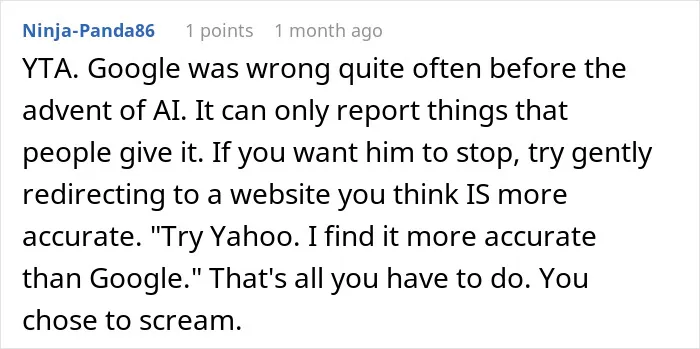
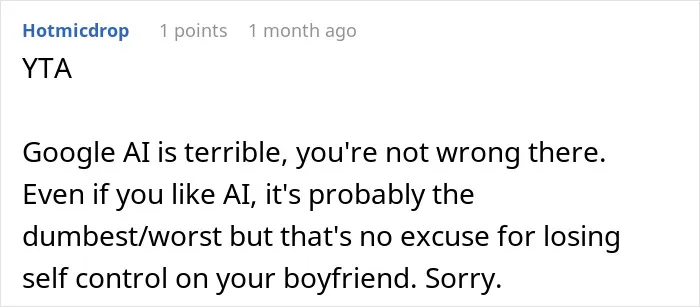
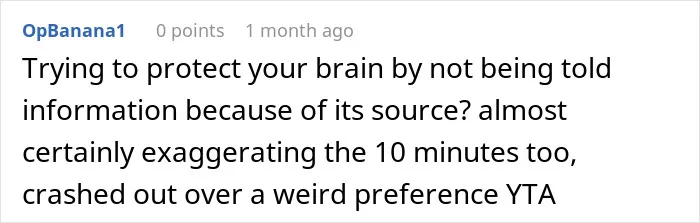
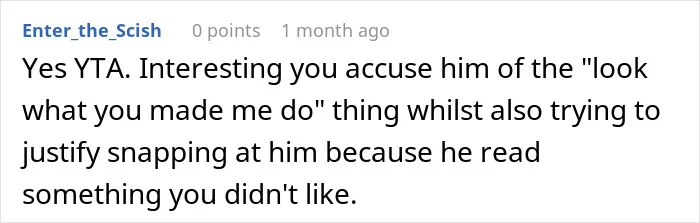
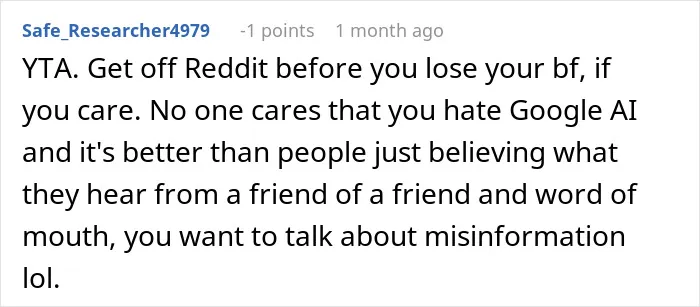
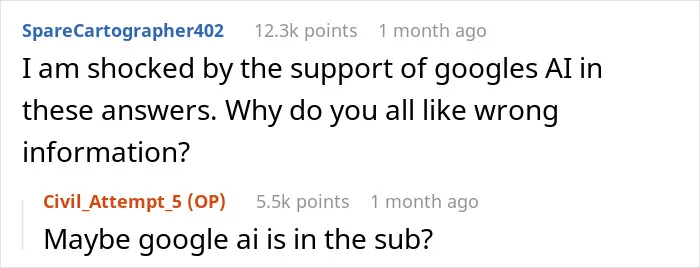
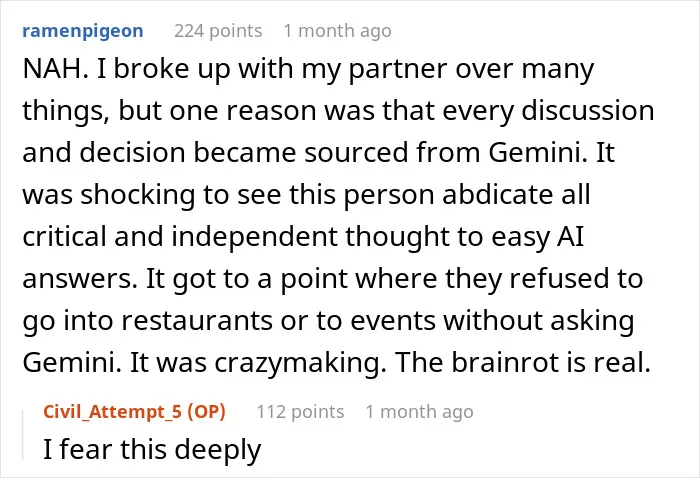
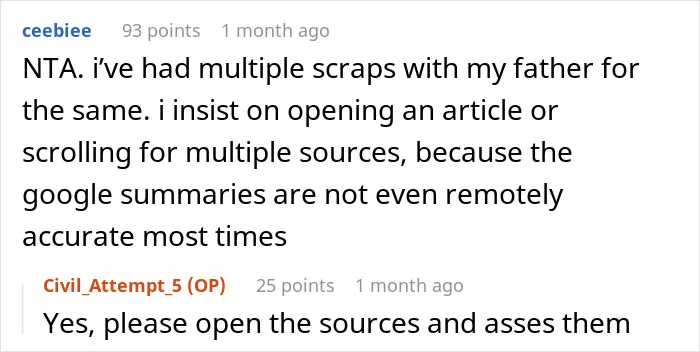
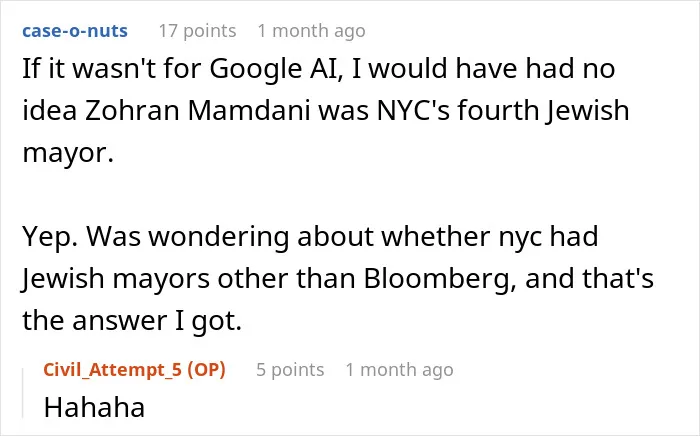
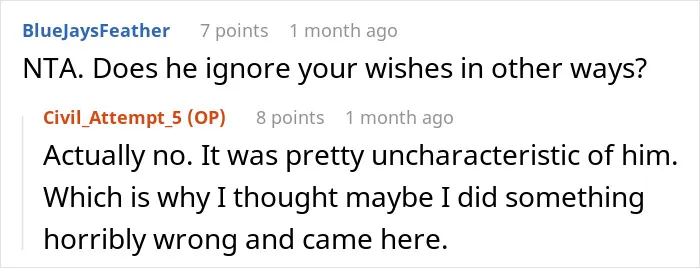
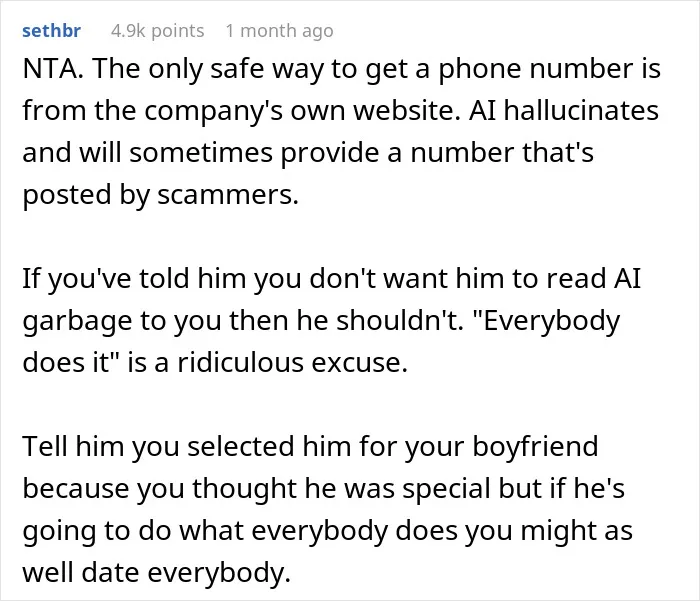
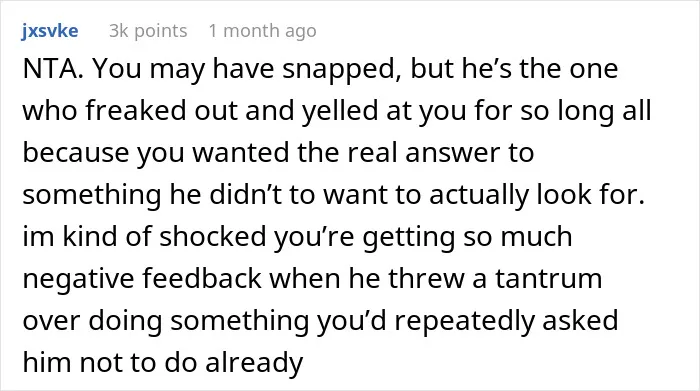
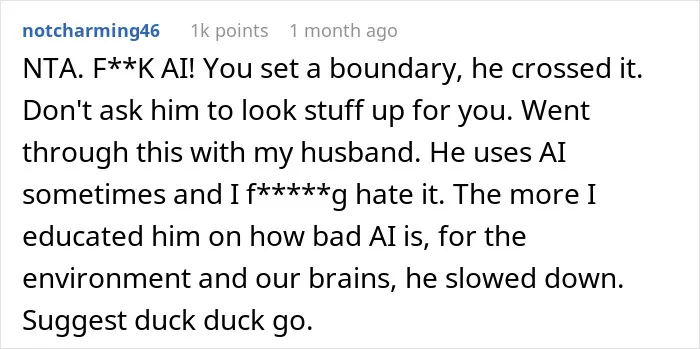
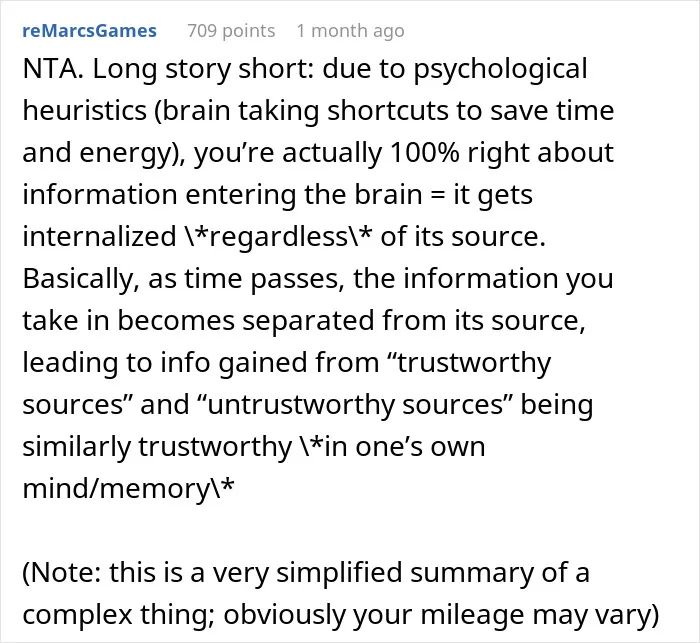
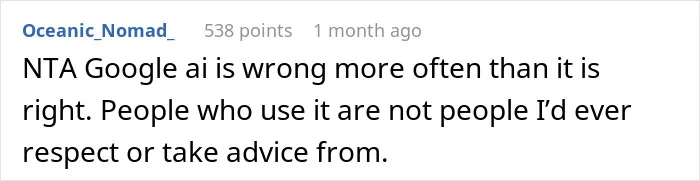
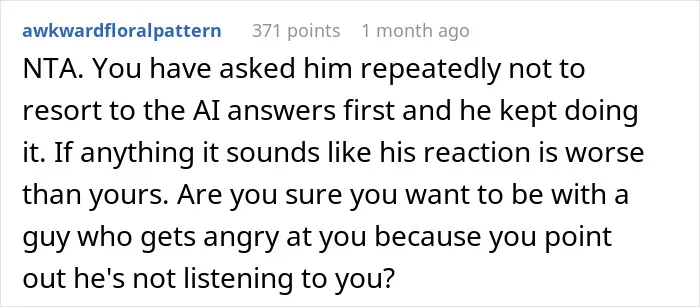
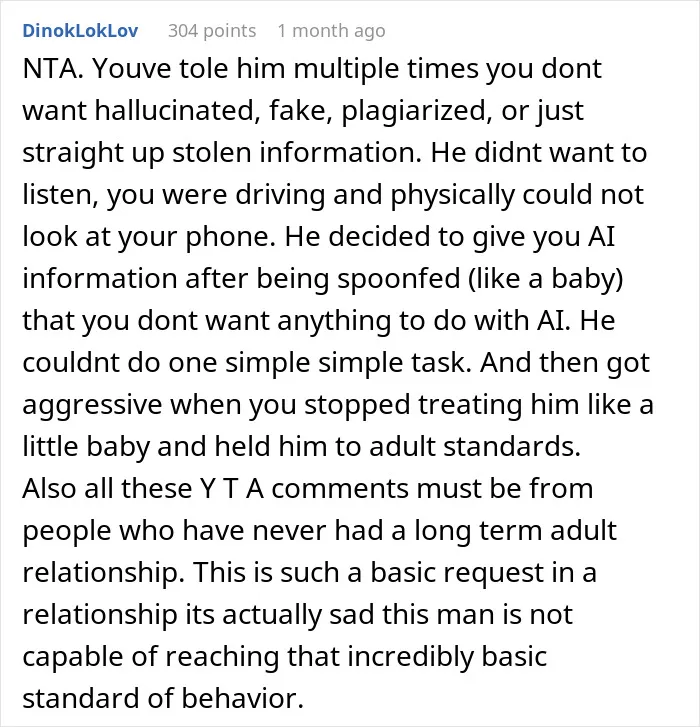
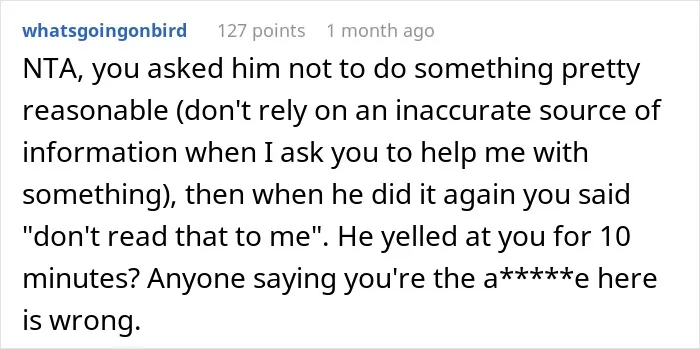
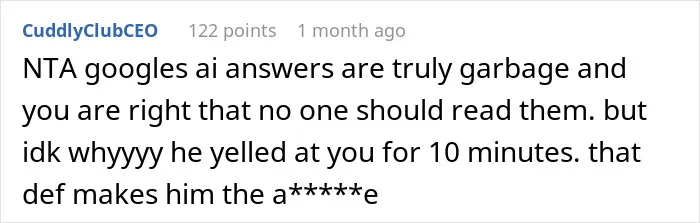
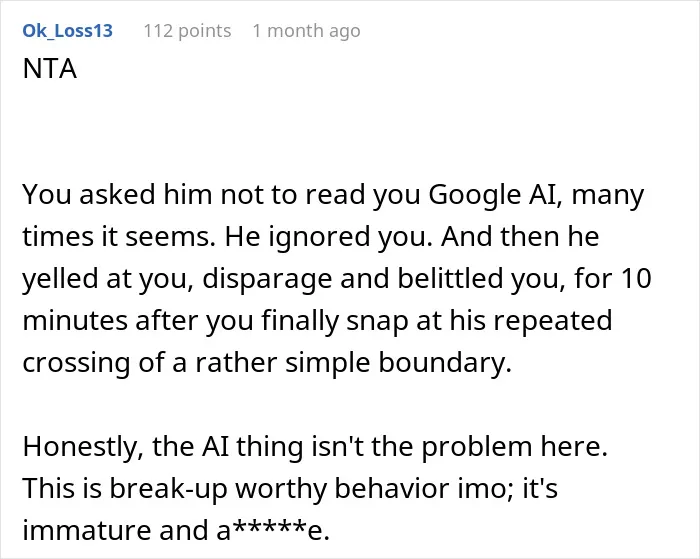
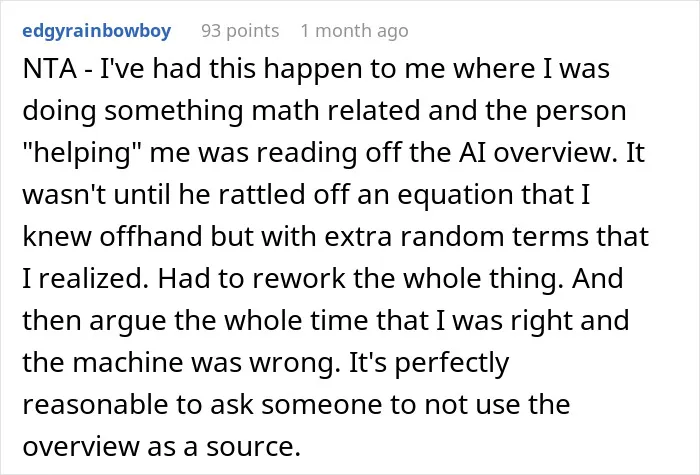
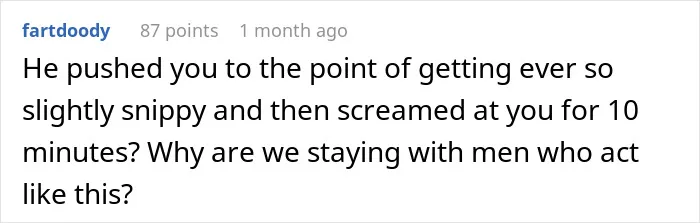
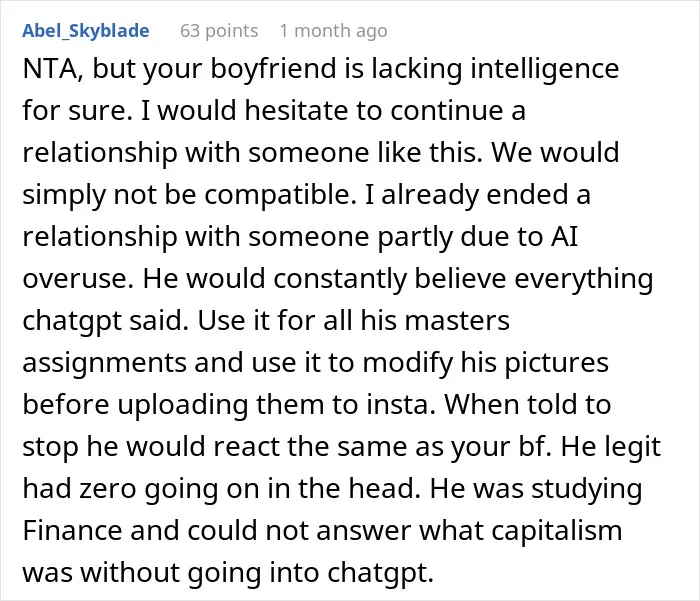
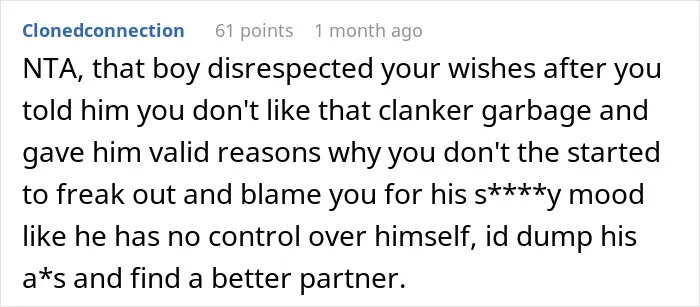
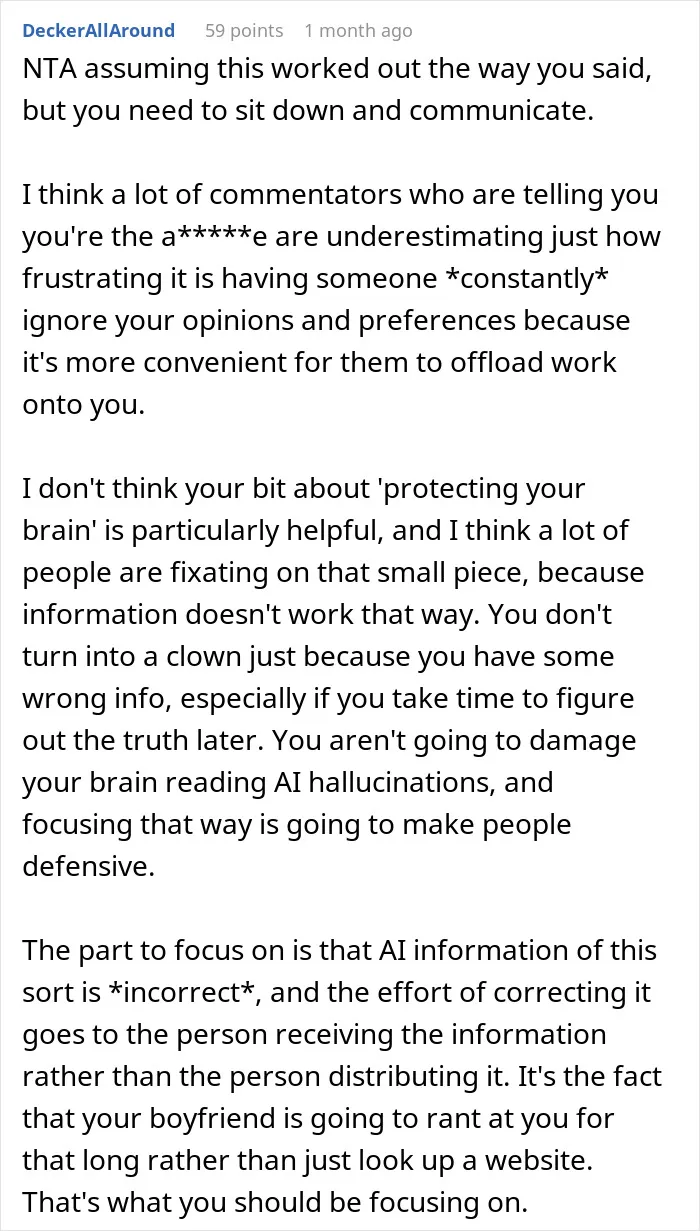
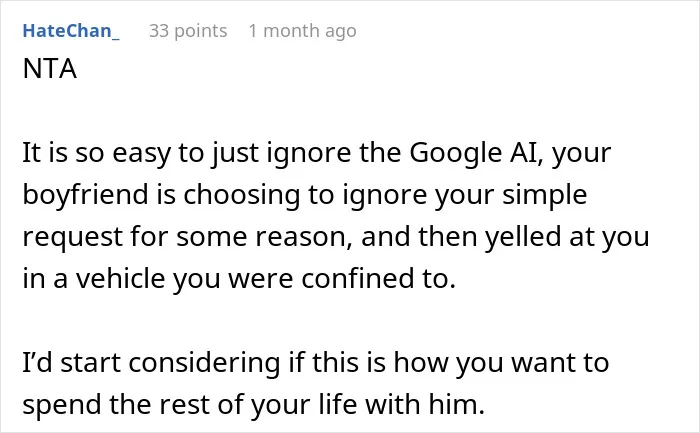
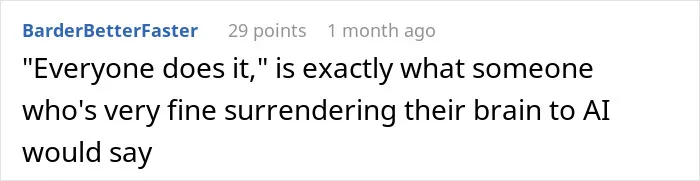
Many people agreed that the boyfriend’s reaction was way over the top and that relying too heavily on AI summaries is probably not a great idea

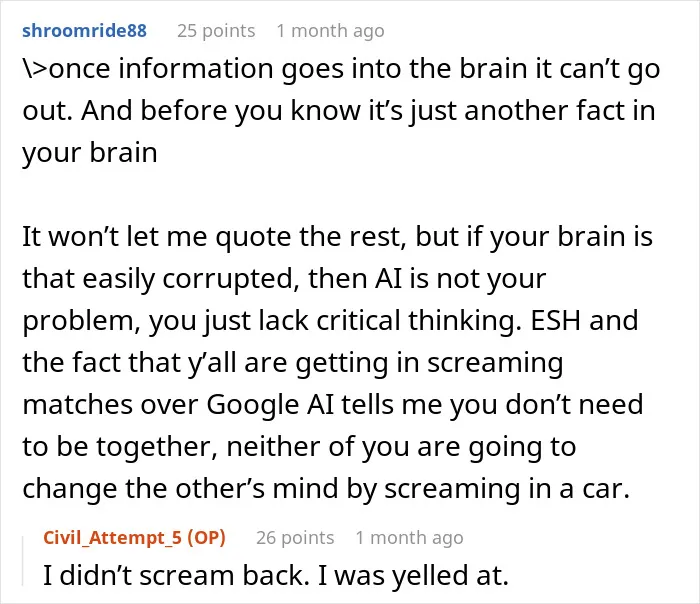
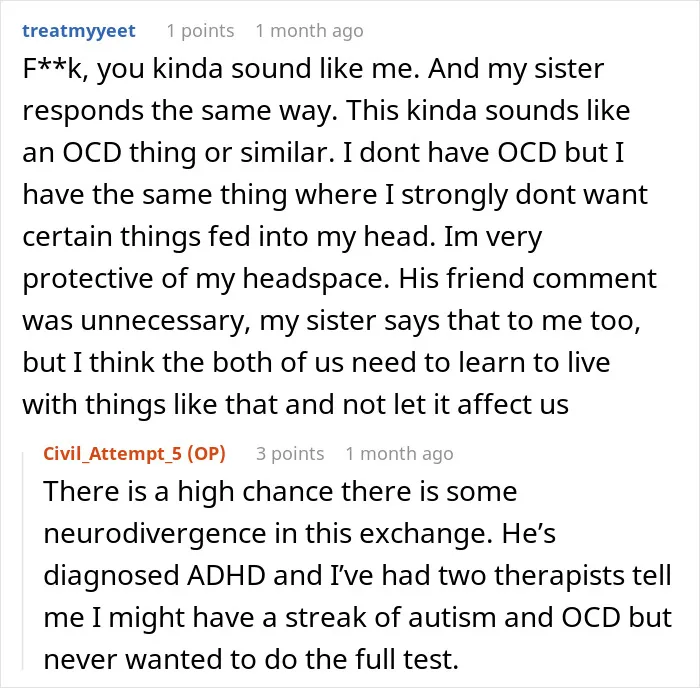

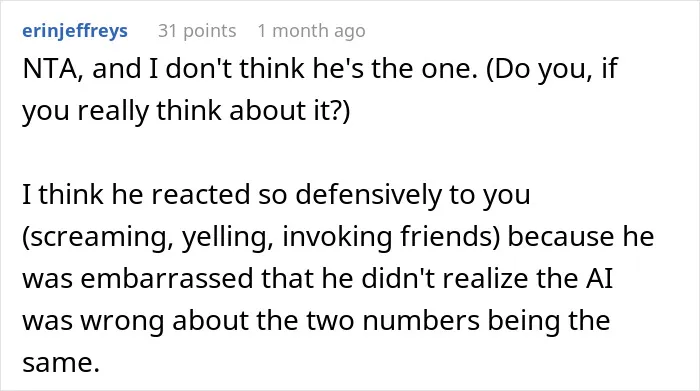

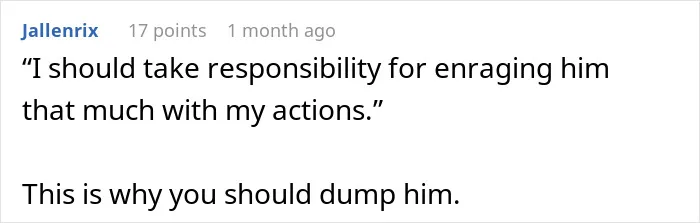

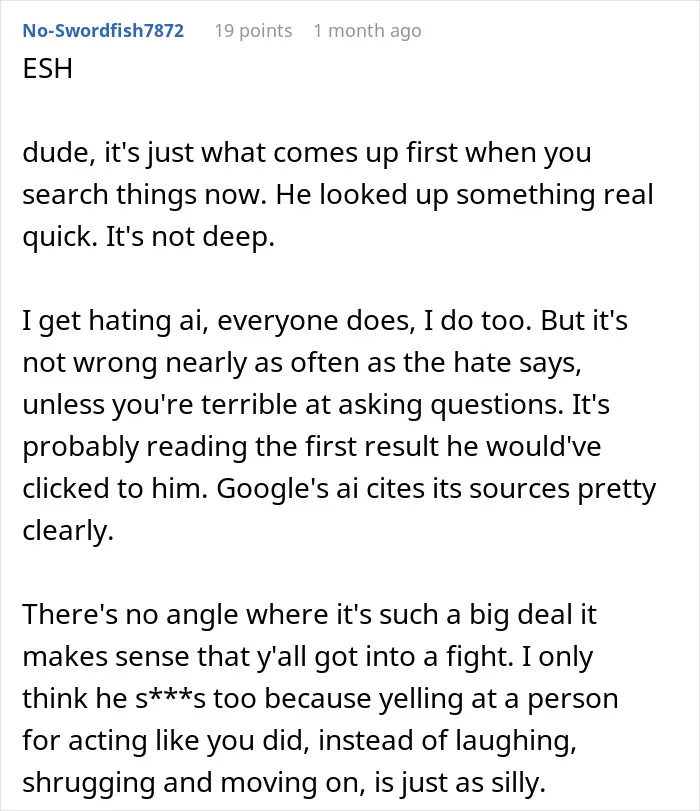
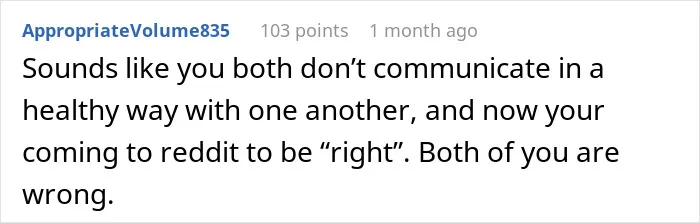
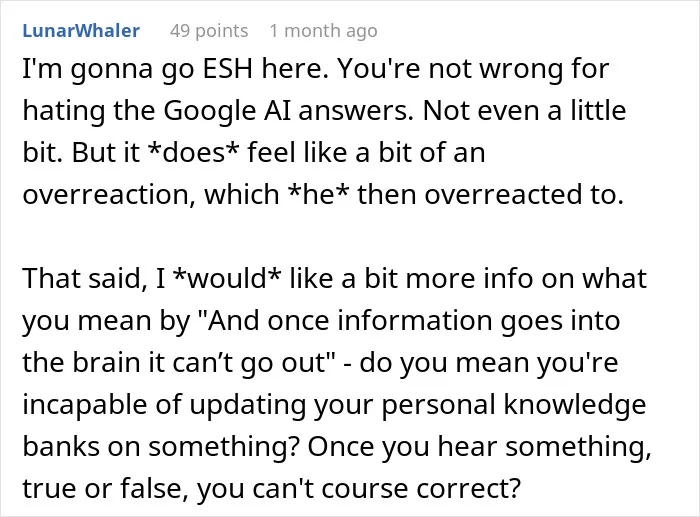
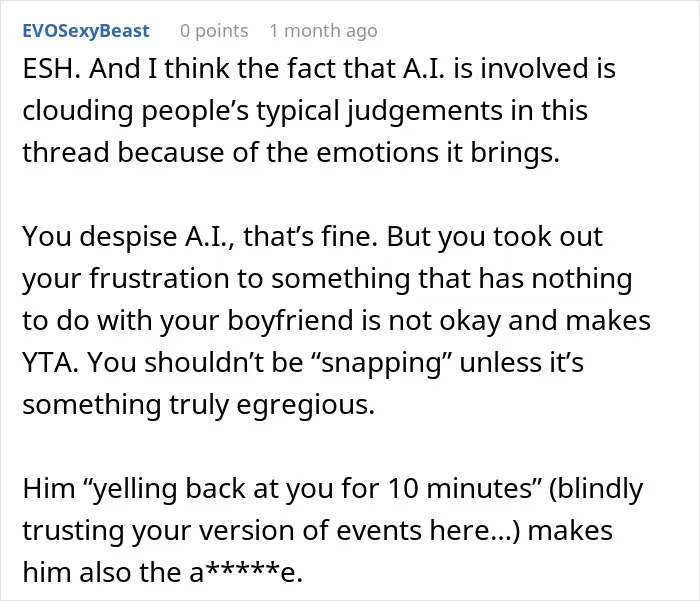
Others, however, felt that neither person handled the disagreement particularly well