

Everyone has baggage that their partner has to sift through to understand who they are. But some folks end up carrying a bit too much with them. So there comes a time when one might have to choose between keeping the relationship going or ending things.
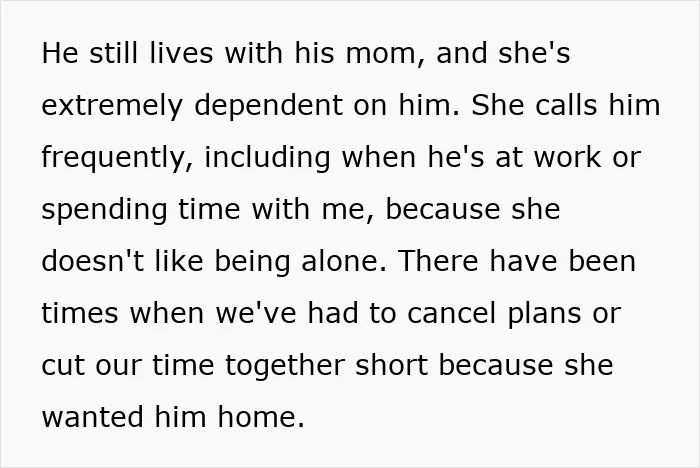
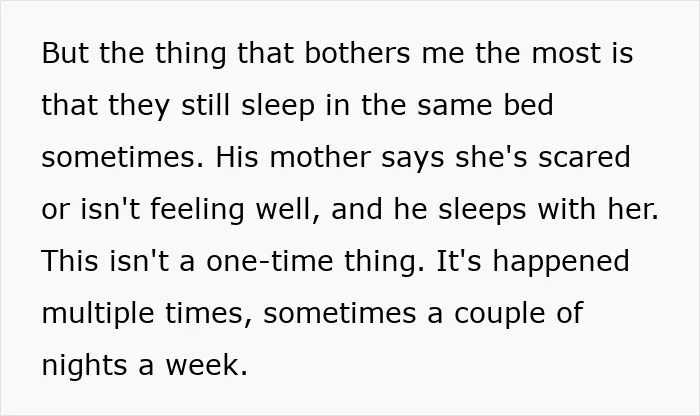
A woman turned to the internet for advice when she started to notice just how close her boyfriend of over a year was with his mom. Besides living together, she got the feeling he was never going to move out. But when she learned he sometimes slept in the same bed as her, she decided to get a second opinion.
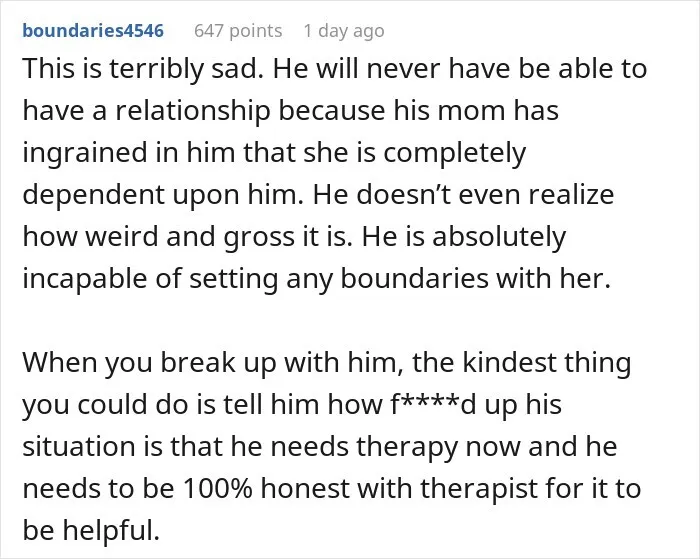
Some men remain too close to their mothers

So one woman wanted a second opinion on her BF who lived with his mom











Being close to your parents can be good, being a manchild isn’t
Few labels start an argument faster than “momma’s boy.” Some people hear an insult, others hear a compliment, and plenty land somewhere in between. A man who phones his mother every Sunday, remembers her birthday and fixes her gutters is simply close to his family. The situation in this story sounds like something different, a pattern therapists often call enmeshment.
GoodTherapy defines enmeshment as a blurring of boundaries between people, and one of its listed signs is a lack of appropriate privacy between parent and child. A mother who stays in the room while her adult son gets dressed, after he has asked her to leave, is the kind of example that definition has in mind.
It is worth remembering that enmeshment does not always begin with bad intentions. Healthline’s guide to enmeshed families notes that these patterns can grow out of hard circumstances, such as a parent dealing with addiction or mental illness, or a child who once needed extra protection. A mother who fears being alone may be genuinely frightened, and a son who answers every call may be acting out of real love. Opinions tend to split sharply between “he needs support” and “this is a dealbreaker,” and both reactions come from somewhere real.
Several details in the story echo commonly described signs. Trouble making decisions without the other person and feeling responsible for the other person’s emotions are typical markers, which echoes a man who checks daily on whether his mother has eaten and expects chaos if he moves out. Simply Psychology adds that in enmeshed families, steps toward independence often meet with hurt feelings or guilt, which can leave a person feeling selfish for wanting ordinary separation. The same piece says outsiders, including a later partner, may end up feeling unwelcome or like a threat to the family system.

When living at home, culture matters too. Plenty of families around the world treat adult children living at home and caring for aging parents as normal and admirable, and a partner’s discomfort does not automatically mean a family is doing something wrong. Sharing a bed with an adult child because a parent feels unwell or frightened is something families view very differently. The more useful question is whether everyone involved still has room to say no.
Which brings us to boundaries, a word that gets thrown around often and understood less often. A boundary is not an ultimatum or a punishment. It is a statement about what a person will do. Asking a parent not to call during dinner is a request. Deciding to return the call after dinner is a boundary. The distinction matters because the most revealing moment in the story is a small one. He told his mother his girlfriend had not come over to hear a long list of problems, and when she pushed back, he let it go. A boundary that disappears under pressure only teaches everyone that pressure works, so consistency counts for more than any single brave sentence.
The therapy detail invites a similar look at the gap between intention and action. Agreeing to go shows willingness, and months without a first appointment shows how hard the next step can be. For anyone weighing a similar situation, progress is easiest to judge when it can be seen rather than promised. An attended session counts. So does a realistic plan and timeline for a place of his own, a set rhythm for contact with his mother, such as one daily check in rather than calls throughout the workday, and separate sleeping arrangements. Those changes can also help the mother, who may benefit from other sources of company and support so her son is not the only option.
It also helps to be clear about who holds the line. A partner cannot set boundaries with someone else’s mother on that person’s behalf, and a conversation framed as “choose me or her” tends to produce defensiveness rather than change. Naming specific needs, such as plans that stay plans and privacy as a couple, and asking what he is willing to do keeps the focus on the relationship rather than on whether he loves his mom.
Whether this couple makes it depends on things no post can show, mainly whether he wants the change for himself. What the story does make clear is that loving a parent and having a separate adult life are not opposites. Do you agree? Share your thoughts in the comments below.
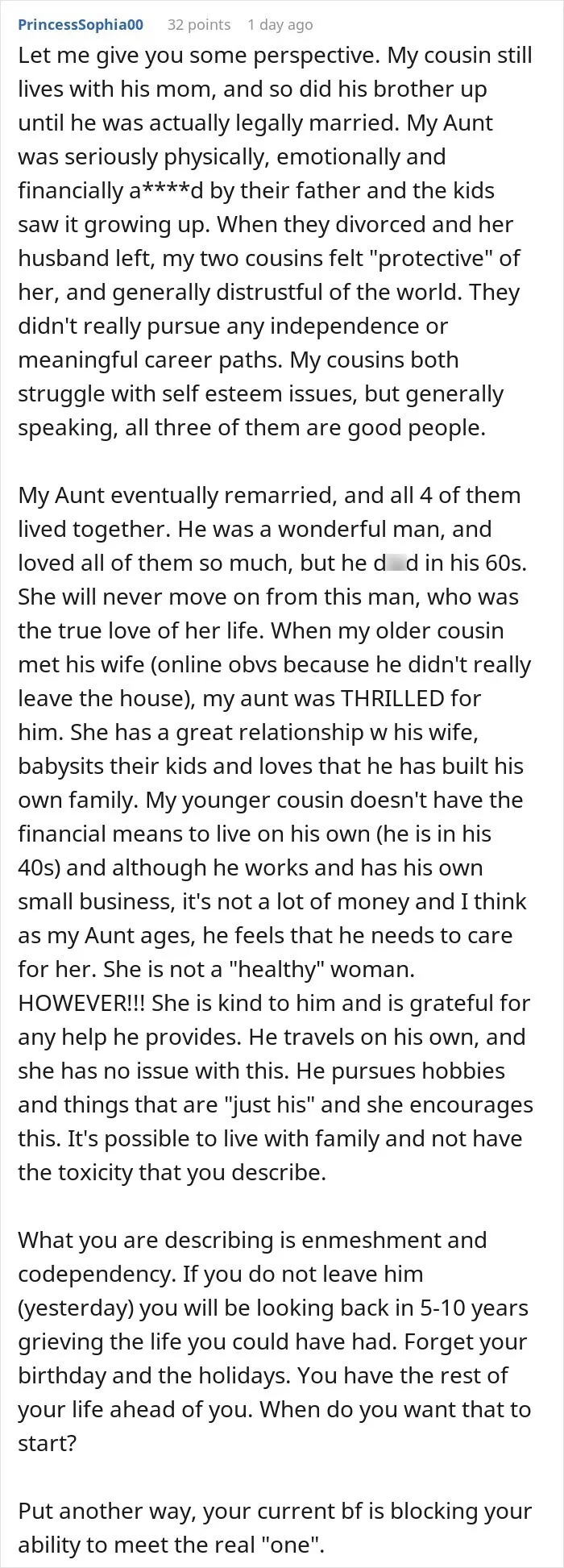
Readers were surprised by the man's relationship with his mom