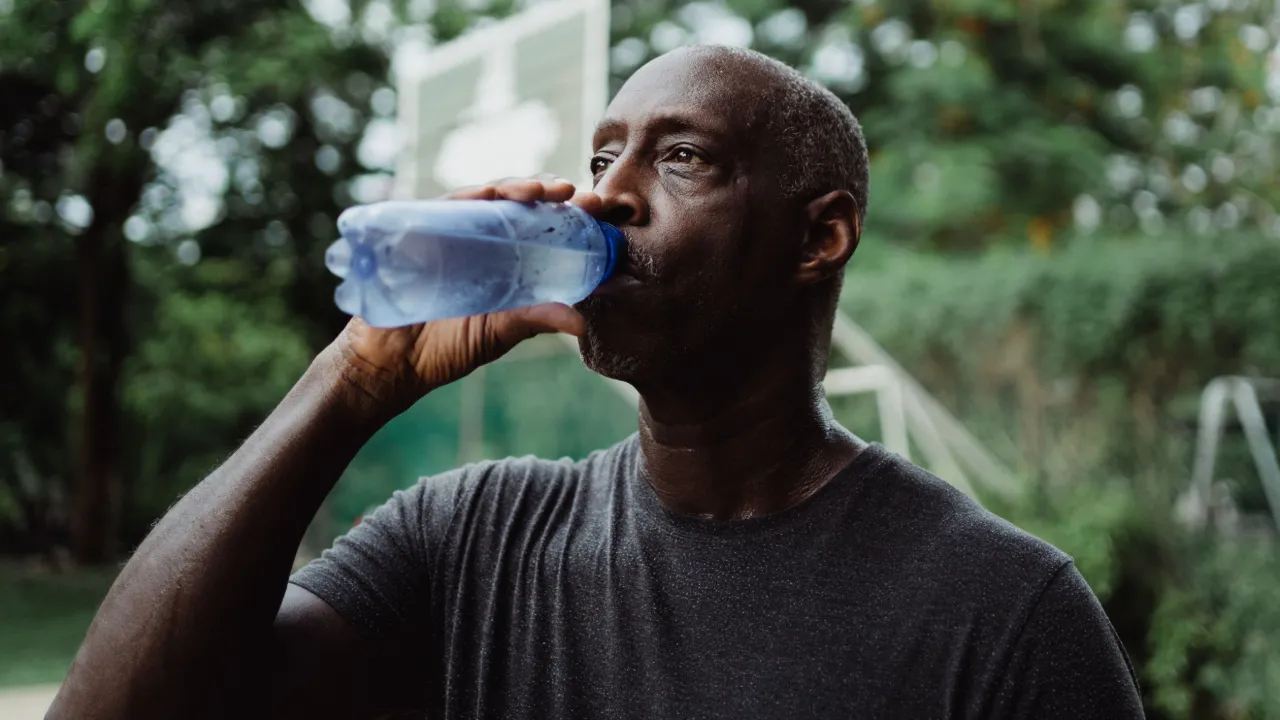
It’s estimated that 1.3 billion plastic bottles are sold around the world every single day. If you piled them all up, they would create a mountain half the size of the Eiffel Tower. At the head of the plastic production empire is Coca-Cola, as it is the world’s largest branded producer of plastic, and the company’s annual waste in the oceans is expected to reach 602 million kilograms by 2030. But whether your refreshing beverage of choice is a sugary soda or sparkling water, you might be getting an unexpected dose of microplastics along with it. Researchers at Columbia and Rutgers universities have found that in just one liter of bottled water, there is an average of 240,000 nanoplastic particles. Understandably, this information sent the internet into a frenzy, and microplastics became a buzzword seemingly overnight. So Bored Panda got in touch with three experts to set the record straight: is this simply fearmongering, or are there reasonable concerns that we should all have about the particles we’re ingesting? Ketut Subiyanto / Pexels (not the actual photo) When plastic first entered the food production industry in the early 20th Century, it was seen as an incredible innovation. It was easy and cheap to produce, and it extended the shelf life of countless food products. It really wasn’t until the 1960s that the public began to grow concerned about the environmental impacts of plastic. Following the release of Rachel Carson’s 1962 book, Silent Spring, the public became increasingly interested in environmental issues as a whole. And once plastic debris was observed in the oceans, people began to wonder if this miracle product was causing more harm than good. As we now know, however, those concerns didn’t slow down the production of plastic at all. Today, 81% of all produce sold in American grocery stores has plastic packaging, and 88% of Americans say that they consume bottled water. I’m sure you’ve heard the word “microplastics” plenty of times, either on the news or from the mouth of a wellness influencer on Instagram. But scientists have a very specific definition of what exactly this term means. According to the UN Environmental Program, microplastics are any fragment of plastic that is between 1 nanometer and 5 millimeters wide. To put that into perspective, one nanometer is a fraction of the width of one human hair, and 5 millimeters is about the width of a wedding band. The majority of these microplastics end up in water and food sources through the slow degradation of larger plastic products, such as plastic wrap, takeout containers, polyester clothing, tires, paint, and artificial turf. But nowadays, they are found essentially everywhere, including in water, soil, air, and on our dinner plates. MART PRODUCTION / Pexels (not the actual photo) A 2024 study found that 90% of animal and vegetable protein samples tested positive for microplastics. Even staples like salt, sugar, and rice have been found to contain microplastics. But plastic bottles are at the center of this conversation. After researchers from Columbia and Rutgers universities published their findings about microplastics in water bottles, all four co-authors who were interviewed by Global News admitted that they would be cutting back on their bottled water consumption. It’s hard to look away from the issue of microplastics when research has proven that these particles are being found in human organ systems, as well as human biological samples such as breast milk, urine, and stool. In recent years, microplastics have been lumped alongside the likes of seed oils, food dyes, and birth control as some of the most terrifying things wellness influencers can imagine putting inside their bodies. In the case of these other examples, fearmongering has steamrolled actual science. Microplastics, however, are in a sort of no-man’s-land where even experts admit that they’re still trying to get to the bottom of just how dangerous (or innocuous) they really are. “The danger of the plastics themselves is still an unanswered question. For me, the additives are the most concerning,” Duke University professor of medicine and comparative oncology group director, Jason Somarelli, told Global News. “We and others have shown that these nanoplastics can be internalized into cells, and we know that nanoplastics carry all kinds of chemical additives that could cause cell stress, DNA damage and change metabolism or cell function,” Somarelli continued. Rui Stenio / Pexels (not the actual photo) So if these plastic particles are unavoidable, is it even worth fretting over them? On one hand, Somarelli says that his own unpublished research has found over 100 “known cancer-causing chemicals” in microplastics. But others are still skeptical of any link between these plastics and cancer. The American Cancer Society reports that, at this time, there simply isn’t enough evidence to classify microplastics as a carcinogen. However, early research has suggested a correlation between microplastics and infertility, dementia, heart attacks, and strokes. So they aren’t necessarily seen as harmless either. Studying the impact of microplastics comes with inherent difficulties, as it’s not easy to find a control group. If you want to research the impacts of smoking, for example, you can compare a group of smokers to a group of non-smokers. When it comes to microplastics, however, we’ve all been exposed to them. So finding people who have had more or less exposure isn’t a simple task, as there are plenty of other factors to consider as well. “Younger generations have been exposed to more plastic than older generations, and at younger ages,” says Thejus Jayakrishnan, MD, an American Society of Clinical Oncology (ASCO) expert. “Plastic could be one reason for the difference in cancer rates, combined with other factors such as sedentary lifestyles and processed food.” Palvinder Deol, Superintendent Pharmacist at Happy Pharmacy, told Bored Panda that we’re still learning what long-term exposure to microplastics means for our health. “They might contribute to inflammation and damage to cells, particularly if we're exposed to them repeatedly over many years. There's still ongoing investigation into whether these particles can affect the gut, immune system and other organs, but there hasn't been enough evidence to say exactly how much harm everyday exposure causes,” Deol explains. “There are also concerns about chemicals associated with plastics, e.g., bisphenol A (BPA) can interfere with hormone activity, while some phthalates have been linked to reproductive and developmental problems,” Deol continued. Pexels User Kristina / Pexels (not the actual photo) However, the pharmacist says these chemicals can enter the body through various routes, so it isn't crystal clear yet how much risk comes specifically from ingesting microplastics. “We need better human studies to properly establish the long-term consequences of exposure,” Deol added. Shawn Hamilton, a board-certified internist and strategic medical advisor with over 17 years of experience, says that it’s important to keep things in perspective when considering how harmful something may be. “Plastic in your body is probably not great, but it's not going to top my list when you have elevated blood pressure, high glucose, [smoke] cigarettes/vape, obstructive sleep apnea, drink [alcohol] or [take medication],” Dr. Hamilton explains. Product-injury lawyer and Managing Partner at Liss, Shapero & Mitnick, Anthony Shapero, also noted that the idea that “you will get sick from drinking out of [a plastic] bottle” is likely not something that we can prove. But if you are concerned about how many microplastics you’re guzzling down with your Coke Zero or bottled water, there are certainly steps you can take to minimize your exposure. Both Shapero and Dr. Hamilton recommend avoiding drinking out of plastic bottles that have been exposed to high temperatures and keeping a glass or metal water bottle on hand instead. It’s also not wise to reuse plastic water bottles, as they will continue to release more and more microplastics over time. Bottles certainly aren’t the only way we’re exposed to microplastics. “Household dust can also contain plastic fibers released from synthetic fabrics, so damp-dusting and vacuuming can help reduce the dust you breathe in/swallow,” Deol notes. “There isn't any way we can remove microplastics from our body (so ignore any products that claim to do so), so all we can do is reduce some potential sources of exposure.” Now, you might be thinking that there’s an easy solution to avoid microplastic exposure through plastic bottles: simply drink tap water. That isn’t necessarily free from contaminants, though. A 2024 study comparing ten different brands of bottled water to one tap water source in Toulouse, France, found that the tap water actually contained even more microplastics per liter than eight of the bottled water samples. Meanwhile, in the United States, a 2018 investigation found that 94% of tap water samples contained microplastic fibers. Olga Lioncat / Pexels (not the actual photo) It was determined that microplastic concentrations in tap water were significantly lower than those in bottled water in the United States. But 40% of Americans don’t even trust their tap water, so many prefer to purchase bottles anyway. If you do want to opt for tap water, becoming best friends with your kettle might be a good idea. Scientists in China conducted a study in 2024 that found that boiling and filtering water before drinking it can significantly reduce the amount of microplastics and nanoplastics present. But this certainly isn’t the most convenient solution when you want a glass of water. So should we be living in fear of these omnipresent plastic particles? “I don't think we necessarily need to be scared, but we should take the research seriously,” Deol told Bored Panda. “All the media coverage makes findings sound more alarming than they are, and the evidence out there isn't strong enough on its own to properly quantify the risks of everyday exposure.” “We have seen how particles affect cells under particular conditions, but that doesn't necessarily tell us what happens when people ingest much smaller amounts over many years,” he continued. “The size and composition of the particles also matter, so it's misleading to treat all microplastics as equally dangerous.” Deol suggests reducing unnecessary exposure where practical, but you shouldn’t feel pressured to purchase expensive products or make drastic lifestyle changes. “We still need to establish which particles cause harm at what levels and over what period of time,” Deol added. “But until that evidence is clearer, claims that microplastics are definitely making people ill go beyond what the research can currently prove.” So for now, pandas, enjoy that bottle of sparkling water in peace, and try not to worry about the plastic that may or may not be in your body. It’s probably inside everyone else’s body too.