




The Bird Photographer of the Year is a bird photography competition held annually since 2016 where photographers from all over the world compete for the grand prize and the title of Bird Photographer of the Year. And now, after a whole year of waiting, the winners of this year's competition have finally been announced.
The winner of this year's Bird Photographer of the Year title and a £5,000 prize is British photographer Caron Steele and her majestic photograph of a Dalmatian Pelican on a frozen Lake Kerkini in Greece. Check out Caron's photograph and other category winners in the gallery below!
#21 Meera Sulaiman - Garden And Urban Birds - Silver
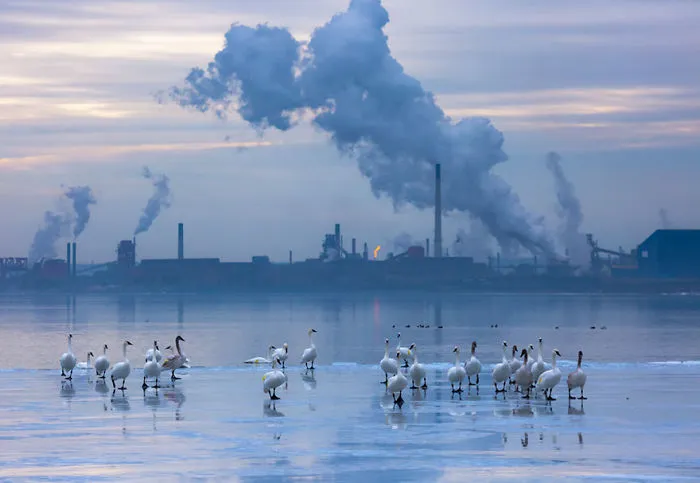
‘This part of Lake Ontario is regarded as the biggest toxic coal-tar deposit in Canada, a by-product of more than 100 years of industrial waste. Its claim to fame is being the largest and most contaminated site on the Canadian side of the Great Lakes. However, it is also a winter home for Trumpeter Swans. These North American natives are the largest of their kind in the world and one of the heaviest flying birds; weighing up to 30 pounds they are held aloft on a wingspan of eight feet. Around 200 swans gather here every winter. Trumpeter Swans once nested over most of North America and some estimates placed their numbers, historically, at more than 100,000. But by the 1880s they were almost hunted out of existence and were locally extinct in Ontario, Canada. The Trumpeter Swan’s reintroduction to Ontario has been a story in the making for more than 30 years. I started to document this wonderful species three years ago after being moved by their recovery story.’
27points
#22 Yashodhan Bhatia - Garden And Urban Birds - Honorable Mention
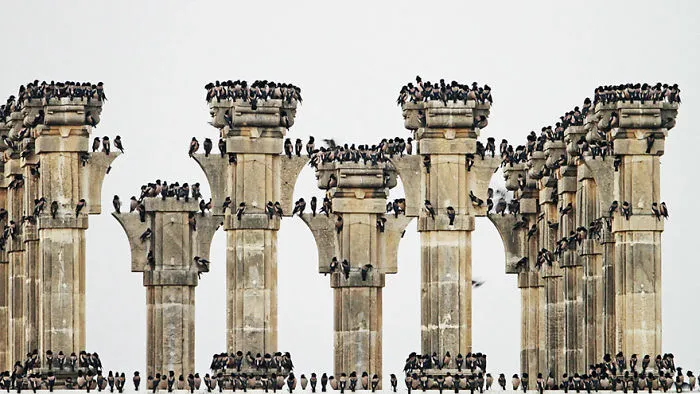
‘I am a regular visitor to the backwaters of the Ujni Dam in Maharashtra, India. This winter water levels were very high and so a big flock of Rosy Starlings chose this place to roost in a place of safety. I made two trips to the area within 20 days to photograph the birds’ murmurations and roosting. I took this image using a slow shutter speed to create the feeling of movement in these flying birds.’
26points
#23 Diana Andersen - Attention To Detail - Honorable Mention
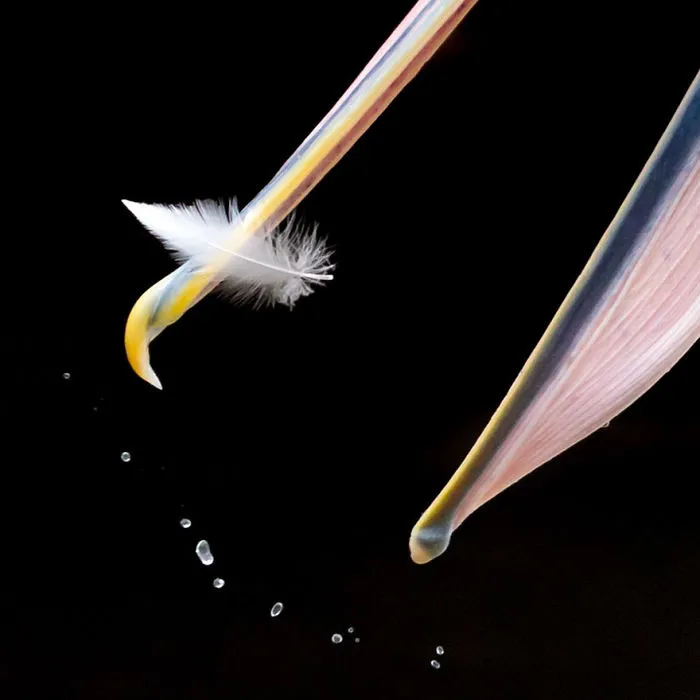
‘I have always been fascinated by the ability of large-billed birds to be so dexterous when preening. It seems to me like trying to slice cake with an axe. I was photographing a preening pelican that had been swimming in a tourist area lake. The water in the lake is very dark and exposing for the white feathers made the background even darker. The pelican removed a feather which stuck to its bill. It opened its bill and shook to remove the feather. A trail of water droplets rained down from water that had accumulated in the tip while preening its wet feathers.’
25points
#24 Martin Eschholz - Garden And Urban Birds - Bronze
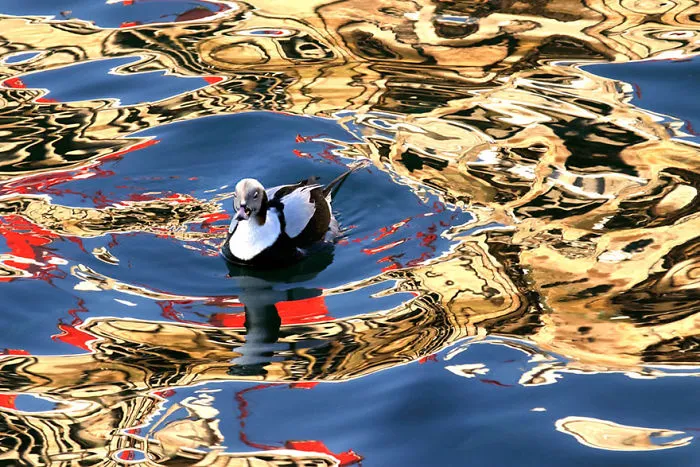
‘White everywhere. That is the first impression when visiting the Varanger Peninsula in the Arctic north of Norway in winter. But a surprisingly amount of colour can be found too, especially in the region's various harbours. The port of Vardø is a working fishing harbour attracting several species of wintering sea ducks. One of the most fascinating is the Long-tailed Duck and at first glance it looks too feebly built to survive in the arctic. But the reality is that it can cope perfectly. A bit of extra food like offal from a fish factory comes in handy and that is the reason these birds swim between the harbour's colourful reflections.’
24points
#25 Ivan Sjogren - Bird Behaviour - Gold
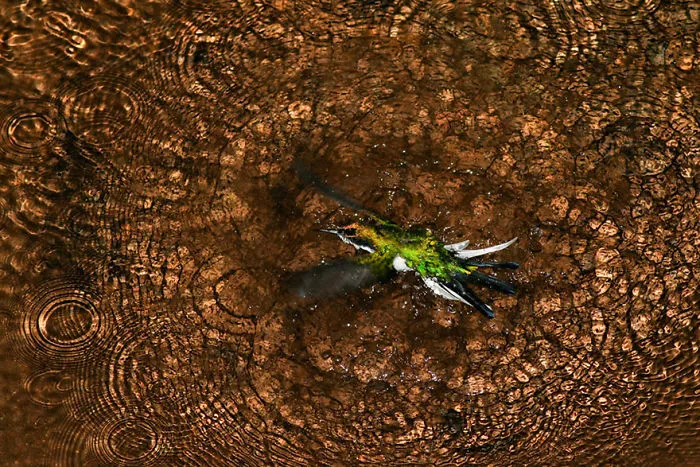
‘Small natural pools deep into the rainforest make a perfect place for hummingbirds to have a quick bath. I was blessed to witness this behaviour in Costa Rica early one morning. The birds hover over the water for a little time and then make small dips beneath the surface. I was able to capture the moment as a Purple-crowned Fairy left the water. The idea of using flash to highlight the rocks on the bottom of the water made the water look golden.’
23points
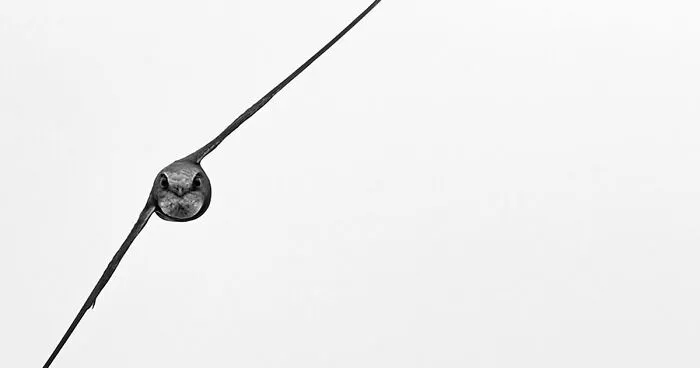
#26 Georgina Steytler - Birds In Flight - Silver
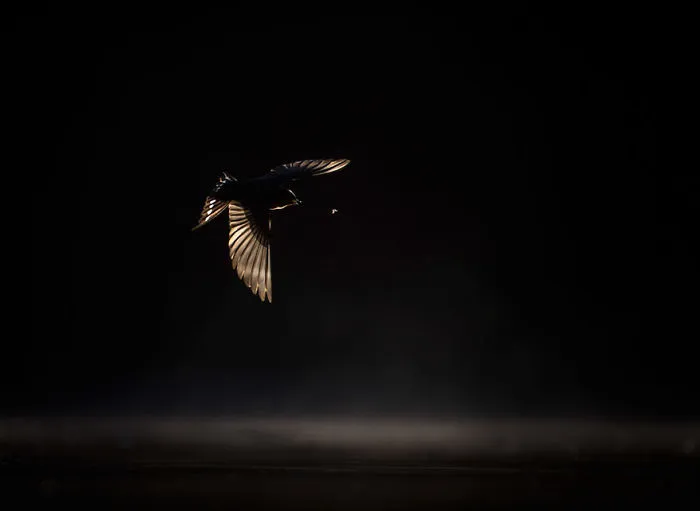
‘I was at Laratinga Wetlands in South Australia in April 2018. I initially went to photograph waterfowl when I noticed dozens of Welcome Swallows diving about the surface of the water. I am attracted to the challenge of shooting birds in flight and swallows present the ultimate challenge due to their small size and quick, erratic flight. There was a beautiful mist so I decided to shoot backlit against a dark background (trees in shade on opposite bank) and try to capture some of the atmosphere. I used the ‘spray and pray’ approach to photography (ie rapid frame rate and loads of pictures) and needed a lot of luck to get this shot.’
22points
#27 Helen Moore - Birds In The Environment - Bronze
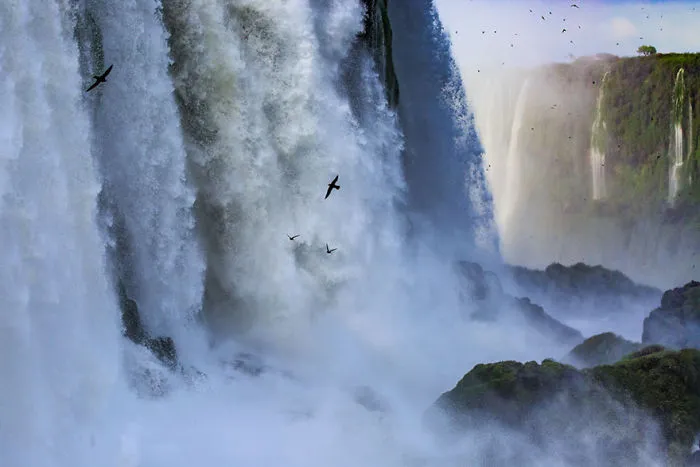
‘I was travelling in South America last year and visited the Argentinian side of Iguasu Falls. The whole spectacle was more magnificent than I expected. After the hype, so often things are disappointing; but Iguasu was overwhelming. And it was made better still by the Great Dusky Swifts – there were just so many of them. They nest behind the falls and goodness knows how they fledge. But fledge they do, and when I was there adults were repeatedly flying in and out of the cascade feeding young which were clinging to the rocks underneath.’
22points
#28 Carolina Fraser - Attention To Detail - Honorable Mention
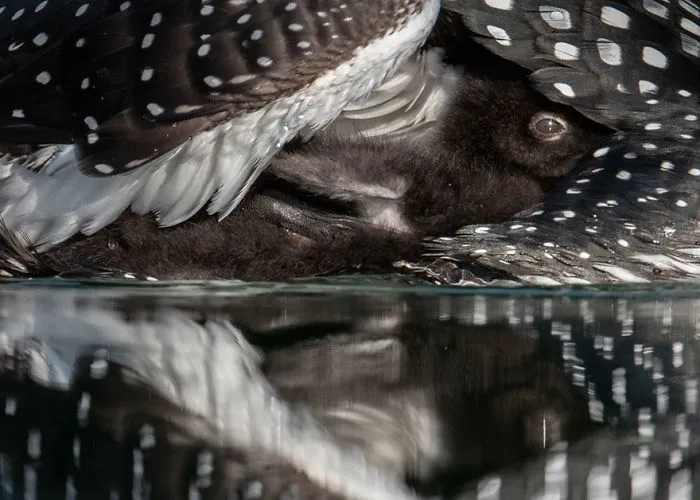
‘Common Loon chicks will usually nestle among their parents’ feathers until they are too large to fit. It was difficult to get a glimpse of the chick when it rested in the adult’s feathers. The parent’s wing fitted snugly around its young and a slight bend in the feathers was the only clue that a chick was beneath. In a brief moment lasting a few seconds the adult moved its wing to stretch and I composed this photo that I had previously envisioned just before the chick was covered again.’
20points
#29 Mohammad Khorshed - Birds In The Environment - Gold
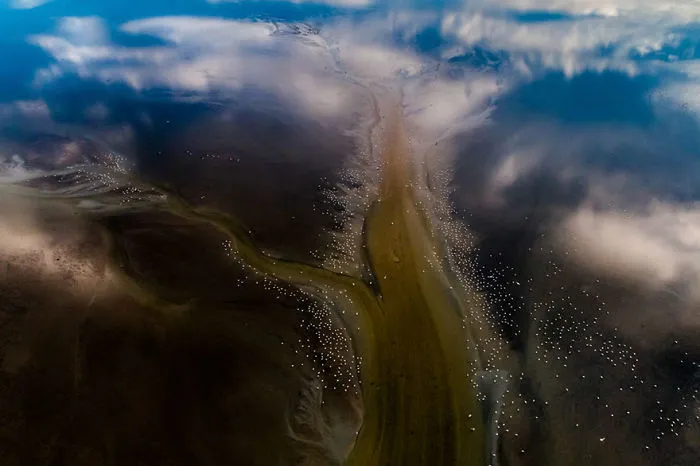
‘Low tide reveals the beauty of the coastal environment. The intertidal zone is also a good feeding area for seabirds, and so a lot of gulls and herons gather because of the abundance of life. I waited for many days to get the perfect combination of elements for the photo I had in mind: still water at low tide, beautiful clouds and of course the birds. I took this photo using a drone and the magic lasted just a short time before the rising tide altered the scene.’
19points
#30 Tamas Koncz-Bisztricz - Young Bird Photographer Of The Year - Gold
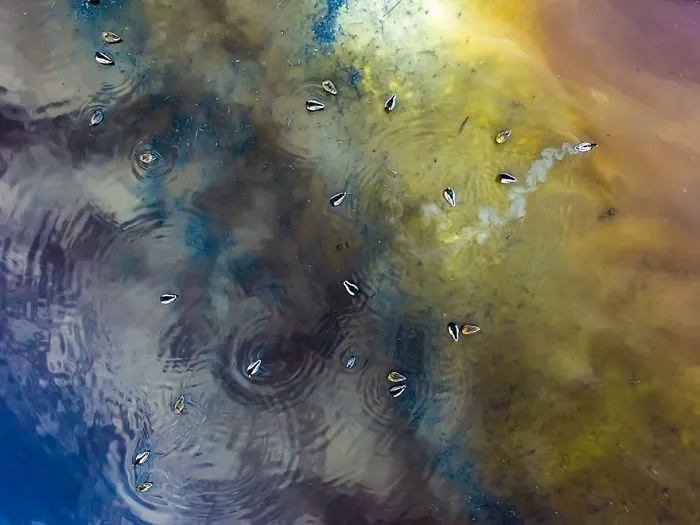
‘It’s late winter, and Hungary’s soda lakes are full of life, both above and below the surface of the water. These lakes are a sanctuary for a wide variety of water birds including Eurasian Teal, Eurasian Spoonbill, Great Egret, Greylag Goose, Greater White-fronted Goose, Common Black-headed Gull, Mediterranean Gull, Eurasian Coot, Grey Heron, and other birds. There is a nice, but unknown hidden lake between the village of Tömörkény and Pálmonostora. It is surrounded by reeds and sedges and therefore it is impossible to observe and photo the diverse life it harbours without causing disturbance. I took this aerial photograph by a remotely controlled drone which causes almost no disturbance when used properly: the shape, colour and sound of this machine do not correspond to any predator. I used a special technique to slowly approach the birds from very high altitude, the same method used by conservation experts to count the population of the birds for scientific purposes. Here we can see wild Mallards stirring up the muddy water and leaving lines in the water, coloured yellowish-brownish by organic materials. Sometimes you can see a purple tinge to the water, the result of organic matter released from decomposing reeds. The sparkling colour pallet of the image in the photograph is also influenced by the blue sky and the reflection of white clouds on the water surface.’
16points
#31 Ariel Fields - Young Bird Photographer Of The Year - Bronze
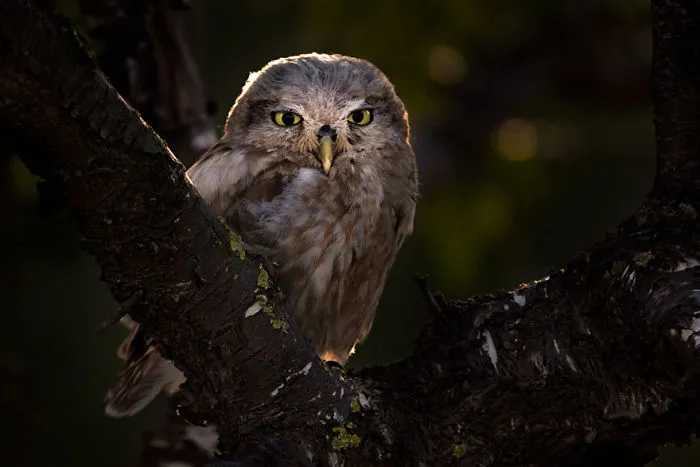
‘I had been watching this Little Owl for roughly 30 minutes. The light was getting nicer and nicer: as the sun goes down you can get mysterious moody shots. The owl was watching something on the ground, maybe her next meal...’
15points
#32 William Steel - Best Portrait - Bronze
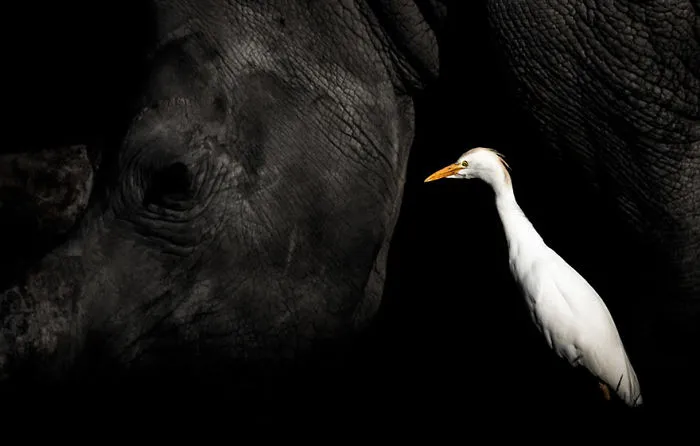
‘A Southern White Rhino continues grazing unaware of the bounty on its head, as a Western Cattle Egret searches for insects flushed from the grass. This is a truly commensal relationship. The Rhino is indifferent to the presence of the bird, while the egret benefits from the Rhino’s movement and foraging: it unwittingly disturbs insects concealed in the grass. For me, the image is such an emotive depiction: a juxtaposition between dark and light, hope and uncertainty. While the Cattle Egret takes centre stage the Rhino can be see fading into the background, indicative of the species’ rapid decline.’
14points
#33 Mohammad Murad - Birds In Flight - Honorable Mention
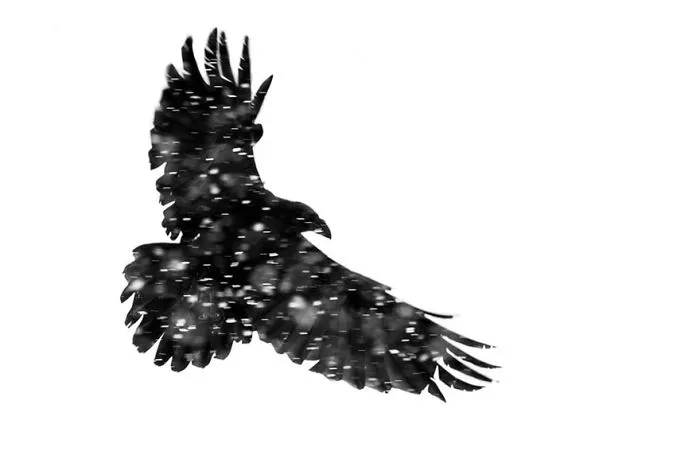
‘This image was taken in Bulgaria. I visited the country for seven days to photograph Golden Eagles from a hide up in the mountains; I stayed in the hide from 5am until 6pm each day for five days and not one eagle showed up! I have heard it said that ‘in every walk with nature one receives far more than one seeks’. I was seeking a Golden Eagle image and it was undeniably frustrating not being able to photograph one. But I guess nature did reward me with this jet-black Raven with the added bonus the image is being featured in one of the World’s best bird photography contests! I am indeed privileged and thankful.’
13points
#34 Mark Peck - Birds In The Environment - Honorable Mention
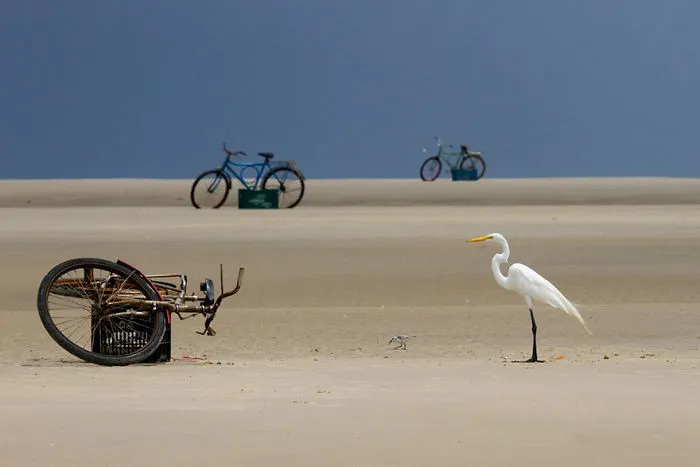
‘As a thunderstorm threatened, I headed back to our shorebird research camp before the rain hit. Each day, the local fisherman would ride their bikes out to the shore and check their nets at low tide. Any fish caught would be placed in the baskets and then the bikes would be placed over the top to protect them from birds that were also fishing in the area. In this case, a Great White Egret patiently waits for the fisherman to return with his catch while a Sanderling goes about his business.’
13points
#35 Hans Olsson - Birds In The Environment - Honorable Mention
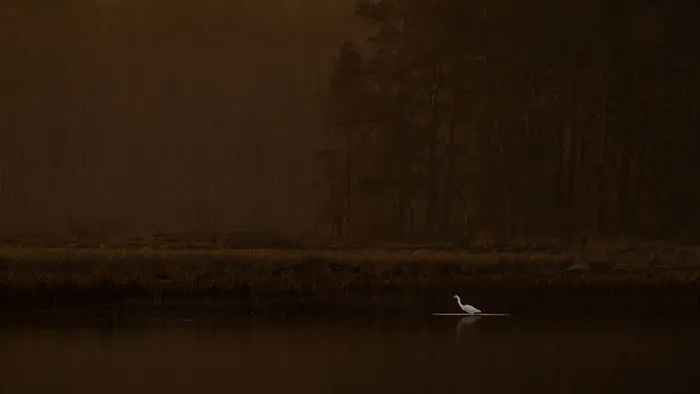
‘The small harbour in Nabbelund (northeast Öland) has a long pier along which you can drive. One morning in the middle of November I was sitting in my car waiting for the sunrise. Just as the sun rose over the forest a Great Egret started feeding in the shallow water near to me - that made it a magic morning.’
12points
#36 Martin Grace - Inspirational Encounters - Gold
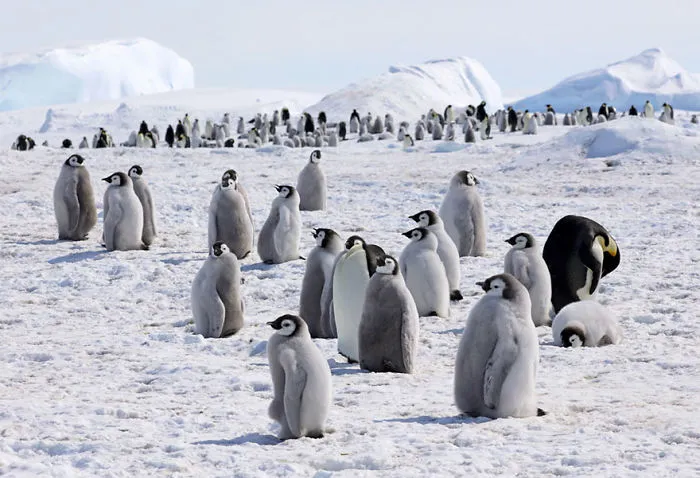
‘Emperor. Penguin. Individually words of little distinction, but together an icon of near-mythical proportion. Flightless. The only bird that completely forgoes land. The march. The crazily dedicated parenting. Arguably the most difficult bird in the world to see. But forget for now the travel nightmare, the two days turbulent torture of the ‘never-again’ Drake Passage, the teetering on the edge of ‘will-we, won’t-we?’ Decades of aspiration are finally approaching a culmination. An unexpected route appears through storm-packed sea ice and Antarctica’s fickle summer opens a calm window of blue. This miraculous conspiracy permits no more than half an hour at the colony, including walking time from landing. Borrowed boots pinch, clothing is stiflingly excessive, and frustration also boils as the camera tangles inside the rucksack. But actually having made it is too overwhelming, too emotional. I shoot a few images then put the camera away, and for fifteen minutes it is just me, the Emperors and heaven.’
11points
#37 Erik Berk - Bird Behaviour - Honorable Mention
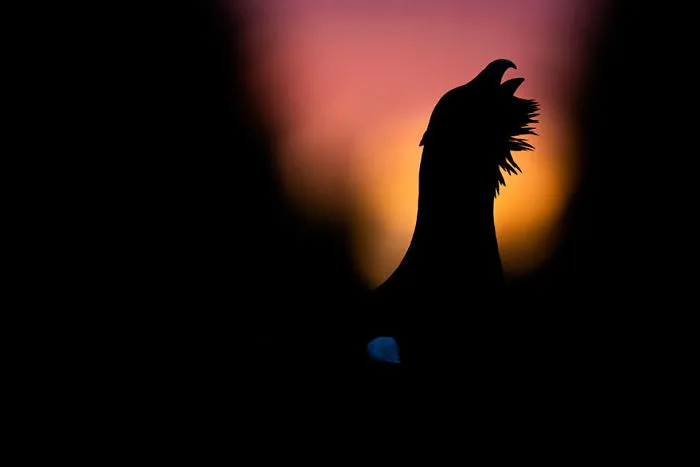
‘I was out looking for owls in one of my favourite forests near home. When the sun had set behind the forest, I heard the characteristic "clucking" of a male Capercaillie just 40 metres away. I crawled closer in my camouflage clothing and managed to get quite close to him. He seemed to be paralyzed in his desperate attempt to attract a female. As available light was really poor, I decided to try to frame him as a silhouette against the warmly coloured sky. I instantly knew that this was something unique.’
10points
#38 Marc Weber - Creative Imagery - Gold
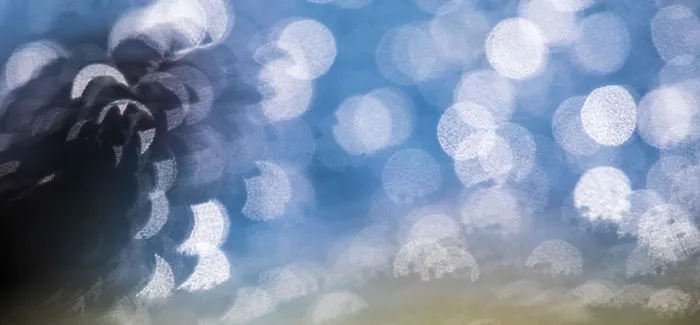
‘I wanted to convey an environmental message with this image. When we visit colonies of Puffins on their nesting cliffs it is easy to get the impression that they are abundant. But all too soon that may be no more than an illusion, their numbers declining as a result of the actions of man. When working in manual mode it is not easy to get the desired setting. Creating the image required reframing and slight contrast enhancement. The observed effect was created directly within the camera.’
9points
#39 Stuart Petch - Attention To Detail - Bronze
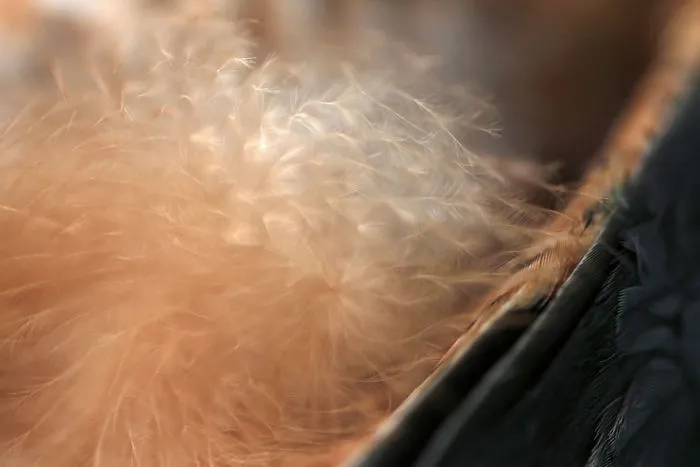
‘This image shows the very finest feathers - the down - on a male Sparrowhawk's breast. A fresh road casualty in a busy urban space, I rescued this male Sparrowhawk from the side of the road, hoping to share the beauty of the bird and his feathers. It was important to me to keep the bird in as natural a light as possible, so I took my picture outdoors in dappled sunlight on a slightly breezy day. Soft winds were ruffling the down, and I used a fast shutter speed to ensure good focus, but still retain a hint of movement. I wanted that swirling softness. The result is a beautiful but poignant reminder of the bird’s sad fate.’
9points
#40 Thomas Hinsche - Best Portfolio
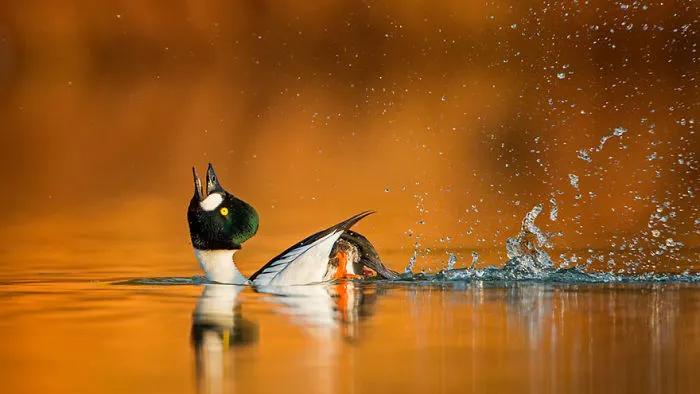
‘A special courtship display ritual reveals this drake Goldeneye in all his glory. He throws his head backwards and pedals his legs to impress the females. The courtship display of these ducks begins early in the year, sometimes even in January. At sunrise I was able to observe and photograph this special moment on a small lake in my homeland.’
9points