
Bored Panda
NASA’s Voyager 1 Becomes The First Human-Made Object To Reach One Light-Day From Earth (17 Pics)

NASA’s Voyager 1 Becomes The First Human-Made Object To Reach One Light-Day From Earth (17 Pics)

33
0
At 5:16 a.m. EST on Wednesday, November 18, 2026, a probe built in the mid-1970s crossed a line no human-made object had reached before. NASA’s Voyager 1 is now one light-day from Earth. It is so far out that a radio signal moving at the speed of light needs a full 24 hours to cover the distance. In more familiar units, that’s about 16.1 billion miles (25.9 billion kilometers), or roughly 173 times the distance between Earth and the Sun.
Voyager 1 lifted off from Cape Canaveral on September 5, 1977, timed to use a rare alignment of the outer planets. It flew past Jupiter in 1979 and Saturn in 1980. At Saturn, a close pass by the moon Titan threw it up and out of the plane the planets orbit in. In August 2012, it became the first spacecraft to cross the heliopause, the boundary where the solar wind gives way to the thin gas between the stars. It has been sampling interstellar space ever since.
Every message NASA sends to Voyager 1 now takes a full day to arrive, and the reply needs another day to come back. Scroll down for the images it sent home over nearly five decades.

#1 The Pale Blue Dot
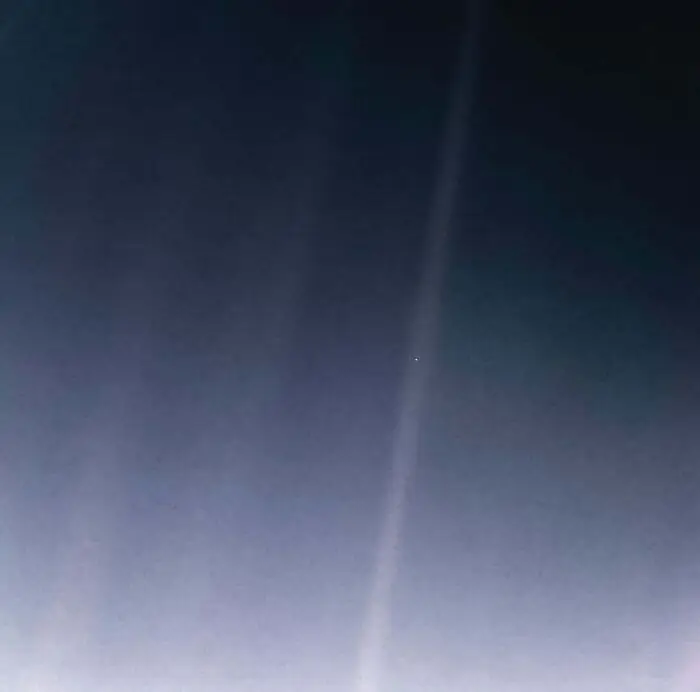
The famous Pale Blue Dot photograph of Earth taken by NASA's Voyager 1 spacecraft from deep space.
Just 34 minutes before its cameras were turned off in 1990, Voyager 1 captured this iconic view of Earth – a pale blue dot in the vastness of space.
Report
11points

Most of the images Voyager 1 is known for were taken within about two years. At Jupiter, it recorded erupting volcanoes on the moon Io, the first active volcanism ever seen beyond Earth, along with the swirling structure of the Great Red Spot. At Saturn, it showed fine detail in the rings and studied the thick orange haze that hides Titan’s surface. Its last pictures came on February 14, 1990. That day the team turned the cameras back toward the Sun and put together a portrait of the solar system. It includes the “Pale Blue Dot,” a view of Earth from about 3.7 billion miles (6 billion kilometers) away. Soon after, the imaging system was powered down for good to save power and memory.

#2 Jupiter’s Great Red Spot
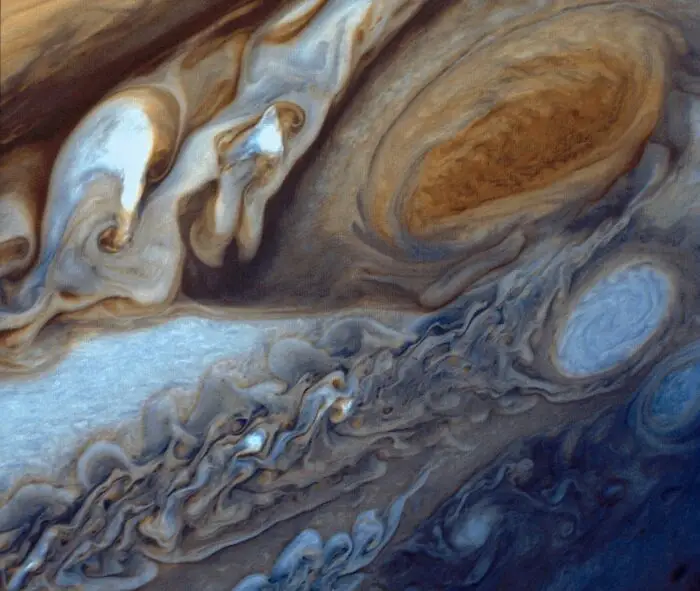
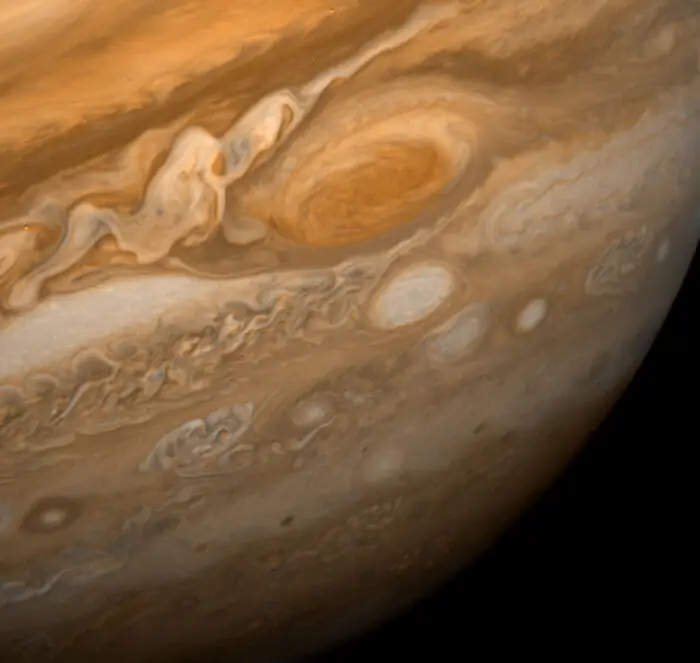
Detailed view of Jupiter swirling clouds and Great Red Spot captured by NASA Voyager 1.
This view of Jupiter was taken by Voyager 1. This image was taken through color filters and recombined to produce the color image. This photo was assembled from three black and white negatives by the Image Processing Lab at Jet Propulsion Laboratory.
Report
8points

#3 Jupiter's Great Red Spot

Close-up of Jupiter swirling clouds captured during NASA Voyager 1 space mission.
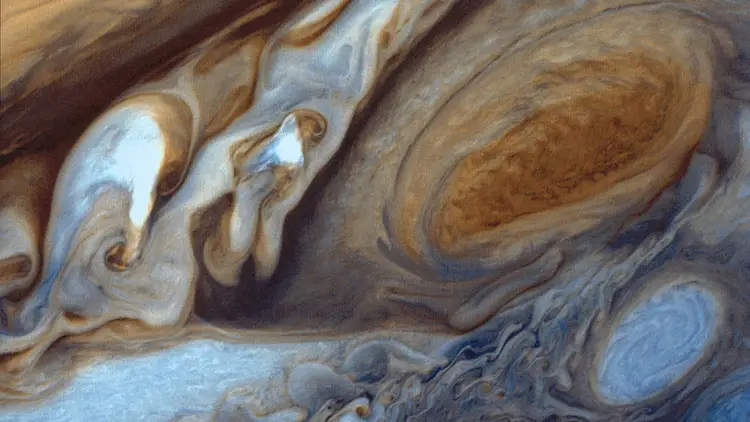
This dramatic view of Jupiter's Great Red Spot and its surroundings was obtained by Voyager 1 on February 25, 1979, when the spacecraft was 5.7 million miles (9.2 million kilometers) from Jupiter. Cloud details as small as 100 miles (160 kilometers) across can be seen here. The colorful, wavy cloud pattern to the left of the Red Spot is a region of extraordinarily complex and variable wave motion. To give a sense of Jupiter's scale, the white oval storm directly below the Great Red Spot is approximately the same diameter as Earth.
Report
7points

Keeping Voyager 1 running has since become careful rationing. The spacecraft gets its electricity from a radioisotope thermoelectric generator, which converts heat from decaying plutonium, and its output drops by about 4 watts each year. Of the 10 science instruments it launched with, only two still operate: a magnetometer that measures magnetic fields and a sensor that listens to plasma waves. The Low-Energy Charged Particles experiment was shut down in April 2026, after an unexpected drop in power during a routine roll maneuver. Later that year, engineers tried a risky fix they nicknamed the “Big Bang.” They turned off three devices in one sequence and replaced them with lower-power alternatives. If the savings hold, the remaining instruments should keep working until at least the mission’s 50th anniversary in 2027.

#4 Saturn With Tethys And Dione
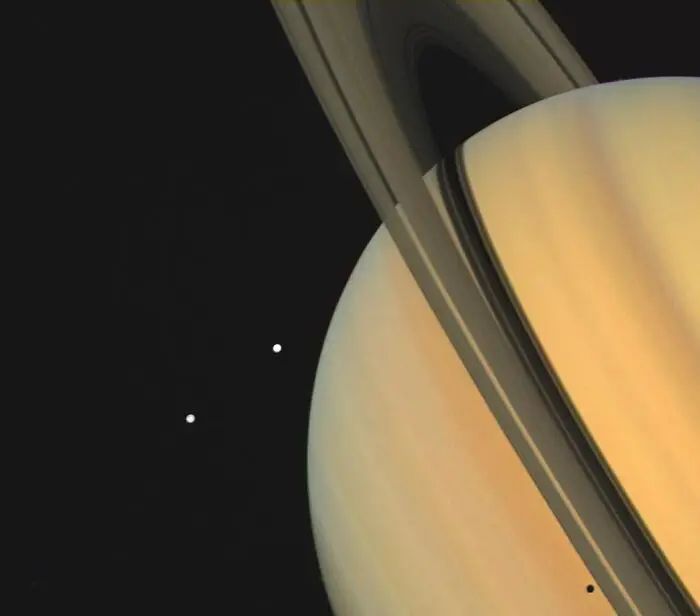
Saturn planet with prominent rings and moons captured during NASA Voyager 1 mission.
Saturn and two of its moons, Tethys (above) and Dione, were photographed by Voyager 1 on November 3, 1980, from 13 million kilometers (8 million miles). The shadows of Saturn's three bright rings and Tethys are cast onto the cloud tops. The limb of the planet can be seen easily through the 3,500-kilometer-wide (2,170 mile) Cassini Division, which separates ring A from ring B. The view through the much narrower Encke Division, near the outer edge of ring A is less clear. Beyond the Encke Division (at left) is the faintest of Saturn's three bright rings, the C-ring or crepe ring, barely visible against the planet.
Report
5points

#5 Saturn And Moons Tethys, Enceladus, And Mimas
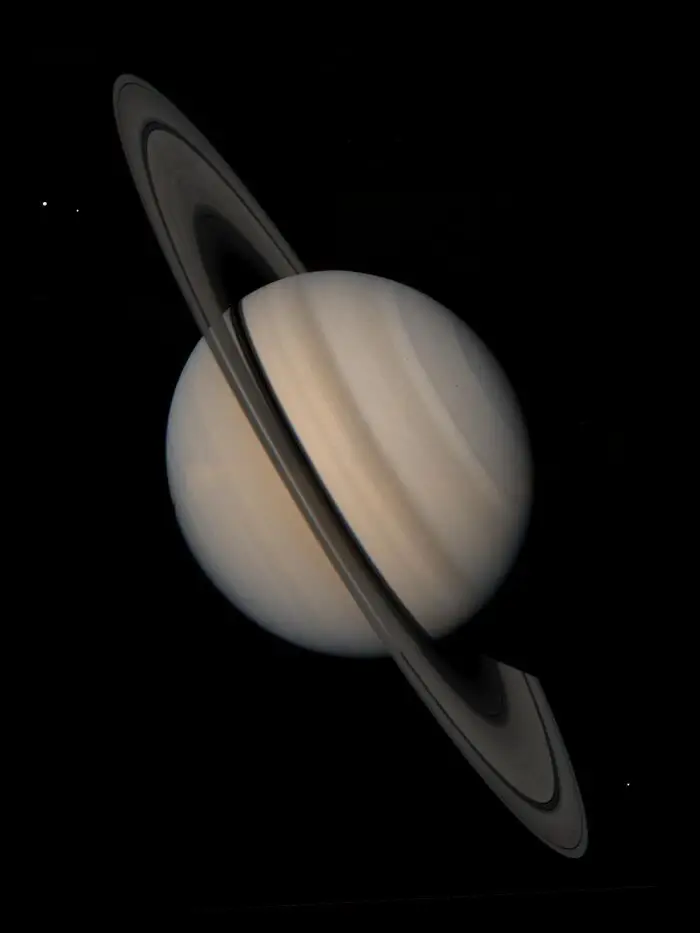
Full view of ringed planet Saturn taken by NASA's Voyager 1 probe in deep space
Saturn and its satellites Tethys (outer left), Enceladus (inner left) and Mimas (right of rings) are seen in this mosaic of images taken by NASA's Voyager 1 on Oct. 30, 1980 from a distance of 18 million kilometers (11 million miles). The soft, velvety appearance of the low-contrast banded structure and increased reflection of blue light near the perimeter of the Saturn disk are due to scattering by a haze layer above the planet's cloud deck. Features larger than 350 kilometers (220 miles) are visible. The projected width of the rings at the center of the disk is 10,000 kilometers (6,000 miles), which provides a scale for estimating feature sizes on the image.
Report
5points

The record also came at a tense moment for the team. In October, contact with the probe was lost for about 48 hours, and then it started communicating again on its own. On November 14, a Deep Space Network antenna in Canberra, Australia, picked up Voyager 1’s carrier signal, but with no science or engineering data on it. The steady tone shows the spacecraft is still pointed at Earth and its transmitter works. The missing data point to the onboard computer that collects readings from the instruments and formats them for sending. A similar fault in 2023 took months to fix, and with two days between sending a command and seeing its effect, this one could also take weeks.

#6 Voyager 1
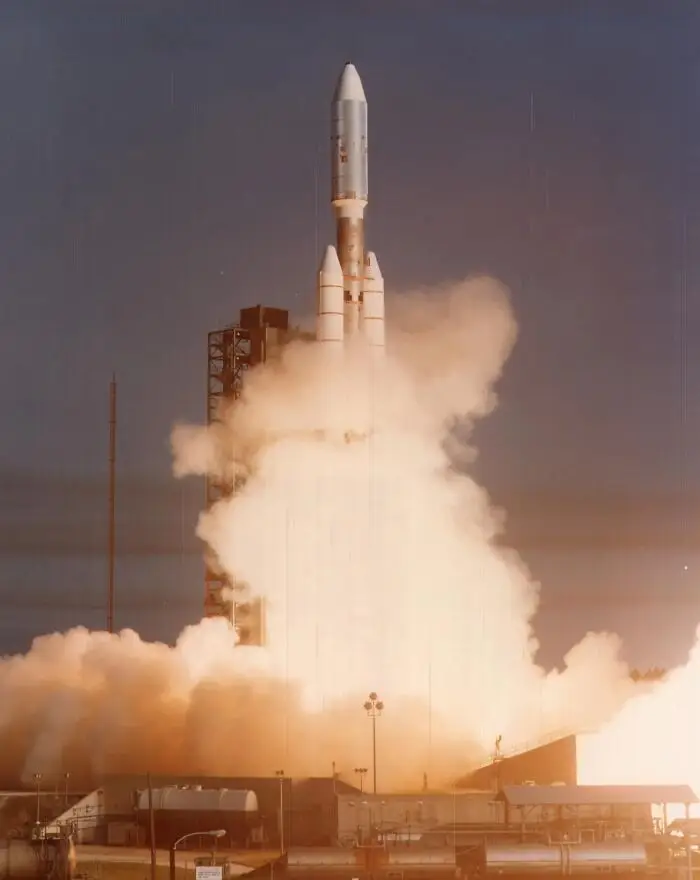
A NASA Voyager 1 rocket launching into space surrounded by heavy smoke from the launchpad.
The Voyager mission was designed to take advantage of a rare geometric arrangement of the outer planets in the late 1970s and the 1980s which allowed for a four-planet tour for a minimum of propellant and trip time.
Report
4points

#7 Jupiter's Moon, Ganymede

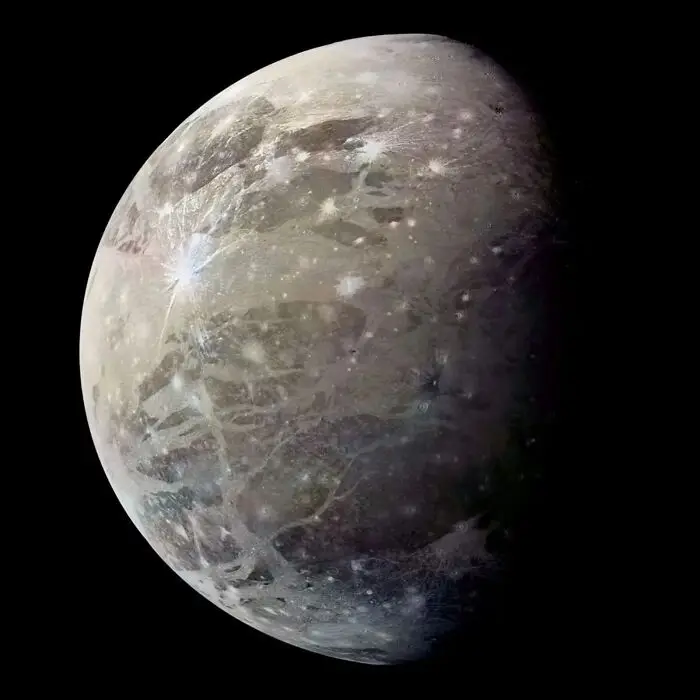
Detailed view of Jupiter's moon Ganymede captured during the NASA Voyager 1 space mission.
This color picture of Ganymede, Jupiter's largest satellite, was taken on the afternoon of March 2, 1979, by Voyager 1 from a distance of about 3.4 million kilometers (2.1 million miles). This photograph was assembled from three black-and-white pictures in the Image Processing Laboratory at JPL.
Report
3points

So where is Voyager 1 actually going? Its path points toward AC +79 3888, also known as Gliese 445, a dim star in the far northern sky more than 17 light-years from Earth. The probe should pass within about 1.7 light-years of it, but not for another 40,000 years. The long wait comes down to speed. Voyager 1 is cruising through space at nearly 38,000 mph (61,000 km/h), fast enough to cross the United States from coast to coast in under five minutes, yet light moves more than 17,000 times faster. When the spacecraft reached the one light-day mark on November 18, it had spent 49 years and just over two months covering a distance light crosses in a single day.

#8 Beyond Saturn
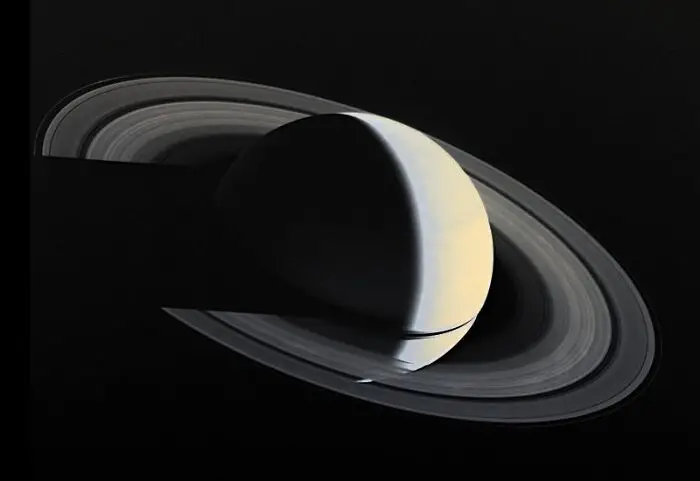
Backlit view of Saturn showing planetary rings against dark space captured by NASA's Voyager 1
Voyager 1 image of Saturn and its ring taken Nov. 16, 1980 four days after closest approach to Saturn, from a distance of 5,300, 000 km (3,300,000 miles). This viewing geometry, which shows Saturn as a crescent, is never achieved from Earth. The Saturnian rings, like the cloud tops of Saturn itself, are visible because they reflect sunlight. The translucent nature of the rings is apparent where Saturn can be seen through parts of the rings. Other parts of the rings are so dense with orbiting ice particles that almost no sunlight shines through them and a shadow is cast onto the yellowish cloud tops of Saturn, which in turn, casts a shadow across the rings at right. The black strip within the rings is the Cassini Division, which contains much less orbiting ring material than elsewhere in the rings.
Report
3points

#9 Jupiter And Moons

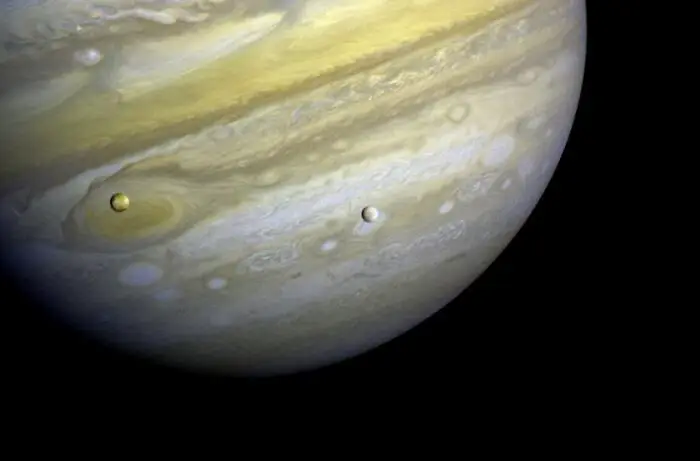
Jupiter with two of its moons Io and Europa photographed by NASA's Voyager 1
Voyager 1 took this photo of Jupiter and two of its satellites (Io, left, and Europa) on Feb. 13, 1979. Io is about 350,000 kilometers (220,000 miles) above Jupiter's Great Red Spot; Europa is about 600,000 kilometers (375,000 miles) above Jupiter's clouds.
Report
3points

#10 Io Mosaic

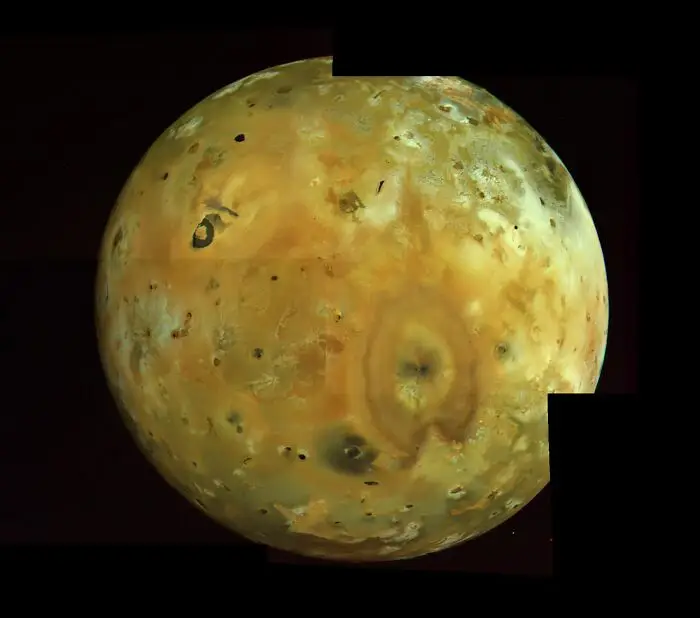
Full view of Jupiter volcanic moon Io captured during NASA Voyager 1 space mission.
Perhaps the most spectacular of all the Voyager photos of Io is this mosaic obtained by Voyager 1 on March 5 at a range of 400,000 kilometers. A great variety of color and albedo is seen on the surface, now thought to be the result of surface deposits of various forms of sulfur and sulfur dioxide. The two great volcanoes Pele and Loki (upper left) are prominent.
Report
3points

#11 Jupiter In Shadow

Crescent view of Jupiter showing banded atmosphere captured by NASA Voyager 1 space probe.
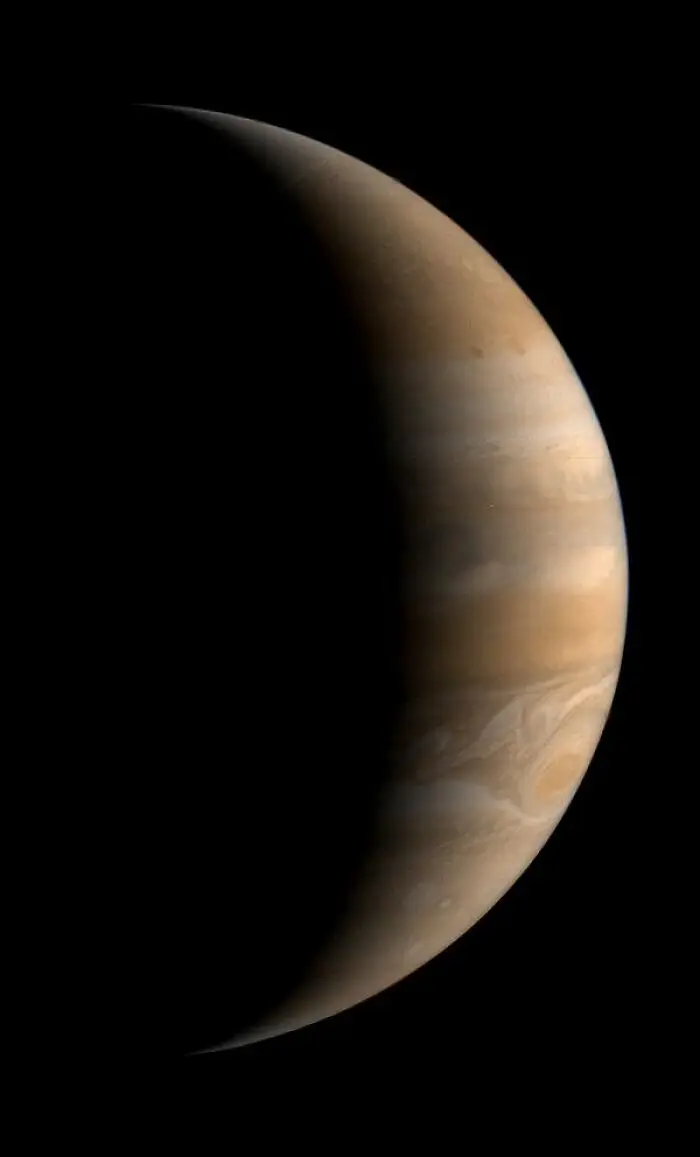
This crescent view of Jupiter was taken by Voyager 1 on March 24, 1979. This image was taken through three color filters and recombined to produce the color image. This photo was assembled from three black and white negatives by the Image Processing Lab at Jet Propulsion Laboratory.
Report
3points

#12 Jupiter’s Faint Ring System

Thin rings of Uranus outlined against deep space, photographed by NASA Voyager 1.
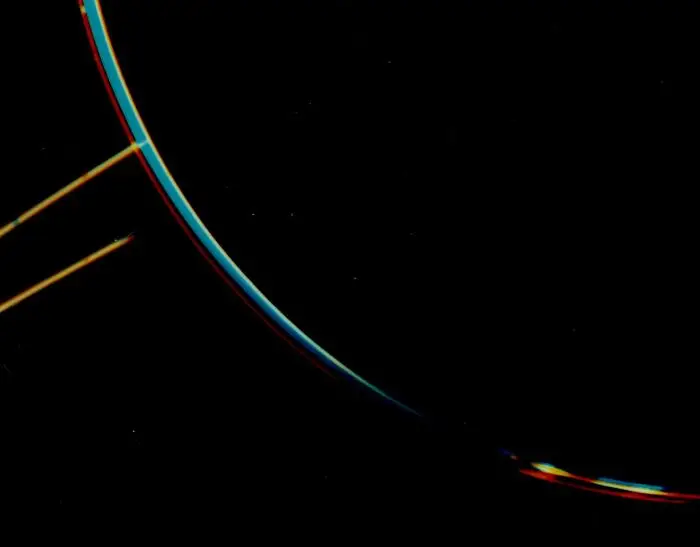
Jupiter's faint ring system is shown in this color composite as two light orange lines protruding from the left toward Jupiter's limb. This picture was taken in Jupiter's shadow through orange and violet filters. The colorful images of Jupiter's bright limb are evidence of the spacecraft motion during these long exposures. The Voyager 2 spacecraft was at a range of 1,450,000 kilometers (900,000 miles) about two degrees below the plane of the ring. The lower ring image was cut short by Jupiter's shadow on the ring.
Report
2points

#13 Jupiter And Europa And Io

Crescent view of Jupiter and its moons captured in deep space by NASA Voyager 1.
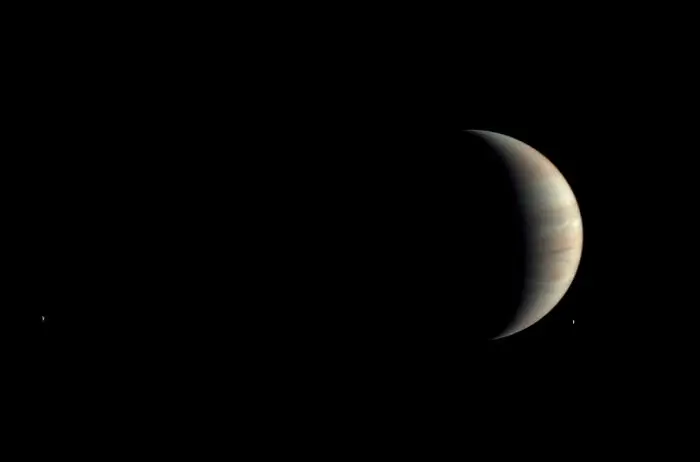
Composite image of Jupiter and its moons Europa (right) and Io (left) taken on the final day of Voyager 1's Jupiter encounter phase (April 13, 1979). This image is a composite centered at 1927 UT, when Europa had just completed a transit across Jupiter and while the Great Red Spot was on the limb. Imaging data for Io was collected from an image set taken approximately 3 hours later.
Report
2points

#14 Valhalla Crater On Callisto

Close-up detailed view of the cratered surface of Callisto taken by NASA's Voyager 1 probe.
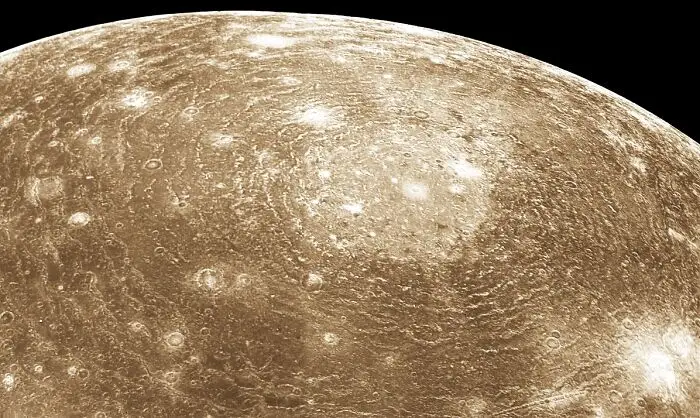
Callisto was revealed by the Voyager cameras to be a heavily cratered and hence geologically inactive world. This mosaic of Voyager 1 images, obtained on March 6 from a distance of about 400,000 kilometers, shows surface detail as small as 10 kilometers across. The prominent old impact feature Valhalla has a central bright spot about 600 kilometers across, probably representing the original impact basin. The concentric bright rings extend outward about 1500 kilometers from the impact center.
Report
2points

#15 Io With Loki Plume On Bright Limb
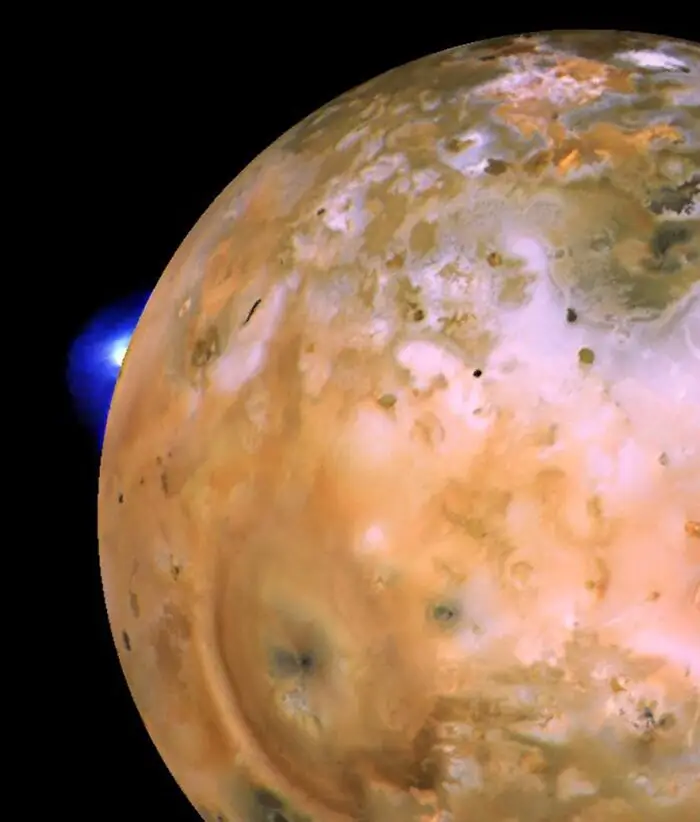
Volcanic moon Io showing active eruption captured during NASA's Voyager 1 flyby
NASA's Voyager 1 image of Io showing active plume of Loki on limb. Heart-shaped feature southeast of Loki consists of fallout deposits from active plume Pele. The images that make up this mosaic were taken from an average distance of approximately 490,000 kilometers (340,000 miles).
Report
2points

#16 Rhea Moon Of Saturn

Close up view of cratered surface of moon Rhea captured by NASA Voyager 1 spacecraft.
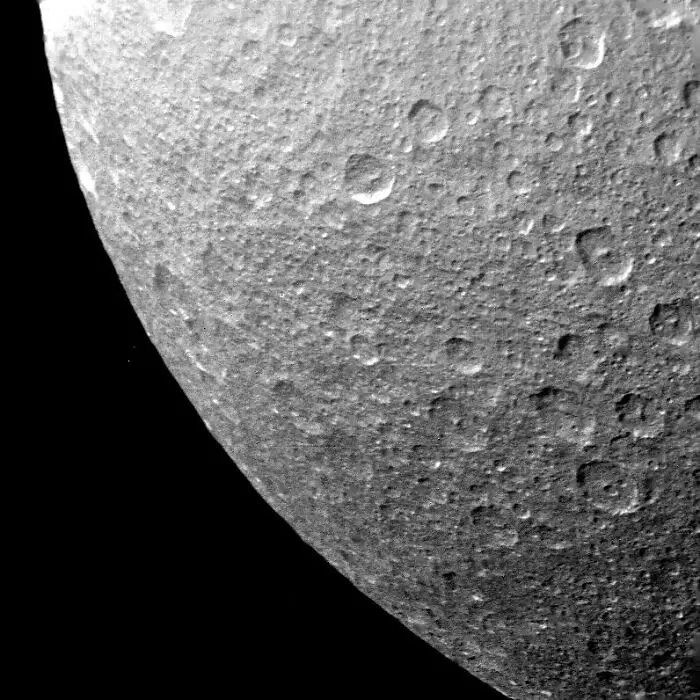
Multiple impact craters are seen on the ancient surface of Saturn's moon Rhea in this picture taken by Voyager 1 on Nov. 12, 1980 at a range of 73,000 kilometers (45,000 miles). The craters closely resemble those on Mercury and Earth's Moon. Many of the craters have central peaks formed by rebound of the floor during the explosive formation of the crater. The craters are old and degraded by later impacts. Crater diameters seen are as large as approximately 75 kilometers (45 miles). Many have sharp rims and appear relatively fresh while others are very shallow and have subdued rims, indicative of their antiquity.
Report
2points

#17 Titan’s Thick Haze

Hazy atmosphere layer of Saturn's moon Titan captured by NASA's Voyager 1 spacecraft
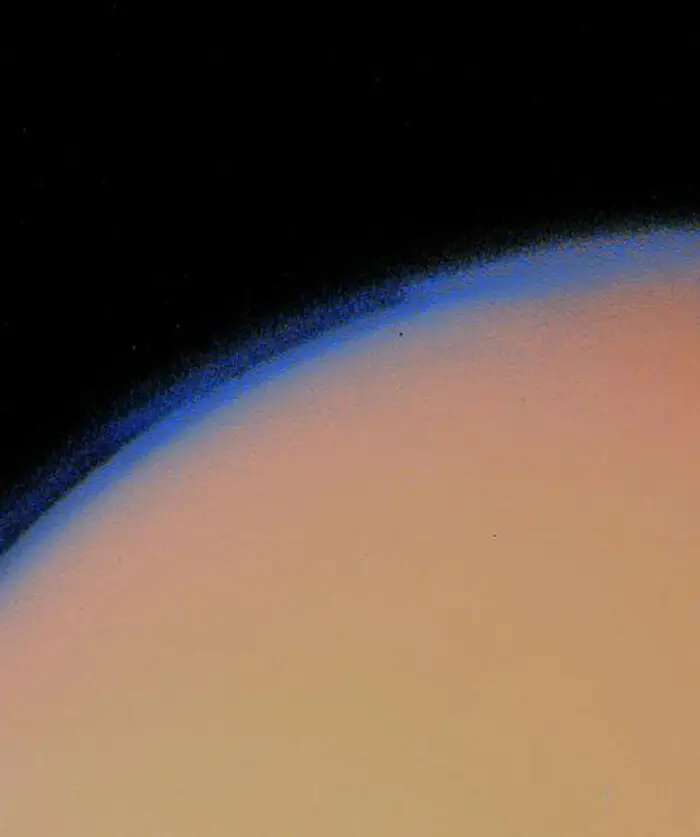
Titan's thick haze layer is shown in this enhanced Voyager 1 image taken Nov. 12, 1980 at a distance of 435,000 kilometers (270,000 miles). Voyager images of Saturn's largest moon show Titan completely enveloped by haze that merges with a darker "hood" or cloud layer over the north pole. Such a mantle is not present at the south pole. At Voyager's closest approach to Titan on Nov. 11, 1980, spacecraft instruments found that the moon has a substantial atmosphere, far denser than that of Mars and possibly denser than Earth's.
Report
1point
33
0