


Dating apps give people the opportunity to meet potential partners, but they also encourage users to carefully manage the impressions they make. The British Psychological Society explains that people select photographs, personal details, and descriptions that highlight their most appealing qualities. This is not necessarily dishonest, since most people naturally want to put their best foot forward when meeting someone new.
However, problems can arise when a carefully constructed profile creates expectations that the person cannot meet in real life. Someone might present themselves as adventurous, emotionally mature, or exceptionally charming, but a few pictures and a witty biography cannot fully demonstrate those qualities.
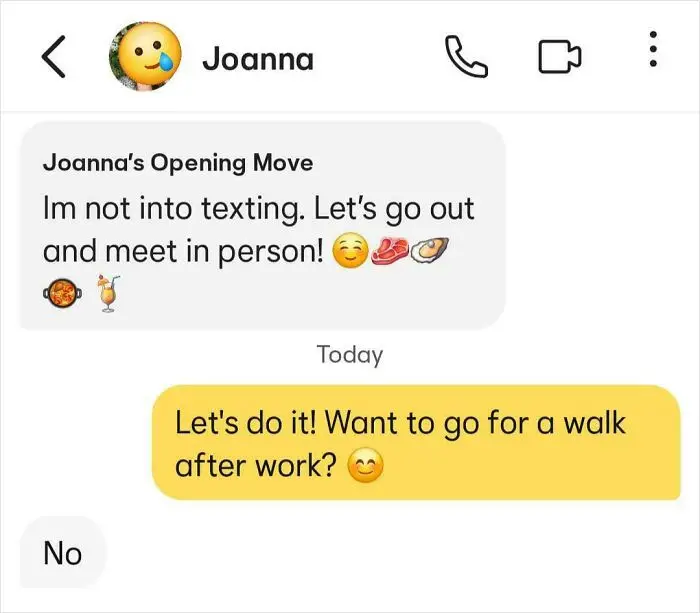
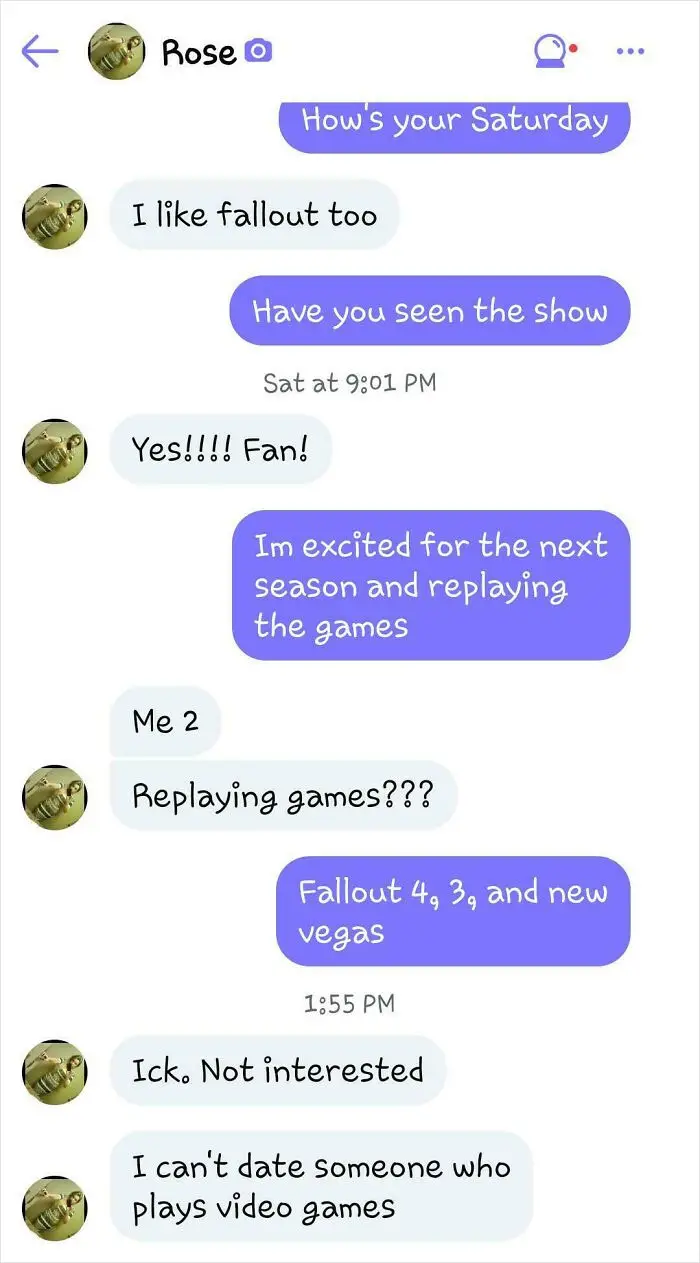
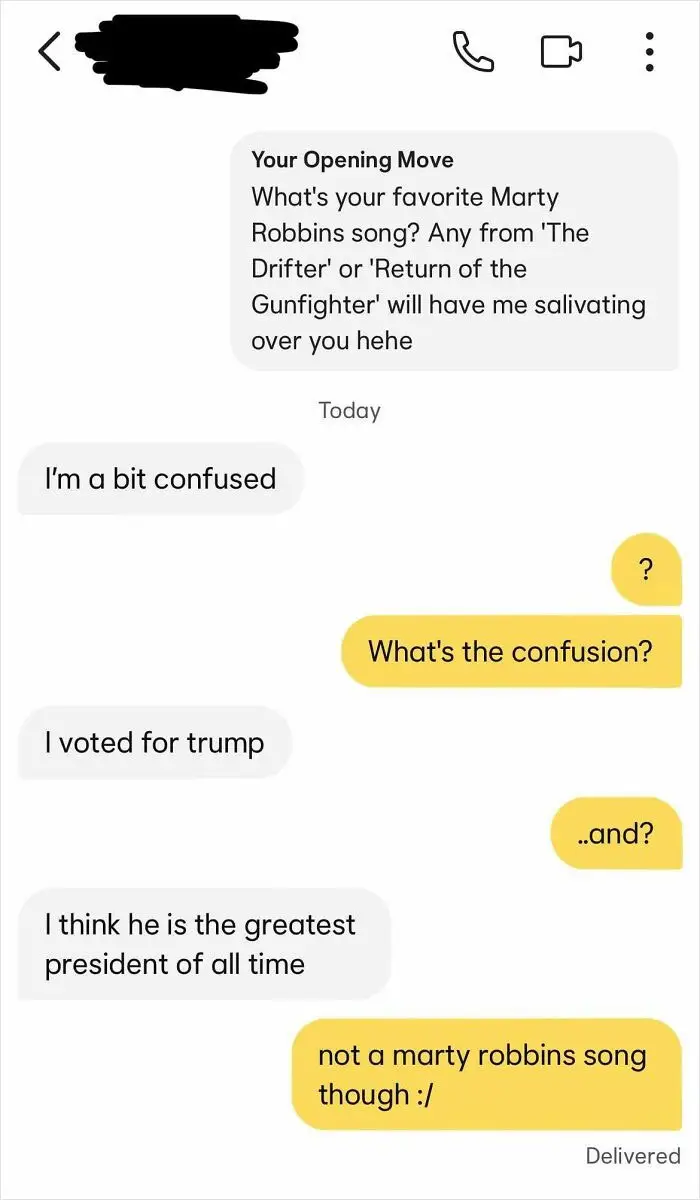
This gap between presentation and reality becomes particularly interesting when conversations begin. People can choose flattering photographs, emphasize certain interests, and describe themselves as funny, adventurous, or emotionally mature, but their actual behavior may tell a different story.
A confident biography does not necessarily demonstrate emotional maturity, just as an entertaining profile cannot guarantee that someone will be equally charming in conversation. Since dating apps offer only limited information about a person, users must form impressions from carefully selected details. This creates plenty of room for misunderstandings, exaggerated expectations, and amusing moments when someone's carefully crafted image starts to unravel.
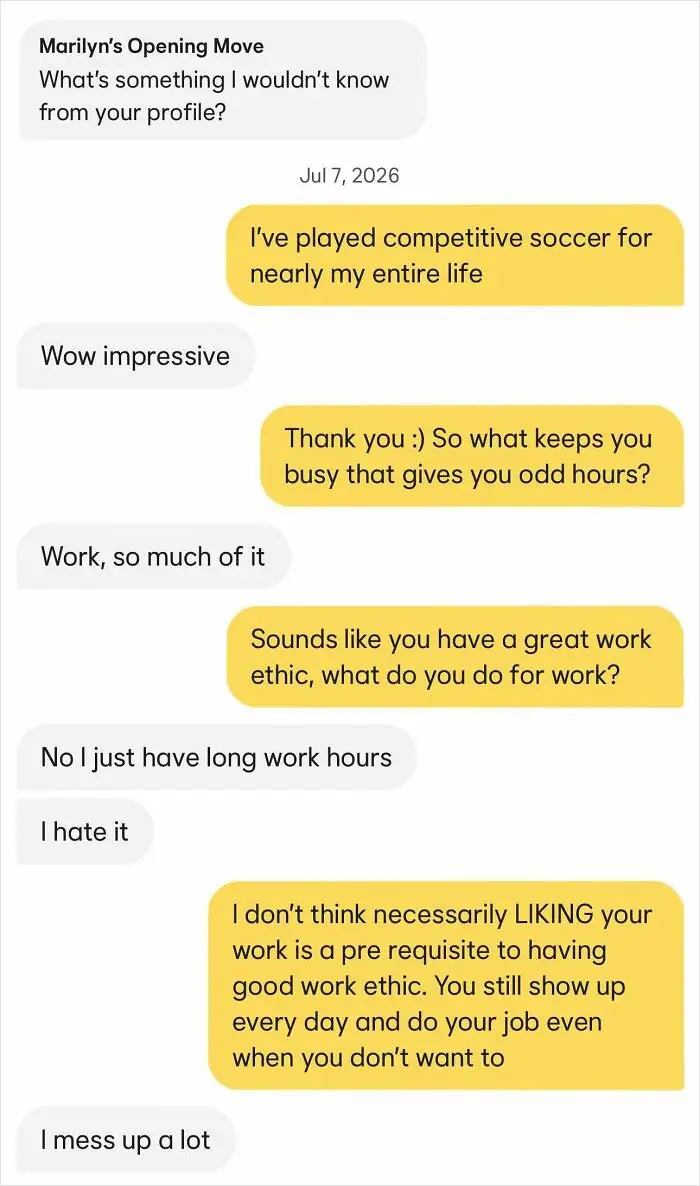
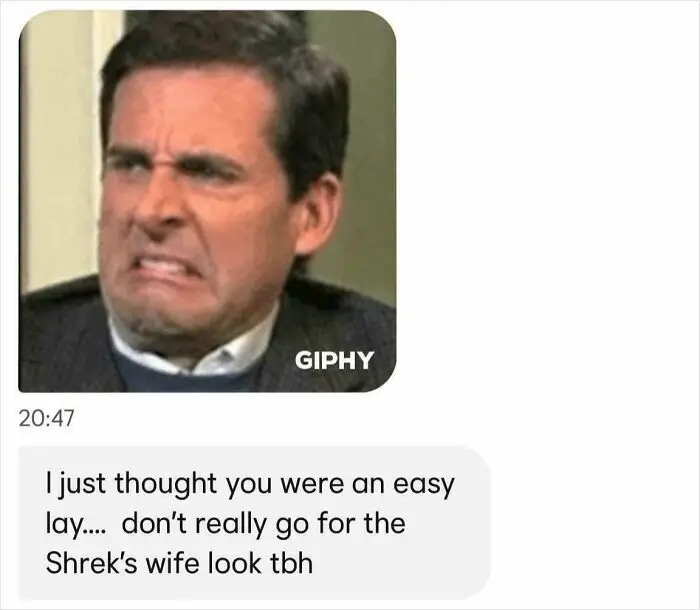
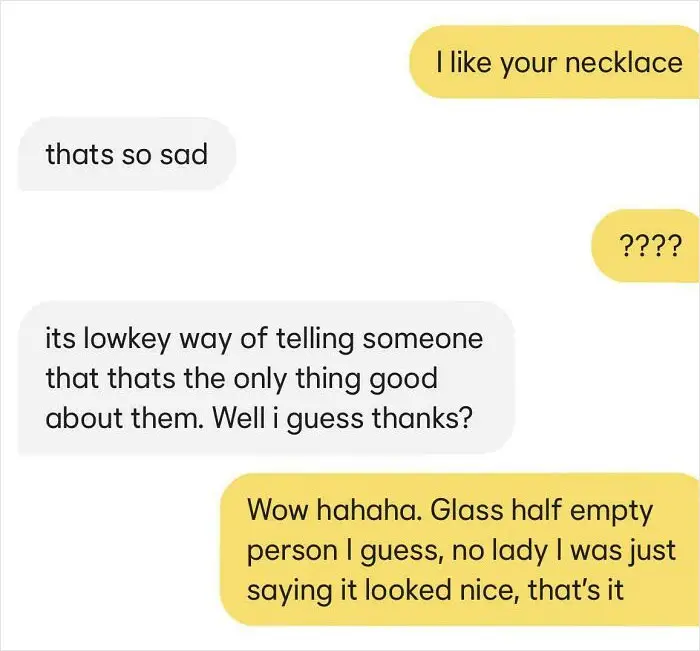
#8 What A Nice First Message To Receive From A Very Respectful Lady
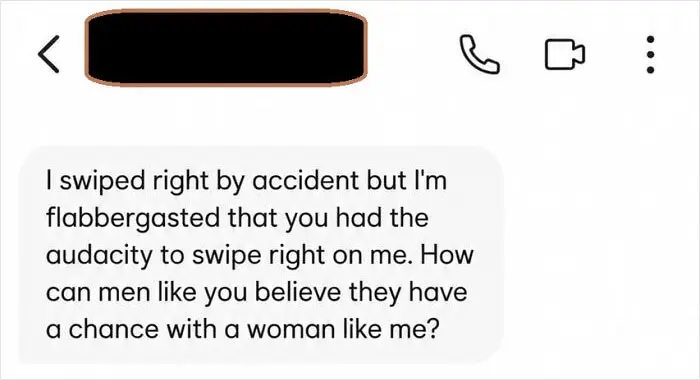

Confidence can certainly help someone make the first move, but research discussed by Psychology Today suggests that it can also lead to misreading another person's interest. Speed-dating research found that men who rated their own attractiveness highly were more likely to overestimate women's interest in them.
Interestingly, men whom women rated as more physically attractive tended to underestimate that interest instead. The findings illustrate that how people perceive themselves does not always match how accurately they interpret romantic signals. On dating apps, this disconnect can make an overly bold opening message seem like a guaranteed success to the sender, even when the recipient sees little reason to be impressed.
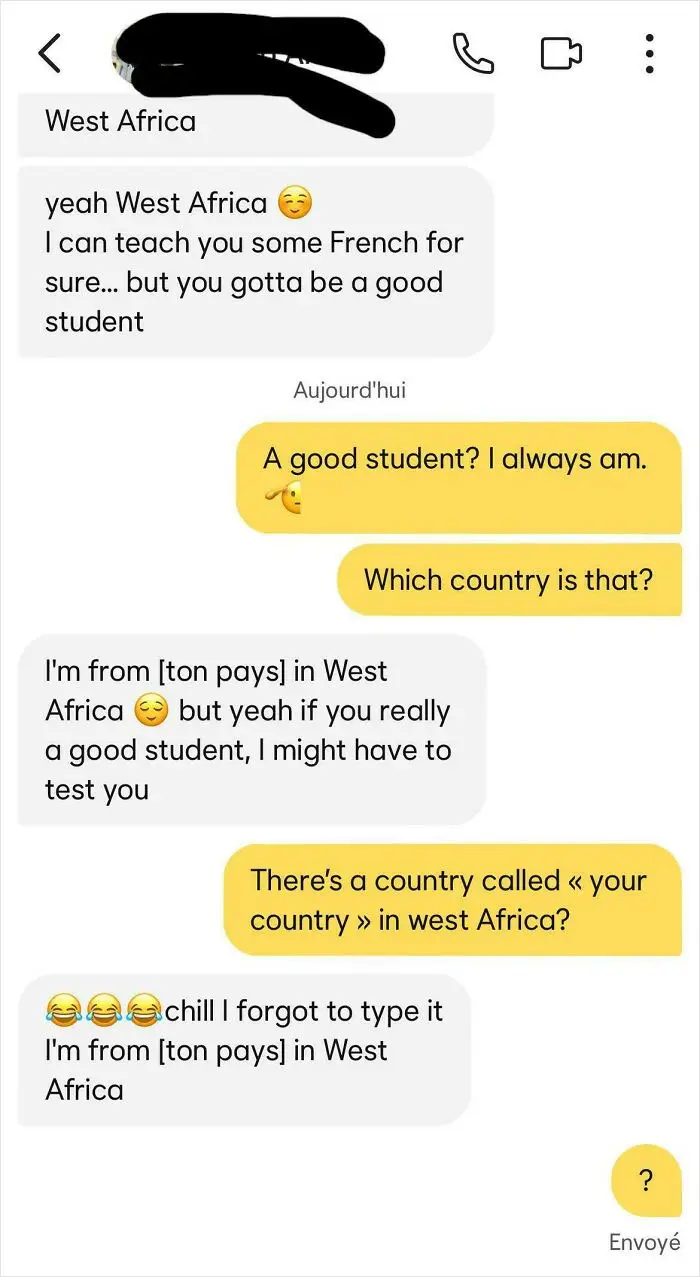
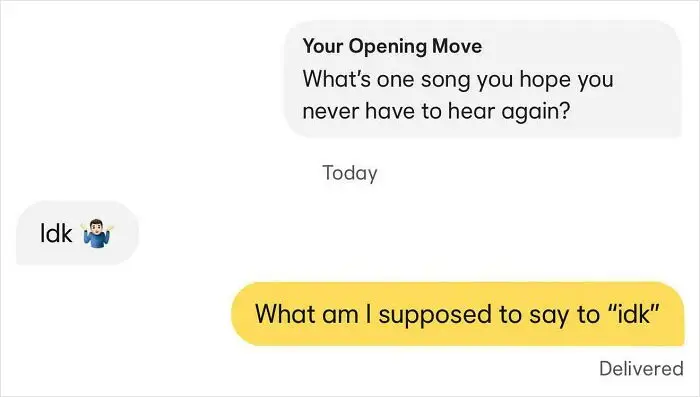
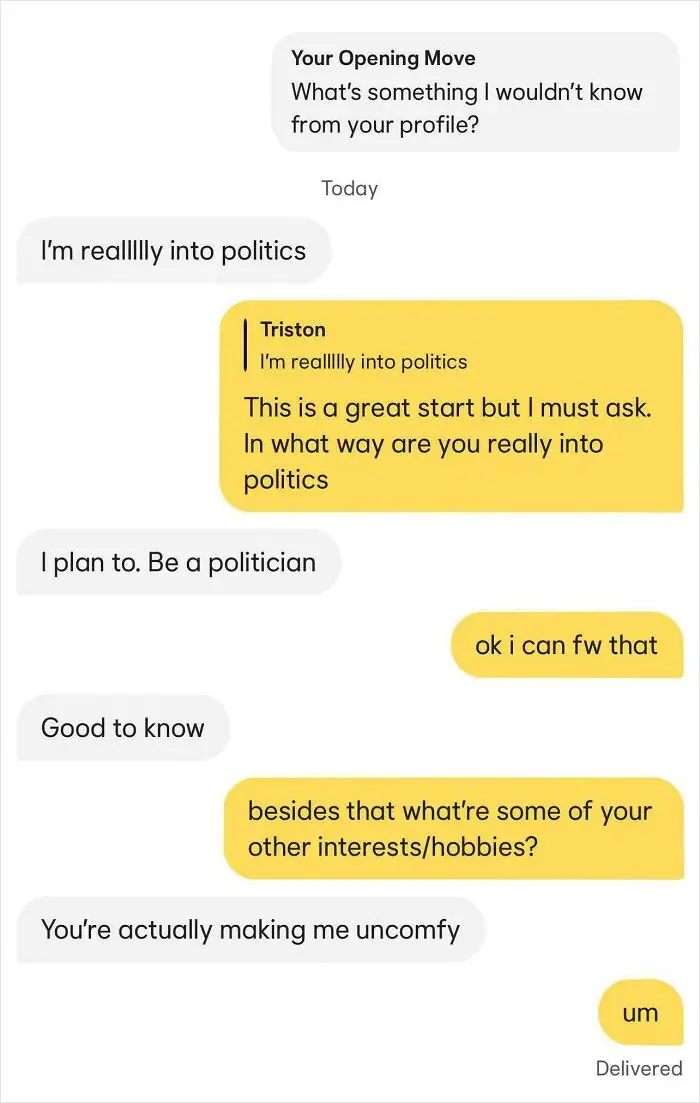
The way people attempt to attract attention can also influence how others judge them. Research found that women perceived men using silly pickup lines as more sociable, confident, and funny, but also as less trustworthy and intelligent. Other studies found that cute or flippant opening lines were generally less attractive than alternative approaches.
These impressions are influenced by more than the opening message alone, as perceived attractiveness and positive qualities such as kindness and intelligence can affect dating intentions. Humor might help someone stand out, but a joke that sounds charming to one person could come across as immature or inappropriate to another. The challenge is that a sender cannot control how their attempt at flirting will be received.
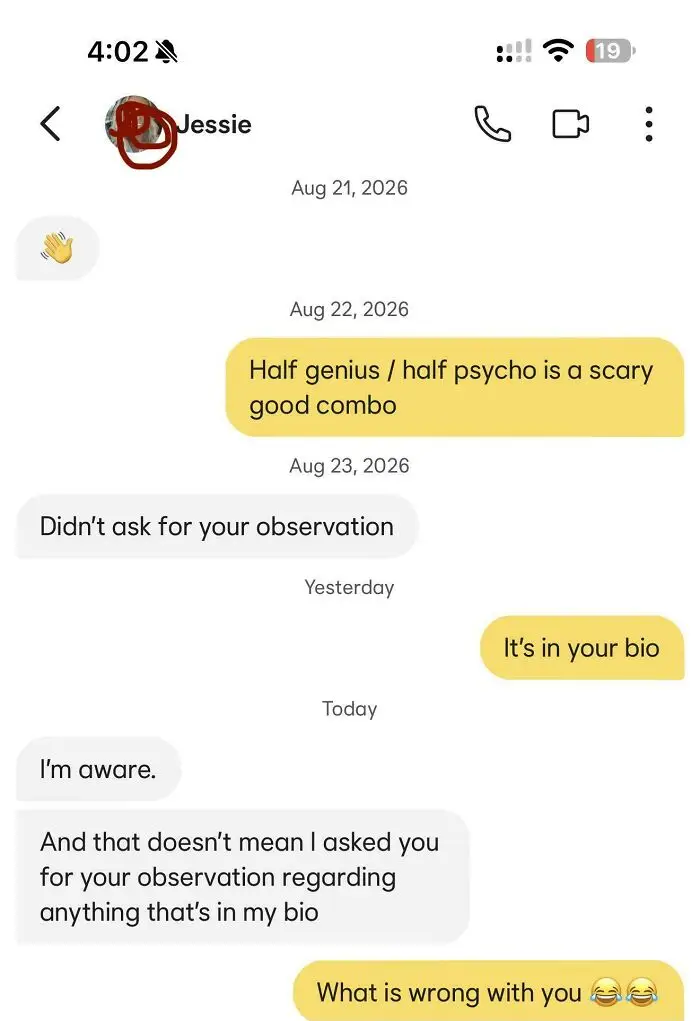
#14 Met On Bumble, Had Coffee Date Scheduled. I Have Norovirus And Cant Keep My Head Out Of The Toilet. Texted To Let Him Know I Couldn't Make It Annnd... I'm Pretty Sure This Was An Act Of The Universe To Keep Me From Meeting This Guy
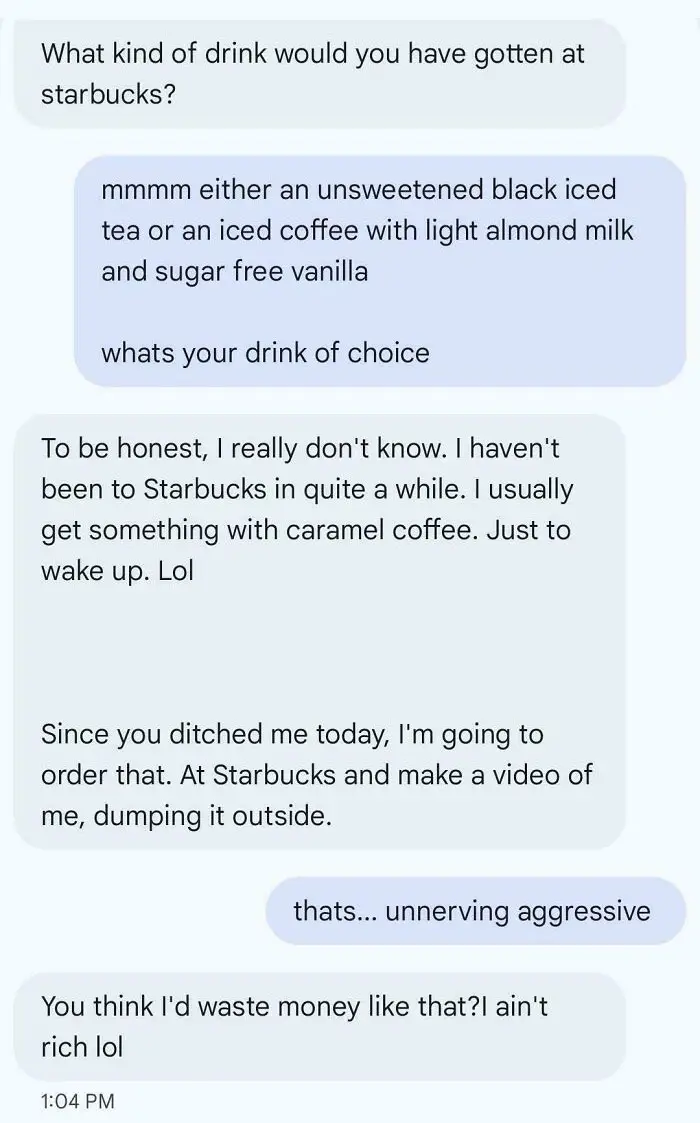
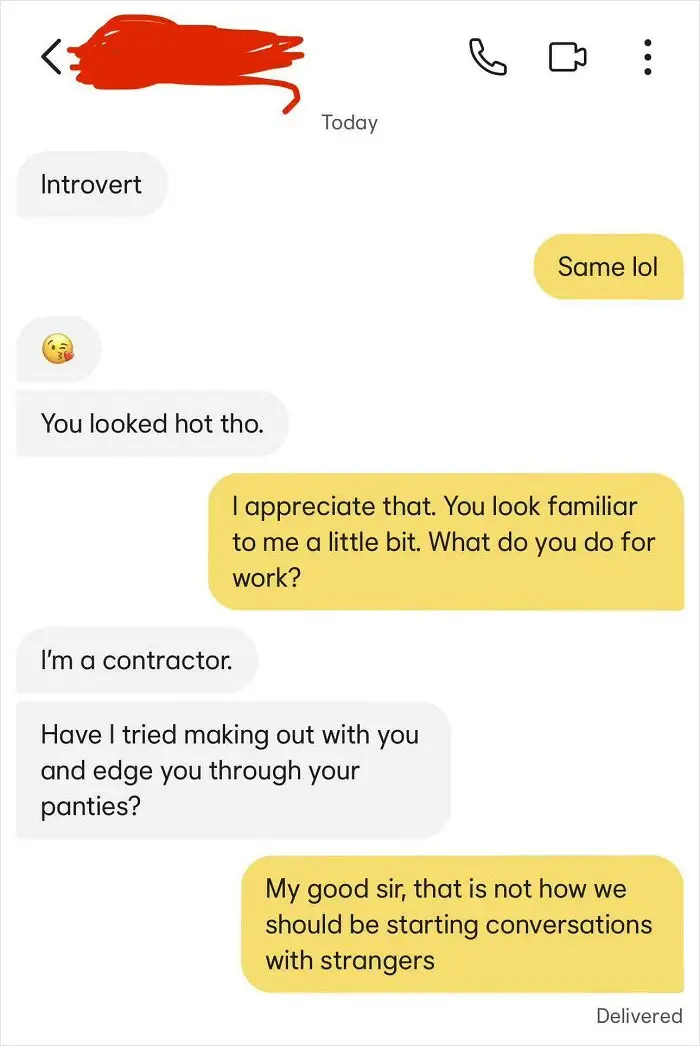
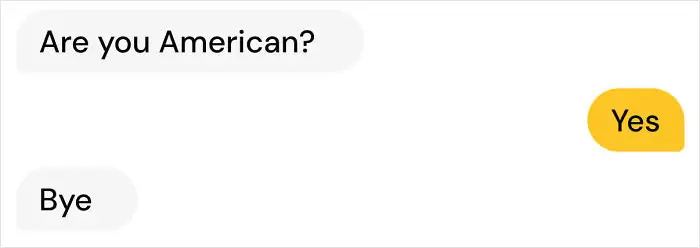
#15 Decided To Install Bumble Again And This Is My First Conversation
Unrealistic expectations and mixed signals can make the process even more confusing once conversations get underway. Research into ghosting and breadcrumbing suggests that online dating can make it relatively easy to begin communicating without being equally clear about whether a connection will continue.
Ghosting involves suddenly ending communication without explanation, while breadcrumbing means giving someone occasional attention without making meaningful progress toward a relationship. Both behaviors can leave people wondering where they stand. A match might send an enthusiastic message one day and disappear the next, or reappear just often enough to keep the conversation alive without showing genuine interest in taking things further.
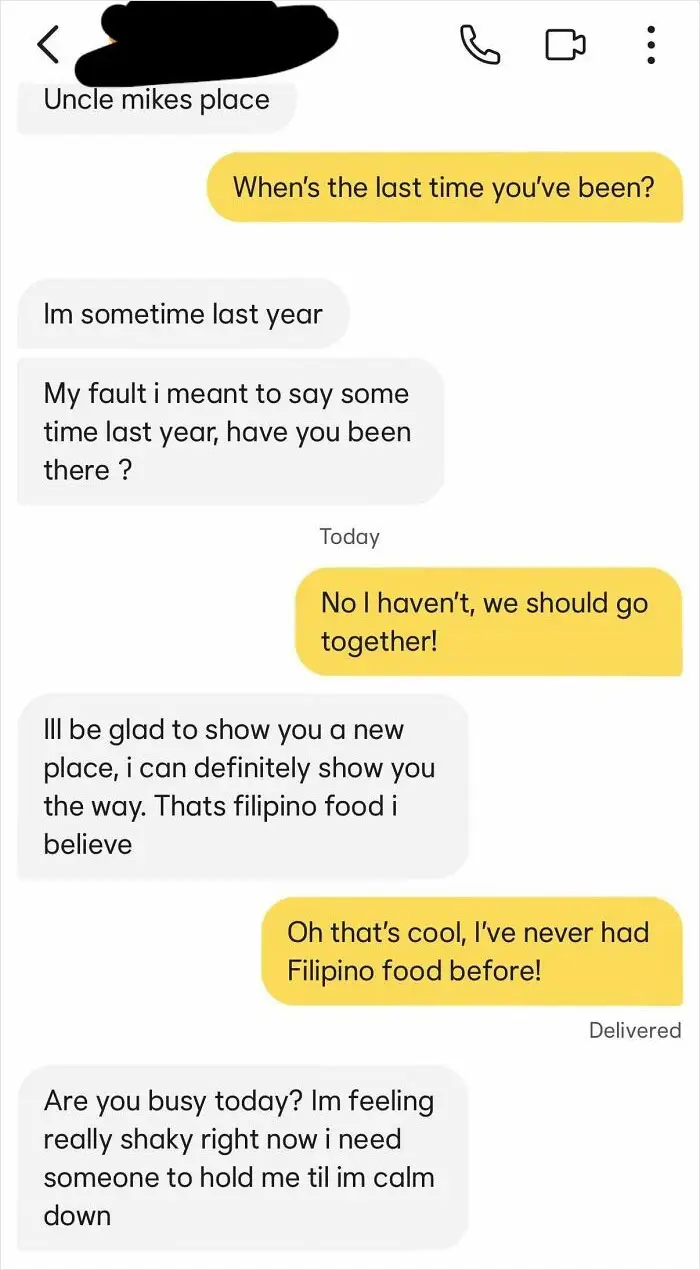
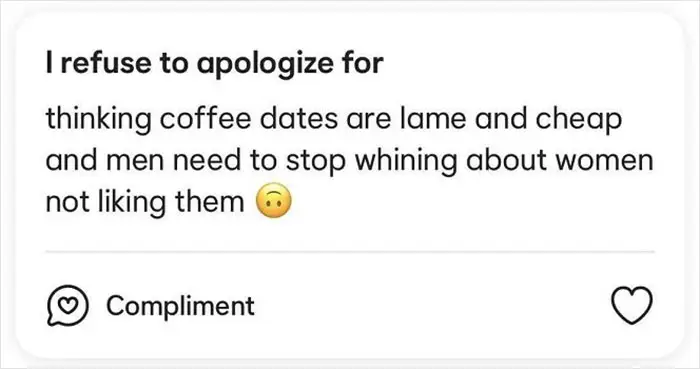
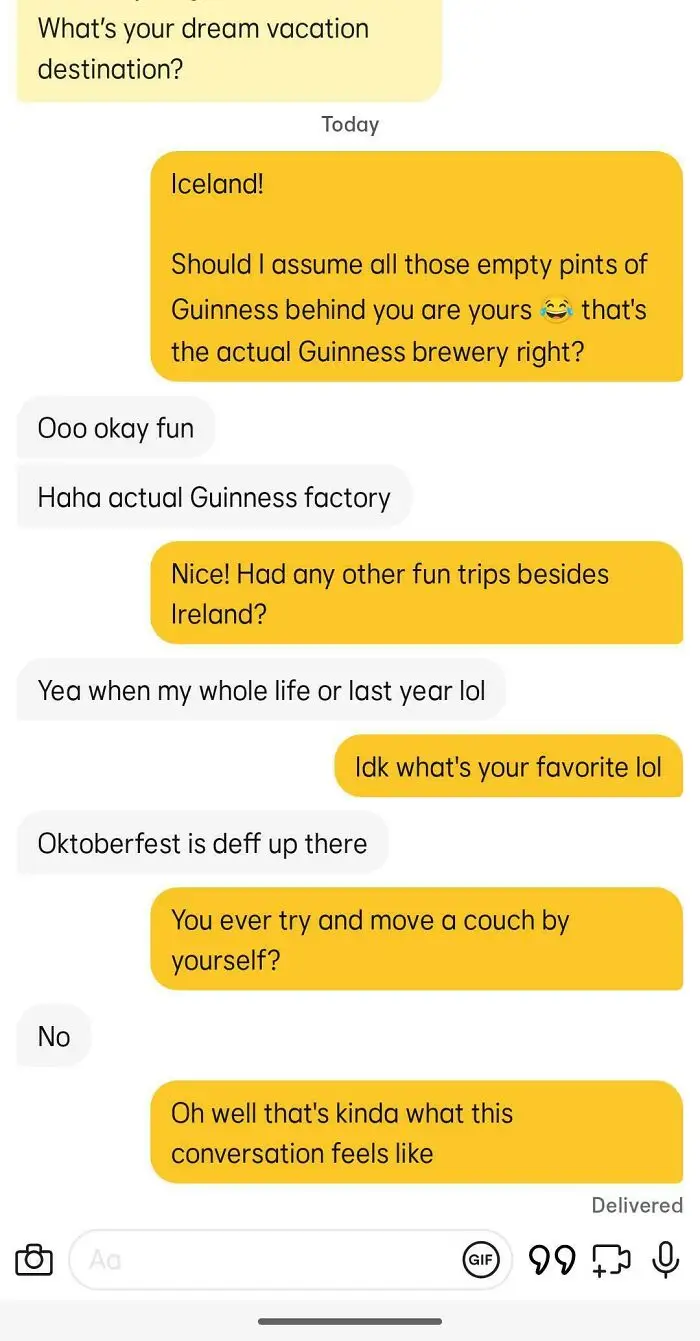
There are several reasons these patterns can become common in digital dating. Some people find it easier to stop responding than to reject someone directly, while others have come to expect disappearing matches as part of the experience.
Studies have also identified information overload and the pressure to remain continually active as possible contributors to disengagement. With multiple conversations competing for attention, maintaining every connection can become exhausting. Some people also withdraw to protect themselves from harassment or emotional vulnerability.
However, the amount of attention someone gives is not necessarily a reliable measure of their intentions. Consistent behavior and clear communication tend to reveal more about a person's interest than a handful of enthusiastic messages followed by unexplained silence.
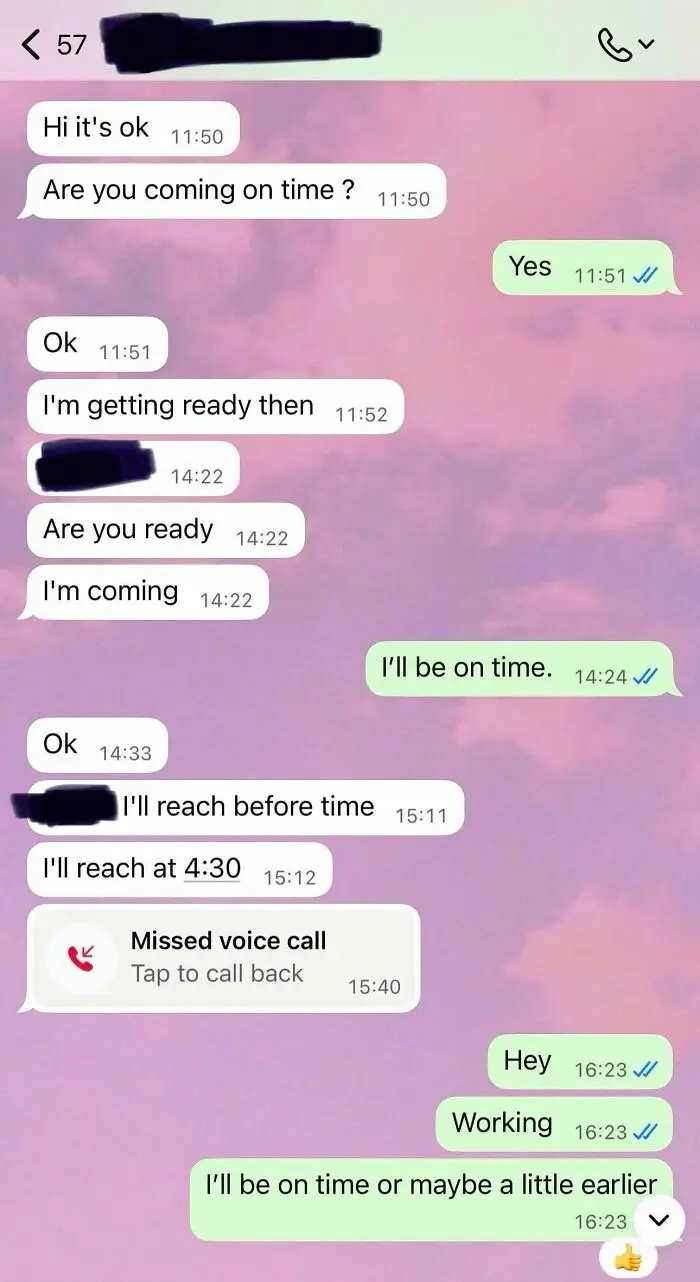
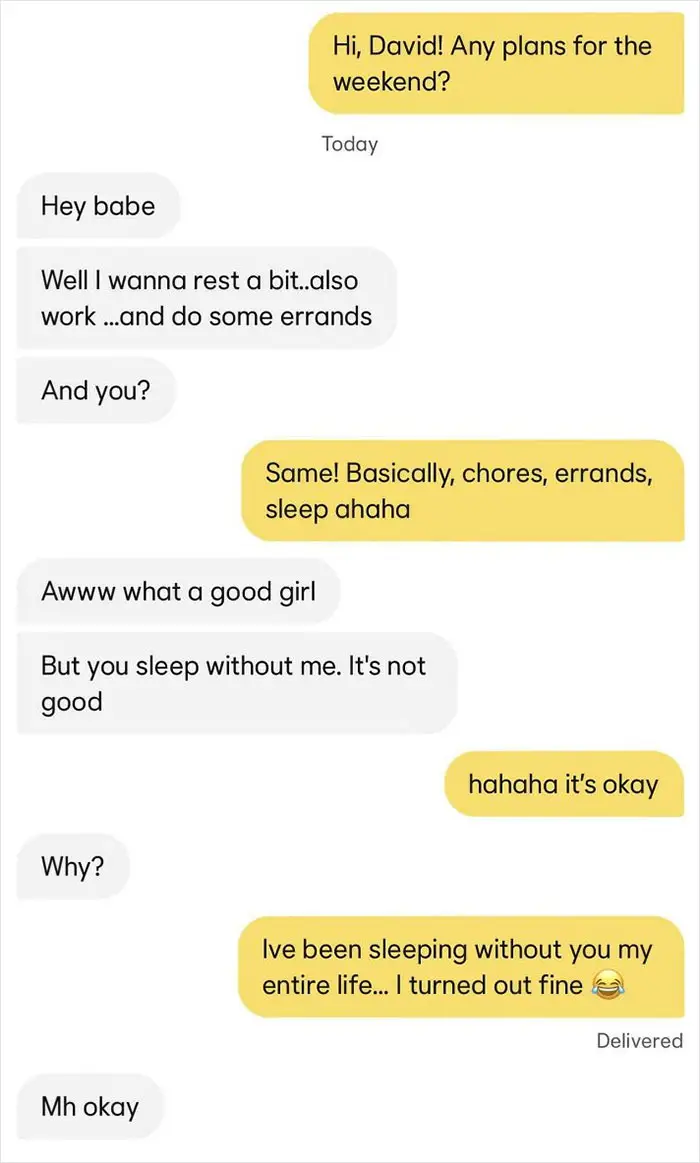
#19 Met A Guy Once And He’s Already Calling Me Baby After Blowing Up My Phone And Arriving An Hour Early To Our First Date