




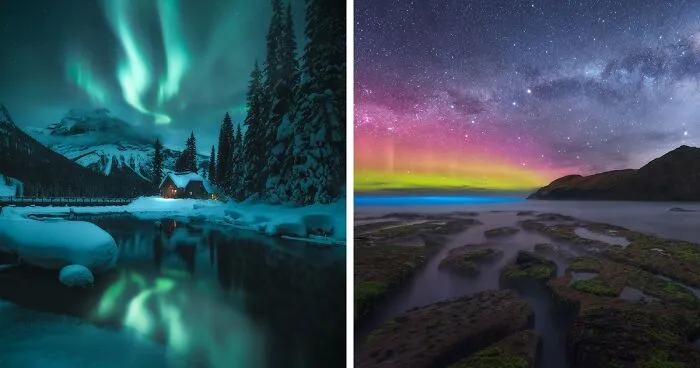


Nature is a beautiful place and in these hard times when everything seems kinda sad and dull, it's always nice to look at some amazing things. These photographers managed to capture one of the wonderful things nature has given us—aurora borealis. This beautiful phenomenon occurs in the high-latitude regions because of the disturbances in the magnetosphere caused by the solar wind.
Aurora borealis is very colorful, magnificent, and even seems like something out of this world. Many people would like to see it in real life; sadly, no one knows when we will be able to travel again, so let's check out the winners of the contest organized by Capture the Atlas from the safety of our homes. They picked 25 of the best photographs for their "Northern Lights Photographer of the Year" competition.
#21 “Ghosts Of The Fell” By Petri Puurunen
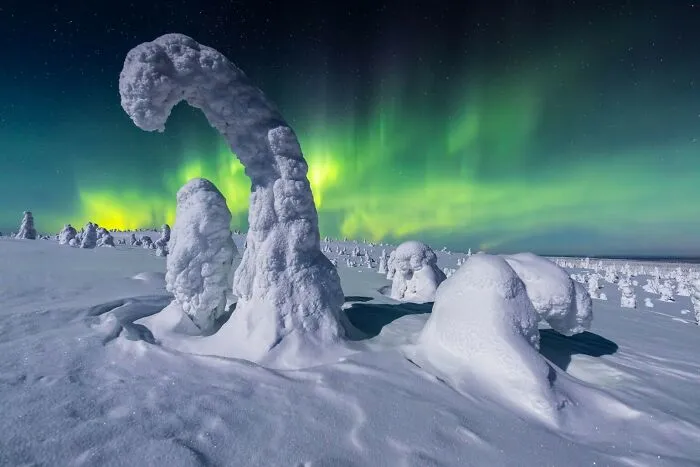
Finnish Lapland
"The weather forecast promised clear skies and refreshing -24ºC temperatures, so what could be a better way to spend a night like that than hiking up to the Fells and photographing trees covered with hard-packed snow? These snowy candle spruces can be up to 10 meters high and, with the snowy coat, weigh several tons. The half-moon was illuminating the scenery, so the conditions were nearly perfect. While wandering around the area and searching for compositions, the Auroras were slowly climbing up to the sky, fading away just ten minutes later. I managed to get a couple of decent photos."
Report
33points
#22 “Antarctic Night” By Benjamin Eberhardt (Edit By Martin Heck)
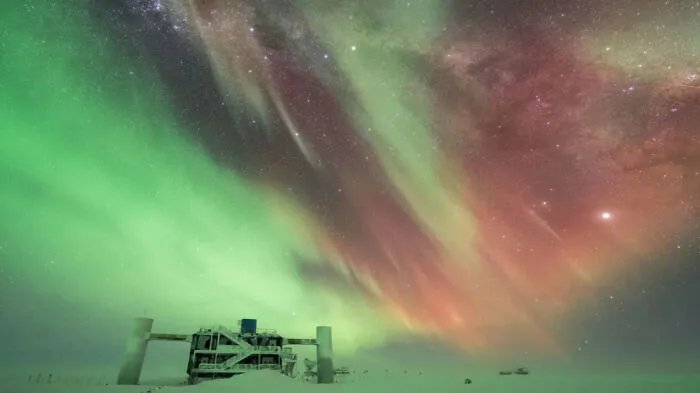
Ice Cube Neutrino Observatory – Antarctica
"This image shows a strong and colorful aurora over the Ice Cube Neutrino Observatory in the South Pole and is part of a longer time-lapse series. The South Pole is probably one of the most remote and challenging environments to do photography, and it is strenuous for both humans and technology. To achieve 24h-long time-lapse shots, you need some creativity to heat and insulate your equipment in order to keep it running, and even rotating, in temperatures ranging down to -80ºC (-112 ºF). In my case, this was a learning curve over multiple months, with a lot of trial and error and frostbite. On the upside, once you have tackled all the challenges, you have plenty of reasons to be proud of your shots."
Report
31points
#23 “Aurora Eruption” By Tor-Ivar Næss
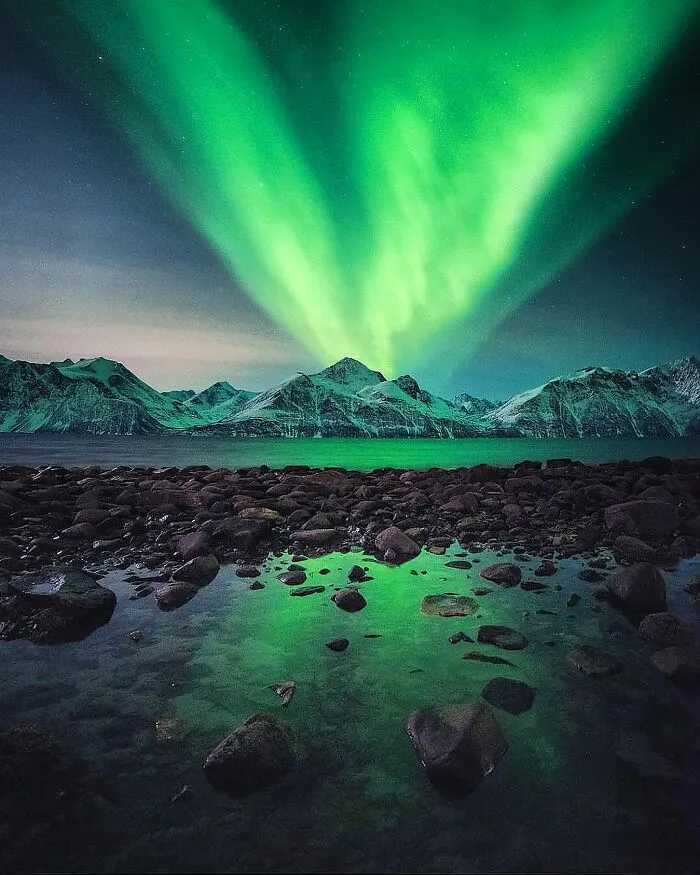
Lyngen Alps, Norway
"A few years ago, I realized how spoiled I am. On a random Tuesday night, I can head out, if the weather is decent, and capture one of the most sought-after phenomena in the world: the Northern Lights. This image came from a night just like that in the majestic Lyngen Alps, which are always a fantastic background when the Northern Lights go bananas. It was a clear night in February, and the Northern Lights started moving very slowly, but they kept building up, so when I watched what was happening on my LCD screen, the Northern Lights looked as if they were erupting from the mountain. Thanks to the moonlight coming from the left (south), the landscape was nicely illuminated and I got a decent balance with the overwhelming display of the Aurora Borealis. One thing that I’ve learned over the years shooting the Aurora is that, if you wait for 100% clear skies before heading out, you will miss out on plenty of good Northern Lights displays. This is just a tip if you are in a region of the world where the Northern Lights are visible at night."
Report
31points
#24 “Over The Lofoten Mountains” By José Antonio Mateos Fajardo
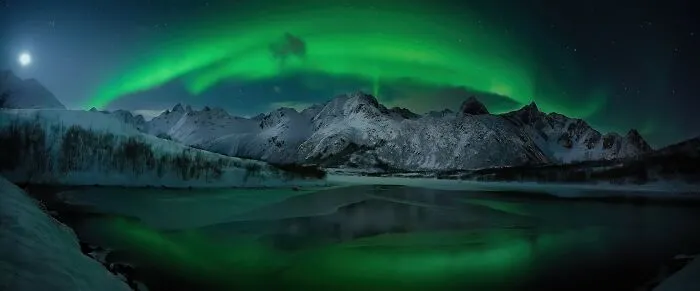
Lofoten Islands, Norway
"March 1st, 2020, 11:30 pm in the Lofoten Islands, Norway. I don’t know if it was -10ºC or -12ºC, but I couldn’t have been more excited about the chance to see and photograph those magic green lights that show up at northern latitudes. The night before, there was a great snowfall, so going off-road meant getting chest-deep in the snow. There was no other choice but to set the tripod in the road. At first, the Aurora seemed like a faint cloud changing its colors from yellow to lime. I used the moon to focus and I could see how my camera was picking up the first colors on my LCD screen. After some test shots, I started shooting at ISO 2500, F2.8, 3.2sec. The faint cloud had turned into a big Aurora, and the landscape was magical, with the moon illuminating the mountains. To capture the entire scene, I shot a pano of horizontal images. After this, I just focused on enjoying the scenery!"
Report
31points
#25 “Natural Mystic” By Virginia Yllera
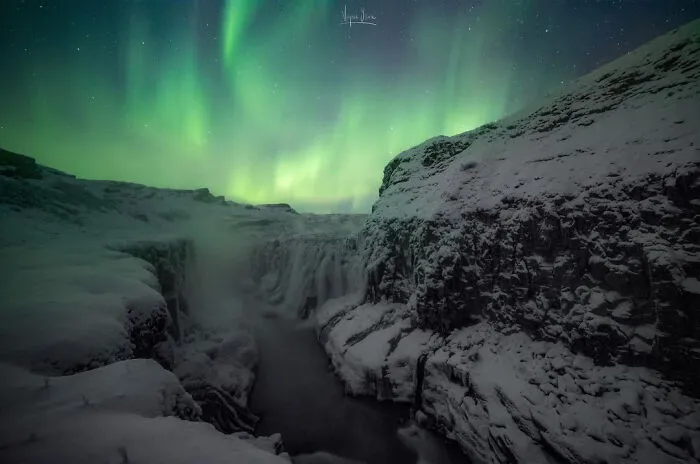
Iceland
"It was a cold and windy night in November, and one of the most spectacular moments I have experienced chasing the Northern Lights. The wind-chill, added to the spray coming from the waterfall, was part of the adventure. The shooting conditions were challenging, as I constantly had to wipe out the lens and make sure that the composition and exposure were correct. Finally, the Lights exploded and all the effort paid off."
25points


