

Nobody likes cheaters, and sometimes that sort of betrayal can even break up friendships. According to Statista, only 7% of Americans think that adultery is an acceptable behavior, so it’s understandable why people wouldn’t want to be friends with people who cheat on their partners.
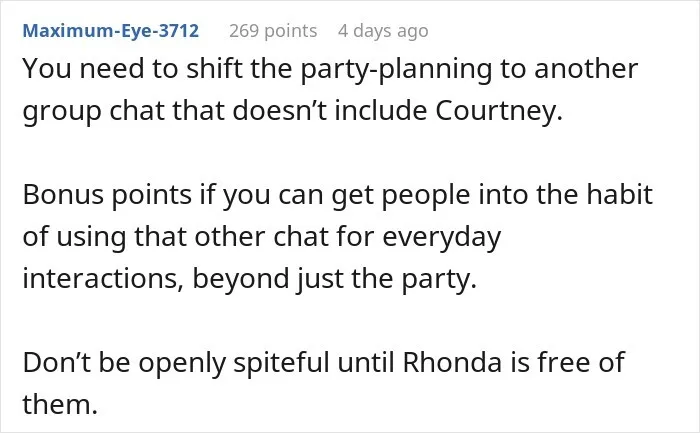
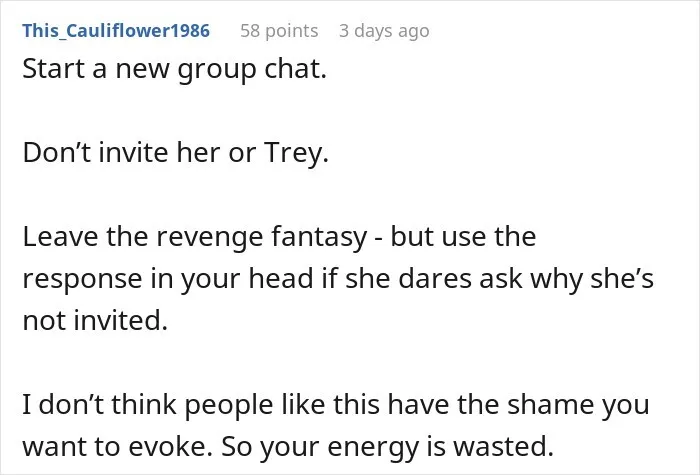
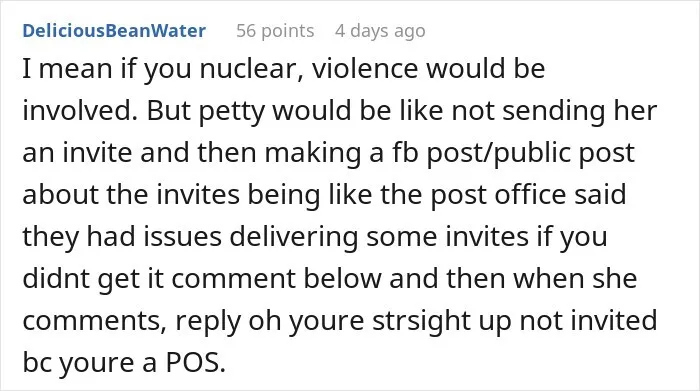
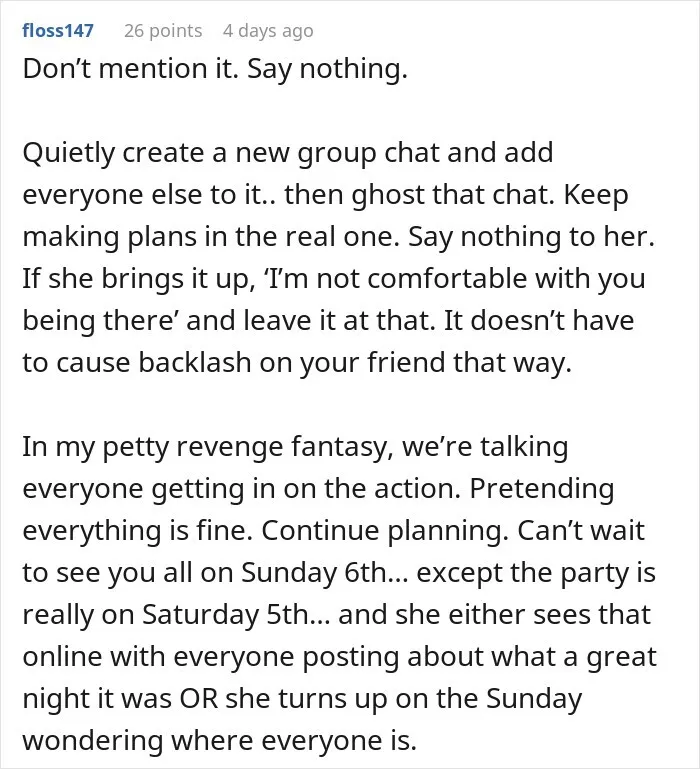
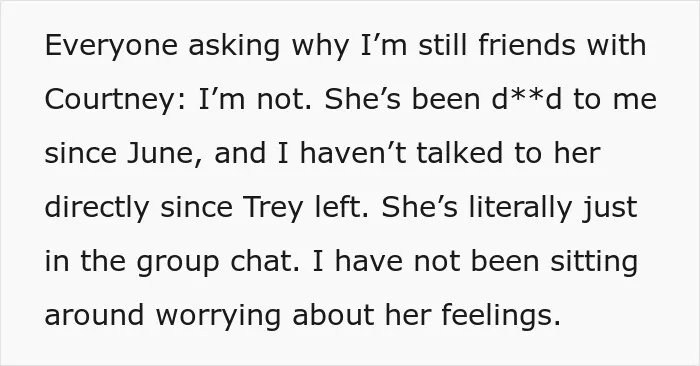
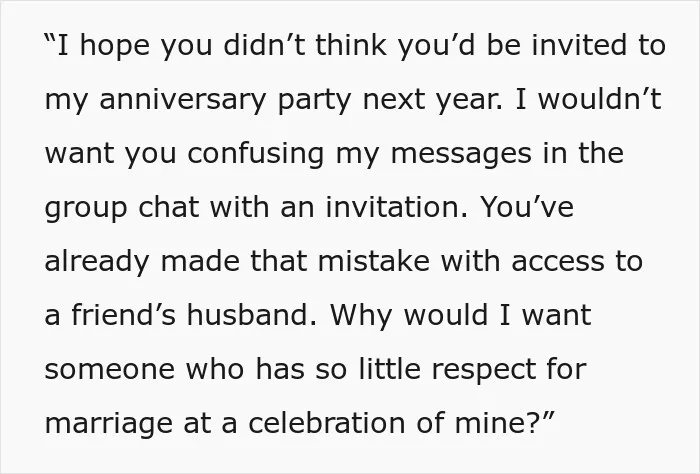
This woman said “sisters before misters” with her whole chest, as she refused to invite the woman who stole her BFF’s ex-husband to her wedding anniversary. Wanting to be a good friend, she even asked the Internet for petty revenge ideas, wanting the traitor friend and the ex to get a taste of their own medicine.
A woman couldn’t forgive a mutual friend for getting together with her BFF’s husband

Refusing to invite her to a wedding anniversary party, she asked people for petty revenge ideas































Her BFF found out about her plan, but her reaction wasn’t what everybody expected








Platonic friendships sometimes develop into something more unintentionally
It’s not clear whether the ex-husband in this story was having an affair with “Courtney,” but it wouldn’t be surprising. Research shows that people are more likely to cheat on their partners with people they’re close to.
According to data from the U.S. General Social Survey, 53.5% of infidelity cases are with a close personal friend. 29.4% of cheating happens with a friend, co-worker, neighbor, or someone the cheater has known for a long time. Much rarer are cases when someone married cheats with a one-time date, a professional they pay for, or someone else.
Cheating with a close friend isn’t always intentional, at least it doesn’t start that way. Psychiatrist and therapist Dr. Shirley Glass writes in her book, "Not Just Friends: Protect Your Relationship from Infidelity and Heal the Trauma of Betrayal,” that sometimes platonic friendships evolve into something more, especially in workplaces where people with similar interests and educations are working together.
“At least one or both parties in 50 percent of all couples, married and living together, straight and gay, will break their vows of [physical] or emotional exclusivity during the lifetime of the relationship,” Glass writes in her book. “After reviewing 25 studies, however, I concluded that 25 percent of wives and 44 percent of husbands have had extramarital [relations].”
Of course, this doesn’t excuse cheating, merely gives an explanation of why the husband and the friend did what they did. Glass’s research also explains another point in the story, that the ex-husband seemingly abandoned his child and is more involved with “Courtney’s” children.
Glass claims that men tend to get emotionally involved more often and that more women are only physically unfaithful. The fact that this husband is now playing family with his new partner proves that this affair was based on more than just a physical connection.
Fathers who start new families are twice as likely to lose contact with biological children
Losing touch with your kids after repartnering isn’t that uncommon either. Experts note that a significant number of fathers care more about the romantic partner than their biological children. So, once they repartner, it’s not unusual that they spend more time with the new partner’s kids than their own.
According to the National Centre for Social Research in the UK, one in eight fathers lose contact with their children after separation. They’re even twice as likely to be absent if they remarry or start new families.
Men paying more attention to their potential stepchildren is an evolutionary theory that sociologists call “mating effort.” Investment in children is seen as courtship currency, in this case, towards “Courtney.” Wanting to show her that he’s a good mate, the ex-husband is spending time with her kids, neglecting his biological one in the process.
According to this theory, biological fathers stop investing in children when the marriage is over because it doesn’t benefit their relationship with their partner anymore. Although it may sound all kinds of messed up, it explains why the ex-husband in this story was more willing to shower his new partner’s kids with attention and seemed to forget he already had a kid.
“If I do this wrong, I’ll end up excluding myself from the whole friend group,” the OP clarified in the comments
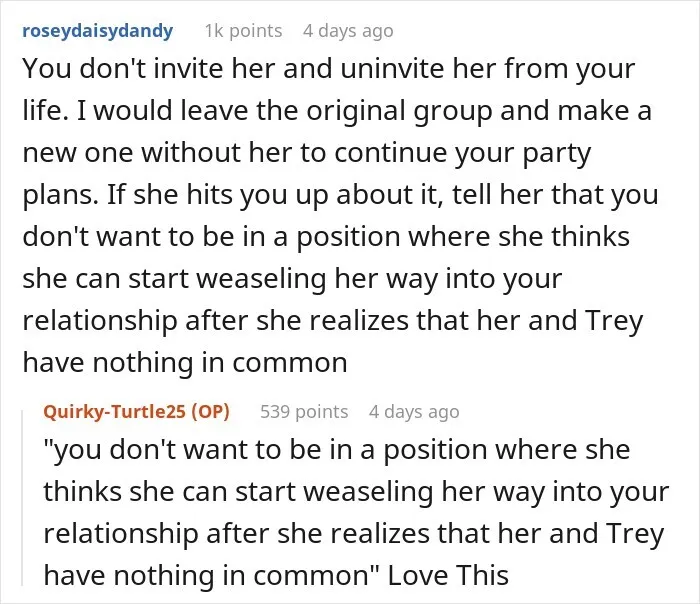
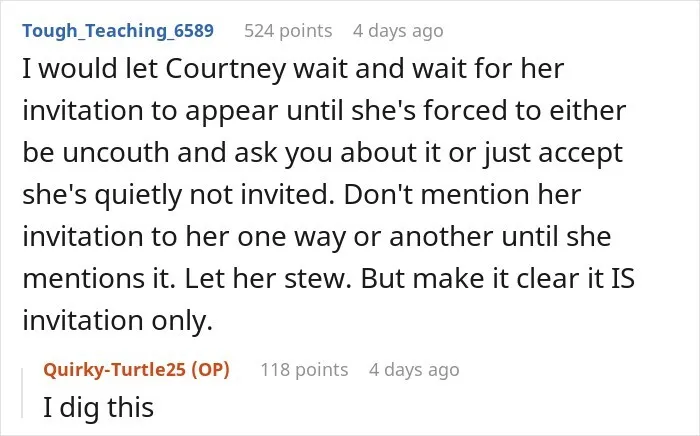
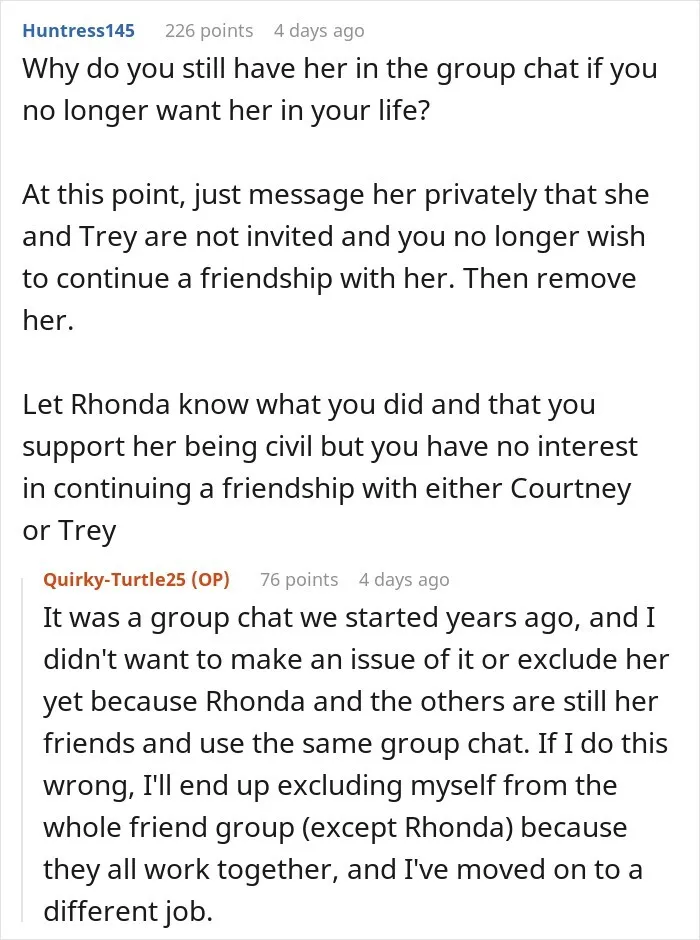
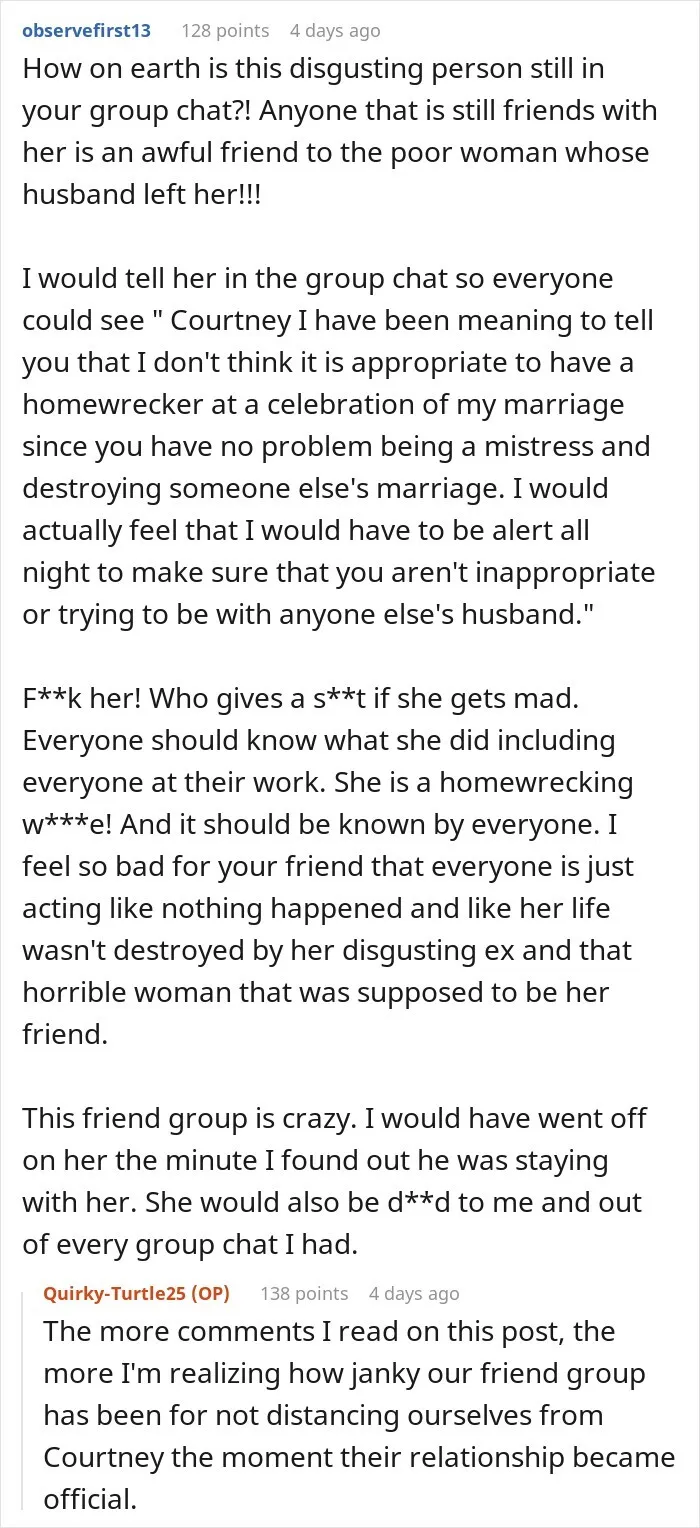
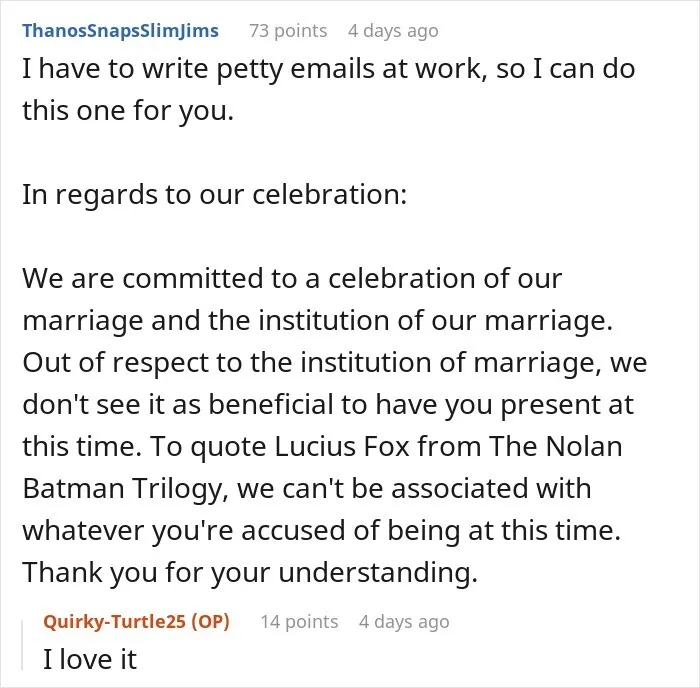

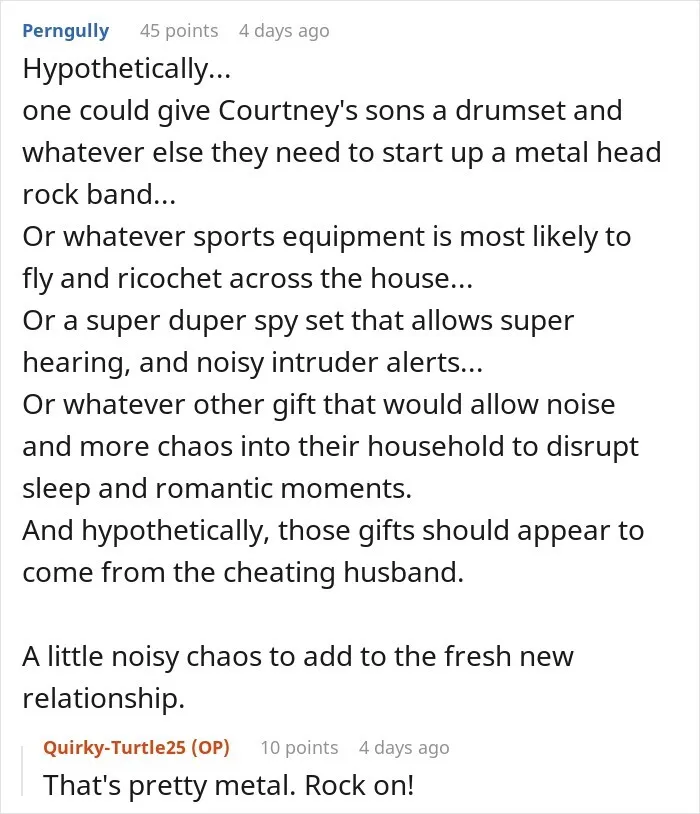
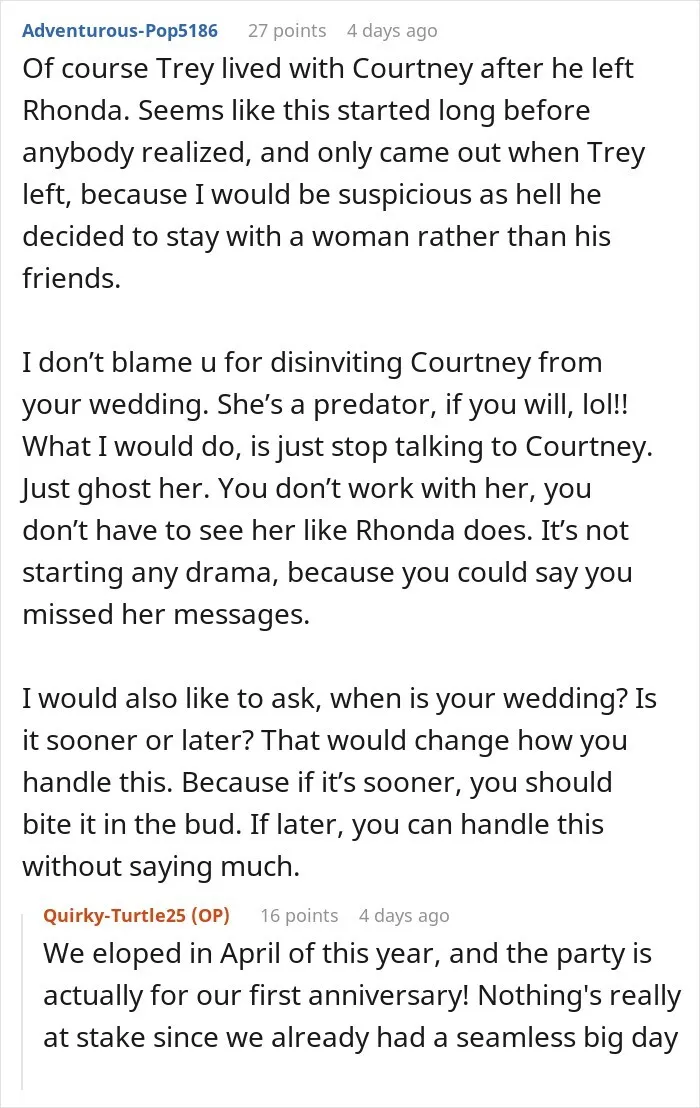
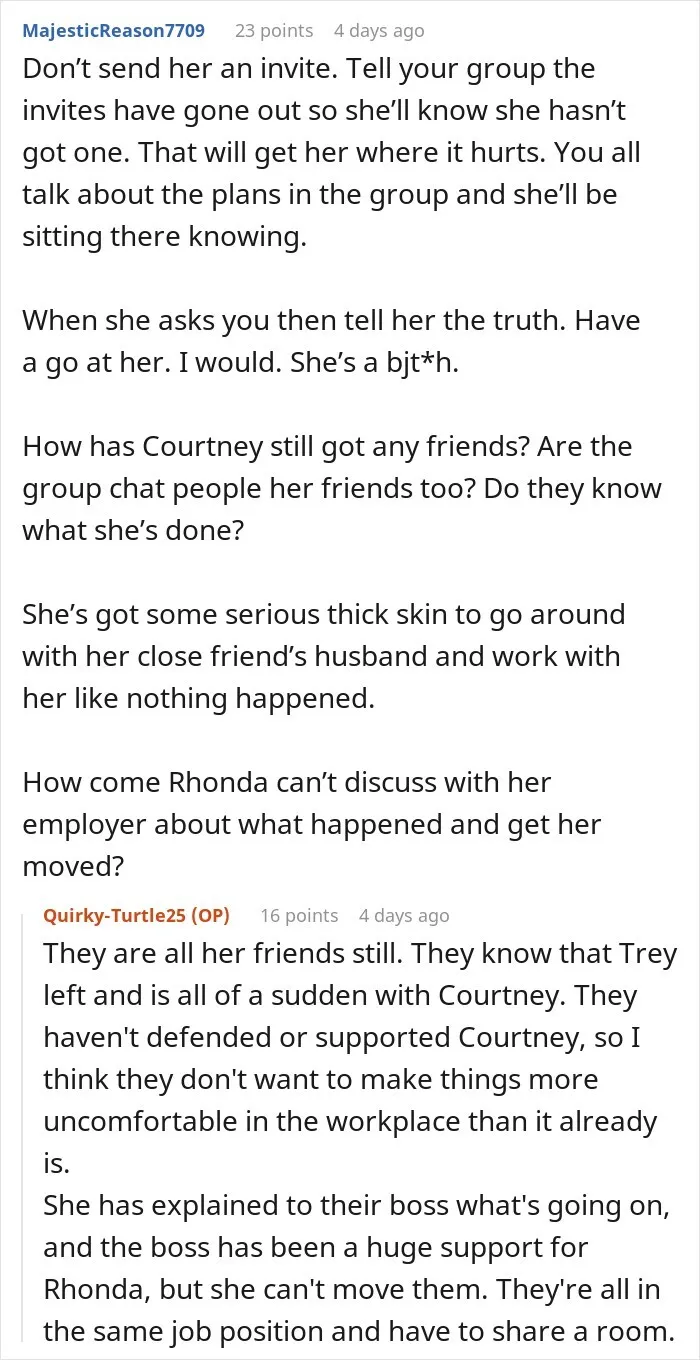

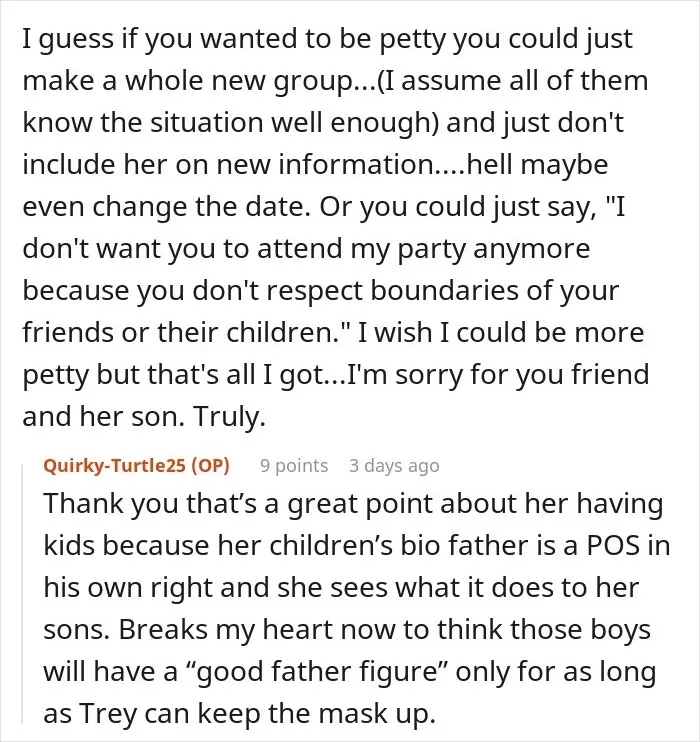
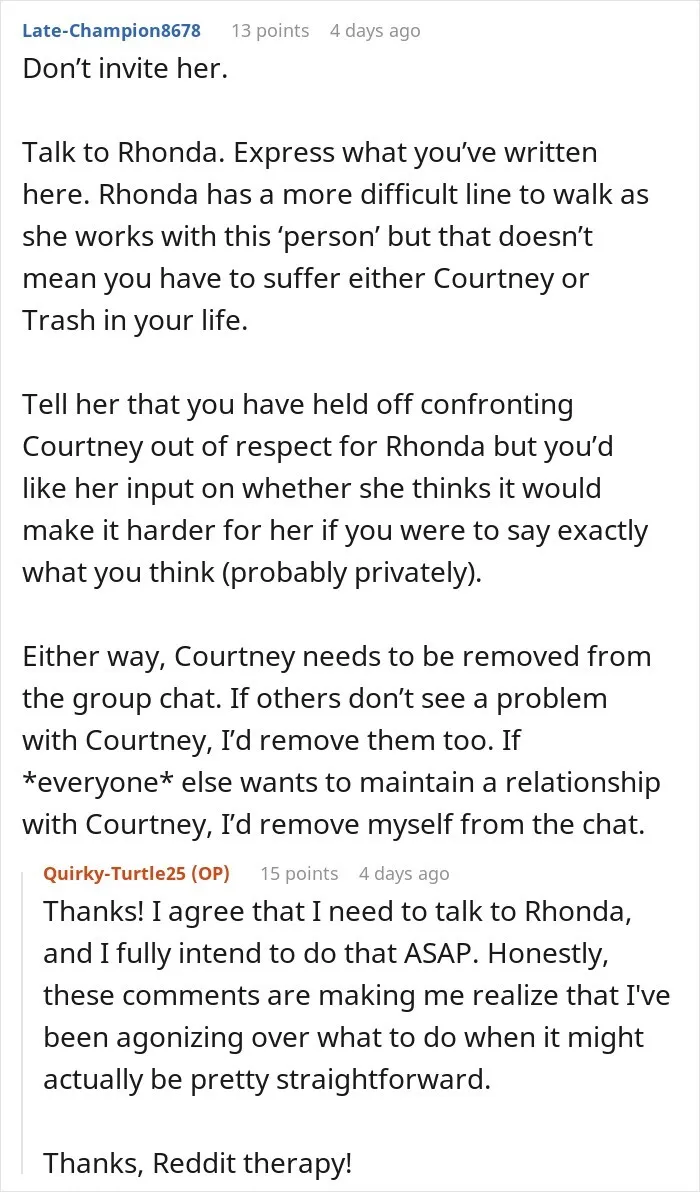
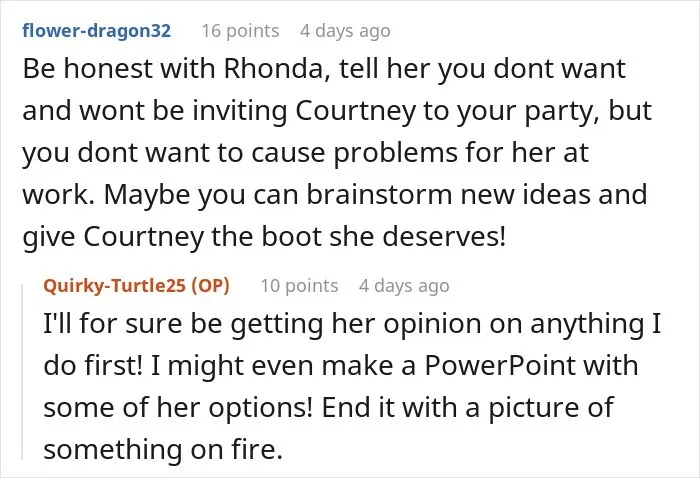
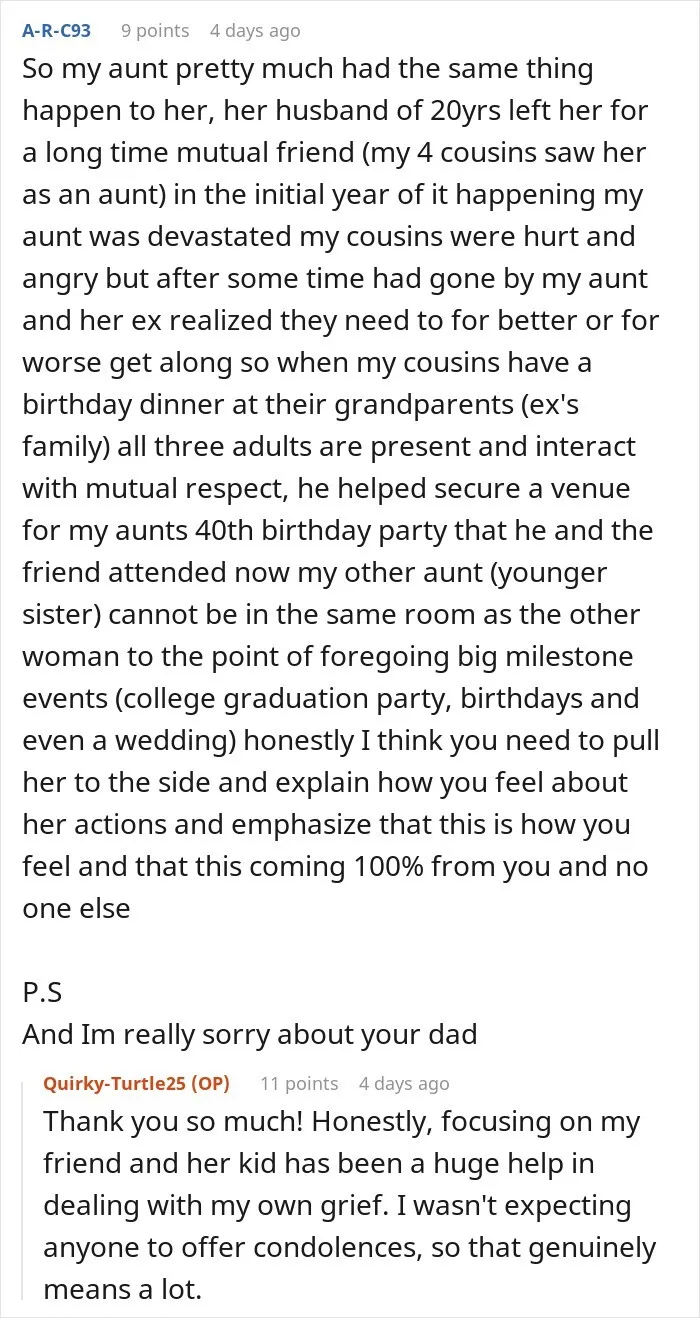
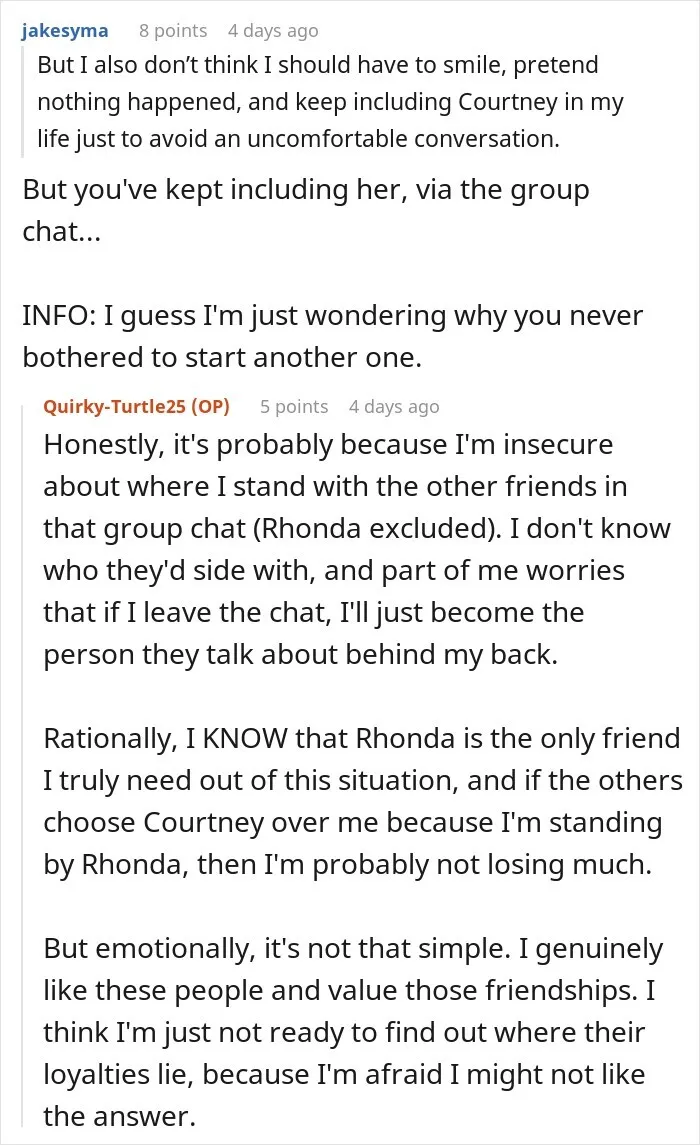
Some people advised OP not to waste energy on the cheaters, others had suggestions for spicy revenge