







#2

How is it that the generations raised online seem less motivated and less empowered than my old Gen X a*s to *leave no question unanswered?*.
Sometimes, the most surprising thing about being an adult is discovering just how much basic knowledge some people seem to be missing.
Personal finance is one of the clearest examples of a responsibility adults must learn outside school. About 49% of financially knowledgeable U.S. adults have learned a great deal or a fair amount about personal finances from family and friends, compared with just 19% who learned the same in K–12 schools.
That leaves many people to figure out budgeting, saving and debt management through trial and error. Only 59% of U.S. adults feel confident about creating a monthly budget, while 56% feel confident about saving money. Growing up does not automatically prepare someone to manage every adult responsibility.
#3

#4
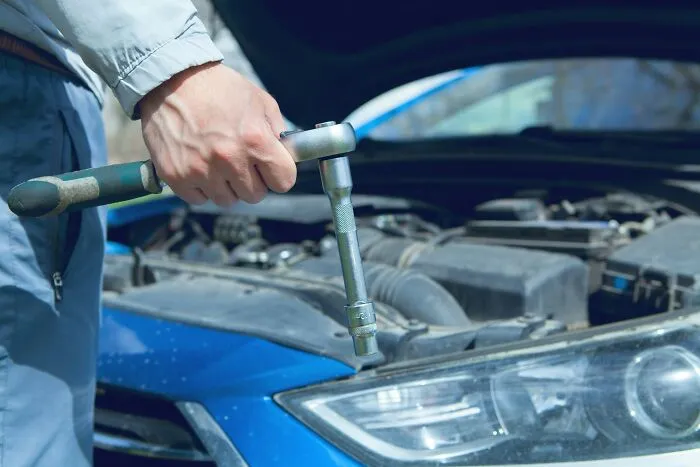
Once my dad was helping replace my car's brakes and I wanted to bring my daughter out to watch. He said "no, she won't be interested in that. That's not girl stuff."
I told him I don't care if it's "girl stuff" or not, but it never hurts for someone to know how to do things. Even if she never does it herself, at least she'll have a better idea about how cars work and is less likely to be taken advantage of if she takes it to a mechanic. .
Knowing how to handle money helps with everyday tasks, but practical skills matter even more when the unexpected happens. The American Red Cross suggests that families get ready for emergencies like fires or floods, pick meeting spots, and choose someone outside the area to contact.
Having a simple plan makes it easier to act quickly instead of searching for answers in a crisis. The Red Cross also suggests giving each family member a specific job and practicing the plan together.
Families can decide ahead of time who will collect emergency supplies, who will look after children or older relatives, and where everyone should meet if they need to leave home. These steps might not seem important on a normal day, but being prepared makes a big difference when routines are disrupted.
#5

Anecdotal evidence is unfortunately the most powerful kind of evidence when people are weak minded and don’t like to question things. It is not nearly as strong as scientific evidence which relies on much larger portions of the population in controlled settings, but it is linked to emotions which can be very powerful persuaders.
I really wish we had people who could think for themselves and didn’t accept everything we told them as fact.
#6

Many adults do not have equal opportunities to learn practical skills, even after they leave school. UNESCO's Global Report on Adult Learning and Education points out that access to further education is especially limited for people in rural areas, migrants, older adults, Indigenous learners, and people with disabilities.
Because of these barriers, some people miss out on knowledge that others gain through work, training, or support from their communities.
This shows that missing skills are not always a sign of laziness or a lack of common sense. If someone never had affordable training, good guidance, or a supportive place to learn, they might become adults without learning certain skills. When learning opportunities are not equal, people can still have gaps in their knowledge long after they finish school.
#7
#8

#9

The question that rises then is: does modern life require more skills? As technology changes the way we work and live, the skills adults need are also changing. About 18% of adults do not reach basic levels in literacy, numeracy, or problem-solving. These skills help people understand information, work with numbers, and deal with new situations.
Digital tools are also changing how people handle daily tasks. Adults now need to check online information, use digital services, and make choices based on data. Artificial intelligence and digital technology are changing everything from managing money to solving problems at work.
Being able to do a task in the past does not mean someone can do its new, tech-based version.
#11

#12
Life was very, very different before modern conveniences. Today’s appliances have taken away much of the hard physical work that used to come with household chores. In the mid-1800s, washing clothes meant carrying water from a river, well, or cistern, heating it, scrubbing clothes by hand, and hanging them outside to dry.
Doing laundry for the week could take a whole day of tough work. Cooking used to involve much more than just following a recipe. Before electric stoves, people gathered fuel, chopped wood, built fires, and worked to keep the right temperature while making meals.
When mechanical washers and electric appliances arrived, they made these jobs much easier. People in the past needed a lot of practical know-how, but today, modern conveniences have changed the household skills we use most often.

#14
While technology makes some tasks easier, adults still have to balance work and personal life. According to the American Psychological Association's Stress in America 2025 report, 69% of working adults in the U.S. say work is a major source of stress.
Work often takes up the time and energy people could use to learn new skills or take care of their homes. The stress does not stop when the workday ends. Adults also have to pay bills, schedule appointments, care for family members, and keep up with new technology.
#16
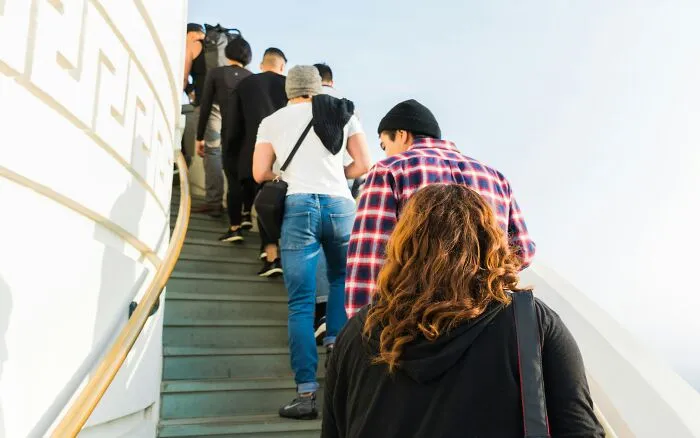
I see so many people line up at a window/stand and block the walkway. It doesn’t take much to have the line go along the wall/stand. .
#17
With so many demands on their time, learning something new can feel like just another chore instead of a chance to grow. This is one reason why even busy, capable adults sometimes do not develop certain useful skills.
At the end of the day, nobody knows how to do everything, and we all have gaps in our knowledge. So, before judging someone for not knowing something that seems obvious, it might be worth asking ourselves what we still have to learn. After all, adulthood doesn't come with an instruction manual!
#19

Learning how to recognize, name, and manage your own emotions is a basic social skill. Same with learning how to express them in a healthy way and avoid making your emotions someone else's responsibility.
All that is foundational to emotional intelligence. It doesn't exactly shock me that a lot of adults were never taught these thing, I mostly feel dismay and sadness. There are a lot of horrible parents out there who a) don't know how to regulate their own emotions, b) never do the work to learn how, and c) pass the chaos on to their children.
#20

Examples:
Using a screwdriver and a drill to reinforce the hinges and door lock plate with 3” wood screws
Using a hammer to nail in a picture hanging hook
Using a wrench and pliers to fix a leaky faucet
Using the jack and lug nut wrench in your car to fix a flat tire.


