



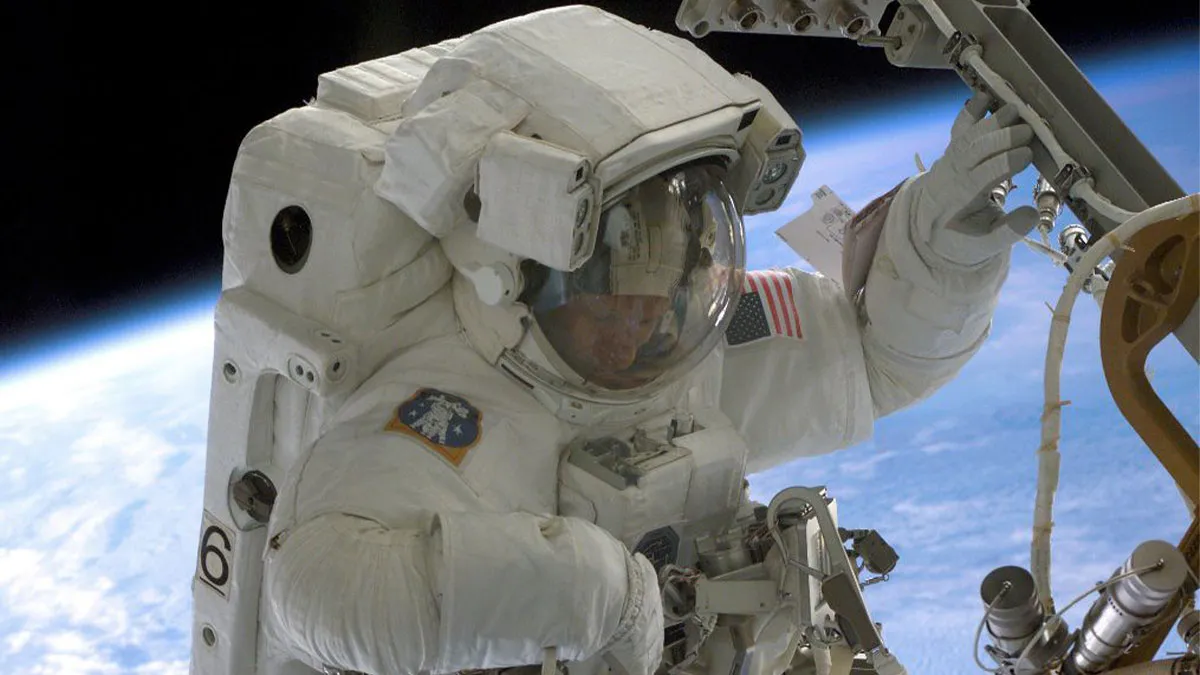




If you’re anything like us sci-fi geeks, you probably spent your childhood dreaming of becoming an astronaut when you grew up. And maybe you still kind of hope to turn that dream into reality someday. However, what you see about space in movies and what happens in reality are two very different things.
#21 The Youngest Astronaut Was Only 25

At the age of 25, Russian cosmonaut Gherman Titov became the youngest individual to venture into space. His historic flight aboard Vostok 2 took place on August 6, 1961, marking a significant early milestone in space exploration. The mission itself spanned just over 25 hours, solidifying Titov's place in history.
Report
17points
#22 Space Sickness Is A Thing

Many astronauts, over half in fact, encounter Space Adaptation Syndrome, a form of motion sickness experienced in orbit. This condition, often called "space sickness," can bring on symptoms like headaches, nausea, and general unease as the body adjusts to microgravity. The severity of these symptoms can vary, with former senator Jake Garn's notable case leading to an informal "garn" scale used by astronauts.
Report
17points
#23 It Can Take Years Before They Get To Go To Space

Even after completing extensive training, astronauts may not travel to space for several years, sometimes working on ground-based projects like engineering support during this waiting period.
For example, Dottie Metcalf-Lindenburger had a four-year gap and Christer Fuglesang waited 14 years for their first missions following their initial and specialized instruction. This pre-assignment phase ensures astronauts remain active in their space program while anticipating their flight.
For example, Dottie Metcalf-Lindenburger had a four-year gap and Christer Fuglesang waited 14 years for their first missions following their initial and specialized instruction. This pre-assignment phase ensures astronauts remain active in their space program while anticipating their flight.
Report
16points
#24 It Can Be Harder For Astronauts To See In Space

During space missions, astronauts can experience changes to their eyesight. This phenomenon is often linked to increased pressure inside the skull, a condition known as intracranial pressure. These vision issues are a notable physiological effect observed in individuals working in microgravity.
Report
16points
#25 Astronauts Have Been Able To Garden In Space

Gardening in space has become a reality, with astronauts successfully cultivating various plants such as zinnias, lettuce, and radishes. This ability to grow fresh food in the microgravity environment is an important development. These botanical experiments help scientists understand plant growth under unique conditions and support long-duration space missions.
Report
16points
#26 The "Maximum Absorbency Garment" Is For Use Outside The Spacecraft As Well

The "Maximum Absorbency Garment" is crucial for astronauts conducting spacewalks or other activities outside their spacecraft, as it allows them to work for prolonged periods without needing to return inside. This specialized undergarment, effectively an adult diaper, addresses the challenge of managing bodily functions when toilet facilities are inaccessible. Its design ensures that missions can continue uninterrupted by basic human needs, especially during critical external operations.
Report
16points
#27 Astronauts Have Special Eyewear For Space Missions

Special eyewear is used by astronauts to help with vision changes that can occur due to prolonged exposure to microgravity, a condition NASA calls Spaceflight-Associated Neuro-ocular Syndrome (SANS). Maintaining good eyesight is essential for the detailed work astronauts perform, and this space-related health issue is carefully studied for long missions. Even pioneering astronaut John Glenn carried "space anticipation glasses" to address potential visual challenges.
Report
15points
#28 Astronauts Have To Exercise Every Day In Space

Daily exercise for at least two hours is essential for astronauts to combat the weakening of muscles and bones caused by the lack of gravity. Using equipment like treadmills and resistance devices, they work to prevent significant physical deterioration. This consistent activity also helps manage bodily fluid shifts, such as plasma loss, which can affect oxygen circulation.
14points
#29 Arizona's Crater Field Is A Popular Training Ground

Northern Arizona is home to Meteor Crater, a significant landmark over 170 meters deep and more than a kilometer across, which NASA has used for astronaut training since the Apollo program. Formed by a meteorite impact roughly 50,000 years ago, this site allowed early astronauts to practice mapping and surveying. The crater continues to be a valuable training location for new NASA recruits preparing for space missions.
Report
14points
#30 Apart From Physical Tests, There Are Psychological Evaluations Too

Beyond physical fitness, prospective astronauts undergo thorough psychological evaluations. These assessments are vital to determine if individuals possess the mental fortitude required for space travel. Dealing with high-stress situations, prolonged isolation, and close-quarters teamwork are all part of the job, making psychological stability a key selection criterion.
Report
14points
#31 Nasa Also Invents Kids' Toys (Albeit Accidentally)

The invention of the Super Soaker can be traced back to NASA scientist Dr. Lonnie Johnson, though it was an accidental discovery. While he was experimenting with a new heat pump design that used water instead of Freon, a powerful jet of water shot across his lab. This unexpected event sparked the idea for the popular children's water toy.
Report
14points
#32 Not All Astronauts Go By That Title

Individuals who travel to space are known by different titles depending on the agency that trained them, such as Astronauts for NASA, ESA, CSA, or JAXA, Cosmonauts for the Russian Space Agency, and Taikonauts for China. Despite these varied names, which in some cases like "Astronaut" versus "Cosmonaut" stem from historical events like the Space Race, their fundamental job in space is the same. Essentially, these titles reflect the country or agency of origin rather than a difference in their core profession.
13points
#33 NASA Has No Age Restriction For Candidates

Aspiring NASA astronauts do not face an age restriction, but they must meet several other key requirements. A bachelor's degree in a STEM field like engineering, biology, or computer science is necessary, as is US citizenship. Additionally, candidates need either 1,000 hours of jet piloting experience or three years of relevant professional work, along with excellent vision, though wearing glasses is permissible.
Report
13points
#34 The Criteria To Get Selected Is Incredibly Strict

To become an astronaut, individuals must pass a demanding selection process implemented by space agencies like NASA, ESA, and Roscosmos. These organizations typically seek candidates with backgrounds in engineering, science, medicine, or aviation. The criteria for selection are notably strict, ensuring only highly qualified individuals are chosen.
Report
13points
#35 Weightlessness Has Tons Of Effects On The Human Body

The absence of significant gravity in space causes several changes in an astronaut's body, including the weakening of muscles and a reduction in bone density. Bodily fluids also tend to shift towards the upper body, sometimes leading to facial puffiness. To help manage these effects of weightlessness, astronauts follow strict daily exercise routines and may use dietary supplements.
Report
11points