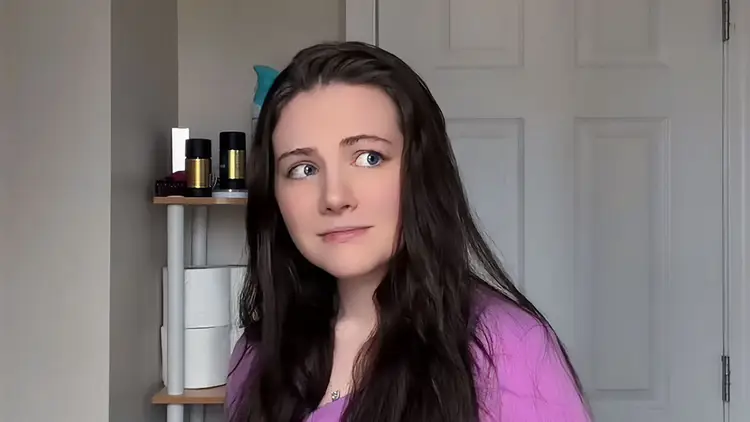
Ashley Zambelli spent 23 years wondering why certain things seemed harder for her than they did for other people. She struggled with learning and memory, experienced recurring physical problems, and often felt her heart racing. Yet no one could explain what was causing these difficulties, despite doctors knowing something was wrong. It took an unusual pattern across several pregnancies for her medical team to investigate a possibility they had not previously explored. What followed would give Ashley an answer she had spent 23 years unknowingly searching for, while revealing how easily a particular form of Down syndrome can go unrecognized. As netizens questioned Zambelli’s diagnosis, with one writing, “She doesn’t look like she has it…,” Bored Panda spoke with multiple experts to uncover the signs that can go unnoticed and why some adults may spend years without a diagnosis. ashleyzambelli Ashley’s journey toward a diagnosis began with a pregnancy loss in 2019. Genetic testing of the pregnancy tissue revealed that the baby had Trisomy 21, a chromosomal condition commonly known as Down syndrome. She later welcomed her first daughter, Lillian, in December 2020, and the child was also born with Down syndrome. Ashley's second daughter, Evelyn, was born in December 2021 and did not have the condition. When Ashley became pregnant again in 2023, prenatal screening indicated that her third child, Katherine, was at high risk of having Trisomy 21. The repeated findings caught her OB/GYN's attention. Speaking to Metro in August 2026, Ashley recalled, “But the third time it happened with Katherine, alarm bells started ringing for my OBGYN, as she’d never had a patient with that many positive results before.” Her doctor referred her for genetic counseling and further investigations to determine whether either parent had an underlying chromosomal difference that could help explain the repeated results. ashley_zambelli Board-certified OB/GYN Dr. David Ghozland explained that although most pregnancies involving Down syndrome are not caused by an inherited chromosomal abnormality, repeated affected pregnancies can occasionally warrant a closer look at the parents. “In a small percentage of cases, however, chromosomal studies of the parents will show a balanced translocation in one of the parents, which predisposes that parent to having more than one pregnancy affected by a chromosomal abnormality,” he said. He also noted that, more rarely, a parent “may have mosaicism involving chromosome 21 in some of the cells” responsible for producing eggs or sperm. Consultant obstetrician and gynecologist Dr. Kuhan Rajah similarly explained that two or more pregnancies affected by Trisomy 21, particularly in a younger woman, can raise the possibility of an underlying genetic explanation. “In these circumstances, I would recommend a review by a clinical genetics specialist to determine whether parental chromosome testing is appropriate,” he said. Ashley initially had blood testing, but the results showed nothing unusual. Doctors nevertheless continued investigating and eventually ordered a buccal smear, which examines cells collected from the inside of the cheek. kaboompics/Pexels (not the actual photo) The results showed that about 3% of the sampled cells carried an extra copy of chromosome 21, confirming a condition called Mosaic Down syndrome. Ashley was 23 and approximately 28 weeks pregnant when she received her diagnosis in February 2023. Unlike the more commonly recognized form of Down syndrome, Mosaic Down syndrome involves two or more cell populations with different chromosome patterns. Some cells have the usual two copies of chromosome 21, while others have an additional copy. According to the International Mosaic Down Syndrome Association (IMDSA), the condition is also medically known as mosaicism for Trisomy 21. The organization estimates that mosaic Down syndrome has historically accounted for approximately 2-4% of people with Down syndrome. However, it cautions that this figure may underestimate its prevalence because some individuals are diagnosed later in life, while others may never receive a diagnosis. ashley_zambelli There is currently insufficient research to establish how many people remain undiagnosed until adulthood. One reason the condition can be missed is that the proportion of affected cells varies between tissues. IMDSA Executive Director Brandy Hellard told Bored Panda, “An individual may have little to no detectable mosaicism in their blood sample but have a higher percentage in their cheek cells or other tissues.” This is why a normal blood chromosome test does not necessarily rule out mosaic Down syndrome when clinical suspicion remains. “A percentage on a genetic test is not a percentage of someone’s intelligence, abilities, or potential,” Hellard emphasized. “It is a laboratory finding that provides information about the cells examined within a specific tissue sample.” Two people could have the same reported percentage of affected cells in their blood and still have very different experiences. The results do not necessarily reflect what is happening in other tissues, including the organs involved in development. Ashley said she did not have many of the physical characteristics commonly associated with Down syndrome, which may have contributed to her diagnosis being overlooked. ashleyzambelli “The only thing I have is that my ears are smaller and they sit a little lower, but nobody ever sees my ears,” she told Metro. However, she had experienced several difficulties throughout her life. From around the age of 12, she dealt with frequent kneecap dislocations, jaw dysfunction, low muscle tone, learning and memory difficulties, and a persistently elevated heart rate. “My heart was always racing. I was always getting out of breath,” she previously recalled. “Doctors knew something was going on with me; they just didn’t know what.” These experiences were not enough to establish a diagnosis on their own. However, they became part of a broader picture once doctors identified the chromosomal difference. Hellard further explained that people with Mosaic Down syndrome “can experience many of the same medical and developmental challenges associated with other forms of Down syndrome.” These may include thyroid disorders, congenital heart conditions, hearing and vision difficulties, sleep apnea, gastrointestinal conditions, low muscle tone, balance problems, and differences in speech, learning, or development. Some people experience several of these challenges, while others have very few. ashleyzambelli The organization particularly warned against describing Mosaic Down syndrome as a universally “milder form” of the condition. “Research has shown that, on average, individuals with mosaic Down syndrome may demonstrate fewer clinical characteristics or stronger cognitive abilities than individuals with non-mosaic Down syndrome,” Hellard explained. “However, there is considerable overlap between the two populations.” “There is no single level of intellectual ability, physical appearance, or degree of independence that defines an individual with Down syndrome,” the organization stressed. Ashley is not the only adult whose diagnosis challenges common assumptions about the condition. A medical case study published in 2000 and indexed in the National Library of Medicine described an adult man who had performed well academically, reached university, and achieved average results on intellectual assessments. Genetic testing identified mosaic Trisomy 21 in just 3% of the 437 cells analyzed. The researchers noted that the case showed “how normal intellectual development is possible in someone” with Mosaic Down syndrome, while also highlighting the wide variation in how the condition presents. Gustavo Fring/Pexels (not the actual photo) The study does not establish that someone with the same percentage will have the same abilities or medical experiences. Rather, it reinforces why a laboratory percentage cannot predict an individual's life. One of the challenges with recognizing Mosaic Down syndrome is that some developmental differences can be subtle or attributed to unrelated difficulties. Dr. Cassidy Blair, a licensed clinical psychologist specializing in psychological assessment, explained that “people may spend years being described as shy, distracted, or not trying hard enough” when their difficulties could warrant a closer assessment. “Reading difficulties, trouble paying attention, difficulty following directions, or even the trouble that some people have with the simple things that most of us take for granted could be seen as individual problems rather than components of a syndrome,” she said. She added that women with relatively mild learning difficulties may not always be referred for further assessment. “Difficulties in school that continued for years, difficulty following directions, and developmental delays are certainly things to share with your doctor,” Blair advised. She also cautioned against assuming that common symptoms automatically point toward Down syndrome. ashley_zambelli “Fatigue and anxiety can definitely cause general problems, but are not specific to Down syndrome,” she explained. “So if you didn’t read well in school and are having trouble following directions at work today, for example, your doctor might inquire when you meet.” Some physical and medical concerns can also go unnoticed when they aren't immediately linked to a genetic condition. IMDSA highlighted thyroid disorders, heart conditions, hearing and vision difficulties, sleep apnea, celiac disease, low muscle tone, and balance or coordination problems among the health challenges that may affect people with Mosaic Down syndrome. Importantly, none of these conditions is exclusive to Down syndrome. Experiencing one or more does not mean someone has the chromosomal condition. The concern, IMDSA explained, is that an individual who “has never been diagnosed may not know that certain health checks and preventive care are particularly important” for people with Down syndrome. ashley_zambelli The organization noted that established healthcare guidelines for adults cover areas such as thyroid function, diabetes, cardiovascular health, celiac disease, mental health, and age-related cognitive changes. Its advice is that people with Mosaic Down syndrome should discuss appropriate healthcare with their doctors regardless of their outward appearance, independence, or reported percentage of affected cells. Ashley discovered her condition because doctors began looking beyond the repeated pregnancy findings. Her experience also raises an important question for women who have experienced more than one pregnancy affected by Trisomy 21. Dr. Roohi Jeelani, an OB/GYN and founder of Onto Health, explained that most cases of Down syndrome occur because of a random error during the formation of an egg or sperm. However, she said, “When it happens two or more times, especially in a younger woman, that pattern is a signal to look deeper.” Dr. Rajah also explained that chromosome testing of both parents may be considered after repeated confirmed affected pregnancies. The type of testing matters, however. Prenatal screening and diagnostic testing answer different questions. ashley_zambelli Dr. Jeelani stressed that “a positive non-invasive prenatal test (NIPT) result is not a diagnosis” and should be confirmed through diagnostic testing, such as chorionic villus sampling (CVS) or amniocentesis, when appropriate. The baby's chromosome results can help establish whether Trisomy 21 is present and identify the particular chromosomal pattern. Depending on those findings and the pregnancy history, doctors may then recommend chromosome testing for the parents. She also explained that prenatal screening can occasionally raise questions about the mother's chromosomes because most of the cell-free DNA circulating in her blood comes from her own body. “A mosaic mother can sometimes trigger a positive result even when the baby is unaffected,” Dr. Jeelani said. In such cases, further investigation may help distinguish a chromosomal difference in the mother from one affecting the pregnancy. For women who have experienced repeated affected pregnancies, the experts recommended discussing previous genetic results with their healthcare providers and seeking genetic counseling. This can help clarify what happened and provide information about possible options in future pregnancies. ashleyzambelli For Ashley, the diagnosis was not simply an unexpected medical finding. It finally gave her an explanation for difficulties she had struggled to understand for much of her life. She was at the hospital with her daughter Lillian when she received the news. “I was at the hospital with my daughter Lillian when I found out,” she told Metro. “She was having some tests done, and I got off the phone just as a nurse was coming in, and I was so happy.” The nurse, Ashley recalled, appeared confused by her reaction. “I’ve never seen so much concern on somebody’s face. She didn’t understand why I was so pleased to have been diagnosed with Down syndrome. I struggled to explain it to her, but I was just so glad to finally have an answer.” She also felt the diagnosis helped her “understand more of what they are going through and how their brain processes things. It takes me longer to process things too, so I can just relate with them a little better.” IMDSA explained that “adults who receive a diagnosis later in life can experience a range of emotions. Some feel relief and validation, while others may feel confused, frustrated, or upset about the support they missed earlier.” ashley_zambelli The organization also highlighted the importance of social acceptance. A research study supported by IMDSA, conducted by Dr. Ruth Brown and Dr. Colleen Jackson-Cook of Virginia Commonwealth University, found an association between negative peer experiences, including bullying and social exclusion, and increased symptoms of anxiety and depression among people with Mosaic Down syndrome. Conversely, those who reported experiencing kindness from their peers had fewer symptoms of anxiety and depression. IMDSA said, “More research is needed to understand the specific experiences of adults diagnosed later in life.” However, it emphasized that a diagnosis “does not change a person's worth, achievements, or potential.” For some adults, receiving an explanation can also open the door to healthcare that might otherwise have been overlooked. Dr. Blair explained, “The best doctor to consult would be a clinical geneticist, as they can review your medical history, including developmental concerns, and advise on whether chromosome testing is appropriate.” Depending on the circumstances, a specialist may recommend examining a larger number of cells, using fluorescence in situ hybridization (FISH), or testing another tissue, such as cheek cells. Atlantic Ambience/Pexels (not the actual photo) She also pointed out that a psychological evaluation may help identify learning or social-emotional needs, but it cannot diagnose Down syndrome. For people seeking support after a diagnosis, IMDSA offers educational resources, opportunities to connect with other individuals and families, and self-advocacy programs. Ashley is now 26 and lives in Michigan with her husband, Taylor, and their four children: Lillian, Evelyn, Katherine, and Damian. Lillian and Katherine have Trisomy 21, while Evelyn and Damian do not. She has also used social media to raise awareness about Mosaic Down syndrome and challenge assumptions about what the condition looks like. Her story has drawn both support and skepticism, with some online commenters questioning whether she has Down syndrome because she does not fit their expectations of the condition. IMDSA said this is precisely why greater awareness matters. The organization has encountered adults with Mosaic Down syndrome who have careers, own homes, marry, raise children, and live independently. Some “choose not to disclose their diagnosis publicly because of the stigma” and assumptions they may face. It also cautioned that “no one should feel pressured to share a private diagnosis to prove their abilities or educate others.” Dr. Blair, meanwhile, advised people to prepare a list of difficulties they have experienced over the years, including learning concerns, physical symptoms, and relevant medical or family history. However, symptoms alone cannot establish a diagnosis, and a low percentage of affected cells does not determine someone's abilities or future. As IMDSA put it, receiving a diagnosis is “not about placing limitations” on someone. It gives individuals and their healthcare providers information that may help protect their health and improve their quality of life. “There is no single face of Down syndrome, and there is no single path that every individual with Down syndrome will follow,” the organization concluded. “They are, and always will be, more than a diagnosis.”