Philosophers and writers have long debated the roles people have played in influencing the progress of civilization. While Thomas Carlyle, for example, felt that great figures are key to guiding us forward, Leo Tolstoy, on the other hand, was of the belief that no individual can single-handedly steer the course of humanity, no matter what position they held.
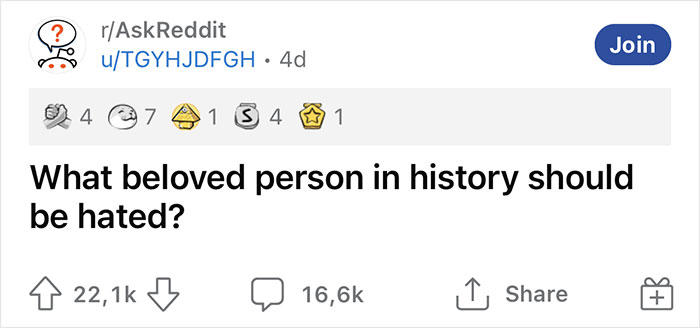
Regardless of what the case might be, there are two kinds of people: those who are forgotten and those who live on in our collective memory. In an attempt to figure out if some of the latter are getting undeserved praise, Reddit user
TGYHJDFGH made
a post on the platform, asking everyone: "What beloved person in history should be hated?" and it was immediately flooded with answers.
But before you scroll down to check them out, I want to make things a little bit more interesting and/or complicated for you. Tell me, can we judge someone's morals after hundreds of years, when the entire cultural landscape has changed course? And where do we draw the line between what we can and cannot accept about someone's personal life if their work has transcended time and allowed countless people to find meaning?
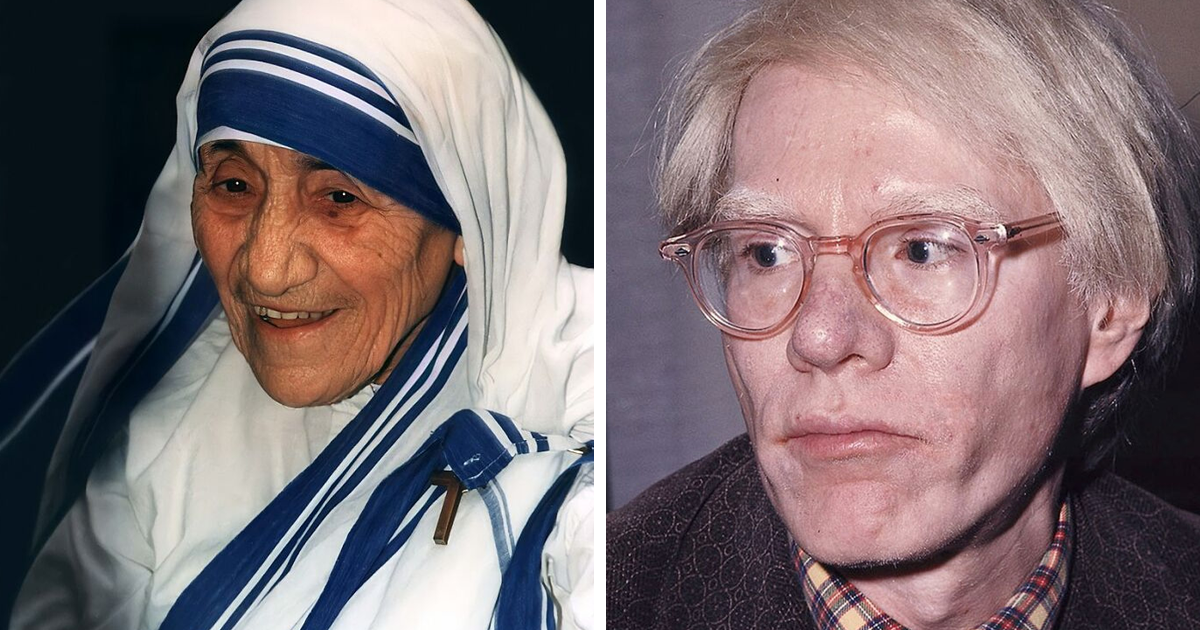
I know, these are pretty tough questions. But humans are walking contradictions and it would be irresponsible to instantly dismiss the legacy of, say, the Founding Fathers or Mother Teresa.
Philosophers and writers have long debated the roles people have played in influencing the progress of civilization. While Thomas Carlyle, for example, felt that great figures are key to guiding us forward, Leo Tolstoy, on the other hand, was of the belief that no individual can single-handedly steer the course of humanity, no matter what position they held.
Regardless of what the case might be, there are two kinds of people: those who are forgotten and those who live on in our collective memory. In an attempt to figure out if some of the latter are getting undeserved praise, Reddit user
TGYHJDFGH made
a post on the platform, asking everyone: "What beloved person in history should be hated?" and it was immediately flooded with answers.
But before you scroll down to check them out, I want to make things a little bit more interesting and/or complicated for you. Tell me, can we judge someone's morals after hundreds of years, when the entire cultural landscape has changed course? And where do we draw the line between what we can and cannot accept about someone's personal life if their work has transcended time and allowed countless people to find meaning?
I know, these are pretty tough questions. But humans are walking contradictions and it would be irresponsible to instantly dismiss the legacy of, say, the Founding Fathers or Mother Teresa.