

“She’s watching a friend quietly unravel. A mother and adult daughter locked in an intense, unhealthy closeness – no jobs, no independence, and money that’s finally run out. What once felt like loyalty now looks like a trap. Excuses, avoidance, and denial are piling up as the risk of losing everything becomes real. Now her friend is desperate, overwhelmed, and out of options – and she doesn’t know how to help without making things worse.”
Life is basically like a rollercoaster. At some point, you're at an all-time high, and then just moments later, you're down in the dumps. And while it sucks to experience those downs yourself, it also sucks to witness someone you care about experiencing them too.
Just like in today's story, a woman is sad to see her friend not doing well financially and emotionally. What makes things worse is that she has someone in her life who could help, but that person doesn't want to lift a finger. And so the woman began considering how she could make herself more useful.
Advertisement
More info: Mumsnet
When you see someone you care about having a hard time, your instinct is to help them somehow
Image credits: user8647581 / Freepik (not the actual photo)
Like this woman, who saw her friend having a bad time financially and emotionally
Advertisement
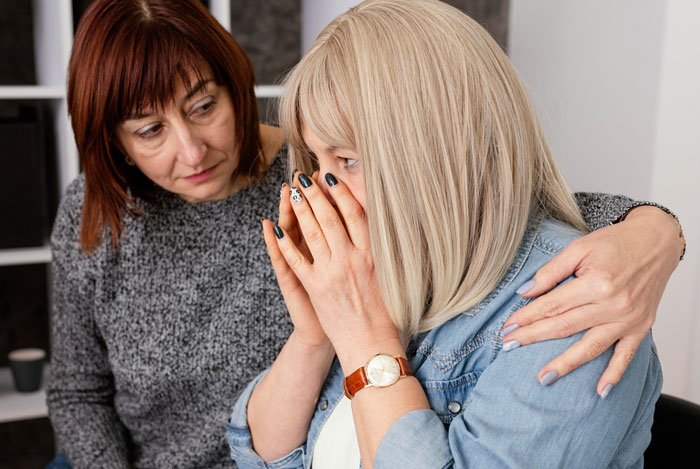
Image credits: freepik / Freepik (not the actual photo)
Advertisement
What made it hard to understand the whole situation was the fact that she had an adult daughter, who didn't help her mom at all

Image credits: freepik / Freepik (not the actual photo)
Advertisement
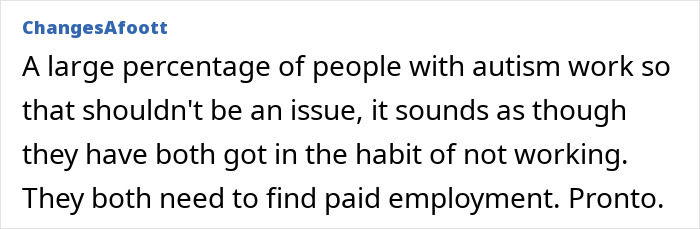
This daughter was coming up with reasons why she couldn't help, for example, self-diagnosed autism
Image credits: Anita4PawsMomma
The woman tried bringing up to her friend that her daughter could help, but was explicitly told to stay out of it
The OP has a friend in her early 50s, whose daughter is in her late 20s. Both of them have kind of an interesting relationship – they’re extremely close, maybe even too close, but at the same time, they tend to get into messy fights.
The thing about both of them is that they have never worked or even trained for anything. Up until now, they have been living in a house that the mom got after her divorce a few years ago, along with quite a large settlement. But now, the money has run out, and they are starting to struggle.
What complicates matters even more is the fact that the daughter refuses to work and contribute to their financial well-being. And that makes her mom’s mental health worse and worse, with more money running out.
Advertisement
Besides not helping out her mom, the other thing that bugs the post’s author is the fact that this woman self-diagnosed herself with autism and is using it to avoid responsibility. Not to mention the fact that she exaggerated her symptoms to the point where everyone who knows her sees that, but she explains that with masking terminology.
Well, this woman isn’t the only one in history who has self-diagnosed herself with something. When it comes to autism self-diagnosis, it’s becoming increasingly more common among adults nowadays. There are a few main reasons behind it.
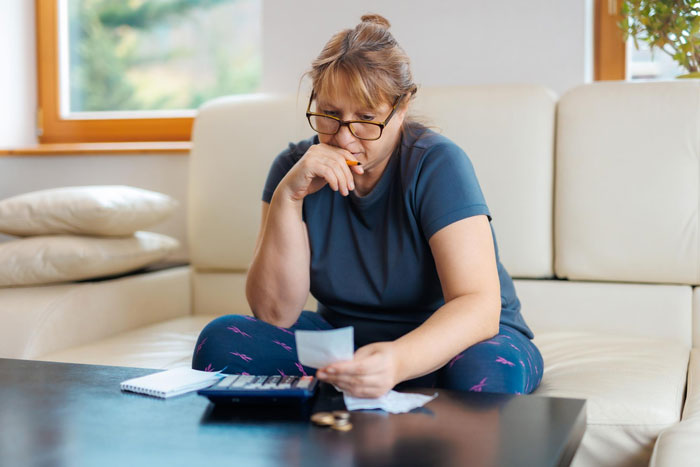
Image credits: user1236986 / Freepik (not the actual photo)
The first one is that more and more folks are speaking about autistic experiences online, which reaches wider audiences than ever before, making more people realize that they relate to these experiences. Yet, getting an official diagnosis isn’t an easy task, especially for adults. You see, a lot of traditionally used diagnostic tools are designed for children, who might not learned yet to mask as well as autistic adults.
So, there aren’t that many professionals with adult autism expertise around. This leads to long waits and high costs of diagnosis, if a person finally finds a professional like that in their area. Plus, there is stigma with getting an official diagnosis. With “a mark” in their health history, individuals might face difficulty getting employed, being educated, or being socially rejected.
All of these things combined are the reason why many choose to simply self-diagnose instead of getting an official confirmation. Many folks accept self-diagnosis with the idea that it helps people to come into terms with themselves, helps to learn about themselves, and get support if needed. At the same time, others, like seemingly the OP, do not really get it.
Of course, in some cases, their doubts are based on other times, and it comes from stigma. Since we don’t really know the post’s author nor the friend’s daughter she refers to, we can’t be sure which one of these applies to her.
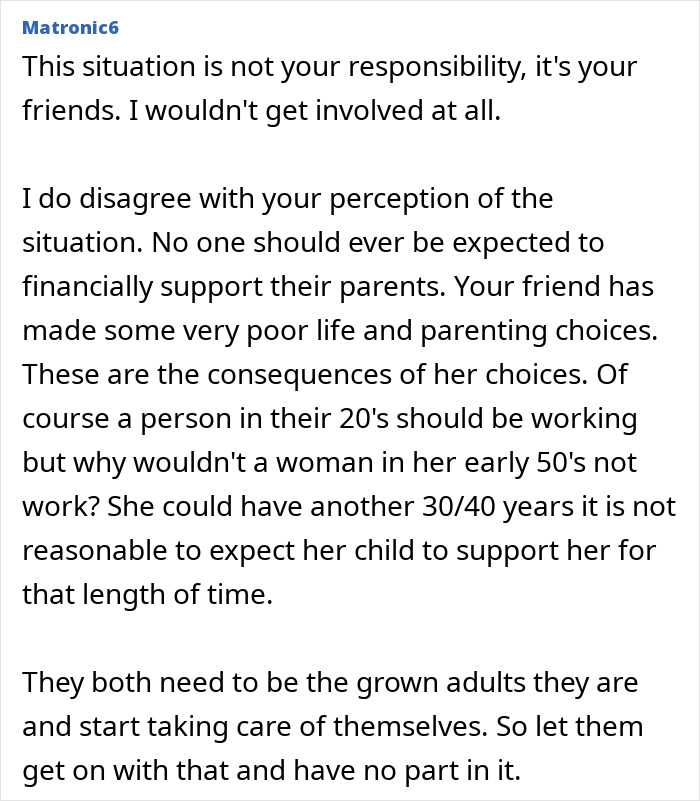
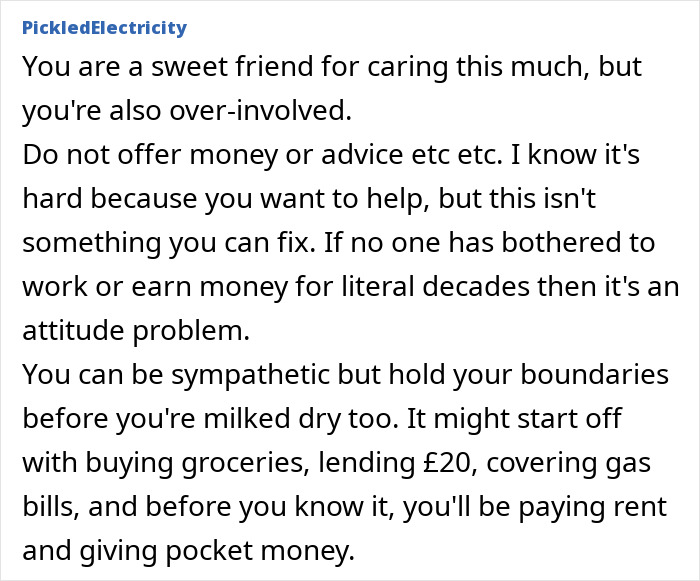
Yet, the fact that the daughter isn’t helping her mom stands. The OP tried a couple of times to bring this question up, but the friend never took it favorably. That’s why netizens are telling her to stay out – the family showed that they don’t want her input on their situation. Do you agree with such a stance?
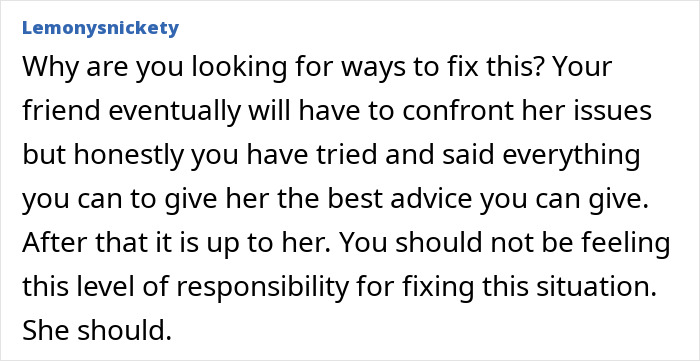
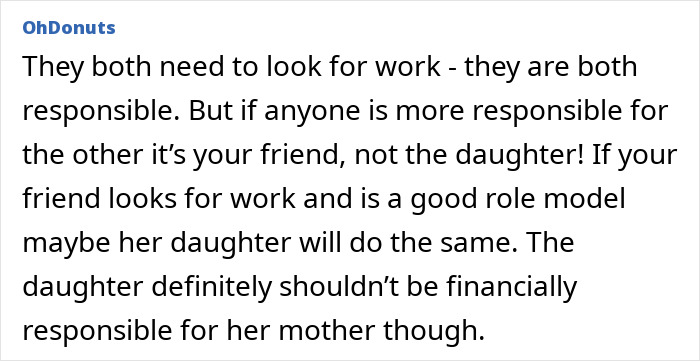
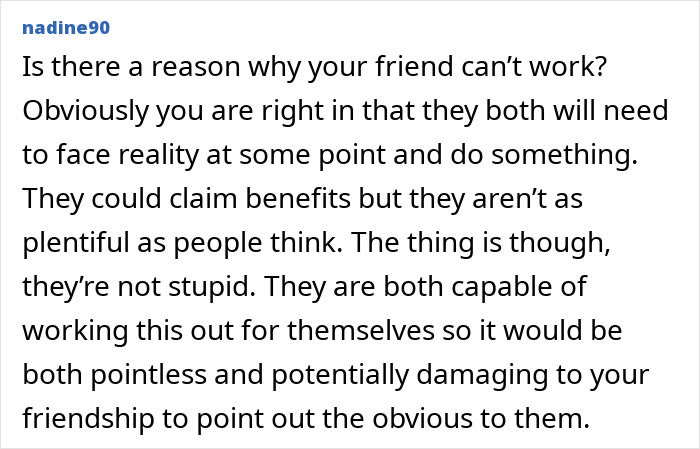
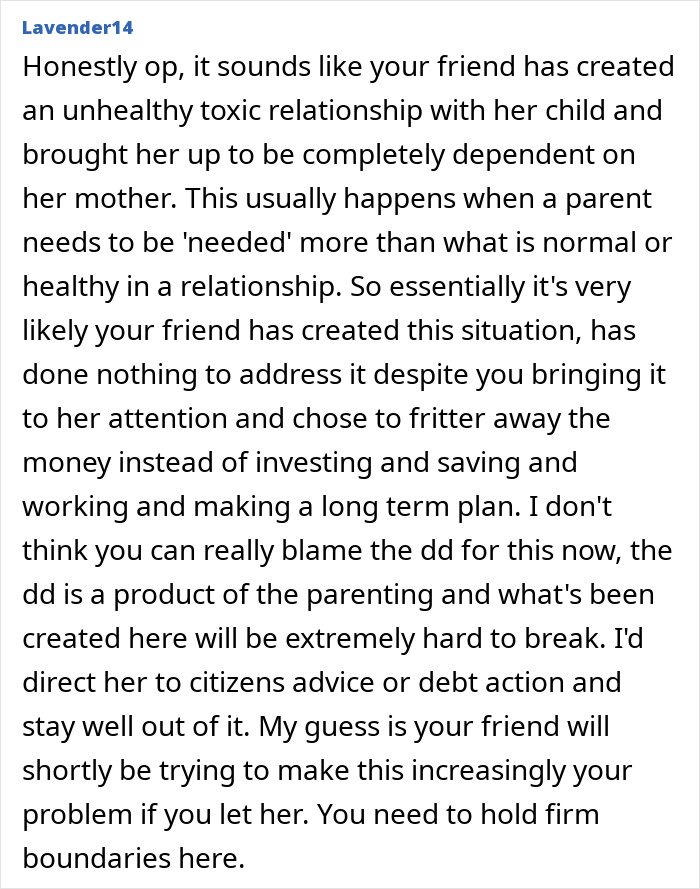
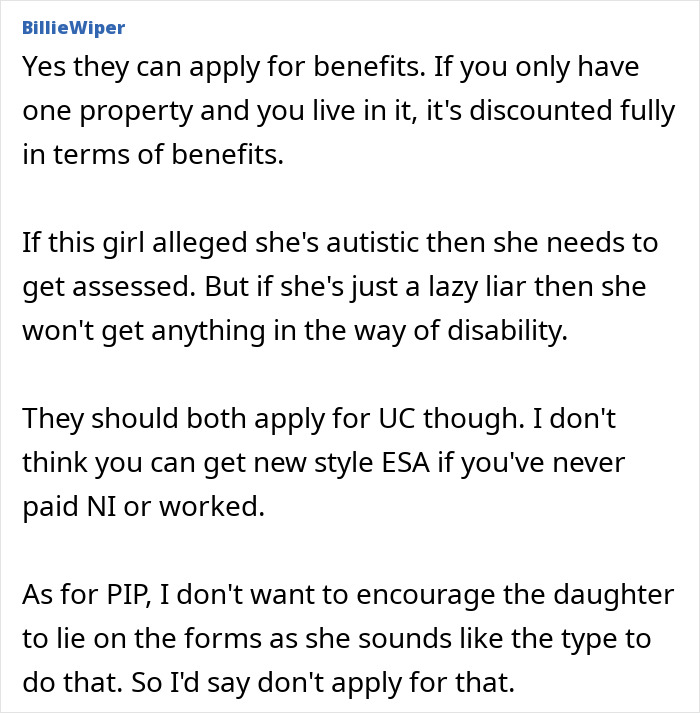
People online also suggested to stay out of it - if the friend doesn't want her help, she shouldn't meddle

Advertisement
3Comments