






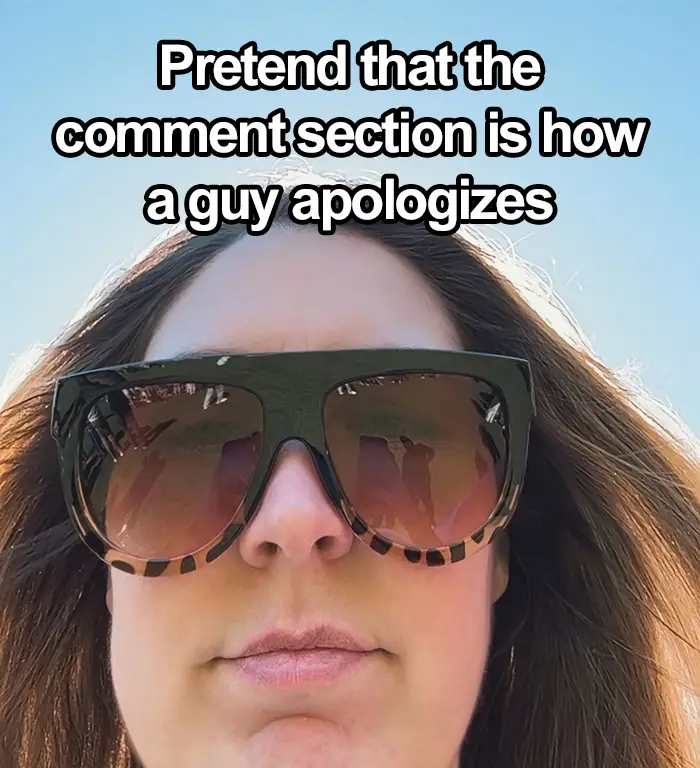
Alexandra's online post was viewed over 17.7 million times and received more than 184.1 thousand comments
This post may include affiliate links.

Reporting on the book ‘Sorry, Sorry, Sorry: The Case for Good Apologies,’ by Marjorie Ingall and Susan McCarthy, NPR states that there are six and a half steps to making great apologies.
For one, you should say that you’re actually sorry, not that you’re devastated or that you regret something. Furthermore, you should be specific about what it is you’re apologizing for.



Next, you want to take ownership of your behavior, avoid making excuses, and explain why your mistake won’t happen again in the future. You should also make reparations for your mess-up.
The last (half of a) step when apologizing is to genuinely listen to the person you’ve hurt so they can have their say.



According to Ingall, using the word ‘regret’ is all about how you feel while ‘sorry’ is about how the other person feels. In other words, it’s vital to “keep the other person’s feelings at top of mind.”
A genuine apology can be very powerful even if it comes late, helping people heal and move on.



How good would you say you are at apologizing, dear Pandas? How often do you run into people who make half-baked apologies or try to twist the situation in their favor? What is the very best apology that you’ve ever received?
Why do you think people find it so difficult to take responsibility for their actions? If you have a free moment, share your thoughts in the comments below.
