




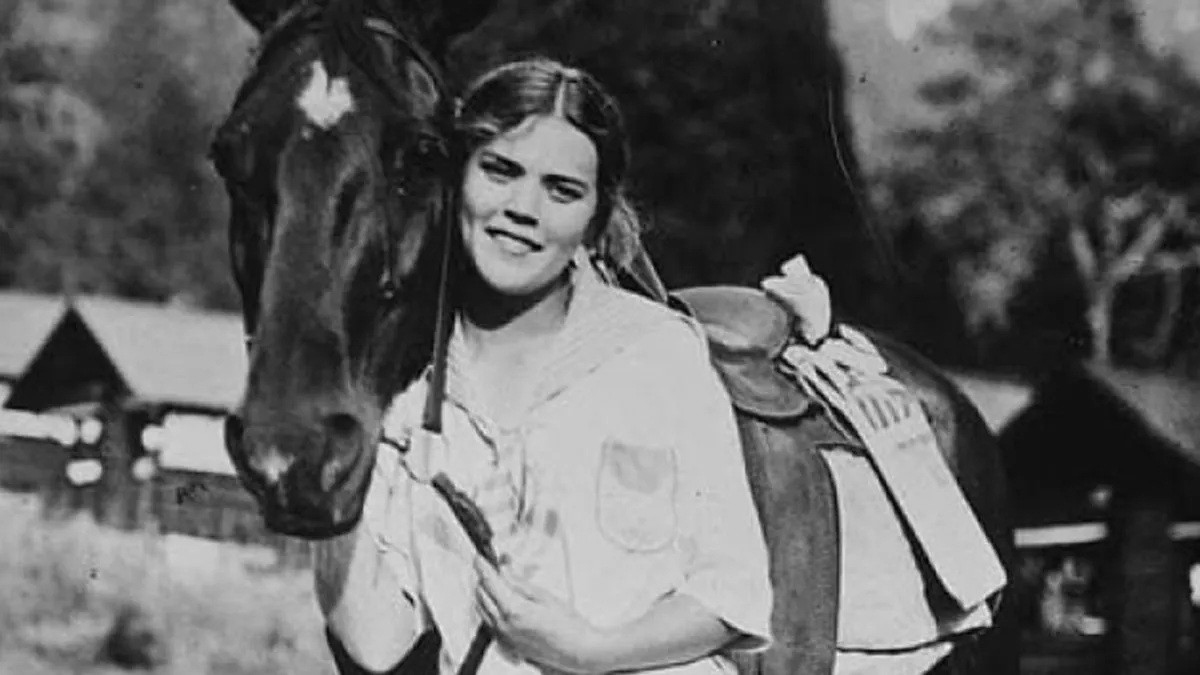


History is important; and many Americans agree. A whopping 96% believe it's important to look back at history to inform our future. And Millennials are paving the way with their growing interest in the past, with 45% saying they have a higher level of curiosity in history than before.
The enthusiasts in the Antique Historical Photographs group on Facebook may not all be Millennials, but they share the same love and curiosity for the past. The history buffs in that group share the incredible stories that we don't see in textbooks but are worth just as much attention.
More info: Facebook
#41 Life In Early 20th-Century Ontario: A Time Of Transformation
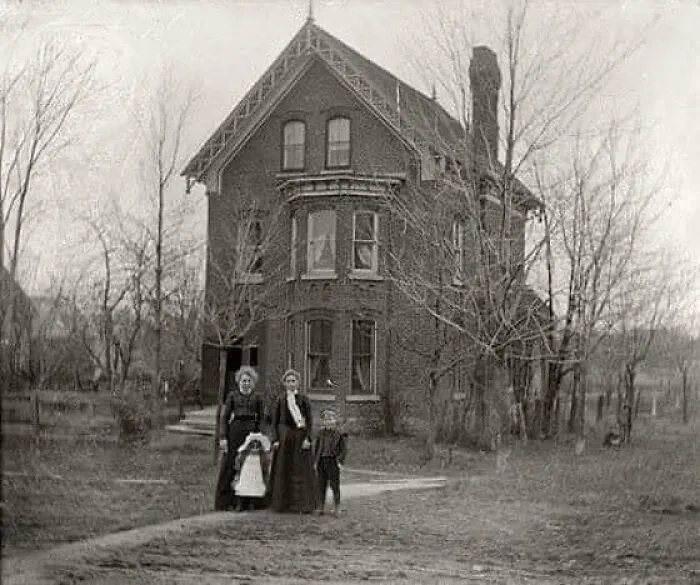
Between 1900 and 1914, Ontario, Canada, experienced dramatic changes that reshaped everyday life for its residents. As the province entered a new century, economic growth and modernization began to influence how people lived, worked, and connected with one another. This fascinating period, observed by artist Marsden A. Kemp, saw Ontario transition from a mostly rural society to one embracing urbanization, technological advancements, and social change.
Report
38points
#42 The Dawn Of Electric Cabs In London: A Step Toward Modern Mobility
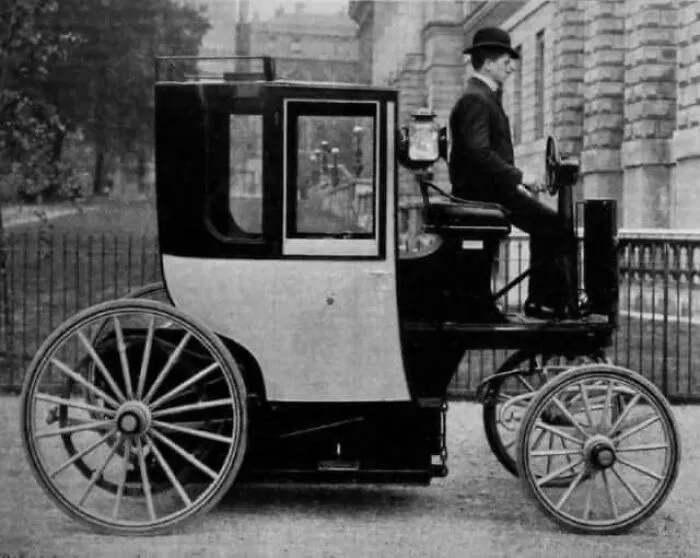
In 1897, the bustling streets of London witnessed a revolutionary addition to its transportation system: the electric cab. Known as the “Bersey Cab,” after its inventor Walter Bersey, this innovative vehicle marked a pivotal moment in the city’s efforts to modernize urban mobility. It was a clear response to the limitations of horse-drawn carriages, which had dominated the city’s streets for centuries.
Report
38points
#43 In 1906, A Daring Final Exercise Awaited Officers At The Italian Cavalry School – A True Test Of Mettle
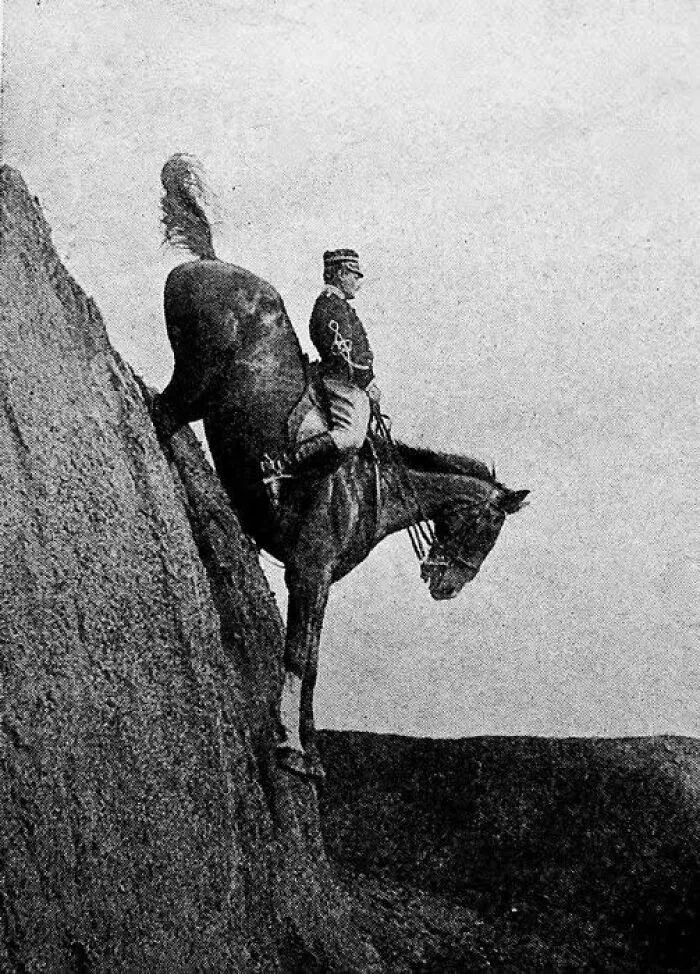
To graduate, each officer faced the daunting "Descent of Mombrone," a sheer six-meter drop from a ruined castle window near Pinerolo. This was considered the ultimate trial of courage, a demonstration of the unwavering spirit and essential skills of a cavalry officer.
This challenge demanded not only exceptional horsemanship but also nerves of steel to confront such peril. The Mombrone slope became an enduring symbol of bravery, loyalty, and the pride of Italian cavalrymen of that era. Even today, the tale of this legendary test is recounted, a powerful reminder of the value of courage in military history.
This challenge demanded not only exceptional horsemanship but also nerves of steel to confront such peril. The Mombrone slope became an enduring symbol of bravery, loyalty, and the pride of Italian cavalrymen of that era. Even today, the tale of this legendary test is recounted, a powerful reminder of the value of courage in military history.
Report
37points
#44 A Group Which At Times Go Unnoticed In The Retelling Of The History. These Are Ordnance Personnel Repairing An Anti Aircraft Gun
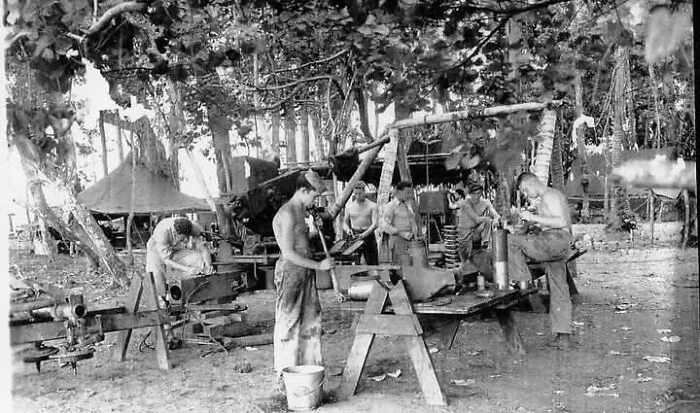
On Guadalcanal, especially in the early days, it was men such as these that performed miracles with scant resources to enable the fight to continue.
On Guadalcanal, there was no rear area and these men suffered just as much. In fact the infantry left the "rear" at times to seek safety in the front line. The area around Henderson Field was described as, "living inside a target's bullring."
On Guadalcanal, there was no rear area and these men suffered just as much. In fact the infantry left the "rear" at times to seek safety in the front line. The area around Henderson Field was described as, "living inside a target's bullring."
Report
35points
#45 Arizona, 1930s
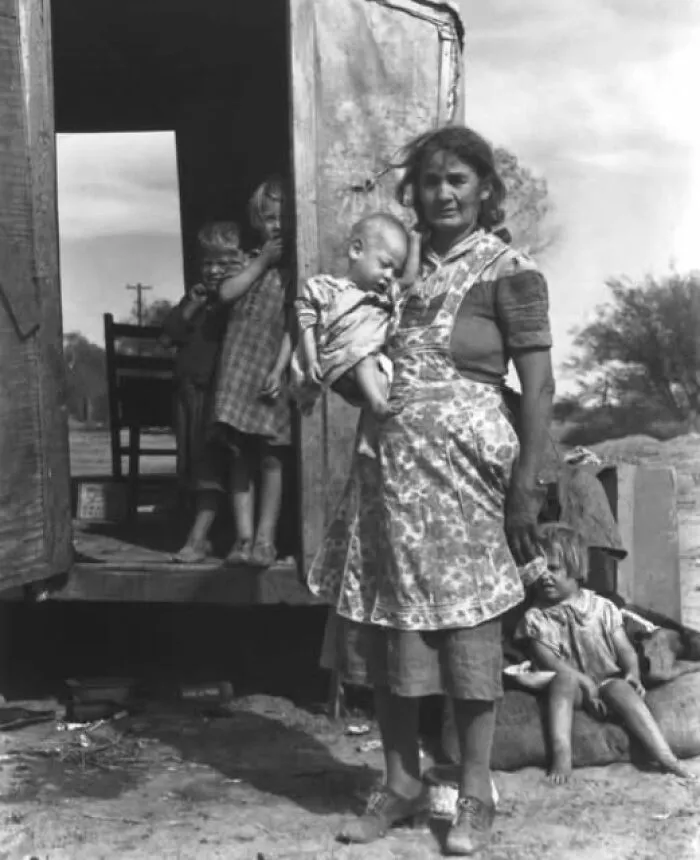
A family living in a trailer in an open field. No sanitation, no water. They from Amarillo, TX; pulled cotton bolls near Amarillo, TX; picked cotton near Roswell, NM and in Arizona. They plan to return to Amarillo at close of cotton picking season for work on Works Projects Administration (WPA)
Report
34points
#46 The Last Known Photograph Of Buffalo Bill Cody, Taken Outside His Doctor’s Office In Glenwood Springs, Colorado, In 1917, Captures A Moment Of Quiet Reflection For A Man Who Had Lived A Life Defined By Adventure And Spectacle
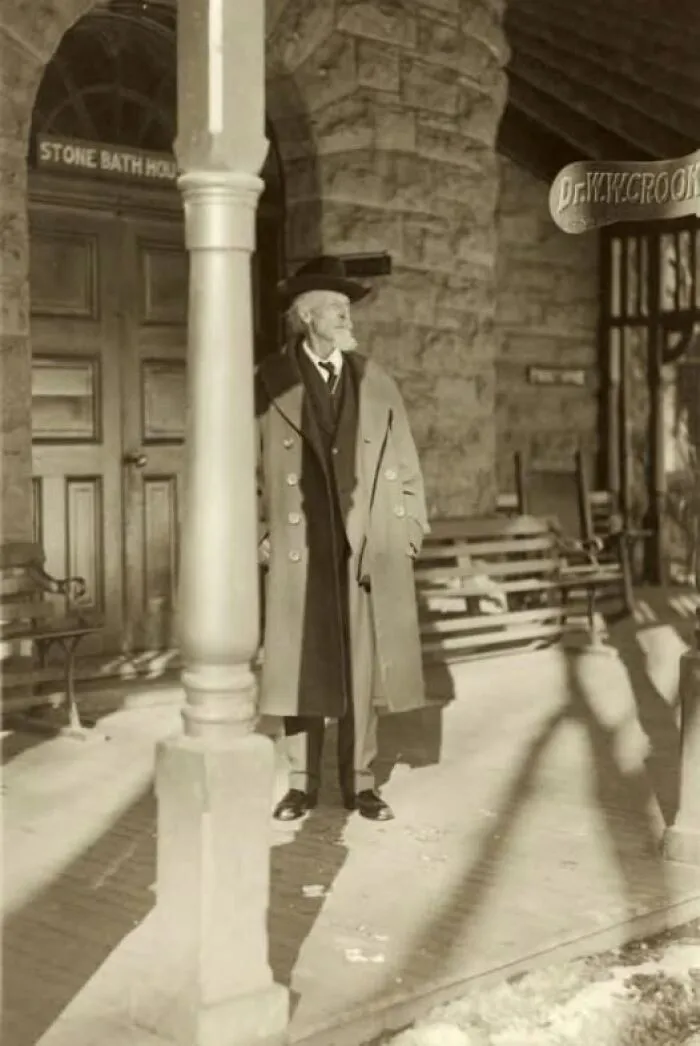
By this time, Cody's health was in decline, marking the end of his legendary career as a frontiersman and showman. This photograph, poignant in its portrayal of the aging Cody, serves as a visual reminder of both the man and the era he symbolized—the closing days of the Wild West and the transition from living legend to historical figure.
Born William Frederick Cody, Buffalo Bill had become one of the most iconic figures of the American West, known for his Wild West shows, which blurred the lines between reality and myth. These shows featured re-enactments of frontier life, cowboy skills, and dramatic portrayals of famous figures like Sitting Bull and Annie Oakley. But as time passed, Cody faced financial struggles and health issues, and this photograph stands as a somber reflection of the man who once helped create the myth of the American West, now diminished by age and hardship.
This final image of Buffalo Bill Cody not only marks the end of an era for him personally but also symbolizes the closing of a chapter in American history. The romanticized vision of the Wild West, as embodied by Cody’s shows, was rapidly fading, giving way to a more modern, industrialized America. While Cody was once seen as the epitome of the frontier spirit—brave, daring, and untamed—this photograph reminds us that even the most legendary figures are inevitably affected by the passage of time.
Born William Frederick Cody, Buffalo Bill had become one of the most iconic figures of the American West, known for his Wild West shows, which blurred the lines between reality and myth. These shows featured re-enactments of frontier life, cowboy skills, and dramatic portrayals of famous figures like Sitting Bull and Annie Oakley. But as time passed, Cody faced financial struggles and health issues, and this photograph stands as a somber reflection of the man who once helped create the myth of the American West, now diminished by age and hardship.
This final image of Buffalo Bill Cody not only marks the end of an era for him personally but also symbolizes the closing of a chapter in American history. The romanticized vision of the Wild West, as embodied by Cody’s shows, was rapidly fading, giving way to a more modern, industrialized America. While Cody was once seen as the epitome of the frontier spirit—brave, daring, and untamed—this photograph reminds us that even the most legendary figures are inevitably affected by the passage of time.
Report
33points
#47 The Backbone Of Rural America: Farm Life In Springwater, New York, 1910

31points
#48 A Glimpse Into 1895 New Orleans: A Bustling Street Scene
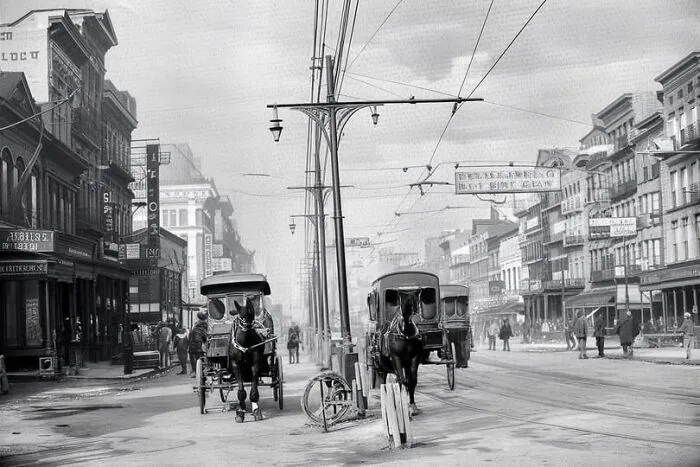
Imagine stepping back in time to 1895, walking along the vibrant streets of New Orleans, Louisiana. Known for its rich cultural blend and fascinating history, the city was alive with activity and architectural beauty as it moved toward the 20th century. A snapshot from this time would reveal a bustling, dynamic city full of sights and sounds that tell the story of New Orleans’ past.
As you look down the street, you’d see horse-drawn carriages and streetcars navigating roads paved with cobblestones or bricks. Streetcars were a popular way to get around the city, highlighting the rapid growth of New Orleans and the expansion of public transportation. Passengers might be seen climbing on and off, as the streetcar clanged its bell and made its way through the heart of the city.
As you look down the street, you’d see horse-drawn carriages and streetcars navigating roads paved with cobblestones or bricks. Streetcars were a popular way to get around the city, highlighting the rapid growth of New Orleans and the expansion of public transportation. Passengers might be seen climbing on and off, as the streetcar clanged its bell and made its way through the heart of the city.
Report
31points
#49 Bryn Owen’s Dazzling Vespa: A 1980s Celebration Of Mod Revival And Individuality
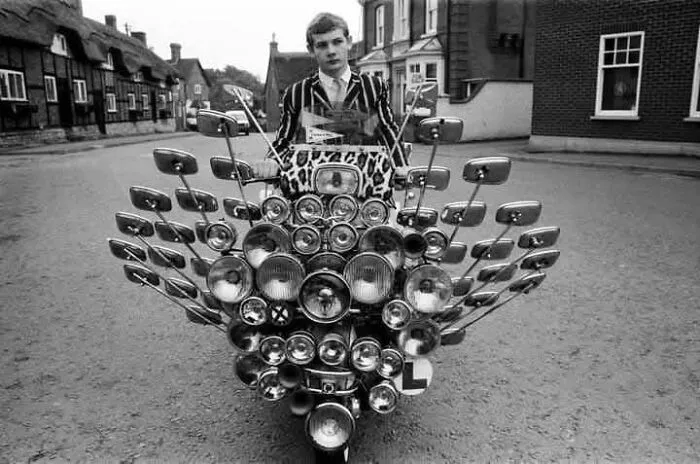
In 1983, a 17-year-old from Leicestershire, England, named Bryn Owen captured the spirit of 1980s youth culture with a Vespa scooter that was anything but ordinary. With 34 mirrors and 81 lights adorning the sleek Italian ride, Bryn’s creation wasn’t just a mode of transportation—it was a masterpiece of individuality and style. Each accessory, carefully selected and purchased with Bryn’s own hard-earned pocket money, transformed the scooter into a shining emblem of creativity and dedication.
31points
#50 Joe Bonanno Was A Controversial Character But There Is No Doubt His Story Is Interesting
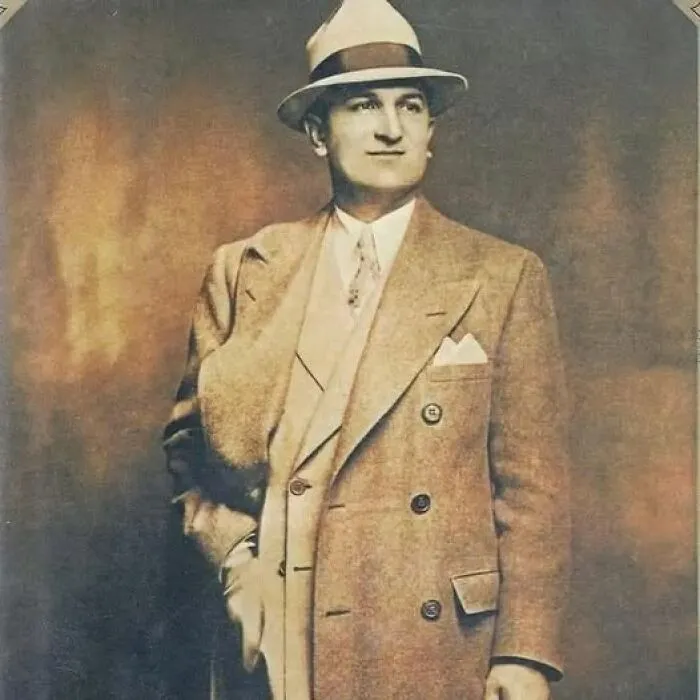
Born in 1905 in Castellammare del Golfo, Sicily, he immigrated to New York City with his family and lived there for about 10 years before he moved back to Italy. He eventually went back to the United States in 1924 but was steeped in Sicilian traditions and was always reluctant to associate with non-Sicilians.
In his 1983 autobiography 'A Man of Honor' he talks about the differences between himself and Charlie 'Lucky' Luciano.
"Luciano was iconoclastic also in that he had no qualms about working with non-Sicilians. He had in his coterie Jews such as Meyer Lansky, Louis Lepke and Bugsy Siegel, and non-Sicilian Italians such as Frank Costello, Vito Genovese and Albert Anastasia. Men of my Tradition were always loath to associate with non-Sicilians.
The reason for this was not bigotry but common sense. They knew that it is very difficult, if not impossible, to pass on a tradition unless one is exposed to it almost from the cradle. A tradition is not something that one learns overnight. It is the work of a lifetime. Even southern Italians, from the Naples region or from Calabria, who otherwise have much in common with Sicilians, cannot fully appreciate the old Tradition of Sicily.
For example, southern Italy has in the past given rise to such groups as the Camorra and the Black Hand. These non-Sicilian groups were orders formed to accommodate the interests of thugs, highwaymen and extortionists. It is a grave mistake to identify these groups as being the same as the "Families" of my Sicilian Tradition. Americans, as well as southern Italians, have often made this mistake. Camorra and the Black Hand never existed in Sicily. They have nothing to do with what Americans refer to as "the Mafia."
In his 1983 autobiography 'A Man of Honor' he talks about the differences between himself and Charlie 'Lucky' Luciano.
"Luciano was iconoclastic also in that he had no qualms about working with non-Sicilians. He had in his coterie Jews such as Meyer Lansky, Louis Lepke and Bugsy Siegel, and non-Sicilian Italians such as Frank Costello, Vito Genovese and Albert Anastasia. Men of my Tradition were always loath to associate with non-Sicilians.
The reason for this was not bigotry but common sense. They knew that it is very difficult, if not impossible, to pass on a tradition unless one is exposed to it almost from the cradle. A tradition is not something that one learns overnight. It is the work of a lifetime. Even southern Italians, from the Naples region or from Calabria, who otherwise have much in common with Sicilians, cannot fully appreciate the old Tradition of Sicily.
For example, southern Italy has in the past given rise to such groups as the Camorra and the Black Hand. These non-Sicilian groups were orders formed to accommodate the interests of thugs, highwaymen and extortionists. It is a grave mistake to identify these groups as being the same as the "Families" of my Sicilian Tradition. Americans, as well as southern Italians, have often made this mistake. Camorra and the Black Hand never existed in Sicily. They have nothing to do with what Americans refer to as "the Mafia."
Report
19points