




Humans may be part of the animal kingdom, but there’s still so much many of us don’t know about the creatures we share the planet with. They come in all kinds of shapes and sizes, and some of their abilities are stranger than anything we could make up.
So today, we’re taking a closer look. We gathered some interesting facts and photos from the Instagram page @wonderzofthewild, and they’re a nice reminder that animals are far more remarkable than we usually realize.
#21
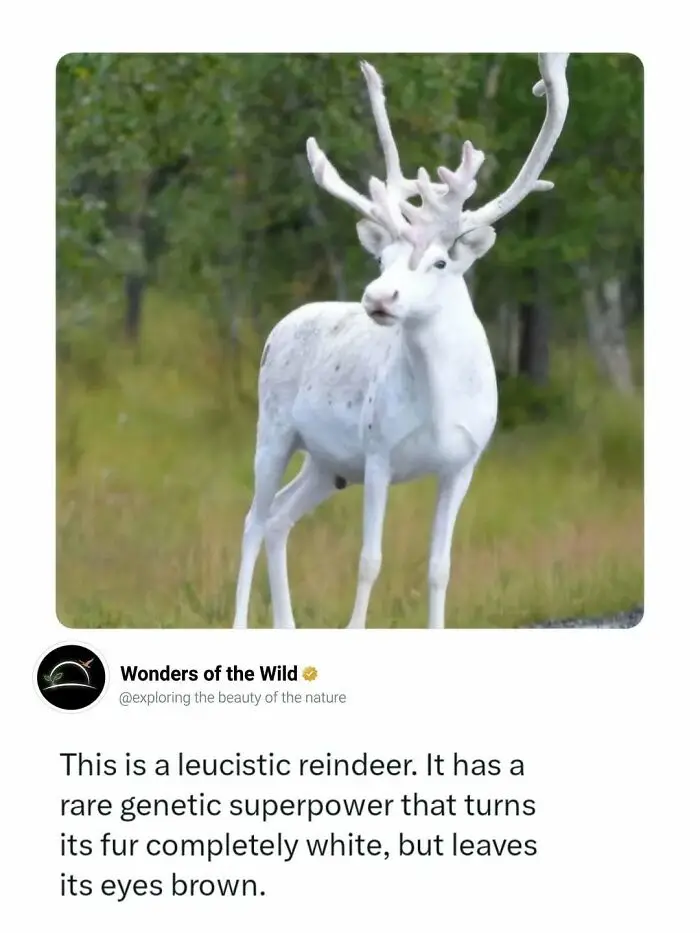
A Reindeer with leucism looks almost ghostlike moving through snowy landscapes, its pale white coat blending so perfectly into winter that it feels more mythical than real. Unlike albinism, leucism reduces pigmentation in the fur while still allowing normal eye color, creating a stunning and incredibly rare appearance. Built for survival in some of the coldest regions on Earth, reindeer migrate across vast frozen terrains using powerful hooves to dig through snow for food beneath the ice. Seeing a leucistic reindeer in the wild is like witnessing a living winter spirit silent, rare, and breathtakingly beautiful against the Arctic landscape.
Report
35points
#22
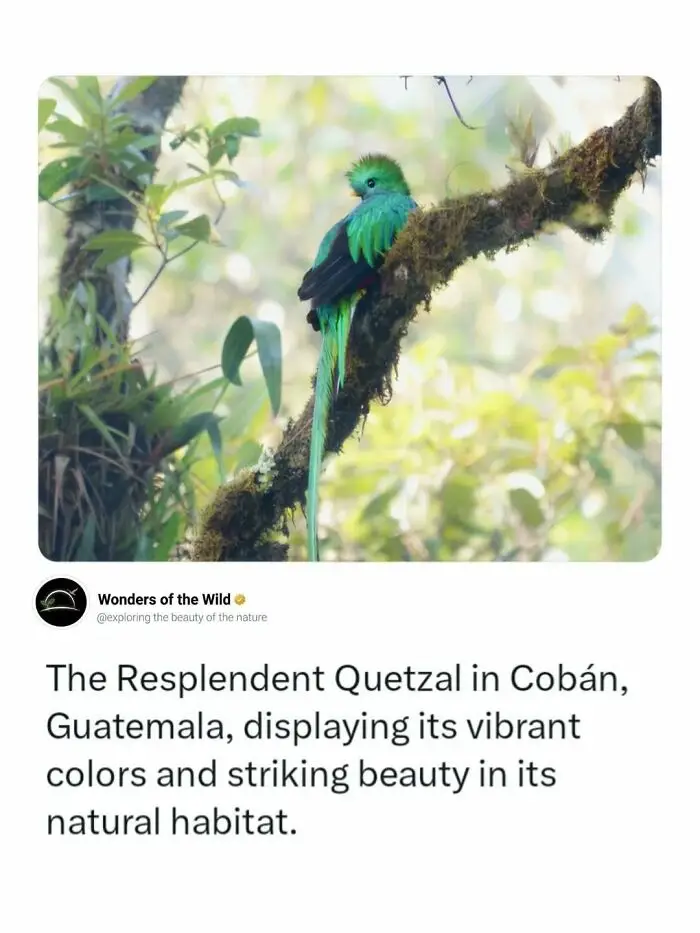
The Resplendent Quetzal is a true jewel of the cloud forests, and seeing one near Cobán is an unforgettable sight. Its shimmering emerald-green plumage, vibrant red chest, and elegant flowing tail feathers create a display of color and beauty that seems almost magical against the lush forest backdrop. Often regarded as one of the most beautiful birds on Earth, the quetzal spends its life among misty mountain forests, feeding on fruits, insects, and small animals. Revered by ancient Mesoamerican cultures and celebrated as a symbol of freedom and natural beauty, it remains one of the most iconic birds in the Americas. Graceful, elusive, and breathtakingly colorful, the Resplendent Quetzal is a living masterpiece of the natural world.
Report
34points
#23
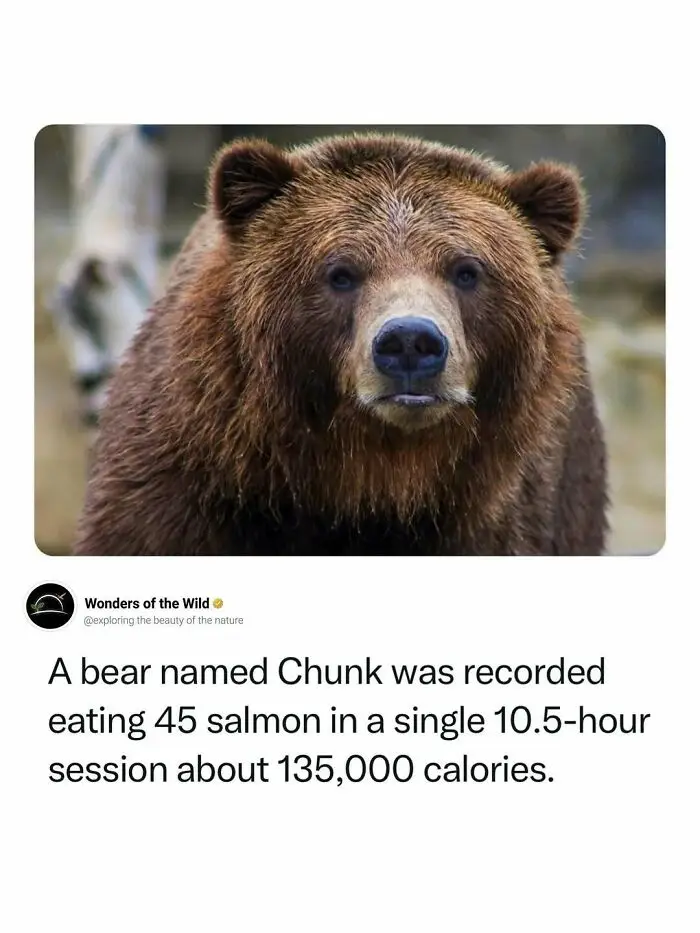
A bear known as Chunk was recorded consuming 45 salmon in a single 10.5-hour feeding session, an intake estimated at roughly 135,000 calories. During salmon runs, bears enter a period of intense feeding where they focus almost entirely on catching and eating fish to build fat reserves for survival. This process is essential for enduring long winters when food becomes scarce and energy demands remain high. Feeding behavior like this highlights the extraordinary efficiency of apex predators when resources are abundant, allowing them to rapidly accumulate energy in a short window of time.
Report
32points
#24
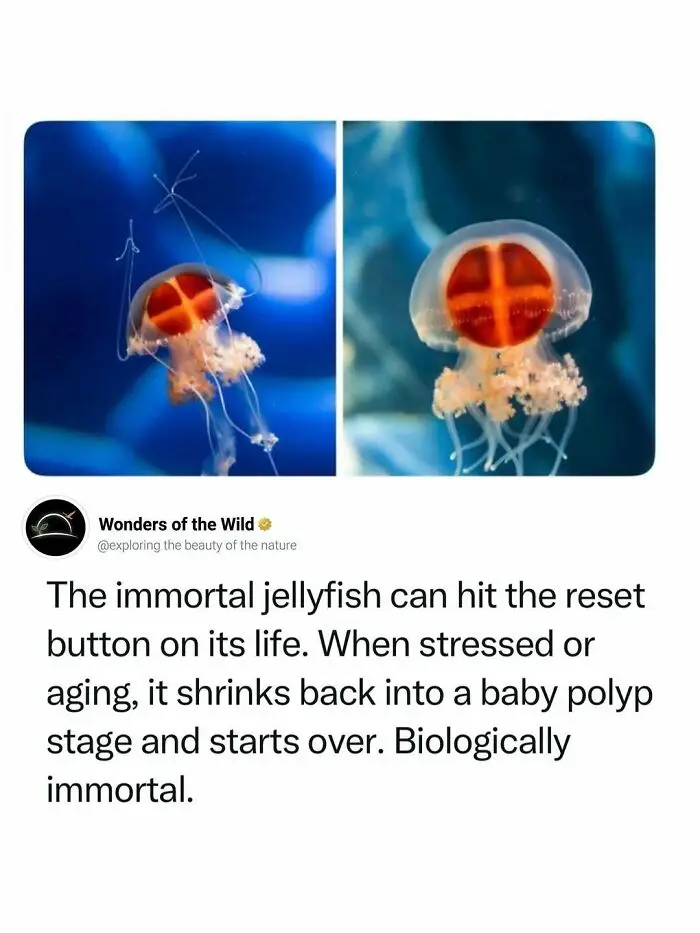
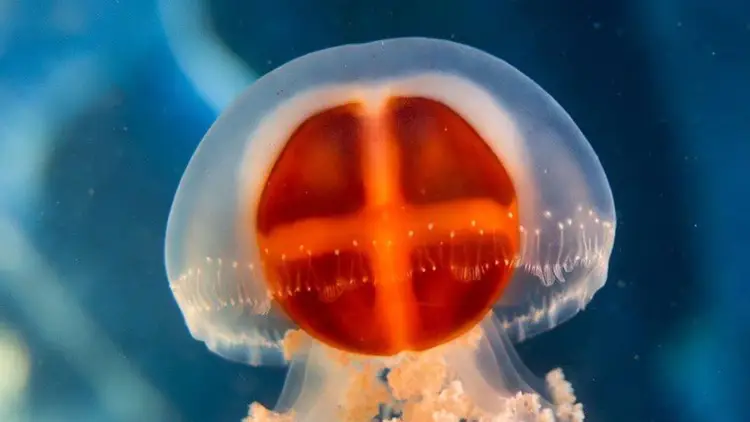
The immortal jellyfish (Turritopsis dohrnii) possesses one of the most extraordinary survival abilities in nature.
When faced with stress, injury, or old age, it can reverse its development and return to an earlier life stage known as a polyp, essentially beginning its life cycle all over again. This unique process has earned it the title of the only known animal capable of biological immortality.
When faced with stress, injury, or old age, it can reverse its development and return to an earlier life stage known as a polyp, essentially beginning its life cycle all over again. This unique process has earned it the title of the only known animal capable of biological immortality.
Report
31points
#25
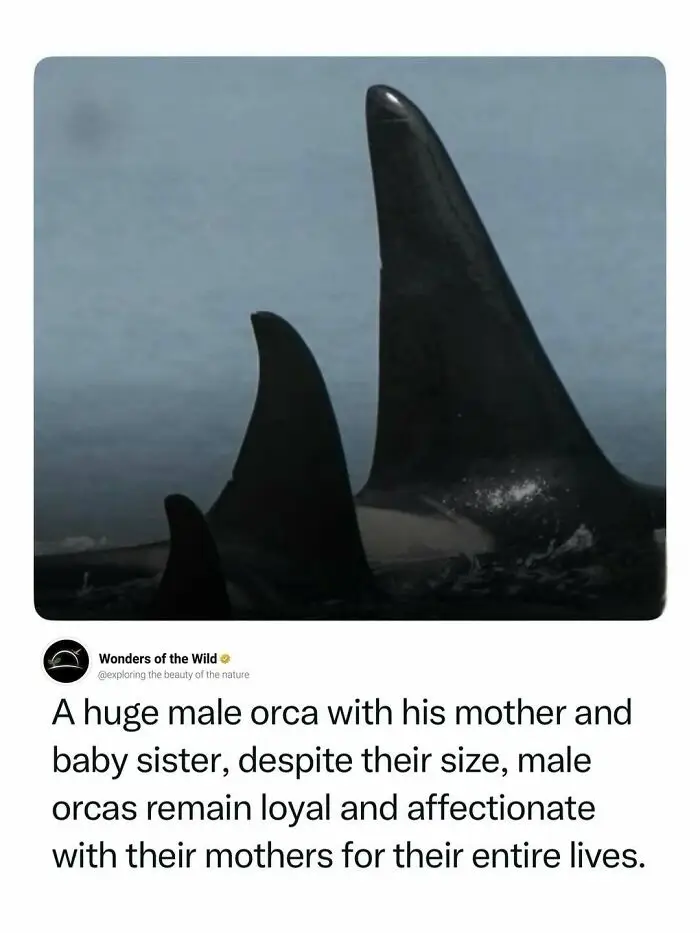
A huge male orca is seen swimming alongside his mother and younger sister, moving together as a tightly bonded family unit. Despite their massive size and role as apex predators, male orcas maintain lifelong relationships with their mothers, often staying within the same pod and relying on strong social bonds for stability and survival. These family groups are highly cooperative, with communication and coordination forming the foundation of their behavior.
Report
30points
#26
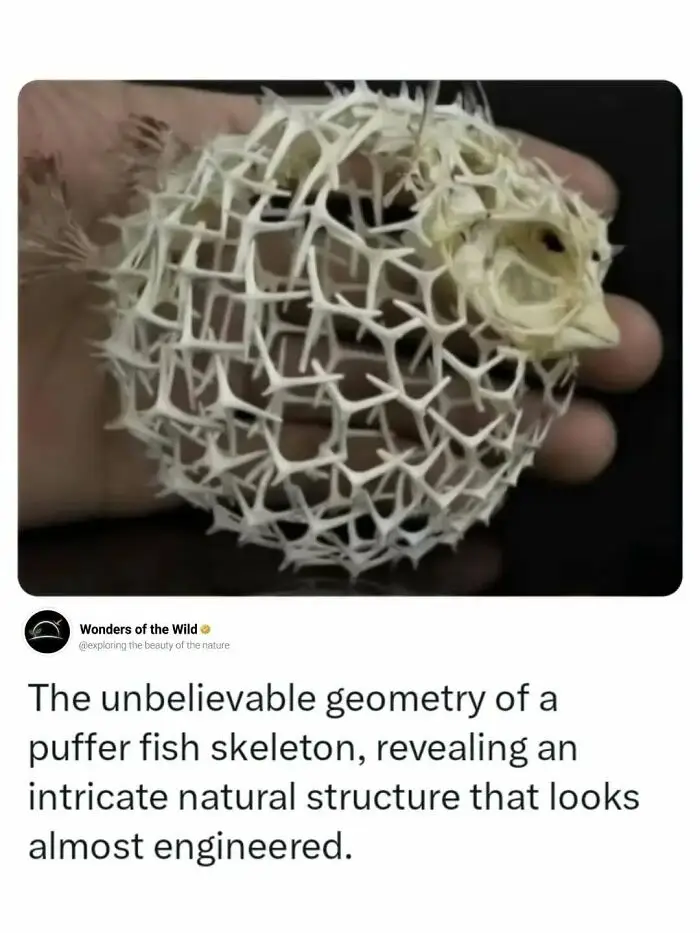
The Pufferfish skeleton reveals an extraordinary natural structure that looks almost engineered, with intricate geometry that supports both flexibility and protection. Once the soft tissues are removed, what remains is a delicate yet complex framework that highlights how evolution can produce incredibly efficient designs for survival. Pufferfish are known for their unique ability to inflate when threatened, turning themselves into nearly spherical shapes to deter predators. This skeletal structure works together with that defense mechanism, allowing rapid expansion while maintaining internal support. It’s a striking reminder that nature often builds systems more advanced than anything we could imagine.
Report
29points
#27
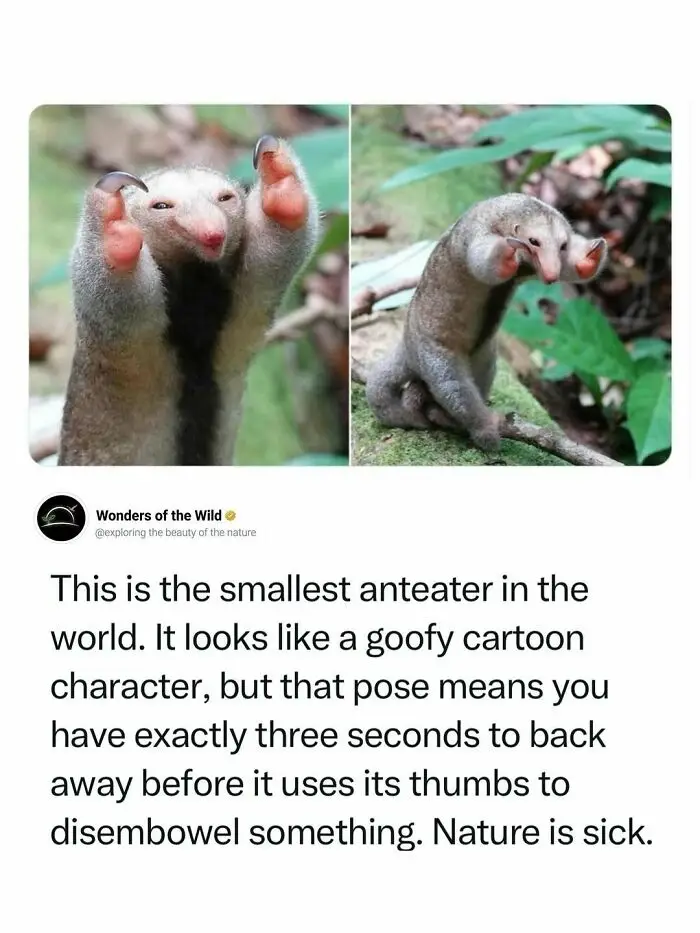
This is the silky anteater, the smallest anteater species in the world. Its tiny size, fluffy appearance, and oversized eyes make it look more like a cartoon character than a wild animal. But when threatened, it adopts a distinctive defensive posture, raising its forelimbs and preparing to strike. Despite its harmless appearance, the silky anteater possesses powerful curved claws that it uses for climbing and self-defense. These claws can inflict serious injuries on predators that get too close, making this tiny mammal far tougher than its appearance suggests. It’s a reminder that in nature, the cutest animals can sometimes come equipped with surprisingly effective defenses.
Report
29points
#28
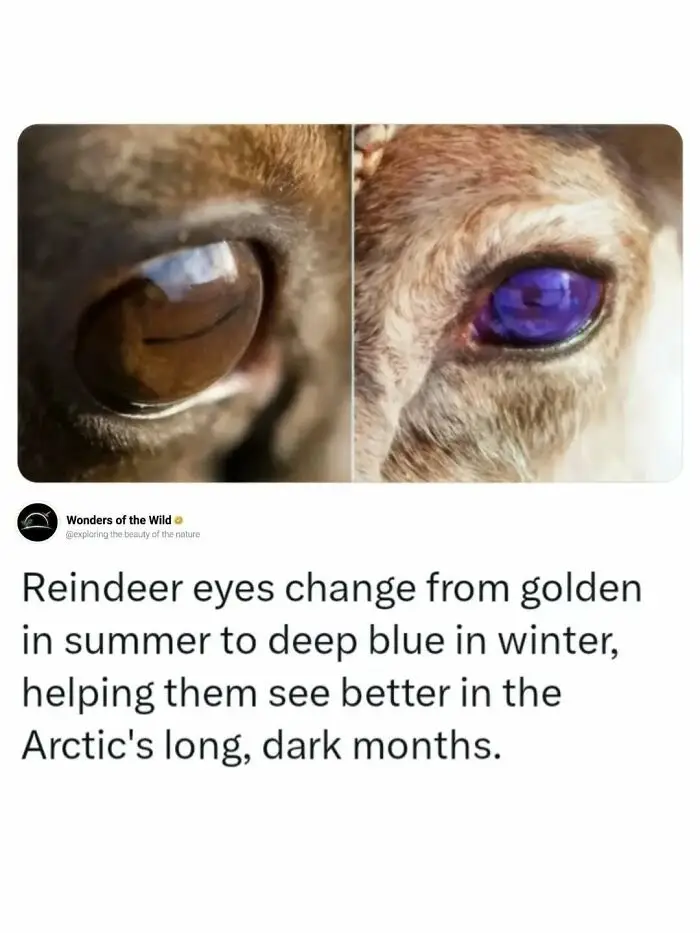
The Reindeer has one of the most remarkable visual adaptations in the animal kingdom. During the bright summer months, its eyes appear golden, but as winter approaches and darkness dominates the Arctic, they gradually shift to a deep blue color. Scientists believe this change helps reindeer make better use of the limited light available during the Arctic winter. The blue coloration increases light sensitivity, allowing them to detect predators, food, and movement more effectively in snowy, low-light conditions. It's a fascinating example of how animals evolve extraordinary solutions to survive in some of the harshest environments on Earth
Report
26points
#29
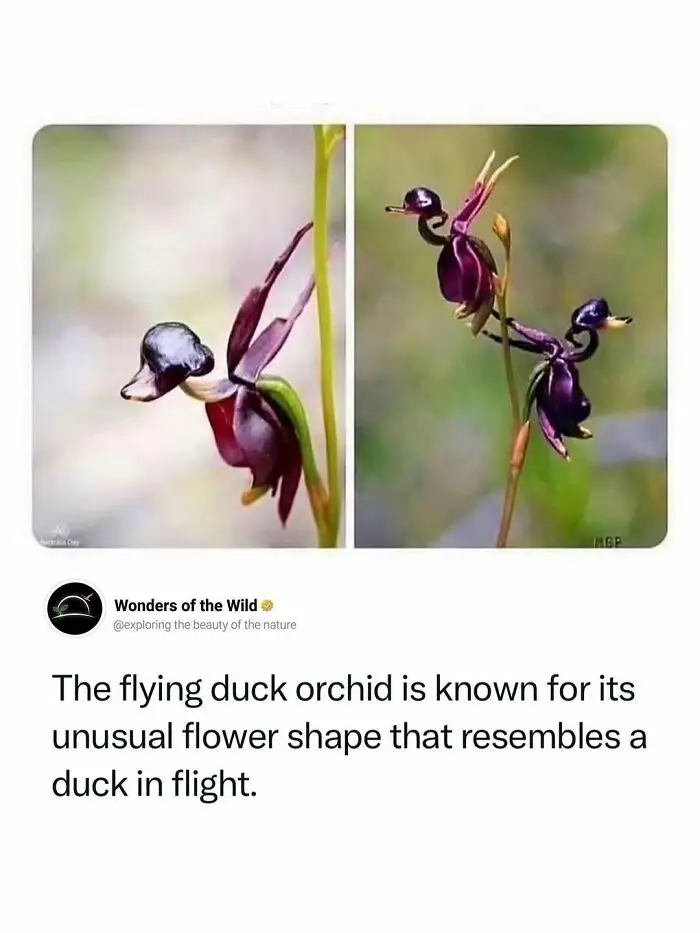
The plant is known as the flying duck orchid, one of the most visually unusual orchids in the natural world. It is admired for its striking shape, where the flower resembles a small duck in mid-flight, complete with a curved body and wing-like structures that enhance the illusion. This natural form gives it a highly distinctive appearance compared to typical orchid species. Its unique structure is the result of specialized floral adaptation, evolved to attract specific pollinators while also creating one of the most recognizable “animal-like” plant forms in nature.
Report
24points
#30
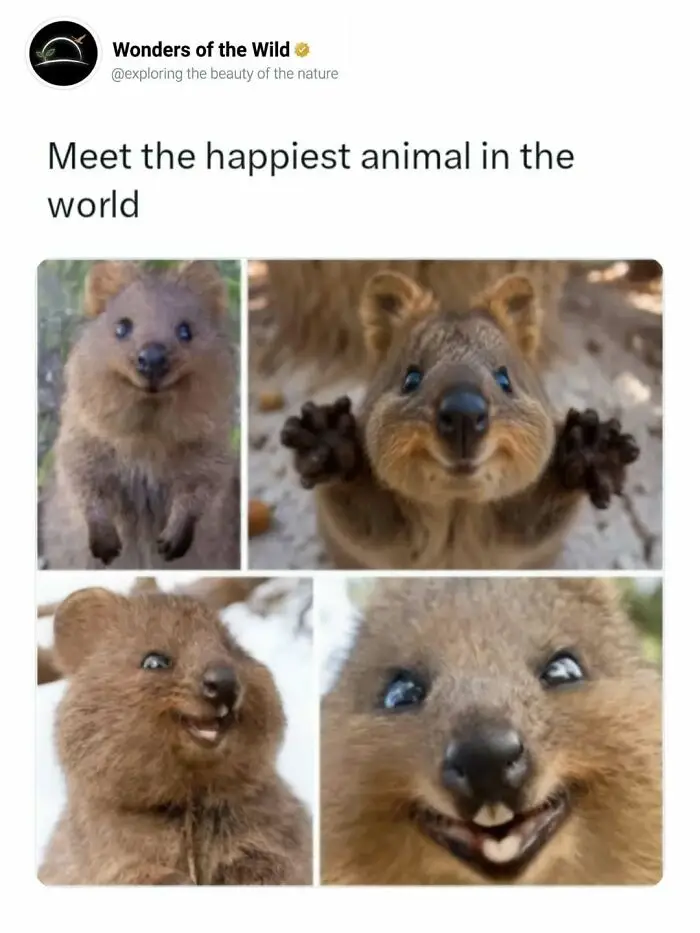
Often called the “happiest animal in the world,” the Quokka wears a natural smile that has captured hearts across the globe. With its round face, bright eyes, and gentle expression, it looks almost permanently cheerful, a tiny marsupial that seems to radiate positivity wherever it goes. Native to Australia, especially on islands like Rottnest, quokkas are curious, social, and surprisingly fearless around humans. But beyond the smile lies a resilient survivor, adapted to tough environments and living a simple life rooted in foraging and calm. Sometimes, happiness really does look this simple.
Report
24points
#31
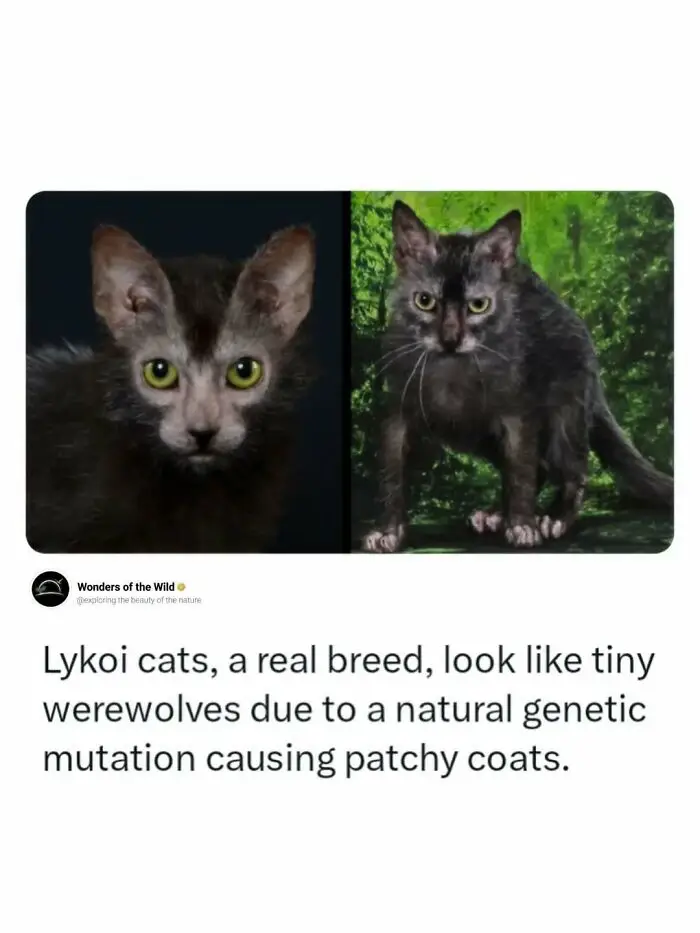
The Lykoi is a real cat breed that looks remarkably like a tiny werewolf. Its distinctive patchy coat is caused by a natural genetic mutation that reduces the number of hair follicles, giving it its unique, scruffy appearance. Despite their wild looks, Lykoi cats are affectionate, intelligent, and playful companions. Their unusual appearance has made them one of the rarest and most fascinating domestic cat breeds, proving that nature can create some truly extraordinary designs.
Report
24points
#32
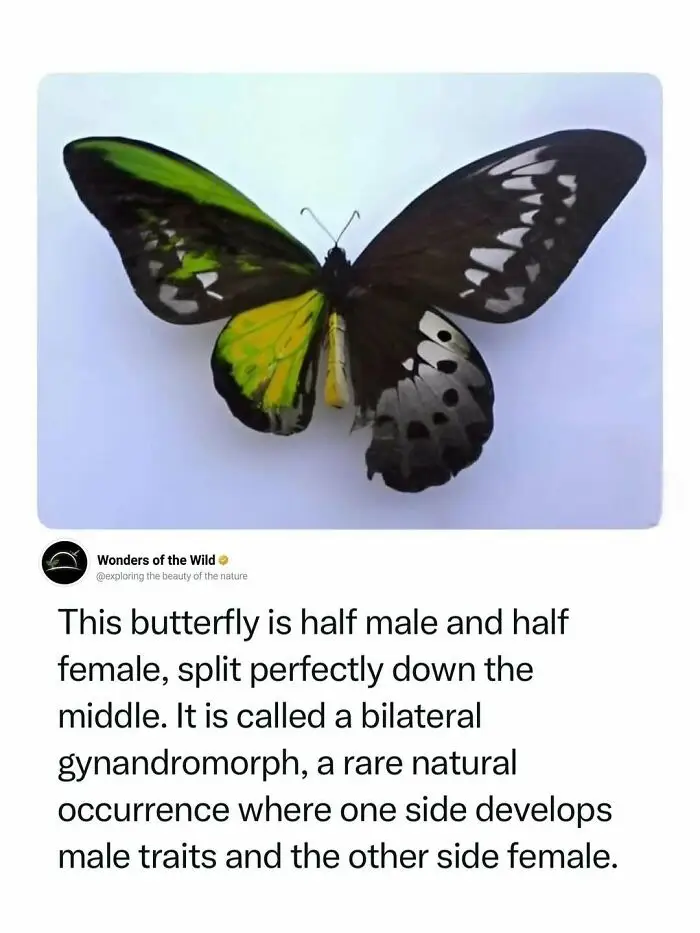
This butterfly is a bilateral gynandromorph, a rare natural phenomenon where a single organism develops both male and female characteristics split down the middle. In cases like this, each side of the body expresses different genetic gender traits, often visible in wing coloration, patterning, and subtle structural differences. The result is a striking, perfectly divided appearance that looks almost symmetrical but genetically represents two developmental pathways in one body.
Report
24points
#33
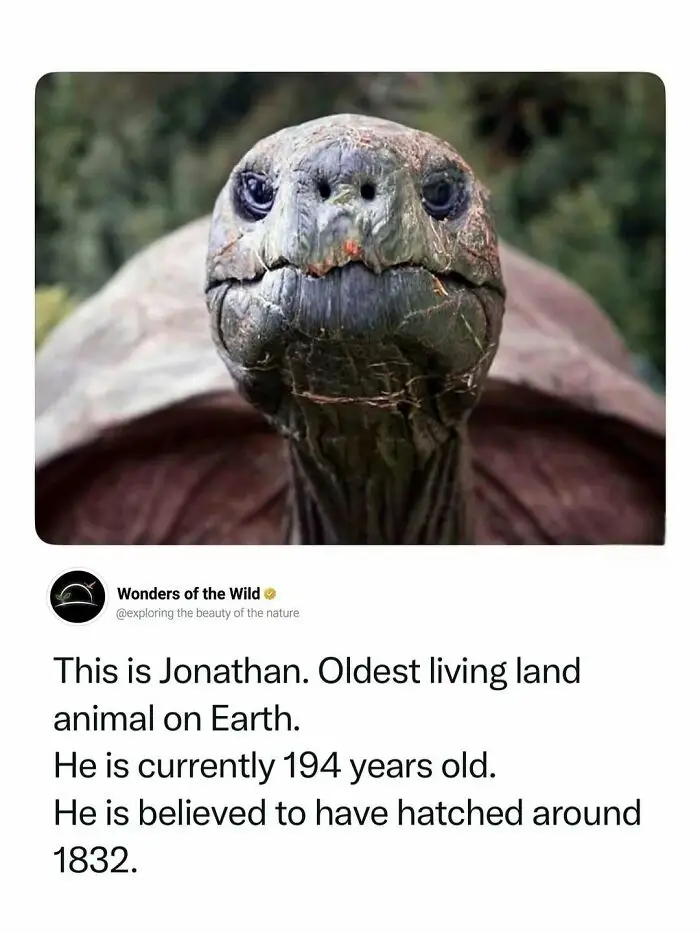
This is Jonathan, the oldest known living land animal on Earth. A giant tortoise, Jonathan is believed to have hatched around 1832, making him approximately 194 years old. Over the course of his remarkable life, he has witnessed nearly two centuries of human history, spanning multiple generations, technological revolutions, and global events. Despite his extraordinary age, Jonathan continues to be a symbol of longevity and resilience, offering a rare glimpse into just how long some species can live under the right conditions.
Report
24points
#34
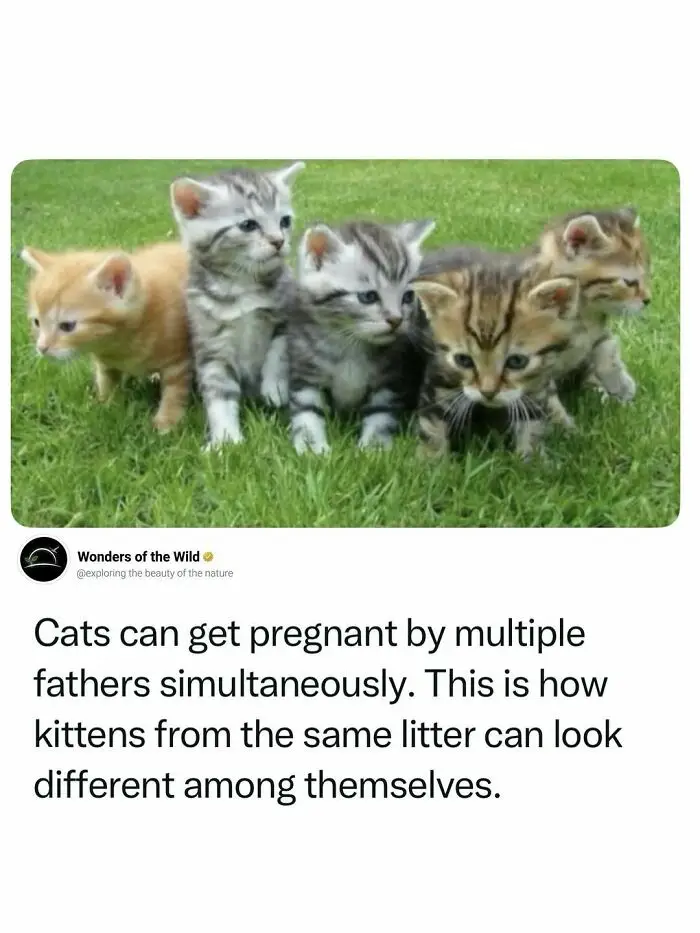
Female cats can carry kittens from multiple fathers in the same pregnancy, a phenomenon known as superfecundation. Because a female cat can release multiple eggs during a heat cycle, those eggs may be fertilized by different males if mating occurs more than once. This is why kittens within the same litter can sometimes look noticeably different from one another, varying in coat color, pattern, and even size.
Report
23points
#35
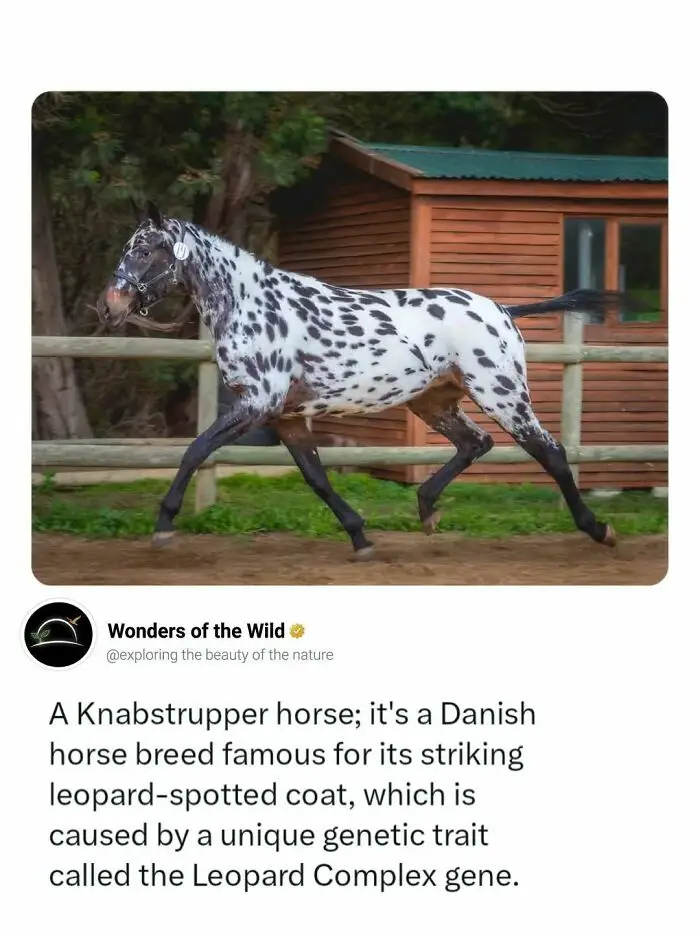
The Knabstrupper is one of the world’s most striking horse breeds, instantly recognized by its dramatic spotted coat that often resembles the patterns of a leopard. Originating in Denmark, these elegant horses combine eye-catching beauty with strength, intelligence, and calm temperament. Knabstruppers are known not only for their unique appearance but also for their versatility and gentle nature. They excel in riding, dressage, circus performance, and companionship, forming strong bonds with humans through trust and responsiveness. Graceful, powerful, and visually unforgettable, the Knabstrupper feels like a living piece of art in motion.
Report
22points
#36
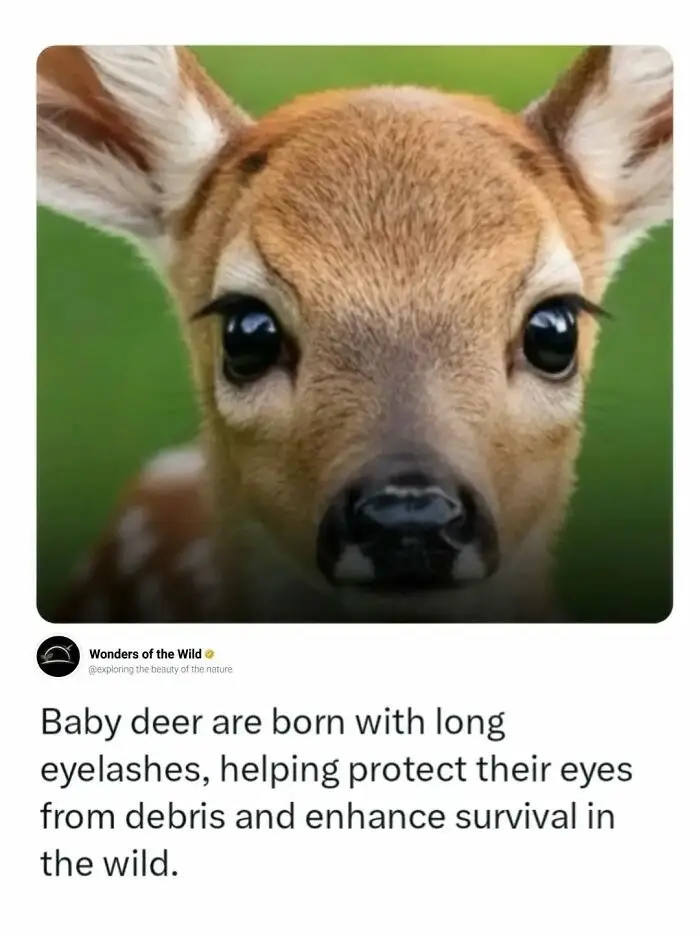
A young Deer begins life with surprisingly long eyelashes, a small but important adaptation that helps protect its eyes from dust, grass, and debris while moving through dense vegetation. These gentle features also enhance its sensitivity to the environment, helping it stay alert in its earliest and most vulnerable stage of life. In the wild, every detail matters for survival, and even something as subtle as eyelashes plays a role in keeping a fawn safe as it learns to navigate its surroundings. Combined with its natural camouflage and cautious behavior, these early traits help ensure it can grow strong under the protection of its habitat and herd.
Report
21points
#37
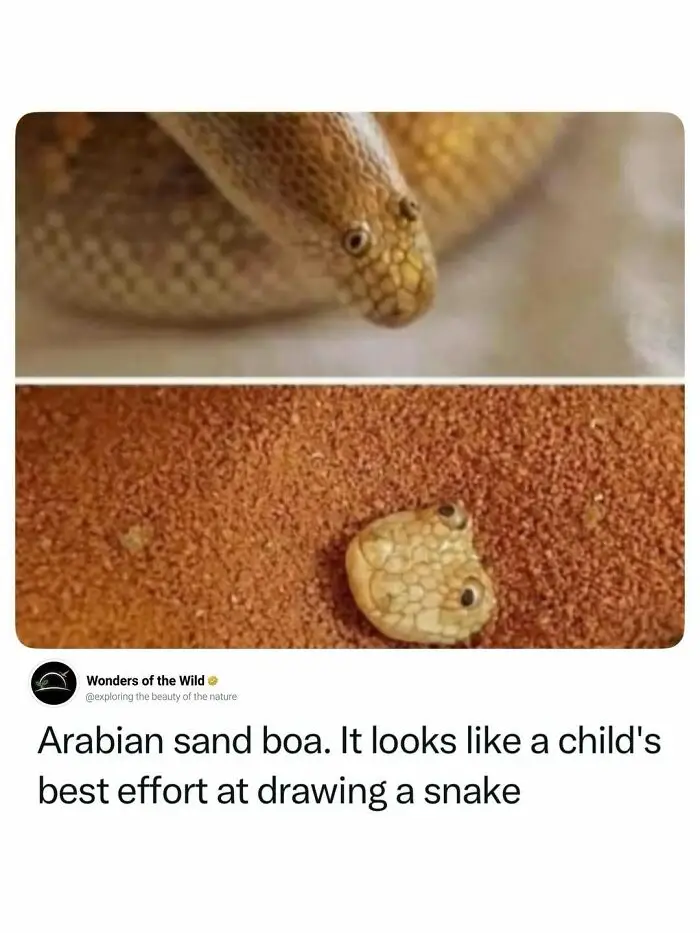
The Arabian sand boa is one of those animals that looks almost too simple to be real, often compared to a child’s drawing of a snake. Adapted for life beneath desert sands, its short, thick body allows it to burrow and ambush prey with minimal movement. Instead of chasing, it waits just under the surface, using stealth and surprise to catch small animals that pass by. Its unusual shape is not a flaw, but a specialized design shaped by extreme desert life.
Report
21points
#38
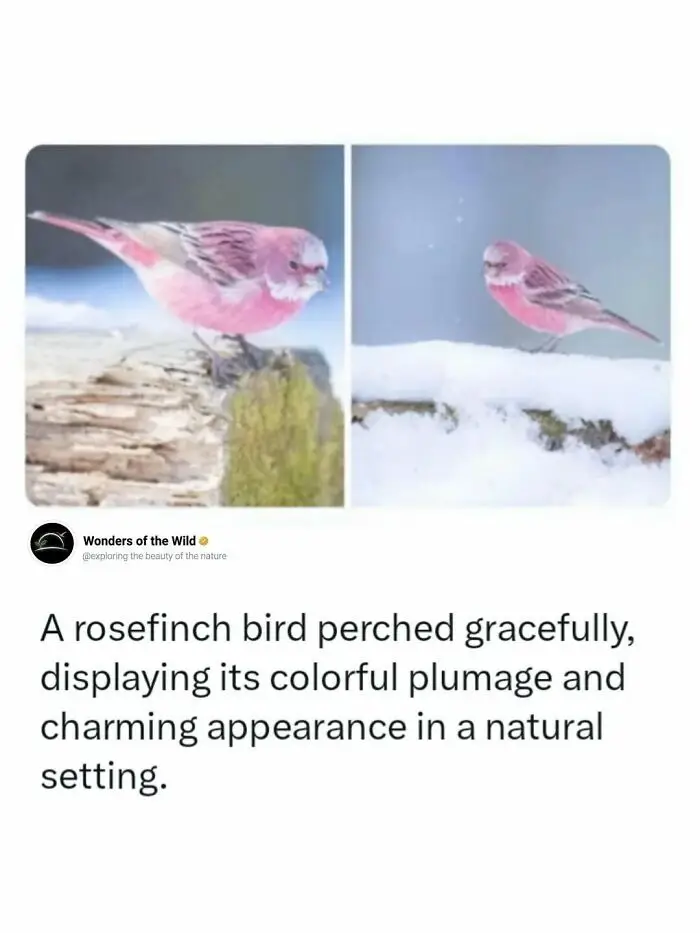
A Rosefinch perches gracefully among the branches, its vibrant plumage standing out beautifully against the natural landscape. With soft shades of pink, red, and brown, this charming songbird brings a splash of color wherever it appears. Known for their sweet songs and gentle nature, rosefinches are often found in woodlands, shrubs, and mountain habitats, where they move quietly through the foliage in search of seeds and berries. Elegant, delicate, and full of character, the rosefinch is a reminder that some of nature’s greatest beauty comes in the smallest packages.
Report
21points
#39
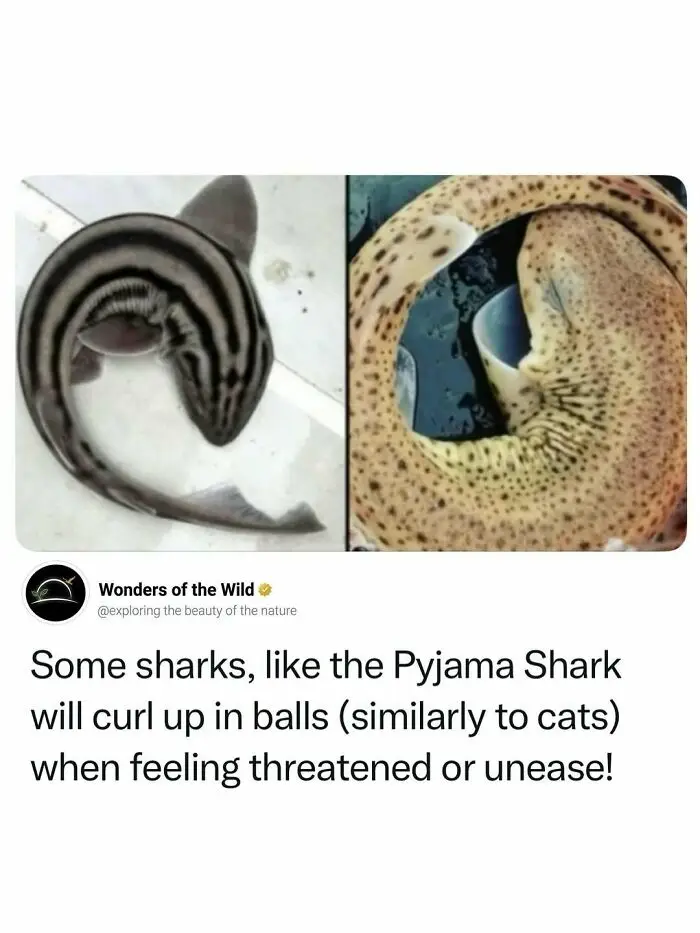
Some sharks have a surprisingly cat-like response to stress. The pyjama shark, for example, is known to curl its body into a tight ball when it feels threatened or uneasy. This defensive posture helps protect vulnerable parts of its body and makes the shark appear more difficult for predators to handle. It’s a fascinating reminder that even some of the ocean’s most iconic predators have unexpected behaviors that seem oddly familiar
Report
20points
#40
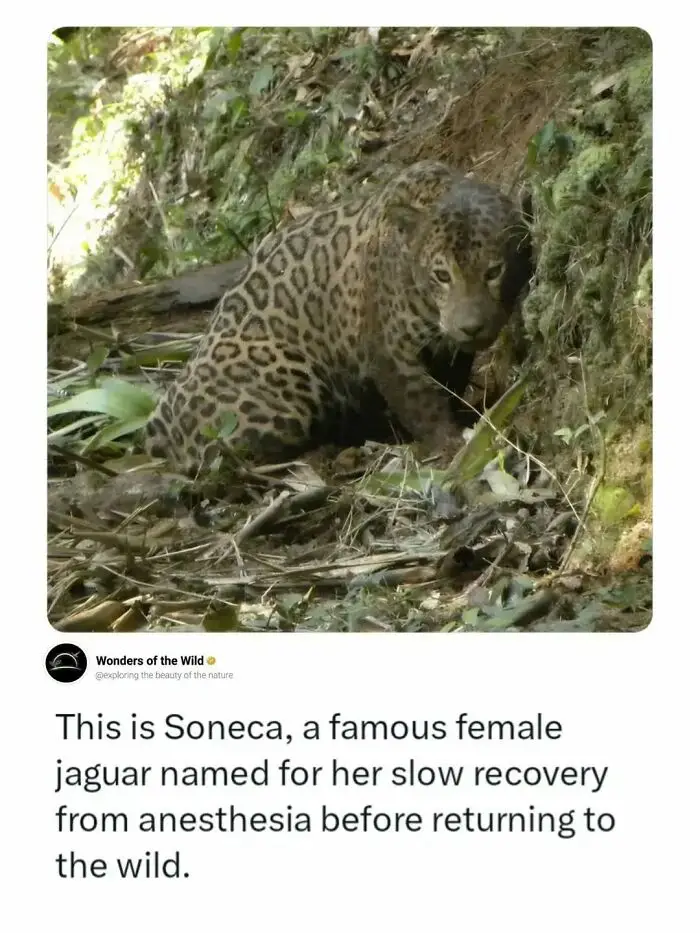
Soneca, a female Jaguar, became widely known after a memorable rehabilitation moment where she took an unusually long time to fully recover from anesthesia before being released back into the wild. Her calm, delayed awakening inspired her name, which reflects that slow, resting recovery phase. Jaguars like Soneca are powerful apex predators of the Americas, but stories like hers highlight the careful work involved in wildlife rescue, veterinary care, and reintroduction programs. After recovery, she was successfully returned to her natural habitat, where she could once again roam forests and river systems as a symbol of resilience and conservation success.
Report
20points