



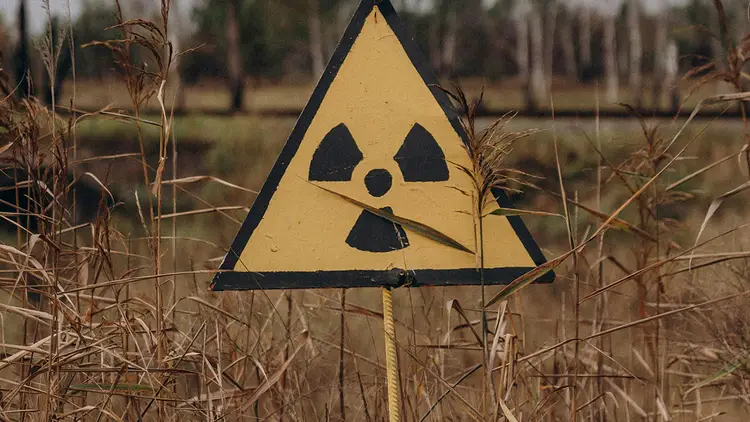


Many of us who grew up watching Indiana Jones or The Mummy probably imagine archaeology to be as exciting and action-packed as our favorite movies make it look. In reality, the work tends to be far more methodical, painstaking, and yes, a little boring. That said, it’s not without its dangers or genuinely jaw-dropping discoveries.
#21
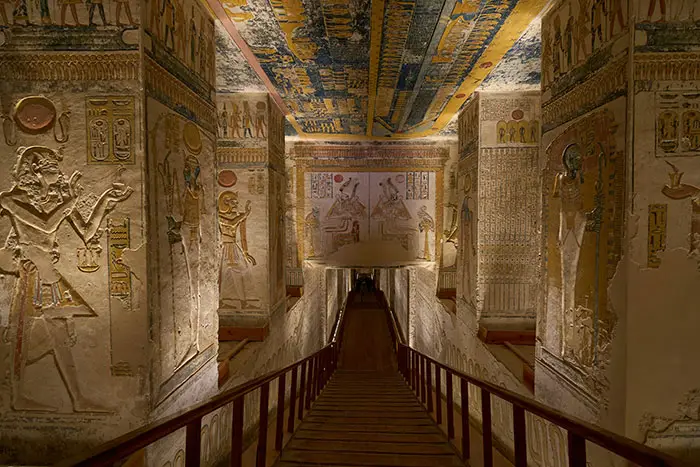
Valley of the kings has a stair well in one of the tombs where they purposely made the stairwell steep and purposely made steps at odd heights to throw someone's balance off allowing them to tumble down the stair well and at the bottom is a deep put so they break a limb and are stuck with no way out.
Report
10points
#22
I can totally suspend my disbelief to accept that ancient peoples rigged tombs and s**t with booby traps to keep out looters. What I can’t accept is that these rudimentary machines still function perfectly after hundreds of years of no maintenance.
Take a brand new Corolla, stick it in a cave and abandon it for 500 years. See if it still works.
Take a brand new Corolla, stick it in a cave and abandon it for 500 years. See if it still works.
Report
10points
#24

I was never able to confirm this, but a cultural anthropology professor I was taught by in college used to be a field specialist on sites in Central America. He was a larger than life kind of dude who lived life to the fullest, you’ll see why.
He told us a story how when walking in to what could best be described as a catacomb he got sprayed with a fine dust after he stepped on a pressure plate. Luckily his student and other workers got him before he suffocated. Turns out it was a type of embalming powder that can coat your lungs if you breath it in.
A year or so later at a different site, he and all of his team caught a form of malaria that was persistent and would lay dormant after he would get treatment. The malaria would end up coming back and k*****g him a year after I finished college. He made archeology and anthropology friggin fun.
Edit: he was told that the malaria being chronic and persistent meant that when he got older, the more likely that it would be life threatening. He would get sick every three years or so and would get sicker ever time. Knowing that he could frankly count the years until his death gave him a very interesting outlook.
Report
9points
#25
I knew an archaeologist k****d why excavating WW1 trenches. Not an intentional trap but the end result was the same.
Report
7points
#26
There's this story of two hoarder brothers (we'll call them J and K, cause I can't remember their names) who lived in an apartment together. J was disabled, and fully dependent on K for having basic needs met.
Because of the sheer amount of stuff they had everywhere, the place was basically booby trapped (they may have placed some traps intentionally, but I don't remember exactly). They were also very reclusive, and seldom left or allowed anyone in.
Someone in their building called for a wellness check for one reason for another, and they found the decomposing bodies of *both* brothers in their apartment. K had been k****d by one of the booby traps, and as a result, J died several days later.
Edit: it also took days to get to the bodies due to the traps, as someone added
I can't imagine how utterly terrifying it would've been to be J. Your brother dies, and then you're just...stuck, knowing death is inevitable. The pain and fear he must've gone through in his final days must've been horrific.
I don't know how I want to die, but I know how I *don't* want to die.
Report
7points
#27
The first emperor of China is buried in a mound style pyramid full of booby traps and mercury rivers. The gov doesn't want to go in and get rekt, so they forbid anyone from trying to enter.
Report
6points
#28
It may not be of any historical value, but during the Vietnam War, there was actually a hole placed in the ground on my family's property; supposedly connected to other tunnels and holes. My cousins tried to trick me into going into it until my uncle came across us and they got in major trouble. Apparently, the hole was boobytrapped and no one knew how to turn them off anymore. I asked for more detail from my cousins later on and they theorized everything from pockets of napalm to explosives. I have no idea if they were still just f*****g with me (but probably).
Report
6points
#29
Ooh, my time to shine! I run a daily trivia game where I angrily text my friends random questions every day. We’ve been running for like a year and a half. We did this one below on booby traps!
——
10/12/20 DAILY LOG
You have a store of riches, or perhaps a secret most dreadful. It must be protected at all costs - how? Booby traps!
The dangerous, hidden, secretive, silly named devices have deterred many a doe eyed fool who valued riches more than his own skin. Which of the following is NOT an actual booby trap?!
A.) mechanical crossbows and rivers of liquid mercury protected the Terracotta Army, a massive series of sculptures depicting the armies of Qin Shi Huang, the first emperor of China. Spicy.
B.) Ivan Vasilyevich, the first tsar of Russia was a tyrant nicknamed “Ivan the Terrible”. A ruthless leader, it was wise to fear him in both life and death. In his mausoleum, his death mask was painted with a highly poisonous red cinnabar paint and toxic hematite dust was sprinkled everywhere.
C.) The Baja 1000, a Mexican off-road race, is among the most prestigious off-road races in the world. It covers roughly 1000 miles of dangerous desert. It is plagued by spectators who set dangerous traps for the drivers including hidden holes, jump ramps, and hidden caches of rocks.
D.) the bamboo pit viper was weaponized by the Vietcong in the Vietnam war. Snake traps were known as “3-step traps” because you only had time to take 3 steps before the venom k****d you. In the tunnel complexes, they stuffed the irritated snake into the hollow bamboo framework, meaning that any US “tunnel rats” were in for a nasty surprise.
Report
5points
#30
I saw a YouTube video many years ago that I haven't been able to find since and the details are murky, but I remember the gist of it was that there was a tunnel system under a German city that the Nazis used to stash some of their gold (allegedly). It was mentioned that these tunnels were likely boobytrapped and the German government didn't want archaeologists messing with a site that was likely wired with bombs in an actual city. I've tried to find it again, but all that comes up is the N**i gold train craze that wound up yielding nothing.
Report
5points
#31
Some jungles in Vietnam still have spike pits, tree traps, and explosives. In some instances, there are active pen traps and watch bombs.
Report
5points
#32
I’ve heard a theory that King Tuts tomb and the curse associated with it (sudden mysterious deaths of initial archeologists soon after inspecting the tomb) may have been some form of toxic micro dust, that was laid across and throughout the entire tomb, and when the seal was broken and air flow kicked up the dust, it was inhaled and wreaked havoc on people who came into contact with it.
Again, I have zero evidence to back this up, it is something I heard theorized, but also don’t underestimate the Egyptians for being able to create such a substance.
Again, I have zero evidence to back this up, it is something I heard theorized, but also don’t underestimate the Egyptians for being able to create such a substance.
Report
4points
#34
I know that the tomb of Qin Shi Huang (the emperor that is buried in a massive mound surrounded by the terra-cotta Warriors) is rumored to have all sorts of traps (and amazing treasures) but the tomb is not planned to be opened (which is great, in my opinion).
2 of the more amazing treasure rumored to be inside... the ceiling is covered in gems to mimic the stars in the sky and the entire known earth is supposedly rendered on the ground with rivers and oceans of flowing mercury simulating water. Tests around the edge of the mound have found high concentrations of mercury.
2 of the more amazing treasure rumored to be inside... the ceiling is covered in gems to mimic the stars in the sky and the entire known earth is supposedly rendered on the ground with rivers and oceans of flowing mercury simulating water. Tests around the edge of the mound have found high concentrations of mercury.
Report
4points
#35
The Oak Island Money Pit:
A man made pit with platforms roughly every 10 feet. Nobody has ever successfully excavated it as it was booby trapped to flood with water although multiple excavation attempts have been made.
A man made pit with platforms roughly every 10 feet. Nobody has ever successfully excavated it as it was booby trapped to flood with water although multiple excavation attempts have been made.
Report
4points
#36
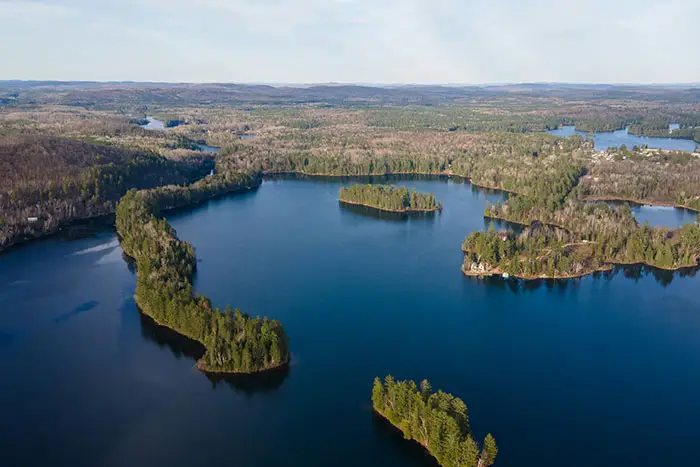
Oak Island in Canada supposedly has a secret treasure buried deep down. There were many different kinds of traps and stuff that have made digging up the island a nightmare.
Several people have gone bankrupt trying to uncover it. There's also tales about a curse.
"The curse" is said to have originated more than a century ago and states that seven men will die in the search for the treasure before it is found. To date, six men have died in their efforts to find the treasure."
There's a history Channel miniseries about it.
Report
2points
#37
There's one in Mesopotamia that keeps luring armies to the region and causes them to lose and leave in shame.
Report
2points
#38
Not set off, but the legend says that the first Chinese emperor's grave would contain poison and k**l anyone who opens it. Archeologist aren't scared of the poison but the grave hasn't been opened for so long that it may get destroyed if air gets in.
Report
2points
#39
A few years ago a person was going thru some old WW1 stuff, put on an old gas mask and inhaled and died. It seems the filter still had some remnants of old mustard gas in it.
Report
1point
#40
The achaeologists who opened Tutankhamon's tomb had a horrific rate of unexplainable deaths, days or even weeks later. The origins of the "curse of the Mummy's Tomb", I suspect.
One theory I like is >!"ancient pathogens that humans have lost their immunity to"!
One theory I like is >!"ancient pathogens that humans have lost their immunity to"!
Report
0points
