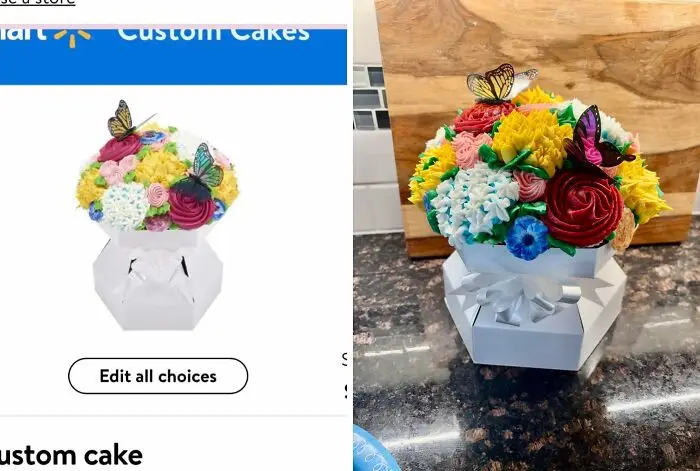


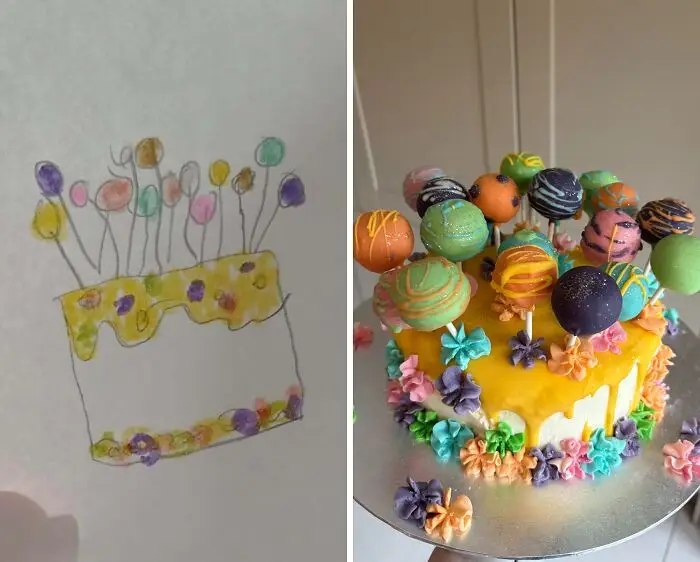
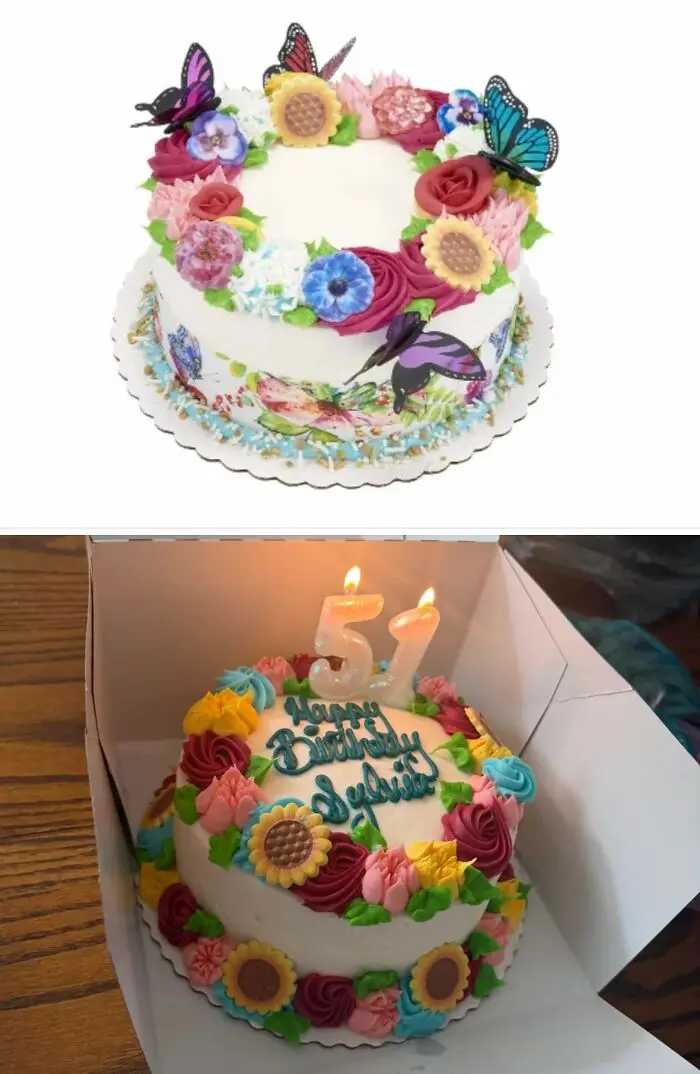
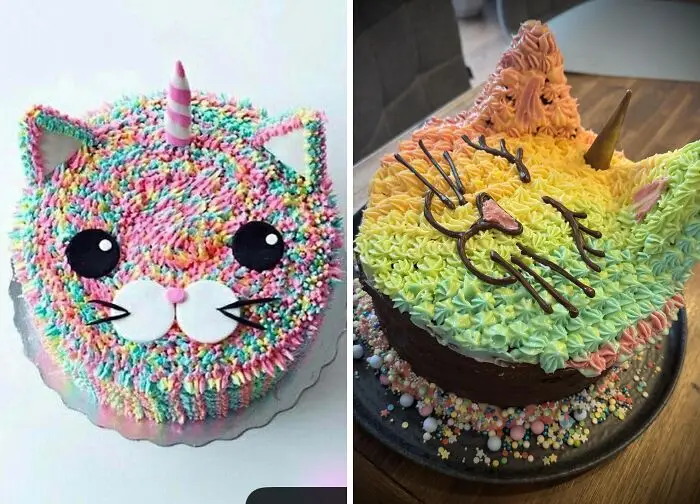
#2 The Brief My 8 Year Old Niece Gave Me For Her Birthday Cake And The Finished Cake
I’m one of those people who always have high expectations of people — too high. I expect thoughtful gifts, engaging conversations, and for my friends not to be late for Sunday brunch. Of course, that’s why I often experience disappointment, and a lot of my life has been about dealing with those feelings and learning to lower my expectations.
However, I’m not the only one who does this. In fact, people are generally wired to expect too much of other people and life in general. According to neuroscientist Tali Sharot, humans have an optimism bias. “When it comes to predicting what will happen to us tomorrow, next week, or fifty years from now, we overestimate the likelihood of positive events, and underestimate the likelihood of negative events,” she writes.

In her research, Sharot found that 80% of people, regardless of where they’re from, their gender, religion, social class, or age, always expect a more positive outcome than they actually get. That includes thinking we’ll get a bigger starting salary and more job offers, underestimating how long a project will take and how much it will cost, and that a vacation will be more pleasant than we anticipate.
Some animals exhibit optimistic bias as well. According to a 2008 study, rats and birds tend to have similarly high expectations, just in different contexts. One group of people is an exception to this rule, though, and that’s folks who struggle with depression. “While optimistic biases are common in the majority of humans, optimism seems to break down in major depression disorder (MDD), with pessimism being one of its key symptoms,” Sharot writes.
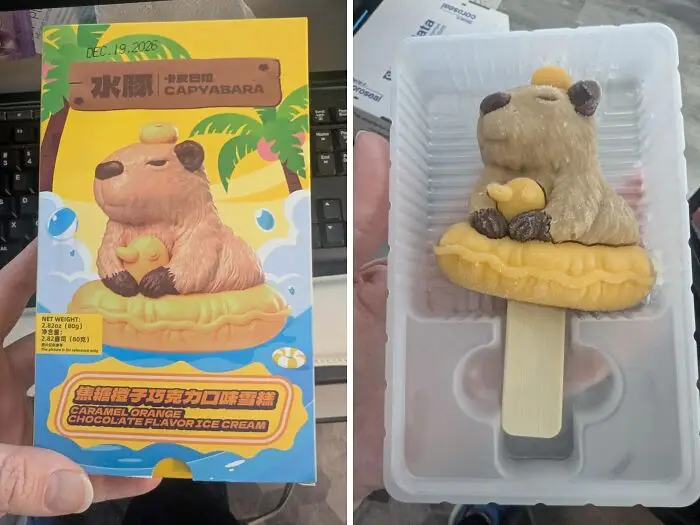
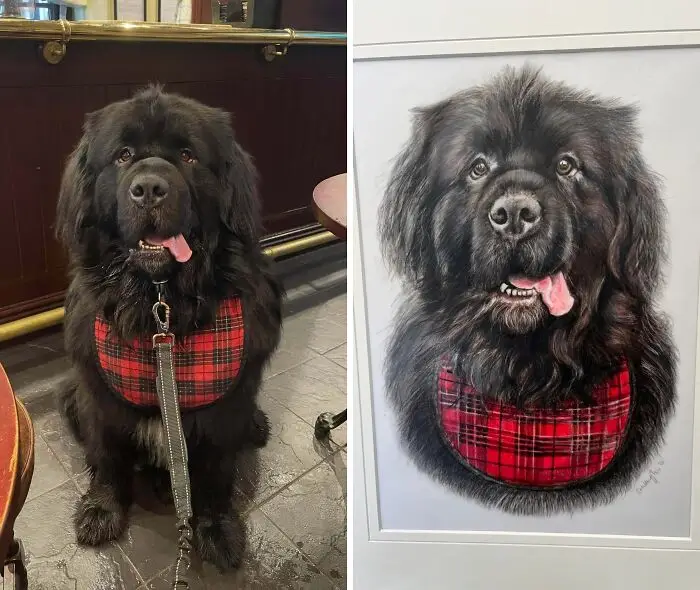
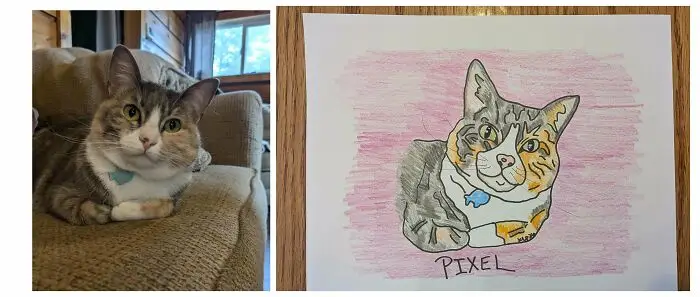
#8 Our Local Animal Shelter Had A "Pet Roulette" For The Month Of March, Where You Can Send In A Picture Of Your Pet And One Of Their Staff Will Draw It For You. Only Catch Is That Some Of Their Staff Is A Lot Better Artists Than Others

Do we fail to finish tasks on time because of wishful thinking or our inability to correctly predict the time and costs it will take to finish? According to psychologists Daniel Kahneman and Amos Tversky, we focus too much on the best-case scenario and fail to consider the evidence we’ve witnessed in the past and the variables that might interrupt us.

#11 My Sister Made Me A Replica Of Britney’s Denim Dress For My 40th “Y2k Prom” Birthday Party!

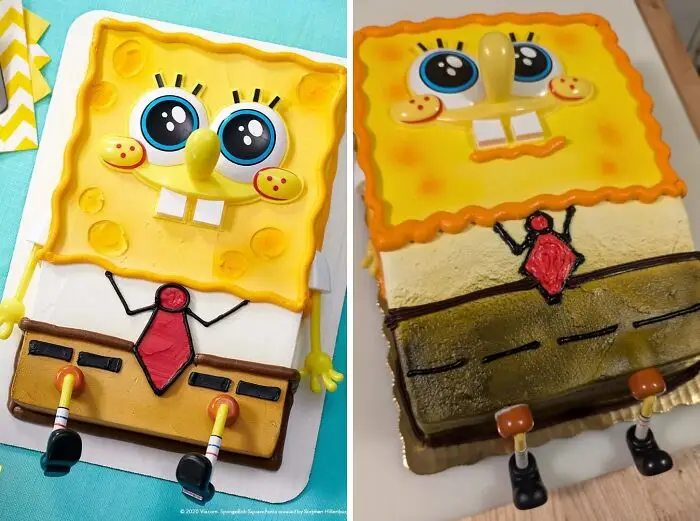
Kahneman and Tversky called this the planning fallacy, and it’s essentially why we procrastinate. We don’t apply it to other people, and that’s why we often have high expectations of our colleagues and get annoyed when they don’t get something done in time. Essentially, this means that we’re not objective, otherwise, we would admit to ourselves that we’ll need more time to finish that project and feel more compassion for Karen when she doesn’t finish that report in time.
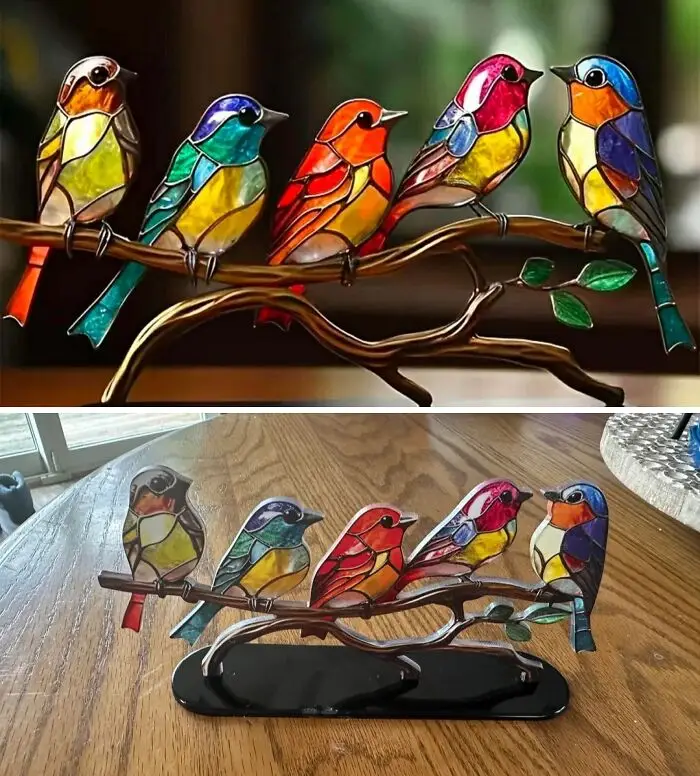
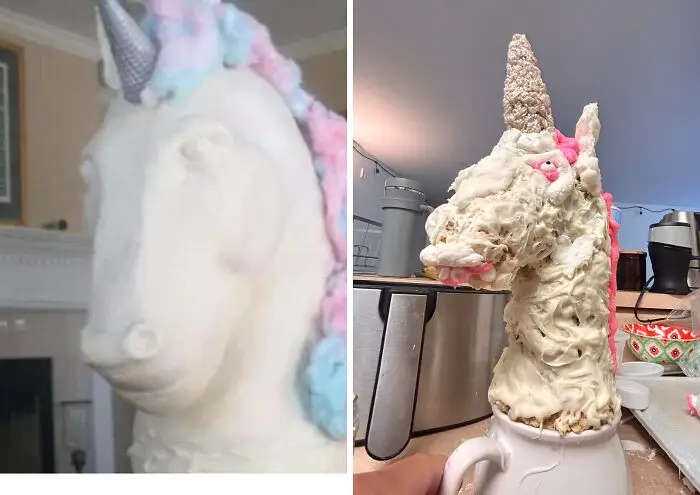
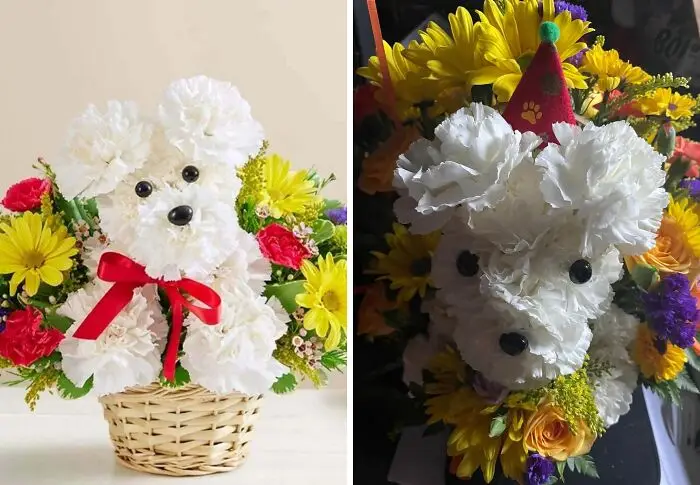
It’s logical to think that having high expectations is a straight road to unhappiness — how can you ever be satisfied with anything if people and life keep disappointing you? While unrealistic expectations can lead to feelings of sadness and disappointment, research shows that lowering our expectations will not make us happier — quite the opposite, in fact.


When high expectations are realistic, such as setting goals to better ourselves, they actually help us move forward. We feel stronger and more optimistic in the face of adversity, because we believe that things will work out. For example, breaking up with a romantic partner diminishes our expectations of finding love, but if we maintain high expectations, we’re more likely to join a dating site, go on a blind date, and otherwise search for it.