





Sometimes, the funniest situations happen when someone fails to notice something that is practically impossible to miss. Psychology Today explains this through a phenomenon known as inattentional blindness, which occurs when people overlook something clearly visible because their attention is occupied by something else. This is not necessarily a problem with their eyesight.
The information reaches the brain, but it does not become part of their conscious awareness. Since the brain has limited capacity for attention, it prioritizes certain details while filtering out others. This means that even something directly in front of a person can go unnoticed if it is not what they are currently focused on.



One of the best-known demonstrations of this phenomenon is the "Invisible Gorilla" experiment. Participants were asked to count how many times basketball players passed a ball, and many failed to notice a person dressed in a gorilla suit walking through the scene.
Their concentration on the counting task made them overlook an unexpected detail that seemed impossible to miss. It is a fascinating reminder that seeing something and actually registering it are two different things. People often assume they are aware of everything happening around them, but their attention can be surprisingly selective, leaving them with an incomplete picture of their surroundings.



Research from James Madison University further explains how this works through the concept of selective attention. The brain constantly receives more information from our senses than it can process in depth, so it must decide what deserves priority.
One way to understand this is to imagine attention as a spotlight that illuminates certain details while leaving others in the background. This spotlight is influenced by external factors such as brightness, movement, loud noises, and unusual objects, as well as internal factors like memories, emotions, and personal expectations. What catches one person's attention might therefore be completely overlooked by someone else.



Although this ability helps people concentrate, it can also create some rather amusing blind spots. Someone might become so absorbed in explaining a particular detail that they fail to notice something much more significant happening nearby. This is closely related to inattentional blindness, but another phenomenon called change blindness also demonstrates the limitations of our awareness.
It occurs when people fail to notice changes in a visual scene, even when those changes seem obvious once pointed out. Our brains do not constantly examine every detail of our surroundings, meaning that small changes and unexpected discoveries can easily slip through unnoticed.
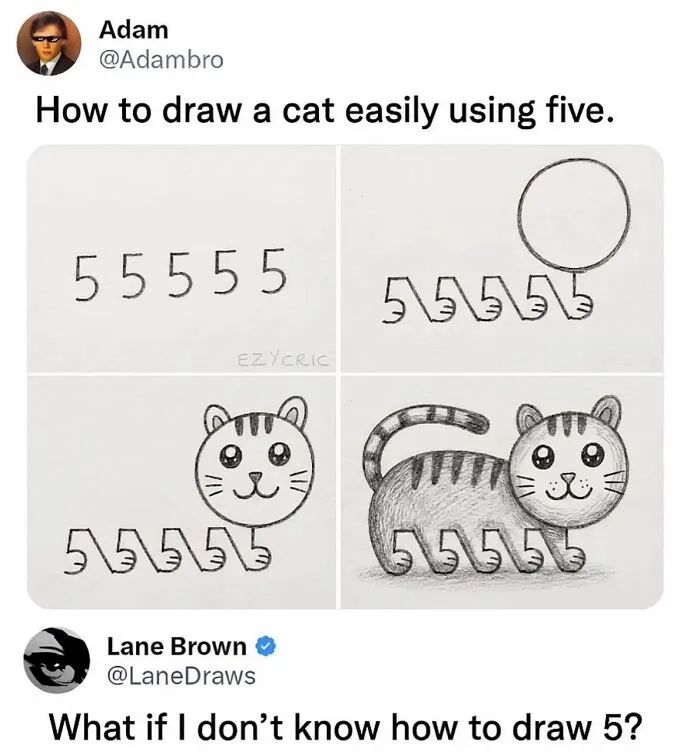


Expectations can make these misunderstandings even more interesting. Verywell Mind explains that people often develop beliefs about how others should behave, communicate, or respond, sometimes assuming that everyone shares the same understanding of a situation.
These expectations help us make sense of everyday interactions, but they can also lead to incorrect interpretations. People may mistake their personal assumptions for objective facts, especially when they have never considered that someone else might see things differently. As a result, something that seems completely straightforward to one person may be interpreted quite differently by another.



These assumptions can also influence what people notice and how they explain it. When someone approaches a situation with a particular idea already in mind, they may focus on details that support their interpretation while overlooking information that challenges it.
This is partly connected to confirmation bias, which describes the tendency to favor information that reinforces existing beliefs. It helps explain why someone might confidently point out one detail without considering the larger picture. Sometimes, the problem is not that the information is unavailable, but that their expectations have already influenced how they make sense of what they see.