






While the world is still firmly in the hands of the Covid-19 pandemic, April 26th marks the 35th anniversary of another catastrophe: The Chernobyl meltdown. It not only changed the lives of the people in the Chernobyl Exclusion Zone in a cruel way forever; even life all over Europe was no longer the same. The Chernobyl meltdown not only caused a huge radioactive cloud that rained down in large parts of Europe and contaminated lettuce, wild animals, milk, and mushrooms to this day—it also showed us how dangerous nuclear power really is and that we urgently need a turn out of nuclear power.
35 years ago, that sounded like an eternity away. But what are 35 years if the area will remain uninhabitable for the next 24,400 years?! What are 35 years if people still die as a result of the disaster today? It is not possible to determine the exact number of victims that died as a result of that meltdown: various organizations speak of 4,000 to 60,000 dead people. It is important to me to mention all these impacts before I tell you about my personal experiences, as the awareness of the disaster and the area has developed in the wrong direction because of the hype about the TV series and the self-expression of many tourists.
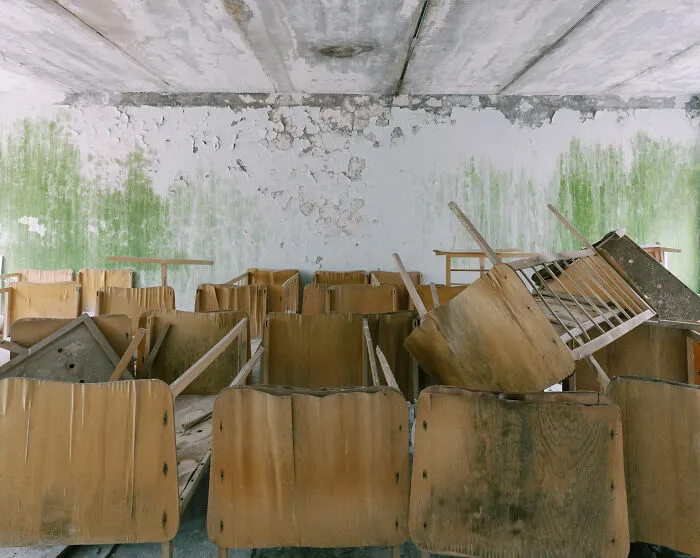
#21 The Class Of 1986
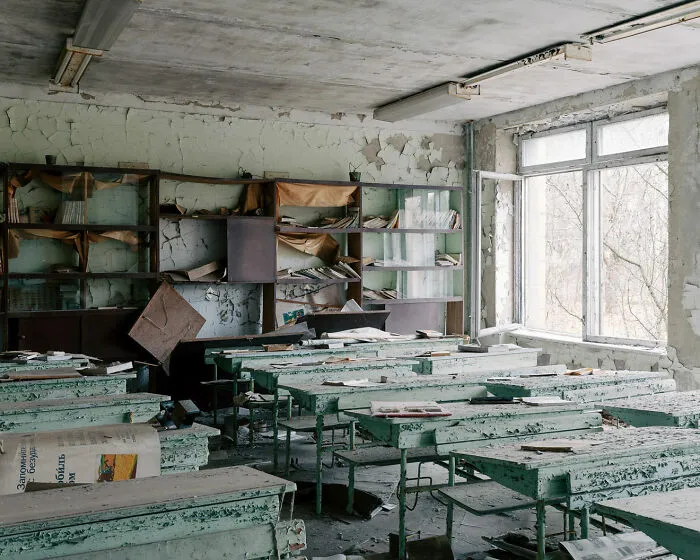
The schools in Pripyat are fascinating: the many different classrooms, many small and large things that make you travel back to the time of socialism and especially stimulate your thoughts on a time before the reactor accident took place.
7points
#22 Wastelands
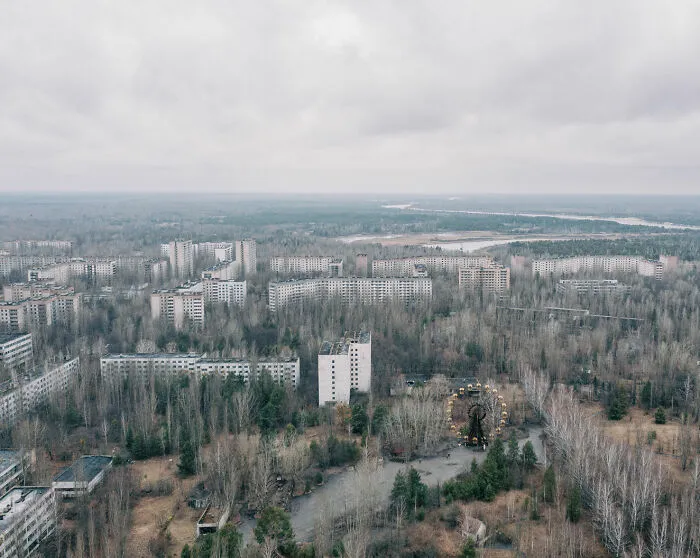
This is the view over Pripyat towards the Belarusian border. An interesting fact is that in Ukraine, “only” 5% of the country’s territory has been radioactively contaminated—while Belarus, whose border is only about 20 km away from the damaged power plant, suffered and still suffers from contamination of almost 70% of the territory. Even if these spectacular ruins did not remain there, the suffering of the Belarusian population could not be decreased. Unfortunately, this is often overlooked a little bit.
7points
#23 The Riverboat
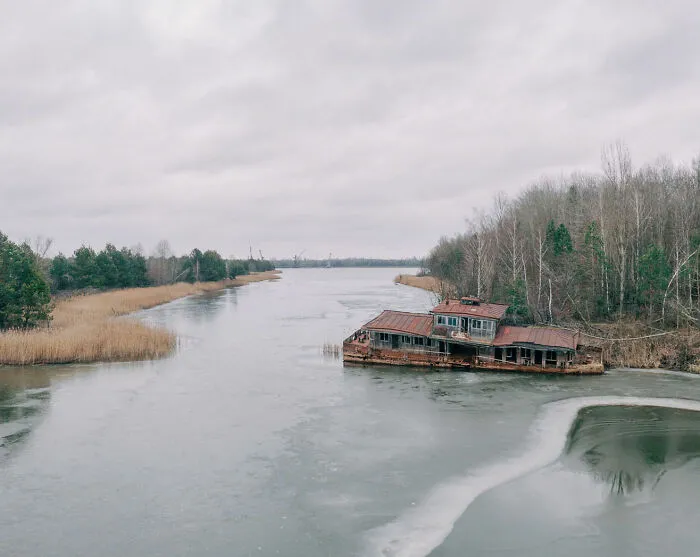
This ship once docked regularly at Marina River Station, which is halfway behind Café Pripyat. Its job was to transport the residents of Pripyat on the river of the same name. Today the two-story ship is sinking slowly but surely, just a few hundred meters away from the former landing stage.
6points
#24 Am I Pregnant?
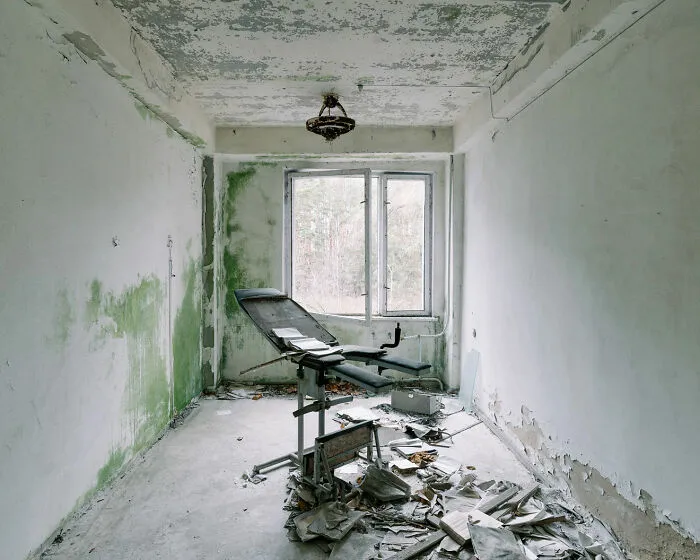
Despite the years of looting in Pripyat, there is still a lot to discover: for example, this old and abandoned gynecologist chair. Creepy thoughts come to my mind when I consider the effects of the nuclear accident on unborn life and pregnant women. Perhaps some of them were examined on exactly that chair before and the good news was brought to them here.
6points
#25 Sviatoslav
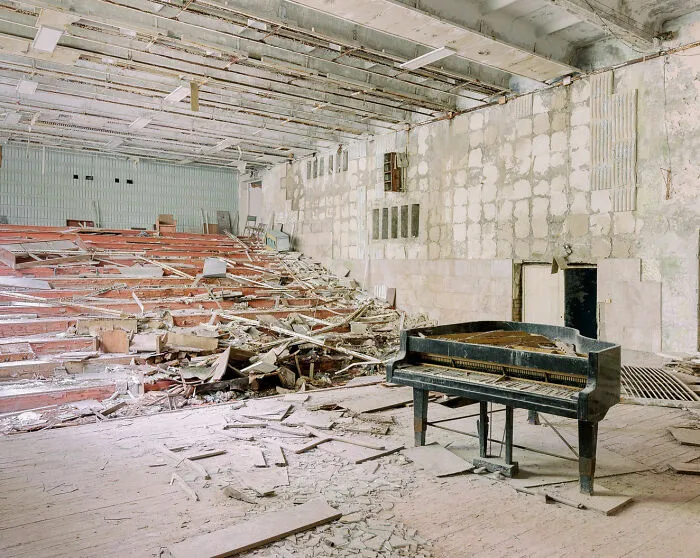
The old piano of the music school in Pripyat.
6points
#26 Olympia
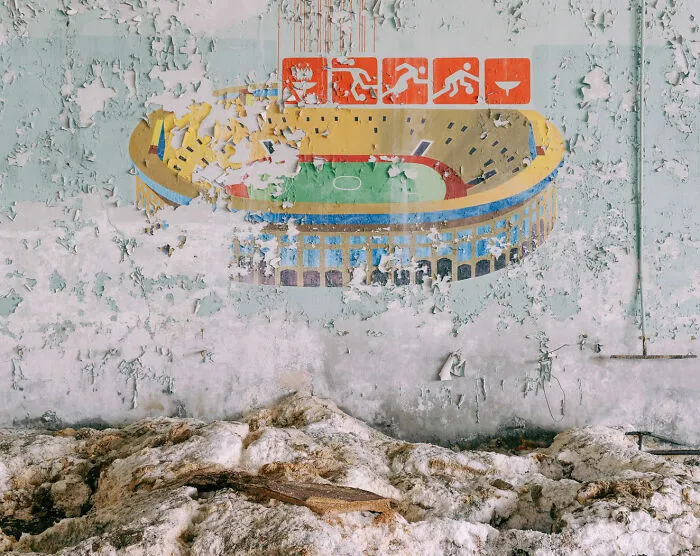
The 1980 Summer Olympics in Moscow was a big event for Pripyat as well. In addition to images of the mascot, the cute bear Misha (or Mishka), this mural of the Luzhniki Olympic Stadium can also be found in one of the many gyms there.
6points
#27 Scooter
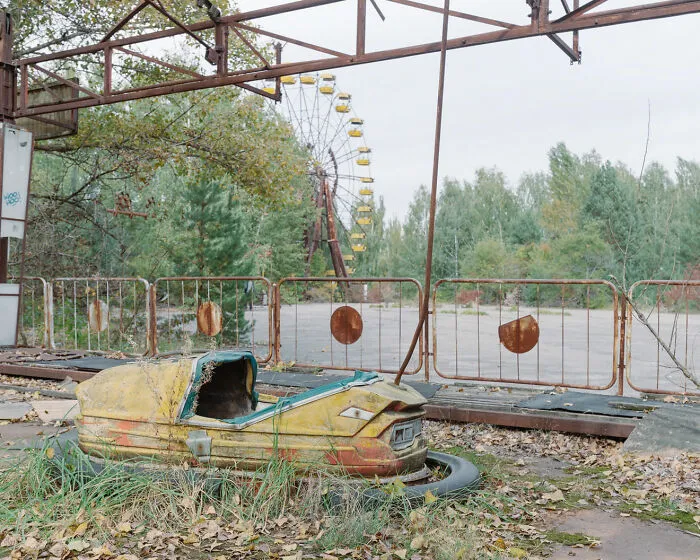
The Pripyat bumper car was part of the amusement park that was due to open on April 30th.
6points
#28 No Man's Land
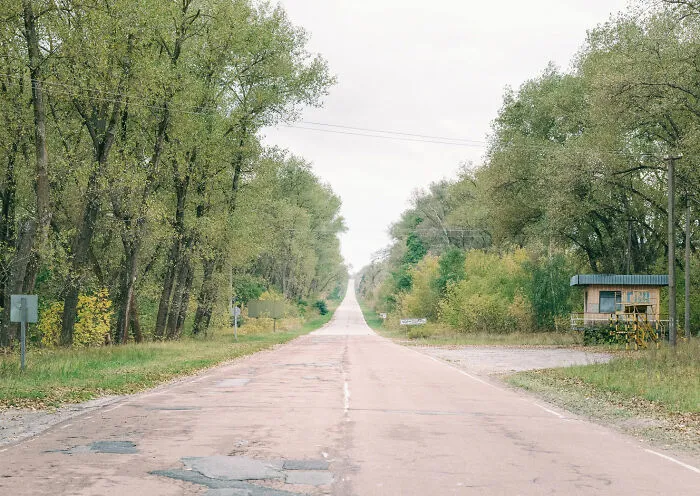
On a cold morning on the outskirts of Chernobyl: a sight that always arouses the longing in me to book a plane ticket to visit the exclusion zone again. The accident was a tragedy for mankind but not necessarily for the flora and fauna: the positive effects on an environment free of human interference. Countless animal species that had almost disappeared settled there again. For example, the Przewalski horse was almost extinct from the wild. In the course of time, I experienced some unforgettable moments there, met wonderful people, and enjoyed the time and the tranquility there. I hope I´ll be able to make several revisits in order to capture every corner of the Ukrainian and Belarusian exclusion zone in pictures.
6points
#29 Dreaming Of A Better World
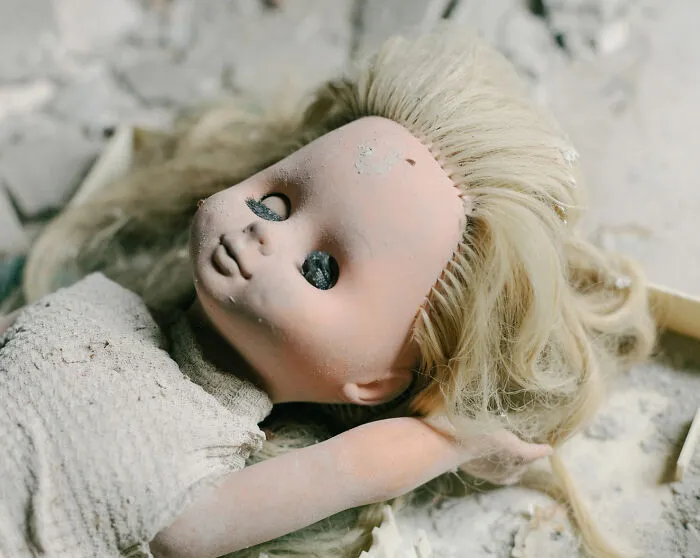
The lost dolls of Pripyat have become very well-known motifs in photography. Unfortunately, the "tourists" moved them, again and again, to represent them in an even stranger scene. But they also fascinate me: over the years and progressive decline, they have adopted different facial expressions and postures that sometimes represent the unreality of their hometown.
5points
#30 Don't Forget Your Gym Bag
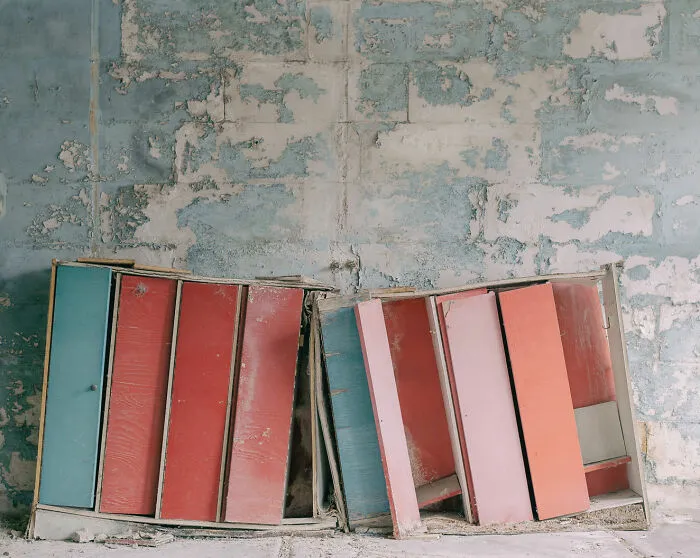
The lockers in a kindergarten, designed in the typical color of the '80s. It often is the aesthetics of tragedy and decay that drives me to visit and revisit places like this.
5points
#31 Hammer And Sickle Stands Above All
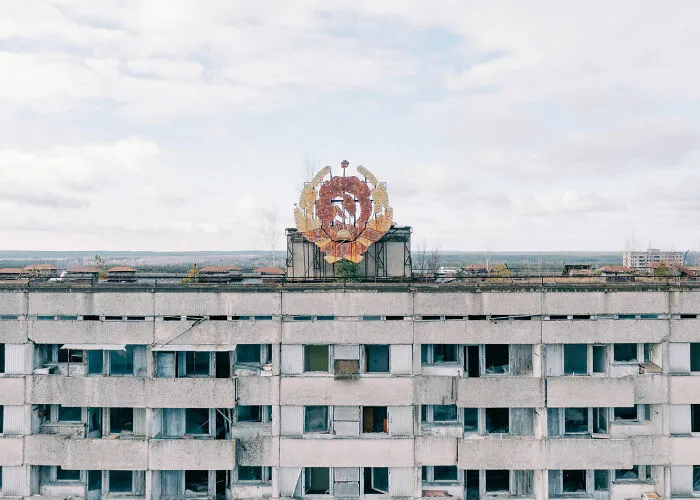
There are two identical high-rise buildings on the main square of Pripyat. Hammer and sickle are still emblazoned above both ruins: the former famous symbol of Marxism and Leninism. That sign symbolized the unity of the working class (hammer) and peasant class (sickle) back in communist times—today, this symbol is even prohibited in several countries such as Latvia, Lithuania, Moldova, Ukraine, and Indonesia.
5points
#32 Let The Atom Be A Worker, Not A Soldier
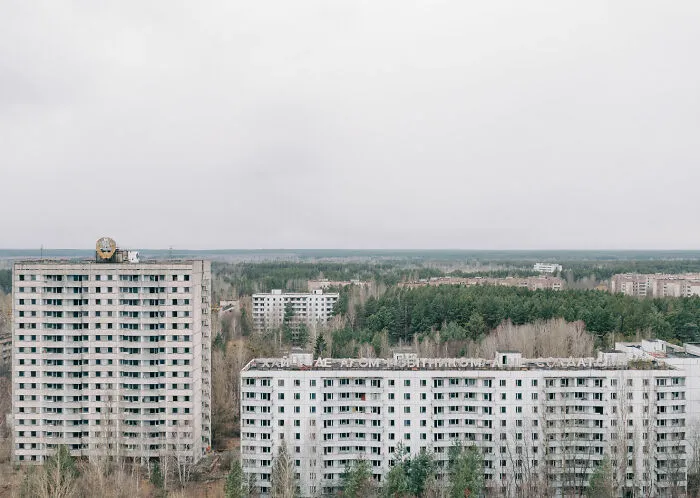
"Let the atom be a worker, not a soldier." This saying, which is located on the elongated building, should suggest that one should not use nuclear power for war but good purposes like energy generation. It has unfortunately also been shown that the atom is not necessarily always a good worker. This saying also shows how the government fooled the people of the Soviet Union when one was on the verge of nuclear war.
5points
#33 Cabins In The Woods
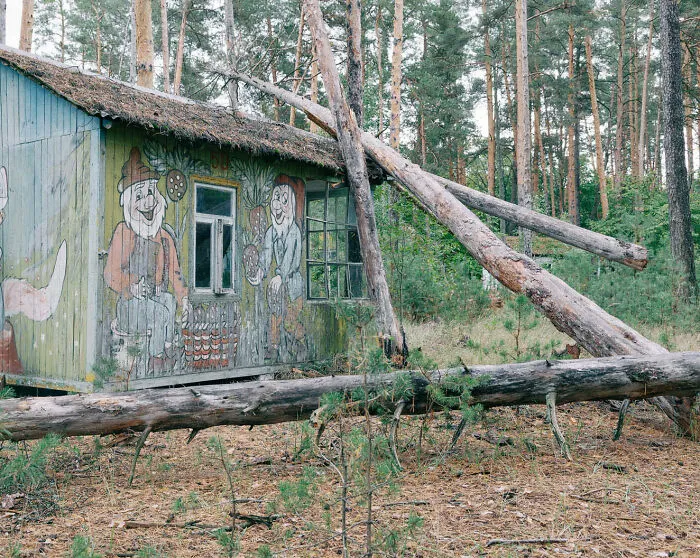
On the way from Chernobyl to Pripyat, off the road, the fairytale holiday camp “Emerald” can be found. The camp is fairytale-like, not only because of its idyllic location in a pine forest with a bank next to a small river. Also, the colorful wooden huts were decorated with hand-painted pictures of Soviet fairytales. As the icing on the cake, a pleasant smell of resin should have permeated the camp during the days of summer. For the nuclear power plant workers only a few kilometers away, this place offered an opportunity to escape their dangerous everyday life during their vacation and most of them spent the summer in nature there. Like many villages in the exclusion zone, the holiday camp became another victim of a devastating forest fire in April 2020 and sadly, it has completely been burned down.
5points
#34 Passport, Please
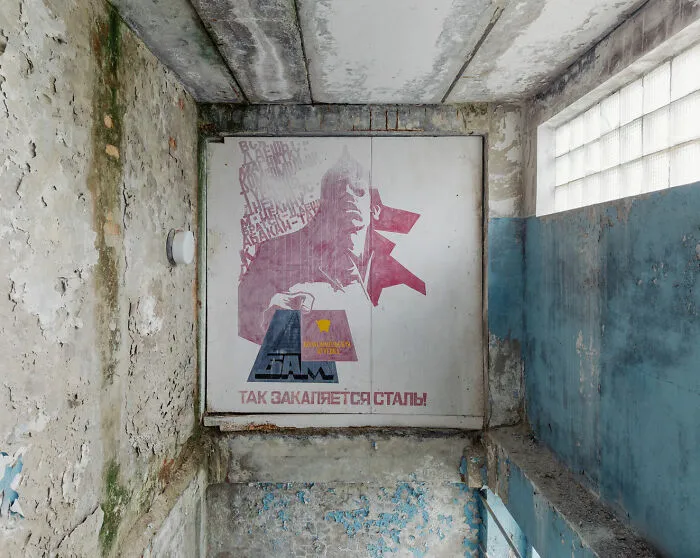
This picture shows one of the numerous propaganda murals. This one is located in the technical vocational school in Pripyat. During the years and my visits to the exclusion zone and barracks of the Red Army in Germany, I photographed countless murals and mosaics from the Soviet era, and I am still fascinated. The content appeals to me because of the degree of details and the artistic implementation of the characters.
4points
#35 Russian Ballet
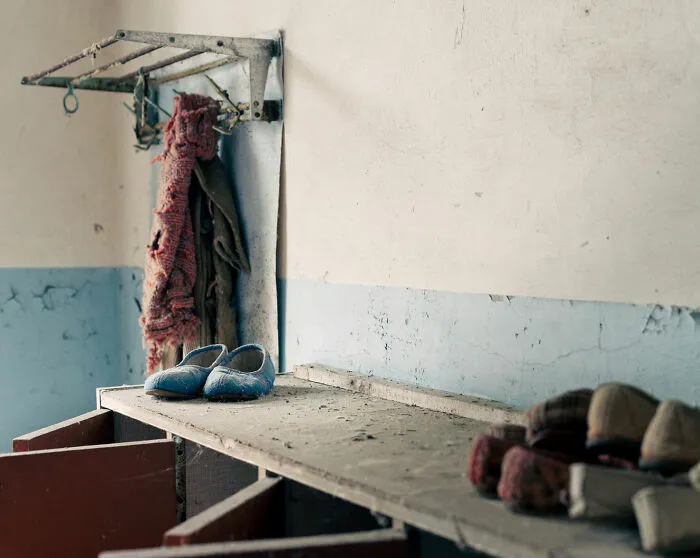
What basketball, wrestling, or boxing was to the boys, ballet was to the girls. Surely one or another little girl in Pripyat dreamed of the big stage in the Moscow State Ballet.
4points
#36 He Is Everywhere
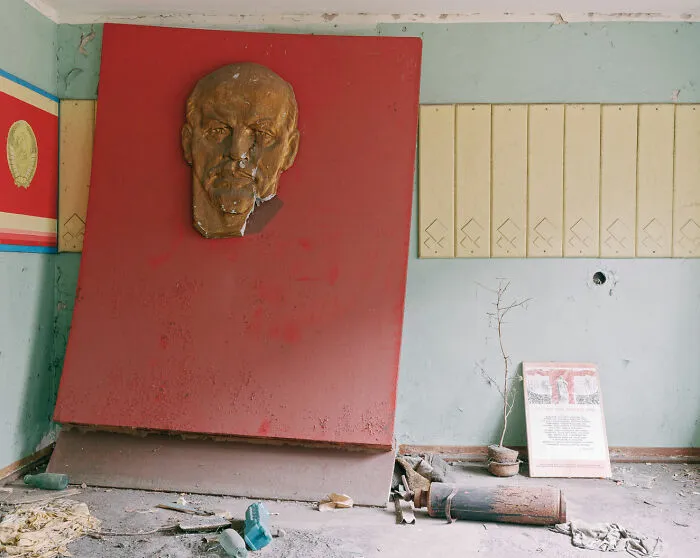
When talking so much about the Soviet Union, a picture of Vladimir Ilyich Lenin must—of course—not be missing: like this one here in a small suburb, there are still numerous portraits of Lenin that can be found in all types and forms of representation and design.
4points
#37 Around The World
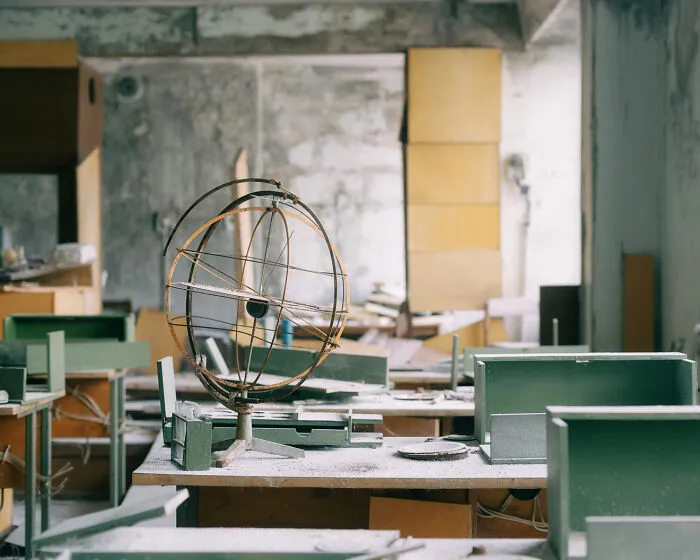
This is just an old globe—or what’s still left of it—in a school building in the exclusion zone. But: can you imagine what it once was used to teach?
From the mid-1920s, the official political ideology of the Soviet Union—and later, that of the entire Eastern Bloc—was Marxism-Leninism. Stalin defined that ideology as "Marx’s doctrine further developed by Lenin under the new conditions of the class struggle in the epoch of imperialism and the proletarian revolutions." Capitalism, and with it the capitalist western powers, were the declared class enemy—I cannot imagine what strange theories and propagandistic wisdom the teachers taught the children in geography lessons back then.
3points
#38 Energetik
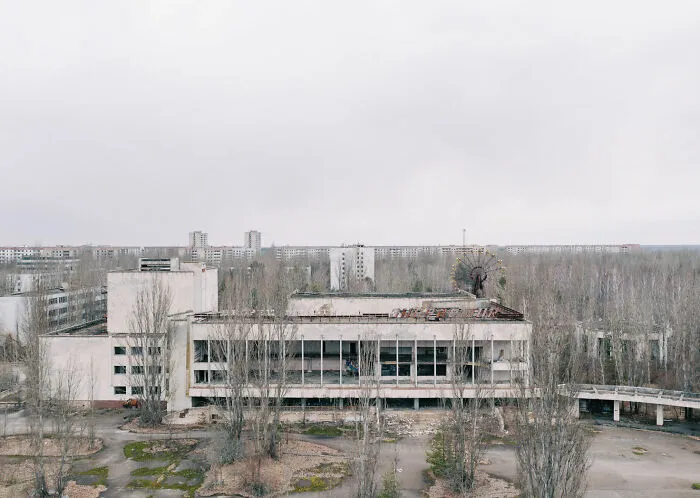
A view on the Energetik Palace of Culture and Sports, which is located directly on the main square of Pripyat, where Lenin Alley and Kurchatova Street meet. The word Energetik was intended as a play on words and should stand for energy through culture and life and sport and nuclear power.
3points
#39 Puzzle
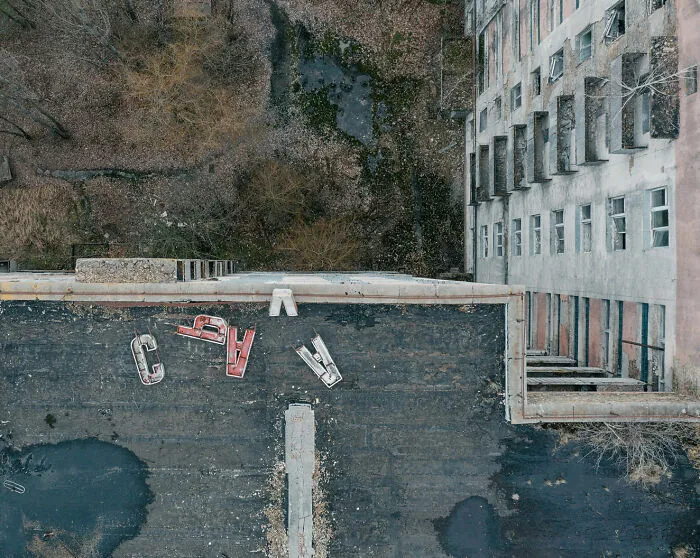
One can still find these old letters on a skyscraper in Pripyat. I don’t know what text they once presented, but I like the view on the building, and I think they`re quite interesting because they look like toy letters on this picture, even if they are twice a person's size in reality.
2points
#40 Side By Side
In the kindergartens, the dormitories were always full. It seems interesting to me that different kindergartens had different bed models—because the variety of furniture in the Soviet Union was not something of great importance, especially in public facilities.
1point
