



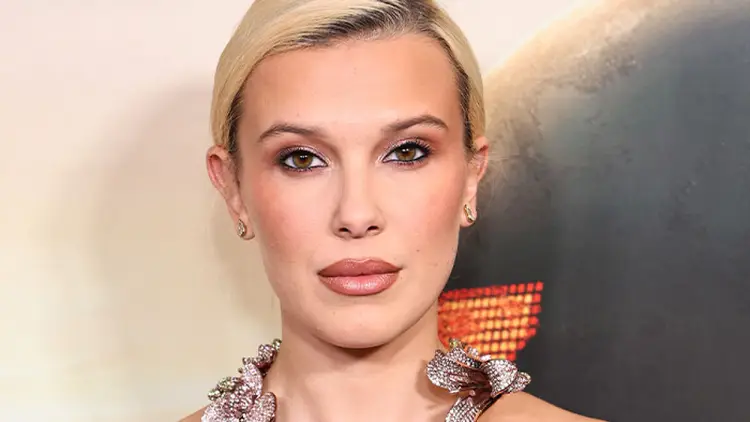


Hollywood is often sold as a dreamland, but behind the bright lights and glitzy lifestyle lies a much darker reality.
For girls in particular, fame often comes with an added burden - inappropriate attention, invasive commentary, and premature adultization from the public and media alike.
From magazine countdowns anticipating “legal” birthdays to grown men openly commenting on teenage bodies, some of Hollywood’s most recognizable young faces were treated less like children and more like commodities.
Stars like Jennifer Love Hewitt and Natalie Portman experienced this long before social media existed, while a new generation, including Millie Bobby Brown and Billie Eilish, has faced the same disturbing patterns in modern times.
Here are 25 former child stars who got brutally honest about facing exploitation and inappropriate attention at disturbingly young ages.
#21 Kate Moss
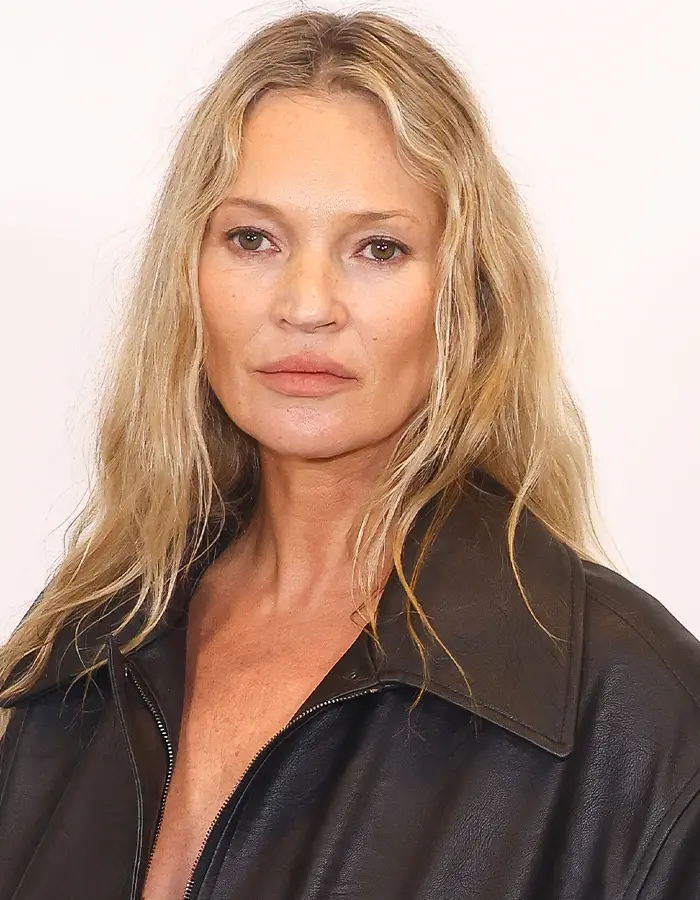
Kate Moss entered the fashion industry after being discovered at just 14 and was quickly thrust into a world that blurred professional boundaries and, at times, took undue advantage of her.
As her career took off, Moss found herself repeatedly placed in situations that left her feeling uncomfortable, exposed, and powerless.
One of the most traumatic experiences occurred when she was only 15 years old during a photoshoot for an undergarment catalogue.
In a 2022 interview cited by The Evening Standard, Moss recalled a male photographer instructing her to remove her top and then her br*.
“I could feel there was something wrong,” she said, explaining that she grabbed her belongings and ran away.
Moss has also spoken candidly about how the industry repeatedly pushed her beyond her comfort zone.
She admitted that she never wanted to pose unclothed and would “cry a lot” before such photoshoots.
In some cases, photographers allegedly threatened her career, warning that refusing to comply could cost her future jobs.
Even those she trusted were reportedly not exempt from applying pressure, reinforcing how deeply ingrained exploitation was within the system.
During a 2024 appearance on Bella Freud’s podcast Fashion Neurosis, Moss revisited a shoot for The Face magazine that intensified her insecurities.
“At a very young age, I started working, and I started doing pictures t*pless,” she said, admitting she was deeply self-conscious about a mole on her chest.
“I hated it so much, I would cry… I really didn’t want to do it.”
Even as she grew older and became one of the most recognizable supermodels in the world, the power imbalance remained.
Moss later described her experience filming the now-famous 1992 Calvin Klein underwear campaign with Mark Wahlberg as objectifying.
She was only 18 at the time and told the BBC in 2022 that she felt “vulnerable and scared,” adding, “I think they played on my vulnerability.”
4points
#22 Emily Ratajkowski
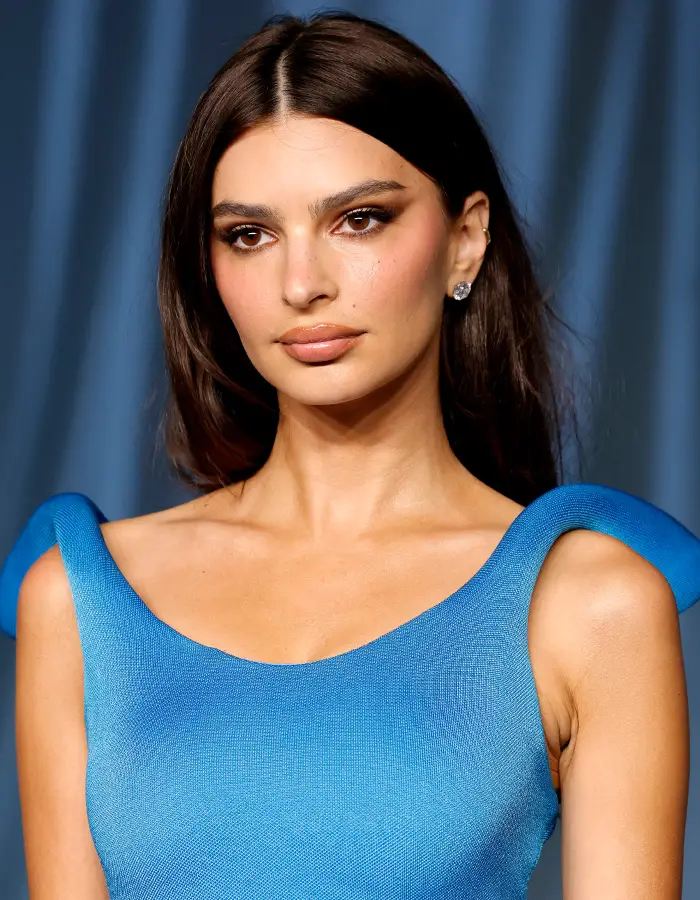
Emily Ratajkowski has spoken openly about being s*xualized from an alarmingly young age, long before she had the tools to understand or protect herself.
In her 2021 book of essays, My Body, the model and author unpacked how her relationship with her appearance was shaped early on, beginning as far back as middle school.
Ratajkowski revealed that she developed at a young age, which made her hyper-aware of how adults perceived her body.
“I developed very young, so I was more conscious of s*xuality and being a pretty girl-woman,” she told the Los Angeles Times in 2015.
“Having men look at you and really having no idea what sx is, is a very strange experience.”
In her book, she also described how her sense of self-worth became closely tied to her appearance within her own household.
“Beauty was a way for me to be special. When I was special, I felt my parents’ love for me the most.”
Ratajkowski entered modeling at just 14 and has since described her early career as that of a “professional mannequin,” where consent often felt conditional.
In interviews, including one with Vogue, she explained that as a teenager, she learned her value was measured by how much she could “please” the men in positions of power.
Saying no, she said, often meant being labeled “difficult” and risking future work.
One of the most public examples of that power imbalance came in 2013, when she appeared in Robin Thicke’s Blurred Lines music video.
The video, which featured Ratajkowski dancing completely bare while the male performers remained clothed, became one of the most talked-about releases of the decade and helped launch her career.
However, in My Body, she later alleged that Thicke groped her without consent during filming, an experience she said she felt unable to speak about at the time out of fear of derailing her career.
In her essay Buying Myself Back, Ratajkowski detailed another traumatic experience from a 2012 photoshoot with photographer Jonathan Leder, when she was 20.
She alleged that she was pressured into drinking and later a**aulted during the encounter.
Today, Ratajkowski has become a vocal advocate for models owning their image rights and reclaiming agency in an industry she argues is designed to strip young women of power.
4points
#23 Mischa Barton

In a 2021 personal essay for Harper’s Bazaar U.K., Mischa Barton revealed that she became a s*x symbol at just 13, writing, “The truth is that s*xuality has always been a component of my career. Even from a young age, I was s*xualized.”
She also admitted feeling intense pressure to lose her virginity early, driven not only by the industry but by society at large.
“After being pursued by older men in their thirties, I eventually did the deed,” Barton wrote. “I felt so much pressure, not just from him, but from society in general.”
In her essay, Barton reflected on how speaking up often came at a cost.
After opening up about her experiences, she said she was dismissed and publicly labeled a “nightmare” to work with.
Even her mother, whom Barton credits with trying to protect her, was criticized and described as “annoying,” with industry figures warning that Barton’s career would suffer if her mother remained involved.
In a 2005 interview with Harper’s Bazaar, then known as Harpers & Queen, Barton revealed that when she was 19, her then-publicist encouraged her to sleep with a 29-year-old Leonardo DiCaprio to advance her career.
“Go and sleep with that man,” the publicist allegedly told her, to which Barton replied that she wasn’t interested in older men.
Reflecting on her time on The O.C., Barton shared in a separate interview that there was “general bullying” from men in positions of power and that she often felt “unprotected” on set.
Barton also revisited her early film Pups, recalling that the role forced her into deeply uncomfortable territory before she was emotionally prepared.
She described having her first on-screen and real-life kiss in front of a full crew, and noted that the film’s popularity overseas led to her being labeled a “s*x symbol in Asia” while she was still just 13.
In 2017, Barton became involved in a landmark legal battle after an ex-boyfriend attempted to sell intimate videos and photos of her, which she alleged were recorded without her consent.
Calling the attempt “painful,” she successfully obtained a court order blocking their release and went on to publicly advocate for stronger revenge p*rn laws.
3points
#24 Ariel Winter
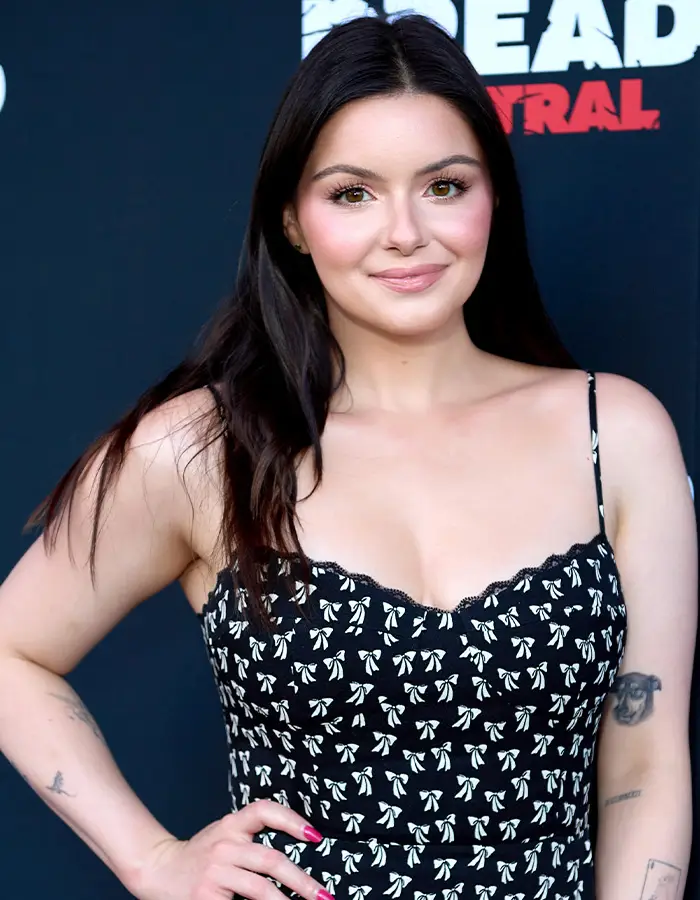
Ariel Winter quite literally grew up in front of the world.
She was only 11 years old when she was cast as Alex Dunphy on Modern Family, a role she played for more than a decade as the hit sitcom ran from 2009 to 2020.
As Winter transitioned from childhood into adolescence on-screen, she became the target of relentless body-shaming and inappropriate scrutiny for going through completely normal changes associated with puberty.
She revealed that the objectification of her image wasn’t limited to headlines or red carpet commentary, it followed her into her personal life as well.
“I don’t wanna say too much about it, but by the time I was on a laptop and cell phone, I was getting inappropriate messages from older men,” she shared in an interview, adding that the experience became a major source of trauma.
Having worked in Hollywood since she was just four years old, Winter said she became “familiar with male predators” far earlier than any child should.
“The experiences I had in person and online as a child have affected me so deeply that I’ve had to go to therapy for it,” she explained.
“The movie and TV industry is a dark place.”
As she went through puberty, Winter said people began seeing her “as an object” rather than as a child actor, something she found extremely difficult to process.
In a 2016 Good Morning America interview, Winter expressed her frustration with how the media fixated on her appearance rather than her work.
“Walking down the red carpet and seeing the photos afterward and having every headline be about my cleavage, not about my talent. It was really disappointing that what we were talking about was the way people look, not what they were actually there for.”
She has also emphasized that public figures, especially young ones, are not immune to the harm caused by constant commentary.
She shared, “People don’t think that I read comments. And I guess it maybe seems like we don’t have feelings… but we’re really not invincible.”
2points
#25 Alyson Stoner
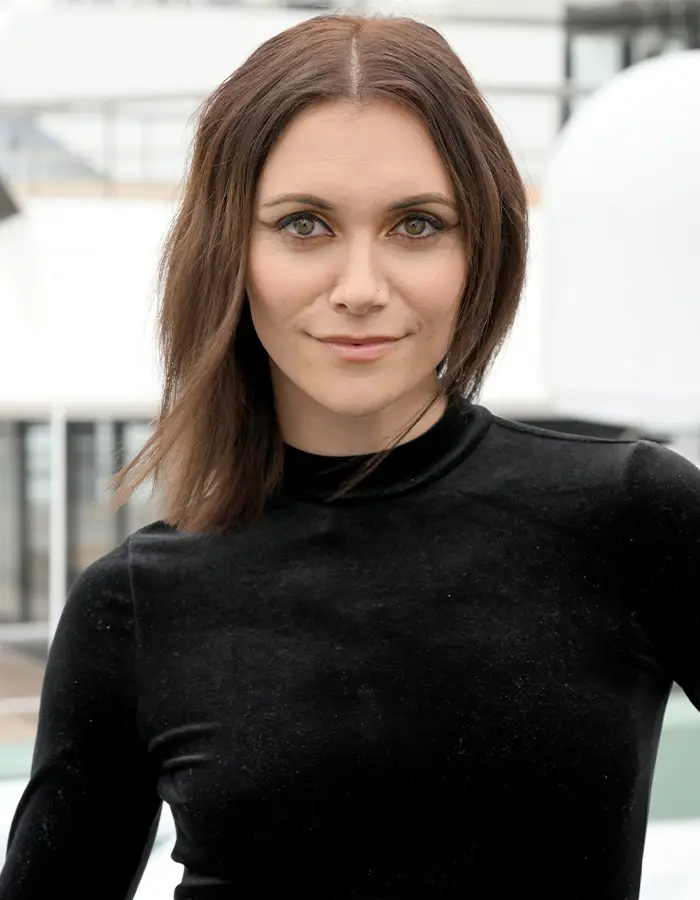
In a powerful video essay for People, former Disney star Alyson Stoner opened up about the harassment and systemic harm she experienced while growing up in the entertainment industry.
Reflecting on her childhood in Hollywood, Stoner stated bluntly, “Nothing was designed for me to end up normal. Stable. Alive.”
As Stoner entered puberty, she said her body became a focal point of adult scrutiny, shaping not only how she was perceived but how her career unfolded.
“The onset of puberty has turned my waist and bust into the main objects of attention and inspection,” she explained.
“This will also categorize my career trajectory.”
To cope, Stoner revealed she learned to dissociate, describing survival as becoming emotionally “numb” while maintaining the image of a cheerful, high-functioning child performer.
Alyson has since emerged as one of the most articulate advocates for child star reform, frequently discussing what she calls the “toddler-to-trainwreck pipeline.”
In her viral essay on the subject, she revealed that her body was treated as a “brand” from the age of six, with her value tied to being “palatable” and “malleable” for adult executives.
As a high-profile child dancer, including appearances in Missy Elliott music videos, Stoner has also spoken about the hyper-s*xualization embedded in the dance industry.
She recalled being taught adult movements and expected to perform with a level of sensuality she did not yet understand.
On her podcast, Dear Hollywood, she further revealed that auditions often included inappropriate questions about her body and maturity, reinforcing the pressure to perform a version of herself shaped by adult expectations.
Through her platform, Movement Genius, Stoner now campaigns for legislative reform to better protect child performers.
She has criticized existing safeguards like the Coogan Law for focusing solely on finances while failing to address psychological and physical safety.
In a separate op-ed titled The Toddler-to-Trainwreck Industrial Complex, she detailed the long-term effects of child labor and the systemic failures that continue to endanger young talent.
Revisiting her career in her People essay, Stoner emphasized that her story is not an exception, but part of a broader pattern.
“I didn’t mention the s*xual harassment, stolen IP and money, paparazzi, psychological impact of the new influencer landscape, toxic power plays, and what actually happened on all of those sets,” she wrote.
“If we disrupt and heal the toddler-to-trainwreck pipeline, we won’t need another cautionary memoir.”
1point