



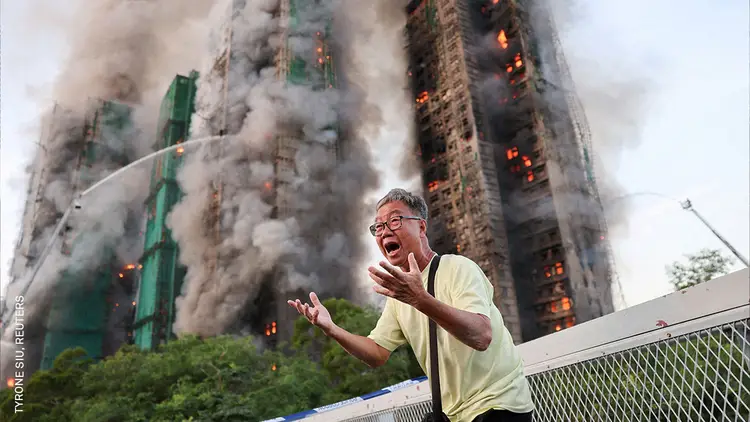

Every year, the World Press Photo contest brings together some of the most powerful and thought-provoking images from across the globe. Celebrating the very best in photojournalism and documentary photography, the competition highlights stories that might otherwise go unnoticed, capturing moments of conflict, resilience, injustice, and humanity in a way that words alone often cannot.
Founded in 1955 in the Netherlands, World Press Photo has grown into one of the most respected platforms for visual storytelling, with exhibitions reaching millions of people worldwide. Its mission goes beyond showcasing striking imagery, it aims to deepen understanding, encourage dialogue, and inspire action through authentic and impactful reporting.
This year’s winners once again prove the power of photography to inform, challenge, and inspire. Take a look at the Photo of the Year and the finalists below.
#21 Africa, Singles: Joburg Ballet School By Ihsaan Haffejee, For Groundup
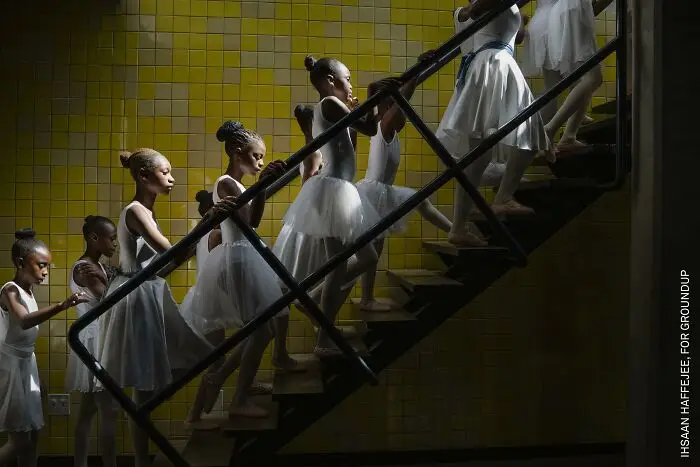
In apartheid South Africa, ballet was the preserve of white culture, inaccessible to people of color. Today, the Joburg Ballet School offers subsidized training to children from historically disadvantaged backgrounds, with locations in Soweto, Alexandra, and Braamfontein. Parents describe seeing their children learn ballet as something they never thought possible.
About the photo:
"Young dancers from the Joburg Ballet School backstage at the Soweto Theatre during their year-end performance. Soweto, South Africa, 7 December 2025."
"Young dancers from the Joburg Ballet School backstage at the Soweto Theatre during their year-end performance. Soweto, South Africa, 7 December 2025."
11points
#22 West, Central, And South Asia, Stories: “I’m Afraid”: Afghan Women Face Us Aid Cuts By Elise Blanchard, For Time
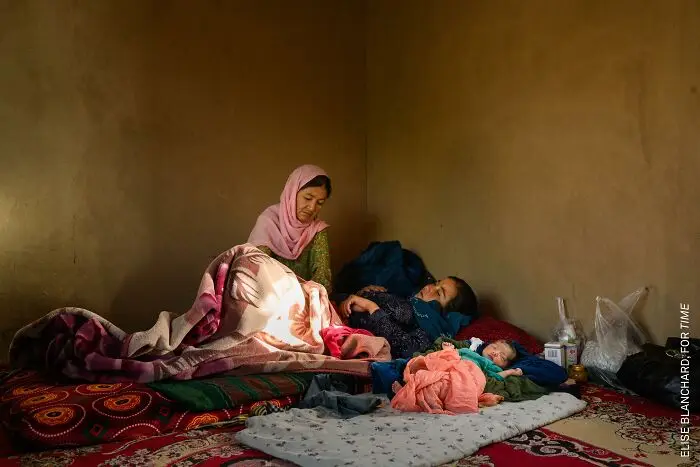
In Afghanistan’s remote Daikundi province, US aid cuts have left pregnant women without access to care, forcing many to give birth at home in a country with one of the world’s highest maternal mortality rates. The cuts have led to the suspension or closure of 422 health facilities nationwide, including small community clinics staffed by a single midwife, many of whom are now working without salary or supplies. This crisis compounds an already critical situation under Taliban rule; girls are banned from education beyond primary school, preventing a new generation from training as health workers.
About the photo:
"Gulshaman visits Fatemah, whose daughter Yasmin was born the previous day. Waras, Shahristan district, Daikundi province, Afghanistan, 27 July 2025."
"Gulshaman visits Fatemah, whose daughter Yasmin was born the previous day. Waras, Shahristan district, Daikundi province, Afghanistan, 27 July 2025."
9points
#23 South America, Stories: Manacillos: A Return To Life By Ever Andrés Mercado Puentes
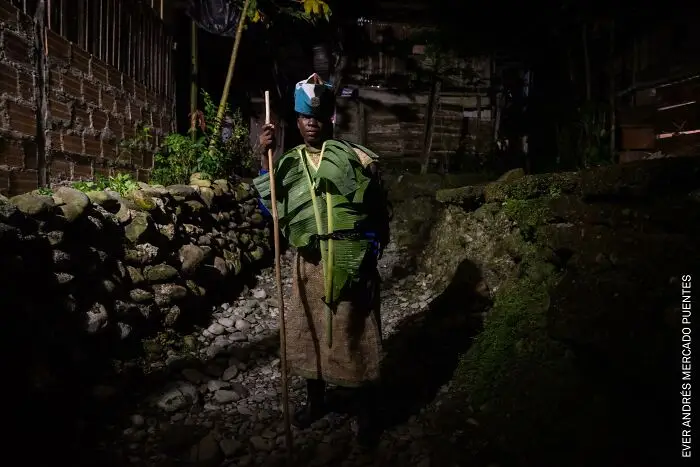
Juntas is an Afro-descendant community deep in the Colombian Pacific rainforest, accessible only by a ten-hour boat journey up the Yurumanguí River. Settled by descendants of enslaved Africans brought to the region in the 1700s, the community faces threats from illegal mining, logging, and armed conflict. Fiesta de los Manacillos is a traditional ritual enacted by the community during Holy Week activities that blends Catholicism with African spiritual traditions. More than just a celebration, the festival is a homecoming for a diaspora, representing a profound affirmation of cultural resilience.
About the photo:
"Eider Calimeño is one of 33 men who act as Matachín: those who commit to participating in the Manacillos. This responsibility is inherited from close male relatives and honors deceased or displaced ancestors. Juntas, Buenaventura, Colombia, 29 March 2024."
"Eider Calimeño is one of 33 men who act as Matachín: those who commit to participating in the Manacillos. This responsibility is inherited from close male relatives and honors deceased or displaced ancestors. Juntas, Buenaventura, Colombia, 29 March 2024."
9points
#24 North And Central America, Long-Term Projects: Mexico, A Changing Climate By César Rodríguez, Norwegian Red Cross, Snca, The New York Times
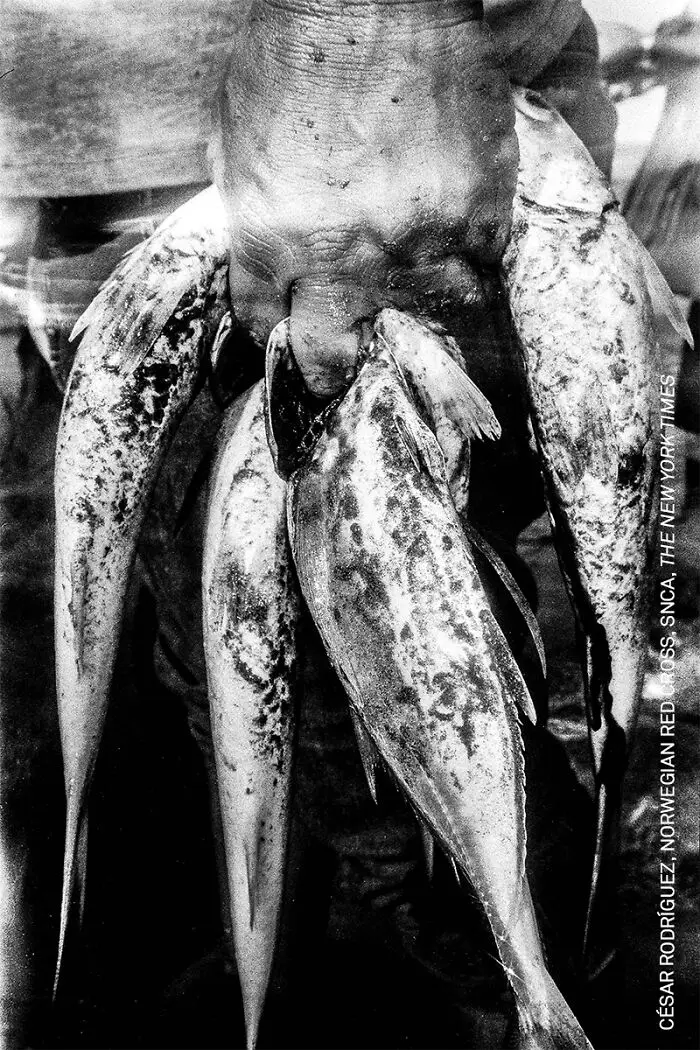
Mexico is especially vulnerable to climate extremes, with 52% of its territory situated in arid or semi-arid zones. Over the last two decades, environmental disasters have internally displaced approximately 2.7 million people, a figure projected to reach up to 8 million by 2050. This project documents the enormous cost of these changes on a human scale: from the rapid erosion of Tabasco’s coastlines, where sea levels are rising three times faster than the global average, to the systemic water scarcities in Monterrey and the State of Mexico, where renewable water availability has plummeted by 81% since 1950.
About the photo:
"A portion of Enrique’s catch. Fishing is becoming increasingly difficult in the area as beaches erode and changing conditions in the sea drive fish species elsewhere, transforming the marine ecosystem of the Gulf of Mexico. Las Barrancas, Veracruz, Mexico, 12 March 2025."
"A portion of Enrique’s catch. Fishing is becoming increasingly difficult in the area as beaches erode and changing conditions in the sea drive fish species elsewhere, transforming the marine ecosystem of the Gulf of Mexico. Las Barrancas, Veracruz, Mexico, 12 March 2025."
9points
#25 North And Central America, Singles: Columbia University Pro-Palestine Protests By Alex Kent, For The New York Times
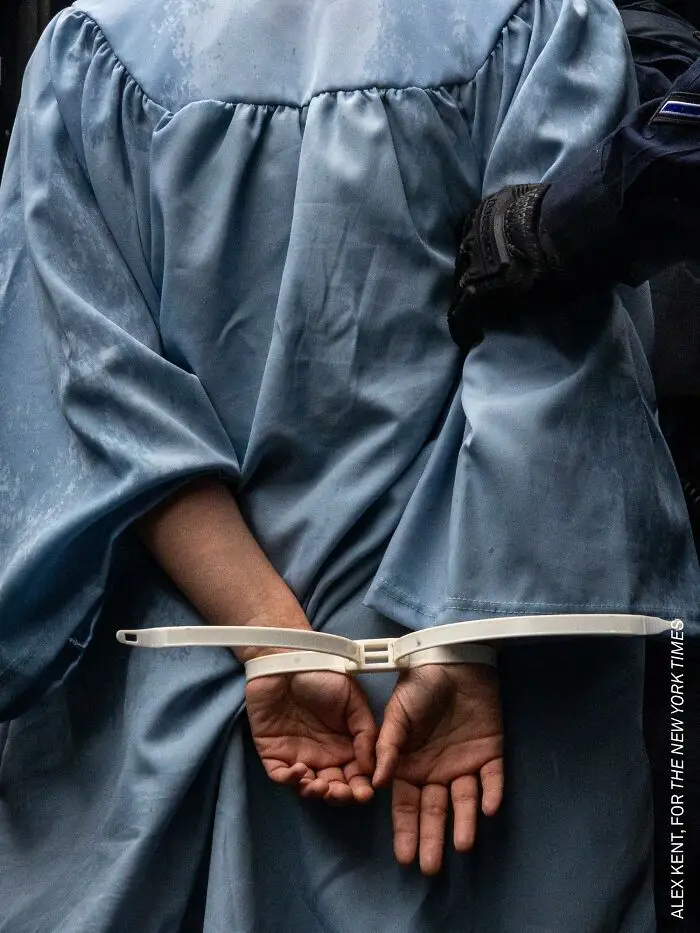
Facing intense political pressure to limit pro-Palestine demonstrations, many US universities became focal points in a national conflict over free speech and institutional independence. At Columbia University, the Trump administration suspended $400 million in federal funding to force a crackdown on campus protests, causing severe administrative upheaval. The students were caught in this institutional crossfire, but many members of the graduating class of 2025 as well as alumni chose to exercise their first amendment rights in protests and demonstrations.
About the photo:
"Barnard College alumna Jesse Pearce is arrested outside Columbia University’s commencement ceremony. Along with current students, alumni protested the institution’s ongoing financial ties to Israel. New York City, New York, United States, 21 May 2025."
"Barnard College alumna Jesse Pearce is arrested outside Columbia University’s commencement ceremony. Along with current students, alumni protested the institution’s ongoing financial ties to Israel. New York City, New York, United States, 21 May 2025."
9points
#26 Africa, Stories: Madagascar’s Gen z Protests By Luis Tato, Agence France-Presse
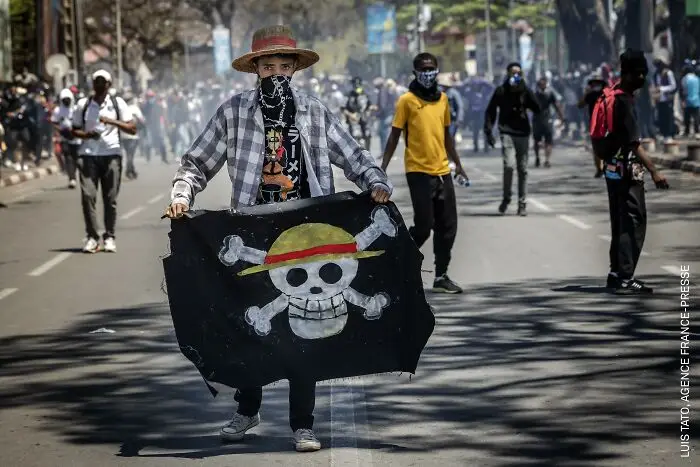
In September 2025, students began protesting across Madagascar over failing public services, corruption, and economic hardship. When President Andry Rajoelina dissolved his government but refused to resign, demonstrations intensified. On 11 October, the CAPSAT military unit defected to join the protesters, the same force that had installed Rajoelina in a 2009 coup. Days later, the military seized power, promising elections within two years. In a pattern seen across Gen Z uprisings in Bangladesh, Nepal, and Bulgaria, Madagascar’s youth forced regime change, but were excluded from shaping the political transition that followed.
About the photo:
"A student holds the flag adopted by Gen Z protesters globally. The symbol comes from the Japanese manga One Piece, in which pirates stand up to corrupt rulers. Antananarivo, Madagascar, 9 October 2025."
"A student holds the flag adopted by Gen Z protesters globally. The symbol comes from the Japanese manga One Piece, in which pirates stand up to corrupt rulers. Antananarivo, Madagascar, 9 October 2025."
9points
#27 West, Central, And South Asia, Long Term Projects: Hijacked Education By Diego Ibarra Sánchez
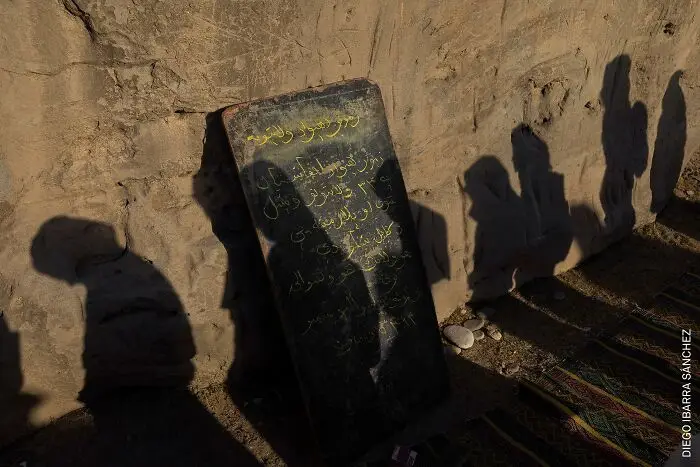
Across the world, war, extremism, and displacement deny children the right to education. Schools are destroyed, teachers killed or forced to relocate, textbooks burned, and classrooms turned into barracks. The UN estimates that 85 million of the 234 million school-age children affected by conflict worldwide have no access to education at all. The consequences extend far beyond the classroom, impacting physical, emotional, social, and cognitive development. Since 2011, the photographer – son of a teacher and father of an 11-year-old – has documented this crisis across nine countries, from Western and South Asia, to Europe and South America.
About the photo:
"Girls attend an informal open-air school in Chaparhar District. The ban on girls attending school continues to undermine the right to education, affecting nearly 2.2 million students. Afghanistan, 12 November 2025."
"Girls attend an informal open-air school in Chaparhar District. The ban on girls attending school continues to undermine the right to education, affecting nearly 2.2 million students. Afghanistan, 12 November 2025."
8points
#28 West, Central, And South Asia, Singles: A Daughter’s Grief In Kashmir By Yasir Iqbal, Outlook India Magazine
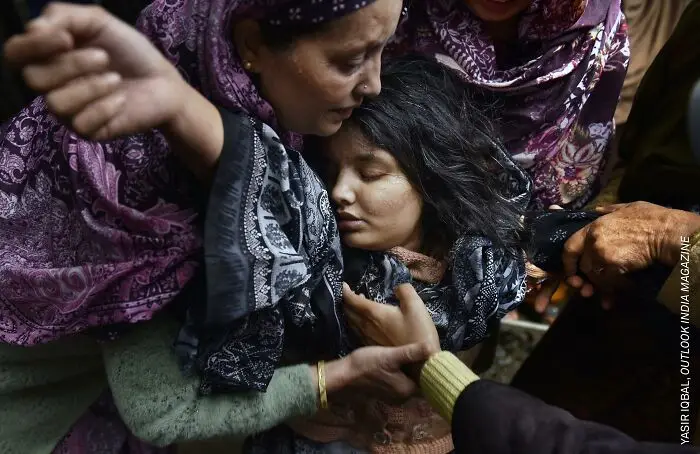
The Kashmir region has been contested between India and Pakistan since the 1947 partition of British India, a territorial dispute that has fueled decades of conflict. On 22 April 2025, an attack on tourists in Pahalgam k***ed 26 people. India blamed Pakistan-backed militant groups and responded with strikes on 7 May. Four days of intense cross-border shelling, drone attacks, and airstrikes followed. Thousands of civilians were displaced, dozens k***ed, and homes and infrastructure along the Line of Control (the de facto border) were destroyed. Widespread international pressure secured a ceasefire on 10 May, averting further escalation between the two nuclear-armed rivals.
About the photo:
"Sanam Bashir (21) collapses with grief at her mother’s funeral. Nargis Begum (45) died from shrapnel wounds after a mortar shell struck while the two were fleeing their home. Uri, Indian-administered Jammu and Kashmir, India, 9 May 2025."
"Sanam Bashir (21) collapses with grief at her mother’s funeral. Nargis Begum (45) died from shrapnel wounds after a mortar shell struck while the two were fleeing their home. Uri, Indian-administered Jammu and Kashmir, India, 9 May 2025."
8points
#29 South America, Singles: Funeral For “The Four Of Malvinas” By Santiago Arcos, For Reuters
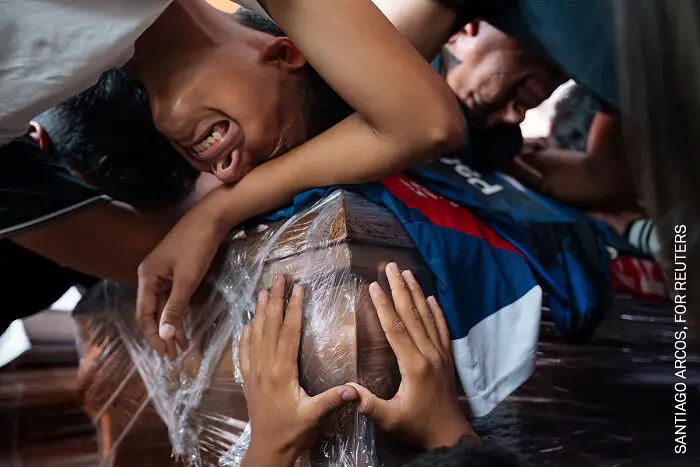
Ecuador’s militarized crackdown on transnational gangs has transformed vulnerable communities into targets for state violence. In December 2024, four Afro-Ecuadorian boys – aged 11 to 15 – disappeared after a neighborhood football practice in Guayaquil. The government initially denied involvement, then attempted to label the children as criminals. The discovery of their burned remains near an air force base shattered the Las Malvinas community and exposed the dangers of security policies that racially profile and criminalize marginalized youth.
About the photo:
"Teammates mourn Ismael Arroyo (15), who was tortured and m***ered by Air Force personnel. Families, neighbors, and residents of Las Malvinas accompanied the coffins from their homes to the cemetery, turning the funeral into a massive public act of grief and protest. Guayaquil, Ecuador, 1 January 2025."
"Teammates mourn Ismael Arroyo (15), who was tortured and m***ered by Air Force personnel. Families, neighbors, and residents of Las Malvinas accompanied the coffins from their homes to the cemetery, turning the funeral into a massive public act of grief and protest. Guayaquil, Ecuador, 1 January 2025."
8points
#30 West, Central, And South Asia, Stories: A Syrian City Rebuilds, Still Divided By Nicole Tung, Vii Photo, For The New York Times
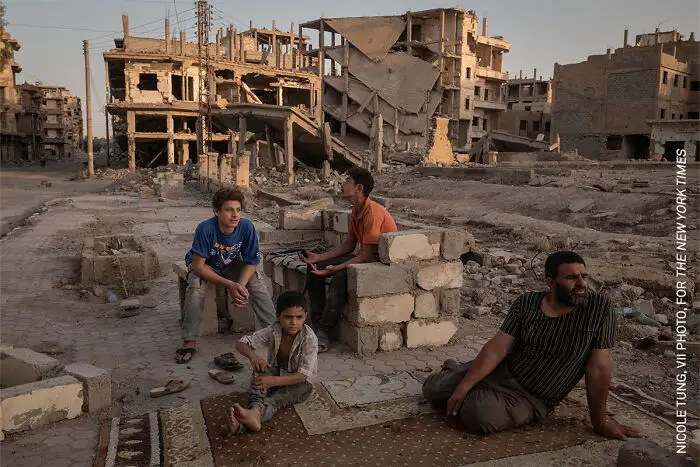
Long neglected by the Syrian state and one of the first cities to rise up in the 2011 revolution, Deir al-Zour endured years of siege, bombardment, and successive occupation by government forces, ISIS, and Kurdish-led fighters. The conflict left around 75% of the city’s infrastructure damaged or destroyed. In 2025, the Euphrates River marked a divide; the government controlled one bank, the Kurdish-led Syrian Democratic Forces (SDF) the other, complicating daily movement, trade, and access to services. For those who remained, and those who returned, rebuilding continued regardless.
About the photo:
"Abdelatif Daham Al Hummada (right) sits with his sons and nephew on the street outside their heavily damaged home, where the family often sleeps. Deir al-Zour, Syria, 20 August 2025."
"Abdelatif Daham Al Hummada (right) sits with his sons and nephew on the street outside their heavily damaged home, where the family often sleeps. Deir al-Zour, Syria, 20 August 2025."
7points
#31 West, Central, And South Asia, Singles: Aid Emergency In Gaza By Saber Nuraldin, Epa Images
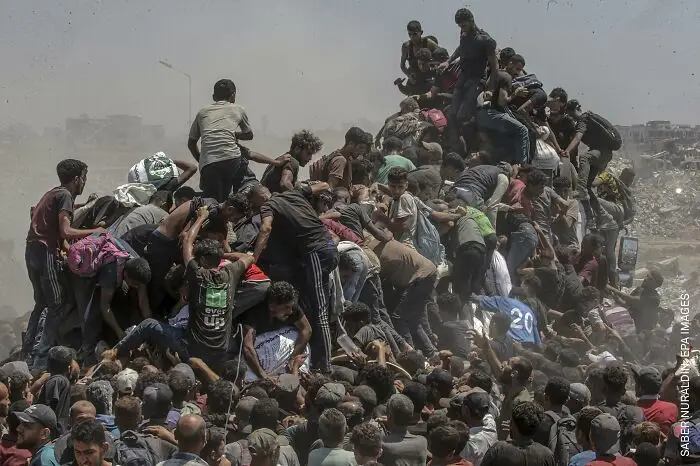
In 2025, famine took hold amid what a UN Commission has concluded is a genocide in Gaza, which Israel disputes. Israeli authorities imposed a complete aid blockade in March, a tactic described by humanitarian organizations as the weaponization of starvation. The UN reports that between 27 May and 31 July at least 1,373 Palestinians seeking food were k***ed at or near aid distribution sites. Despite a ceasefire agreement in October, more than 75% of the population still face hunger and malnutrition. The photographer was born in Gaza and has documented life there since 1997.
About the photo:
"Palestinians climb onto an aid truck as it enters the Gaza Strip via the Zikim Crossing in an attempt to get flour, during what the Israeli military called a 'tactical suspension' in operations to allow humanitarian aid through. 27 July 2025."
"Palestinians climb onto an aid truck as it enters the Gaza Strip via the Zikim Crossing in an attempt to get flour, during what the Israeli military called a 'tactical suspension' in operations to allow humanitarian aid through. 27 July 2025."
7points
#32 Europe, Long-Term Projects: Extramuros By William Keo, La Bibliothèque Nationale De France, Die Zeit
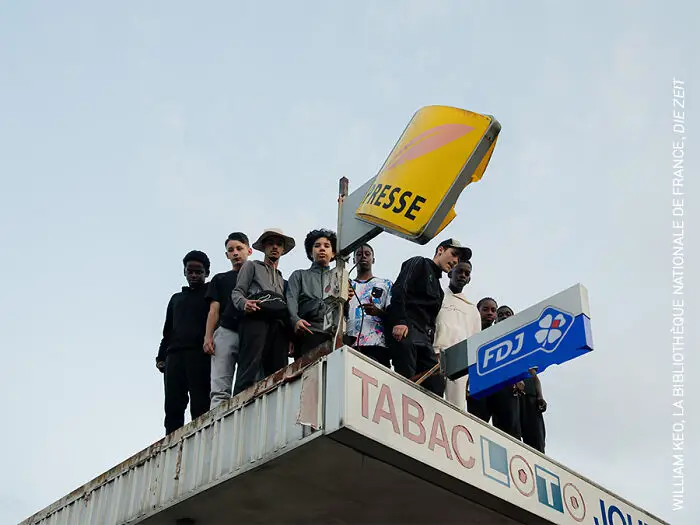
In the peripheral neighborhoods of France’s banlieues, migrant families navigate postcolonial legacies, higher rates of unemployment, and structural inequality. France’s integration system requires migrants to culturally assimilate while prejudice persists, leaving communities caught between exclusion and belonging. Yet these communities are also spaces of creativity and resilience that shape contemporary French culture. Documenting his friends and family, the photographer – born to Cambodian refugees – portrays lives in which community and solidarity are the clearest markers of identity.
About the photo:
"Young men gather on a rooftop in the Briques Rouges, one of Verneuil-sur-Seine’s largest social housing projects. France, 21 July 2023."
"Young men gather on a rooftop in the Briques Rouges, one of Verneuil-sur-Seine’s largest social housing projects. France, 21 July 2023."
6points
#33 Africa, Stories: Sudan’s War: A Nation Trapped By Abdulmonam Eassa, For Le Monde
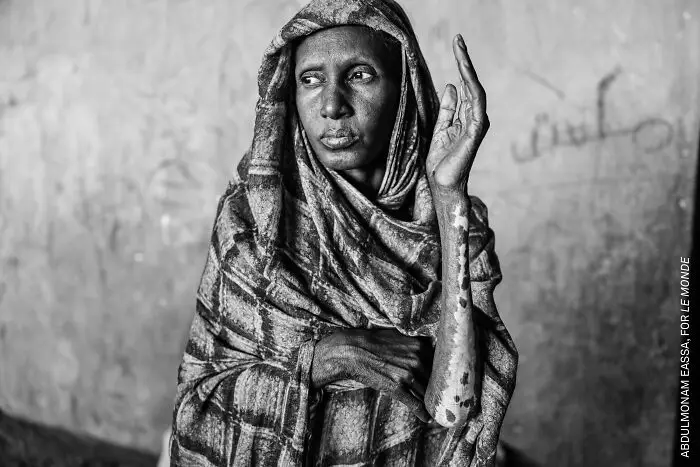
After a 2019 revolution overthrew decades of dictatorship, Sudan’s democratic hopes were crushed by a military coup in 2021. Two years later, the army and paramilitary forces turned on each other, beginning a war that has spiraled into one of the world’s worst humanitarian crises. As famine spreads and essential services collapse, foreign powers continue to fuel the conflict with weapons. Over 13 million people have been displaced, and at least 150,000 killed. The UN reports that civilian killings more than doubled in 2025 compared with the previous year.
About the photo:
"Alhaja Abdallah, a displaced woman from Bara, shows her scars from a fire at Al-Mohad camp. Paramilitary forces have set multiple displacement camps ablaze. El-Obeid, Sudan, 10 December 2025."
"Alhaja Abdallah, a displaced woman from Bara, shows her scars from a fire at Al-Mohad camp. Paramilitary forces have set multiple displacement camps ablaze. El-Obeid, Sudan, 10 December 2025."
5points
#34 Asia-Pacific And Oceania, Stories: The Last Dolphin Hunters By Matthew Abbott, Oculi, For The New York Times
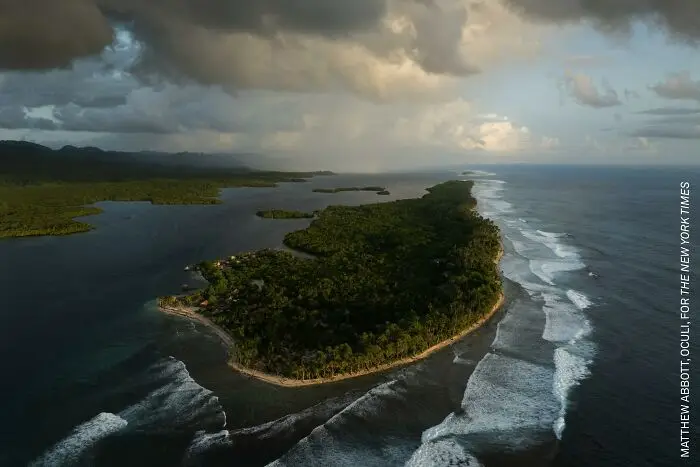
Fanalei, a low-lying island in the Solomon Islands, stands at a crossroads between contested tradition and a changing economy. For generations, dolphin hunting provided food and income, with dolphin teeth used as ritual currency for bride-price and other forms of local exchange. Today, as rising sea levels displace the community and threaten its future, seaweed farming is providing an economic alternative to the seasonal hunt. As seaweed farming expands, fewer people are available for the collective efforts upon which dolphin hunting depends. This story captures a community reshaped by environmental pressure and shifting traditions.
About the photo:
"Fanalei Island has been reduced to a narrow strip of sand and coral by rising seas. Residents believe the settlement, once home to dozens of families, will become uninhabitable in the near future. South Malaita, Solomon Islands, 6 February 2025. "
"Fanalei Island has been reduced to a narrow strip of sand and coral by rising seas. Residents believe the settlement, once home to dozens of families, will become uninhabitable in the near future. South Malaita, Solomon Islands, 6 February 2025. "
4points
#35 Asia-Pacific And Oceania, Long-Term Projects: Motherhood At 60 By Wu Fang

After the death of her only child, retired doctor Sheng Hailin sought in vitro fertilization treatment (IVF) and gave birth to twin girls named Zhizhi and Huihui at the age of 60. This story follows Sheng Hailin’s family over 15 years, offering a portrait that is both extraordinary and mundane, but always filled with enduring love. In China, Sheng Hailin is only one of many shīdú, parents who have lost their only child born during China’s one-child policy era.
About the photo:
"Zhizhi and Huihui attend dance training. The cost of the girls’ education and extracurricular activities placed a significant financial burden on the aging family. Hefei, Anhui Province, China, 23 May 2021."
"Zhizhi and Huihui attend dance training. The cost of the girls’ education and extracurricular activities placed a significant financial burden on the aging family. Hefei, Anhui Province, China, 23 May 2021."
3points
#36 South America, South America, Stories: Those Who Carry The Dead By Eduardo Anizelli, Folha De S.paulo
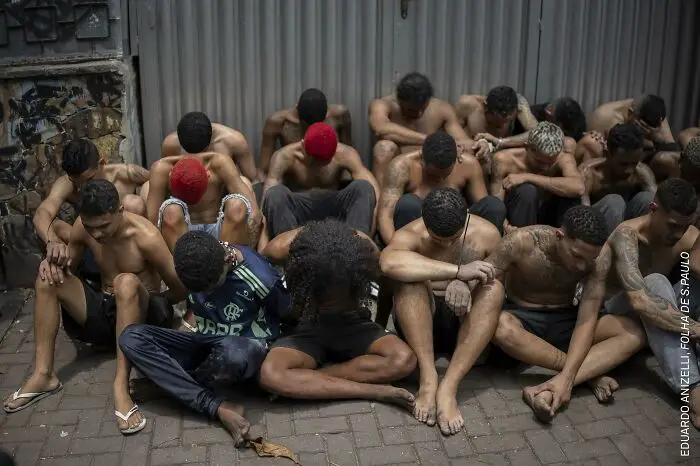
In October 2025, a massive police operation targeting the Comando Vermelho criminal syndicate unfolded in Rio de Janeiro’s Complexo do Alemão and Penha favelas. Deploying a record 2,500 local and military officers, the raid was the deadliest police operation in Brazilian history. Of the 122 who were k***ed, the vast majority were Afro-Brazilians. In the aftermath, authorities failed to deploy forensic teams, forcing the community to bear the physical and emotional weight of carrying their own dead.
About the photo:
"Suspects sit with their heads bowed to protect their identities. Authorities targeted over 50 individuals in the operation, but only a few of these were arrested and none were killed. Rio de Janeiro, Brazil, 28 October 2025."
"Suspects sit with their heads bowed to protect their identities. Authorities targeted over 50 individuals in the operation, but only a few of these were arrested and none were killed. Rio de Janeiro, Brazil, 28 October 2025."
2points
#37 Africa, Singles: When Giants Fall By Halden Krog
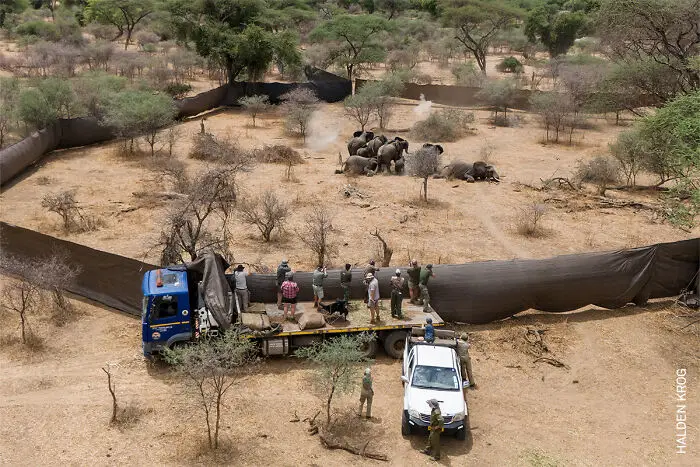
In 2025, the government of Zimbabwe authorized the culling (killing for the purpose of population control) of 50 elephants in the Savé Valley Conservancy. This decision followed a 2024 cull of 200. Authorities say the growing population has surpassed what the land can sustain, worsening human-wildlife conflict as drought drives elephants searching for food and water into closer contact with people. Wildlife organizations dispute claims of overpopulation and condemn culling. They have raised concerns including the fracturing of elephant social structures, and the trauma inflicted on surviving animals, which could increase aggression toward humans.
About the photo:
"Professional hunters shoot a family of elephants identified for culling. Sango Wildlife Conservancy, Savé Valley Conservancy, Zimbabwe, 23 October 2025."
"Professional hunters shoot a family of elephants identified for culling. Sango Wildlife Conservancy, Savé Valley Conservancy, Zimbabwe, 23 October 2025."
1point

