




Each year, the Beaker Street Science Photography Prize brings together striking images that show science at its most visually powerful, from intricate microscopic structures to vast, awe-inspiring cosmic scenes.
Now in its latest edition, the shortlist reveals just how diverse and surprising the scientific world can be when seen through a photographer’s lens. These images have been selected from over 100 entries by judges Dr Kirsten Banks and Marley Butler, and reviewed by scientific editor Simon Grove.
Scroll down to explore the shortlisted images, and head to the website to cast your vote for your favorites.
#21 Ephemeral Blue By Ryan Shan
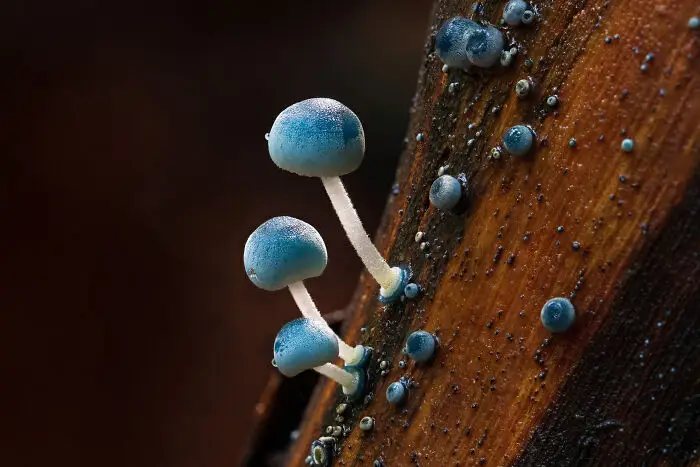
I came across these tiny bursts of blue hidden in the damp forest — Mycena interrupta growing quietly on decaying wood. As a saprotrophic fungus, it plays a vital role in breaking down organic matter and returning nutrients to the ecosystem. Small and fragile, they’re easy to overlook, yet their vivid colour feels almost unreal. In moments like this, decay reveals itself not as an end, but as the beginning of new life.
Report
2points
#22 Coming Home By Shawn Lawrence
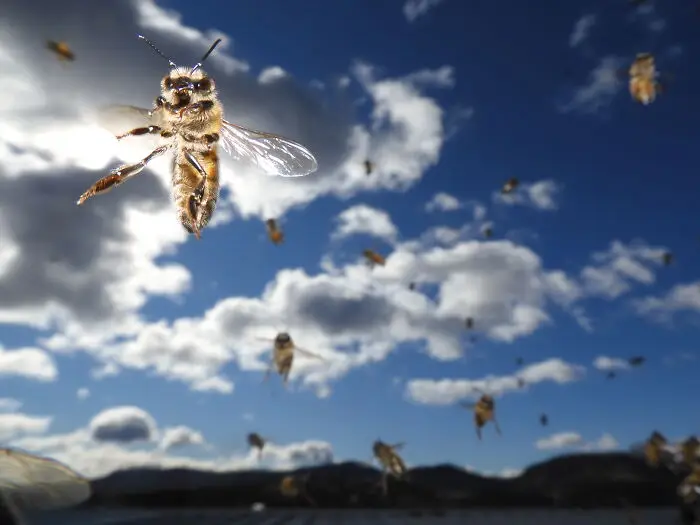
With pollen on her legs and gold on her coat, this worker honeybee (Apis mellifera) returns home to the hive. She receives no applause; her only purpose is to bring home nectar and/or pollen to 'share' with the hive: pollen for the queen's offspring, nectar for co-workers, or for long-term storage to see the colony through lean times. In the Tasmanian/Australian context, she's as much 'stealing' as 'sharing', because honeybees are an introduced species and therefore competing for nectar and pollen with native bees, other native insects and native birds. She does not rest in the triumph of arrival but disappears into the collective, where her efforts become manifest. Coming home is not retreat – it’s a contribution
Report
2points
#23 Endangered By Madi Mclatchie
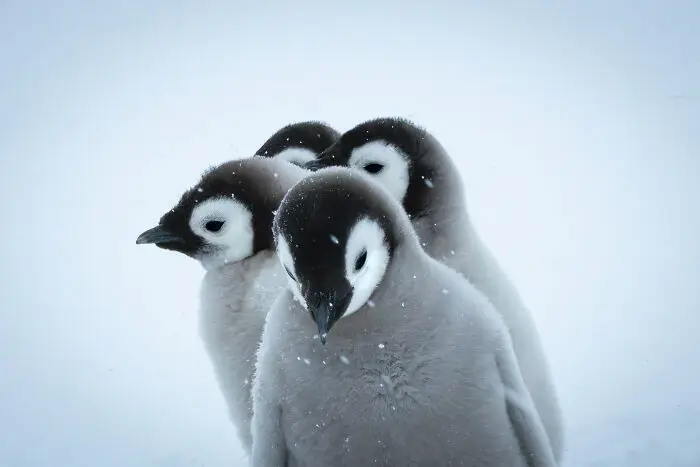
In April 2026, the Emperor penguin was listed as endangered on the IUCN Red List. As sentinels for climate change in Antarctica, the penguins reflect the serious impact humans are having on the environment. Due to the instability of sea ice during the later stages of the chick rearing period, it is becoming common that breeding grounds collapse before fledging time, which is when the chicks are mature enough to take to the seas. If the current trajectory for global warming continues, it is expected that the Emperor penguin population will be halved by the 2080s.
Report
2points
#24 David Nolan, Satellite Trails Over Hobart Skies
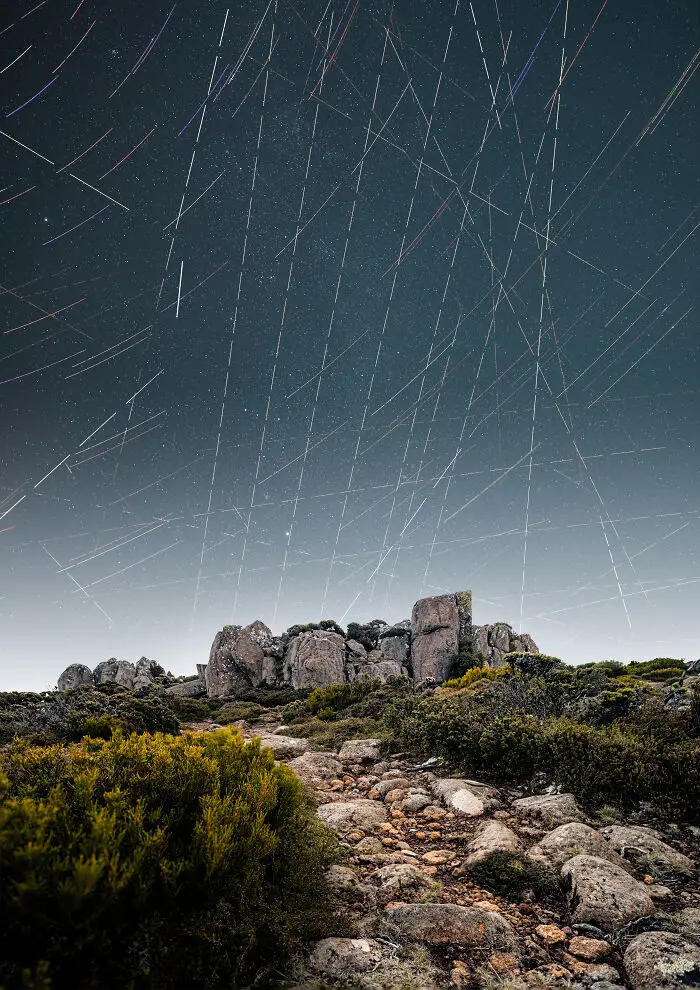
Satellite trails are an increasingly visible sign of human impact on the night sky. As large constellations of satellites expand, long streaks of reflected sunlight appear in astronomical images, interfering with observations and altering the natural darkness of space. This is closely tied to light pollution: while traditional light pollution comes from ground-based sources, satellites introduce a new, moving form of sky brightness. For astronomers and astrophotographers, these trails can obscure faint celestial objects and require complex processing to remove. More broadly, they represent a shift in how humanity occupies even the most remote environments, extending our technological footprint into orbit. Preserving dark skies now depends not only on reducing artificial lighting on Earth, but also on responsible satellite design, regulation, and deployment to minimise their visual and scientific impact.
Report
2points
#25 Dolerite Polygons By Grant Dixon
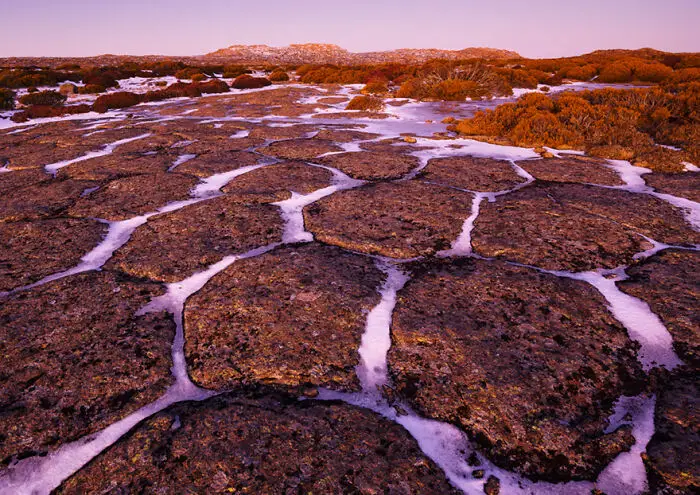
Dolerite is an igneous rock that is unusually widespread in Tasmania and so significantly shapes the landscape. It has been described as ‘the rock that makes Tasmania’. During the breakup of Gondwana, dolerite magma intruded into the crust as subsurface dykes and sills (sheets). As the magma cooled and crystallised, regular vertical cracks propagated through the sills, forming polygonal columns. The characteristic form of many dolerite cliff-lines is due to this. Less common is such a clear exposure of a cross-section of these columns seen here, forming a glaciated pavement on the Ben Lomond plateau, their outline highlighted by a light fall of snow.
Report
2points
#26 Bows And Blows By Saskia Sparshott

A rainy afternoon over the Bicheno Blowhole resulted in a stunning burst of pinky orange, followed by a double rainbow. A rainbow is formed through a multi-step process. Firstly, refraction occurs when sunlight enters a raindrop and then bends as it slows down, separating the colours. The light then bounces off the back of the raindrop in the second phase, known as reflection. Lastly, as the light exits the raindrop, it bends again and displays a brilliant array of colour. Just to add to this process, occasionally the sunlight reflects twice while inside the raindrop, and this results in a brilliant double rainbow. Accompanied by a reverse sunset (as the higher clouds reflected the sun’s brilliant colours), and the power of the waves thrusting the water plumes high into the air, this stunning mesh of scientific phenomena blended seamlessly to create this image.
Report
2points
#27 Absolute Precision By Keith Martin-Smith
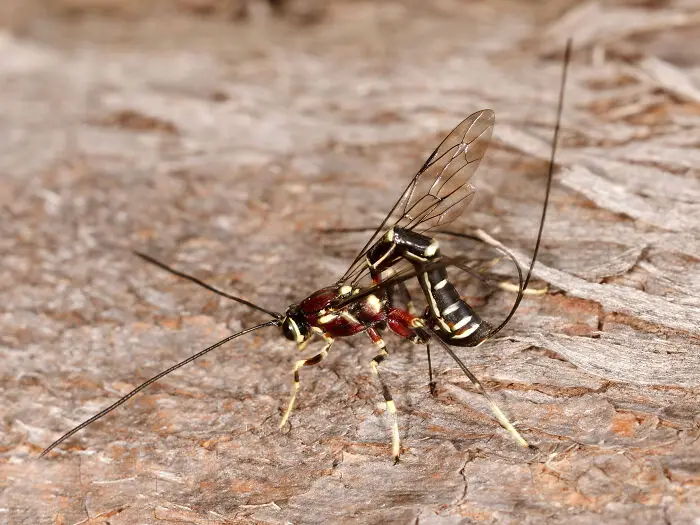
Tasmania has more than 1000 species of native wasp. The life histories of the majority of these species, including their larval hosts, is unknown. This Darwin wasp, Labena sp., uses her sensitive antennae to detect the movements of a beetle larva deep in its tunnel in a tree trunk. She then unsheathes her ovipositor and, using special grooves on her hind legs, manoeuvres this thin tube expertly through the tunnels in the wood. Once her ovipositor makes contact with a beetle larva, she will lay one or more eggs that will develop inside the larva. Although this might seem brutal or cruel, native wasps are vital in controlling insects that, unchecked, would devastate the native vegetation. And the precision involved in guiding a tube which is the same length as her entire body has to be admired!
Report
1point